Artwork
Baby (Cradle)
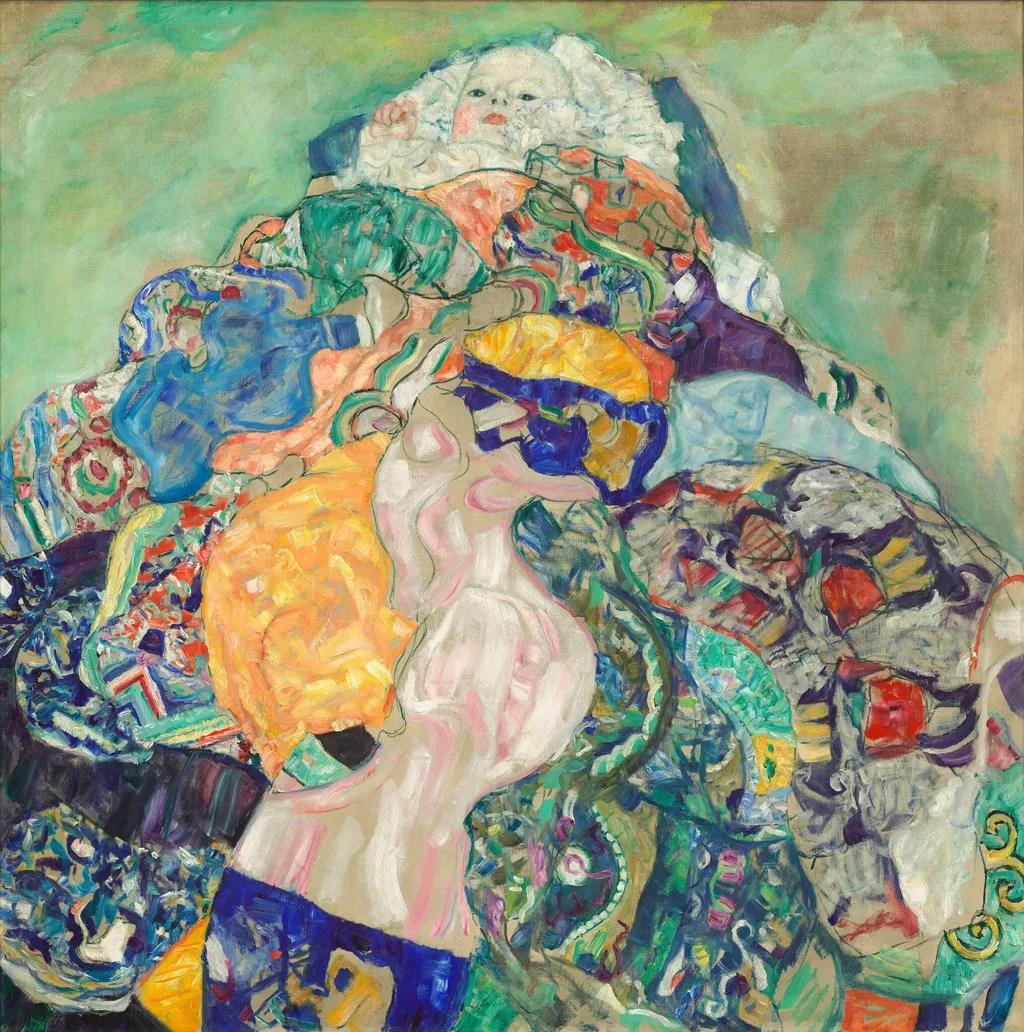
Baby (Cradle) is an oil painting by the Art Nouveau artist Gustav Klimt. It dates from 1918 and is held in the collection of the National Gallery of Art.
About this work
Subject & Meaning
The work is rendered in a vivid color scheme that reflects the influence of fauvism and Slavic folk art, as noted in contemporary accounts.
The painting Baby (Cradle) portrays an infant whose head and a single hand are visible, emerging from beneath a richly patterned, multicolored blanket that drapes across the canvas. The child’s head occupies the apex of a triangular composition, creating a focal point that guides the viewer’s eye. The work is rendered in a vivid color scheme that reflects the influence of fauvism and Slavic folk art, as noted in contemporary accounts.
By limiting the figure to these fragments, Klimt emphasizes the fragile presence of the newborn and invites contemplation of themes related to birth, protection, and the transient nature of innocence.
History & Provenance
Gustav Klimt’s Baby (Cradle) dates to 1917 and remained unfinished at his death the following year. The work was first acquired in 1919 from the artist’s estate by Otto and Eugenia Primavesi of Vienna.
By 1928 it had passed to Hugo or Otto Bernatzig (or Bernatzik) in Vienna, then traveled to the United States in the possession of Josef Urban. It was subsequently handled by the Galerie St. Etienne in New York, where it appeared in a 1959 Klimt exhibition.
Otto and Franziska Kallir acquired the painting and later donated and sold it to the National Gallery of Art, Washington, in 1978.
The painting is held by the National Gallery of Art, Washington, D.C., accessioned as 1978.42.2. It was included in the Galerie St. Etienne’s 1959 Klimt exhibition in New York, where Josef Urban’s widow is recorded as a lender. The gallery’s owners, Otto and Franziska Kallir, later acquired the work and in 1978 donated and purchased it for the National Gallery of Art.
Context
Painted between 1917 and 1918, Baby (Cradle) remained unfinished in Gustav Klimt's studio at the time of his death. The work is frequently analyzed for its bold colorism, which art historians attribute to the influence of Fauvism and Slavic folk art encountered during the artist's 1917 journey to Moravia. Structurally, the composition is defined by a triangular arrangement with the infant's head serving as the apex, while a massive, multicolored, undulating blanket dominates the foreground.
As one of Klimt's final portraits, the painting illustrates his late stylistic shift away from the intricate gold-leaf patterns of his earlier period toward a more direct, painterly approach. The piece was acquired shortly after the artist's death by the Primavesi family in 1919, marking the beginning of a provenance that eventually led to its acquisition by the National Gallery of Art in Washington, D.C.
Legacy
Baby (Cradle) entered the National Gallery of Art collection in Washington, D.C. in 1978 after being gifted and purchased from the Kallir family.
The work had previously been part of the 1959 Klimt exhibition at Galerie St. Etienne, which traveled to New York, marking one of its early public presentations.
Its provenance traces back to a 1919 purchase by the Primavesi family shortly after the artist’s death, a fact noted in contemporary scholarship.
Art historians have pointed to the painting’s vivid coloration and patterned drapery as exemplars of fauvist influence and Slavic decorative motifs that Klimt encountered during a 1917 trip to Moravia.
The piece is regularly reproduced in museum catalogues and online databases, underscoring its lasting presence in Klimt studies.
Overview
Baby (Cradle) is an oil painting created by Austrian artist Gustav Klimt in 1918. This work depicts a tender scene of a woman holding an infant, distinguished by its vibrant palette and distinctive textural qualities. Executed on canvas, it represents a departure from some of Klimt's earlier, more ornate styles, showcasing a direct and expressive approach to portraiture in his final year.
Technique & Style
Klimt employed a technique of applying paint thickly, almost directly from the tube, to create a tangible, textured surface. This method, known as impasto, is particularly evident in the baby's blanket, where the heavy, uneven brushstrokes give the fabric a palpable, three-dimensional quality. This expressive application of oil paint lends the portrait a less refined finish than typical contemporary works, emphasizing material presence over smooth idealization.
Artist & collection
Artist
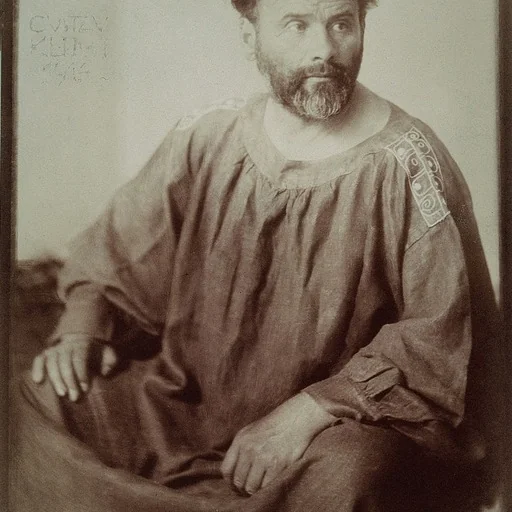
Gustav Klimt was an Austrian symbolist painter and a founding member of the Vienna Secession movement.