Artwork
Japanese and Chinese Poems about the Four Seasons
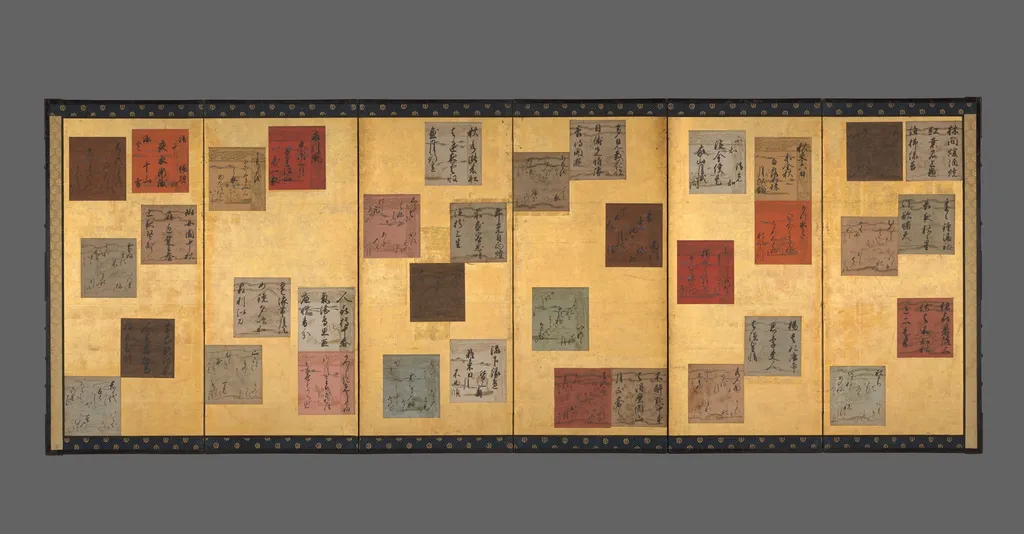
Japanese and Chinese Poems about the Four Seasons is an unspecified painting by the Nanga artist Konoe Sakihisa. It dates from 1600 and is held in the collection of the Metropolitan Museum of Art.
About this work
Overview
Created around 1600 by Konoe Sakihisa, this work presents a curated arrangement of Japanese and Chinese poetic verses centered on the seasonal cycle.
Created around 1600 by Konoe Sakihisa, this work presents a curated arrangement of Japanese and Chinese poetic verses centered on the seasonal cycle. The text is inscribed on small rectangular paper fragments, mounted onto a single surface with a pale yellow ground and a dark blue border. The placement of the poems is asymmetrical, with some overlapping or tilted, suggesting a deliberate yet unstructured composition that prioritizes rhythm over symmetry.
Subject & Meaning
The verses reflect classical literary traditions from both Japan and China, each capturing fleeting impressions of spring blossoms, summer rains, autumn winds, and winter stillness. Rather than illustrating scenes, the work elevates the written word as a vessel for seasonal contemplation. The selection and arrangement invite quiet reflection, aligning with aesthetic principles that value impermanence and the subtle resonance of language over visual representation.
Technique & Style
The poems are rendered in fine black ink, with occasional accents in red or brown pigment, likely applied with a brush to highlight key phrases or names. The paper fragments, though small, retain the texture of handmade material, contrasting with the smooth, uniform background. The irregular layout avoids formal grid structures, emphasizing spontaneity and the natural flow of poetic thought, characteristic of literati traditions in East Asia.
History & Provenance
Attributed to Konoe Sakihisa, a prominent court noble and calligrapher of the late Azuchi-Momoyama period, the work likely originated in Kyoto’s scholarly circles. It entered the collection of The Metropolitan Museum of Art in the 20th century, having passed through private Japanese collections. Its survival reflects the enduring appreciation for poetic manuscripts among elite collectors who valued textual artistry as much as visual beauty.
Context
This piece emerged during a period when Japanese aristocrats actively engaged with Chinese literary culture, blending classical Chinese poetry with native waka traditions. The format, text on paper mounted as a single panel, echoes scroll and album traditions, yet its fragmented, non-linear arrangement distinguishes it as an experimental form. It reflects the literati ideal of combining scholarship, poetry, and calligraphy into a unified meditative object.
Legacy
The work stands as a quiet testament to the cross-cultural exchange of poetic expression between China and Japan. Its emphasis on textual elegance over pictorial narrative influenced later Japanese ink-wash and calligraphic practices. Though not widely reproduced, it remains a reference point for scholars studying the intersection of literature, visual art, and seasonal aesthetics in early modern East Asia.
Artist & collection
Artist

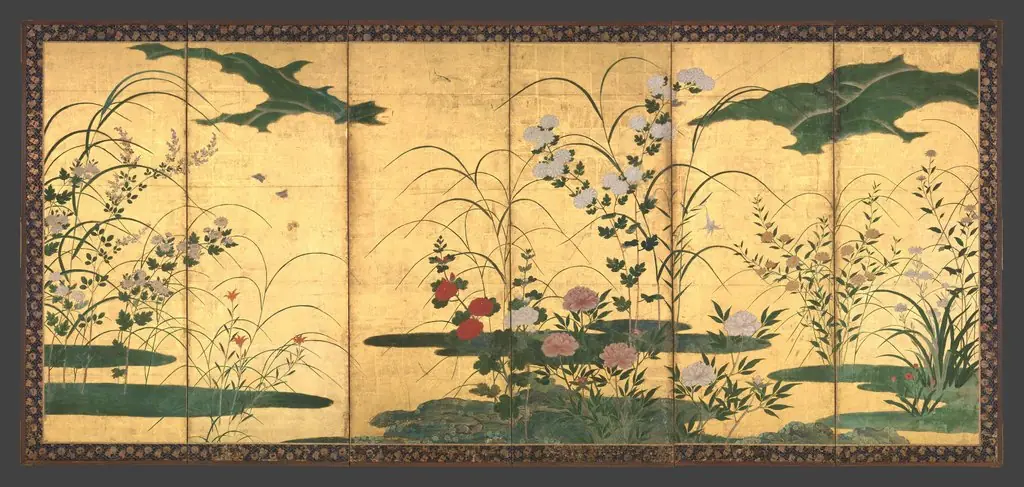 Flowers and Grasses of the Four Seasons
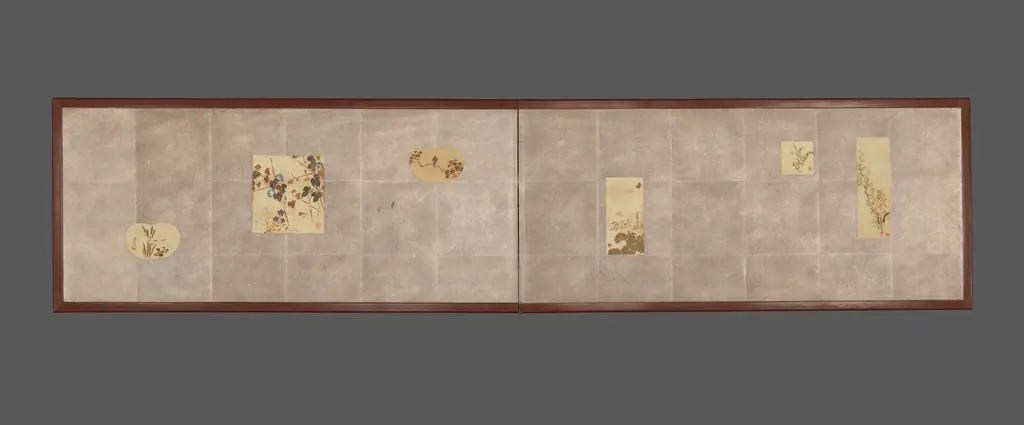 Folding Screen for Tea Ceremony with Six Bird-and-Flower Paintings
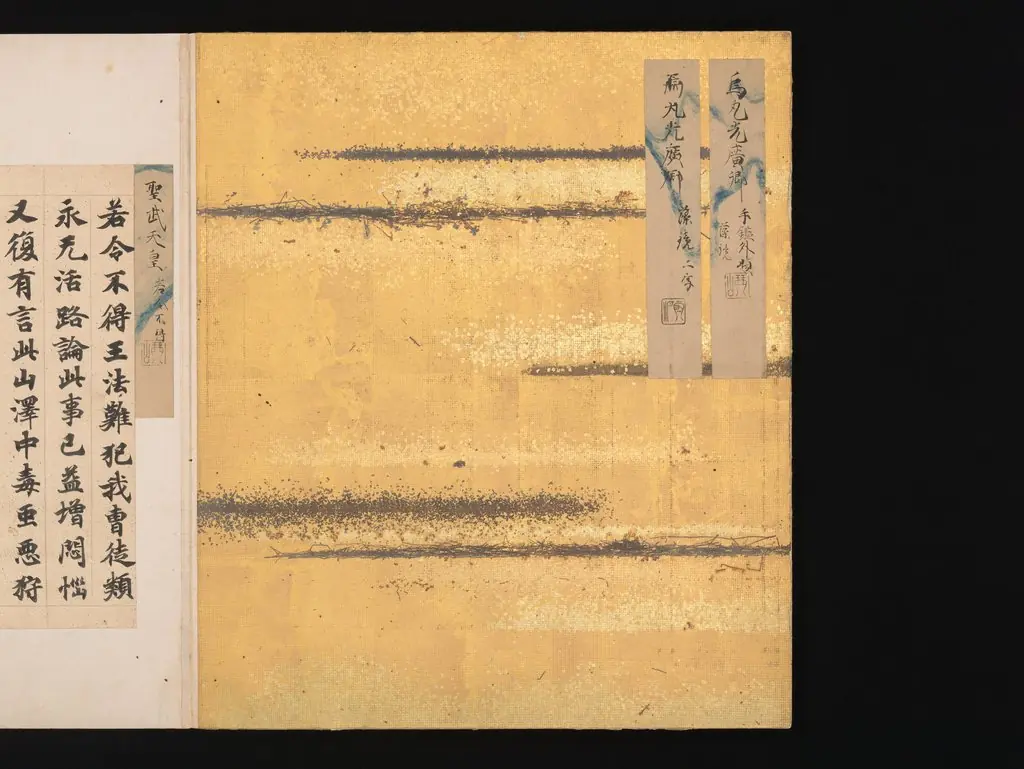 A Mirror of Gathered Seaweed (Mokagami) Calligraphy Album
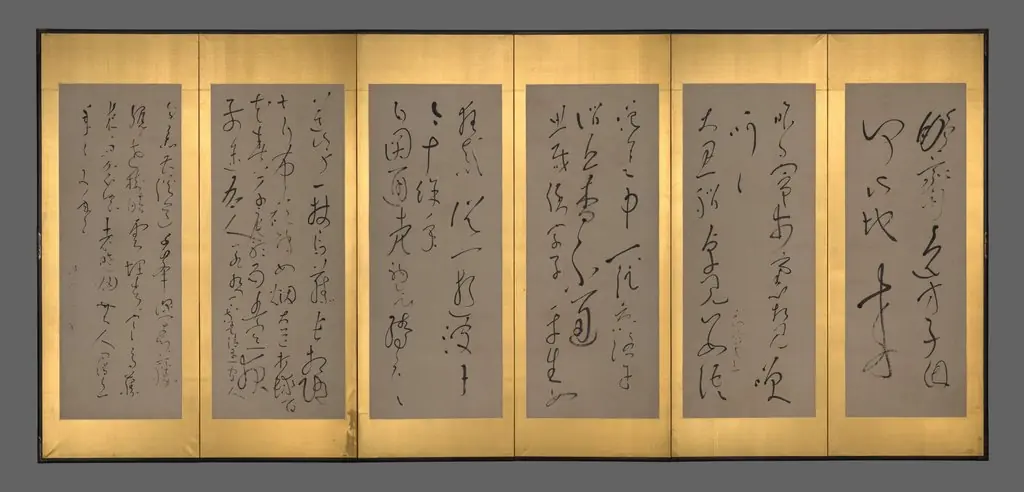 Calligraphy 「鵬齋逸才子」 書
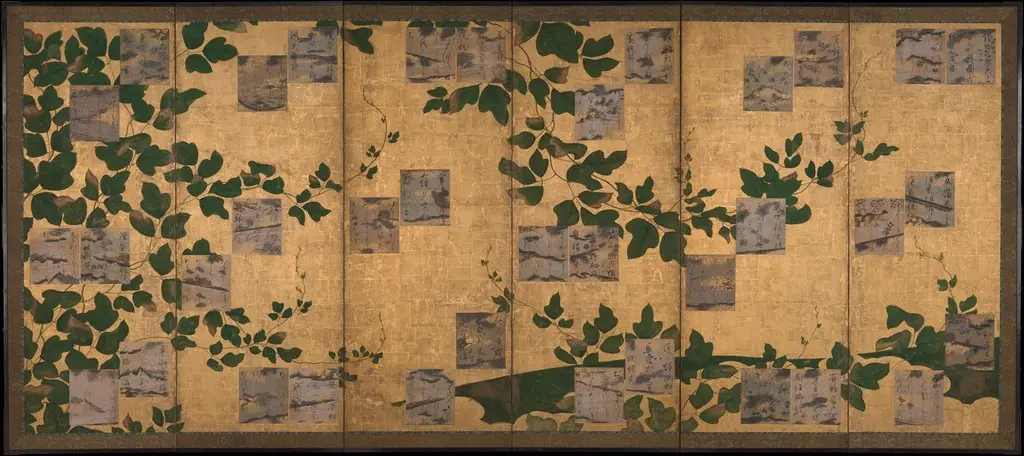 Anthology of Japanese and Chinese Poems (Wakan rōeishū) with Underpainting of Arrowroot Vines
 農耕作月次図屏風|Farmers' Lives in the Twelve Months
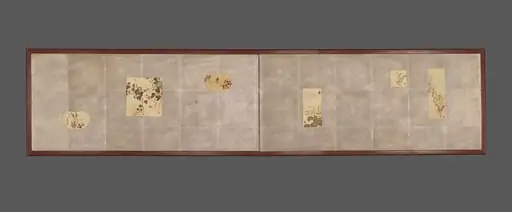 花鳥図風炉先屏風|Folding Screen for Tea Ceremony with Six Bird-and-Flower Paintings
 Munja-Chaekgeori Screen (Character-Books Screen)
 Scenes from the Tale of Genji
 The Tale of Genji