Artwork
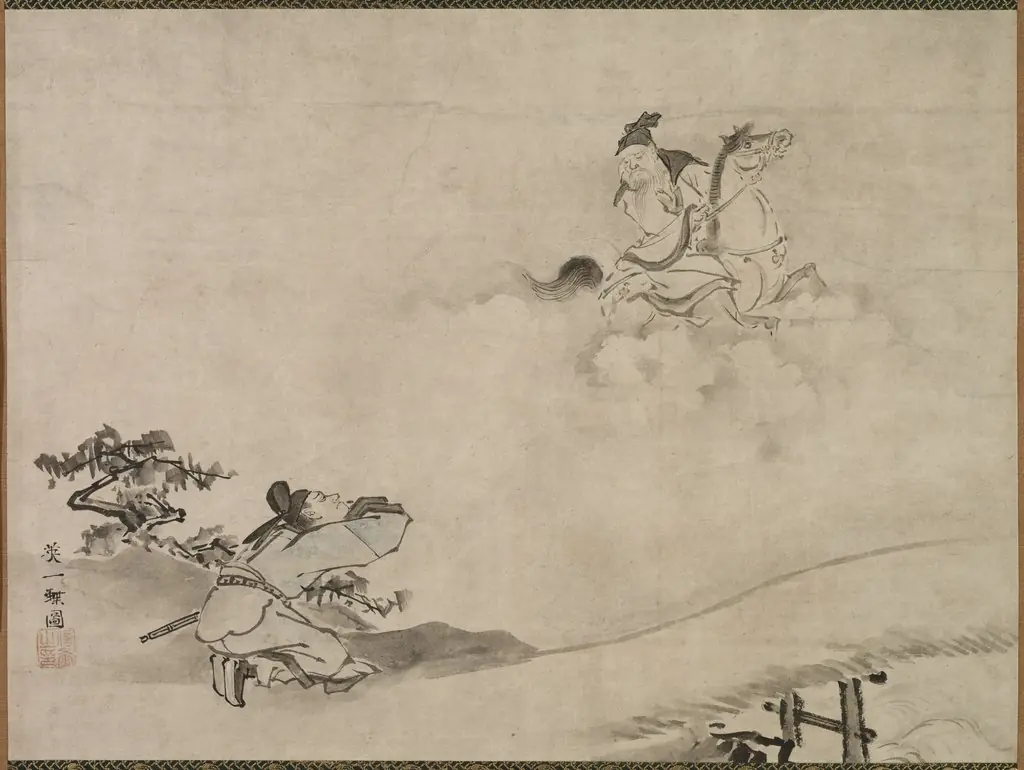
A Samurai on Horseback
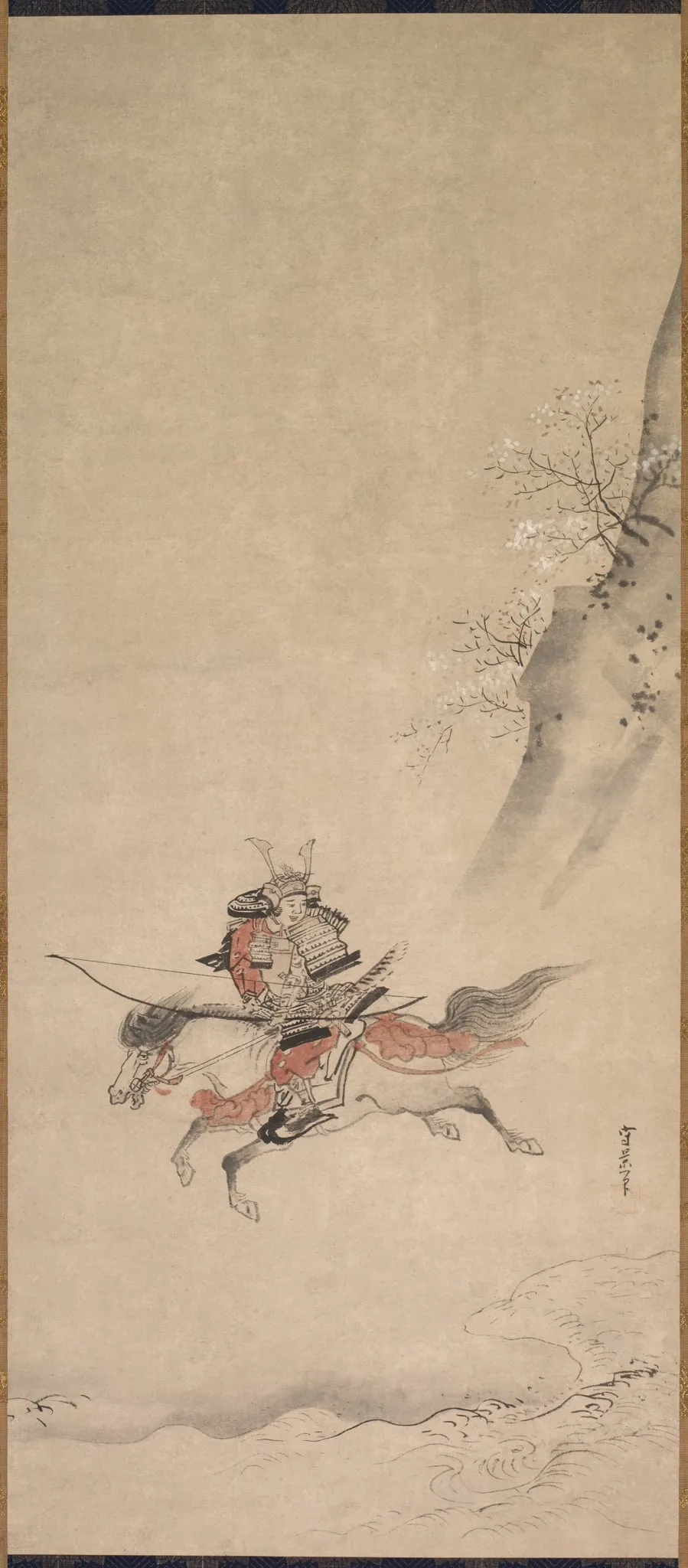
A Samurai on Horseback is an unspecified painting by the Baroque artist Kusumi Morikage. It dates from 1604 and is held in the collection of the Cleveland Museum of Art.
- Accession no.
- 1992.371
- Credit line
- Bequest of Maud Eells Corning
About this work
Overview
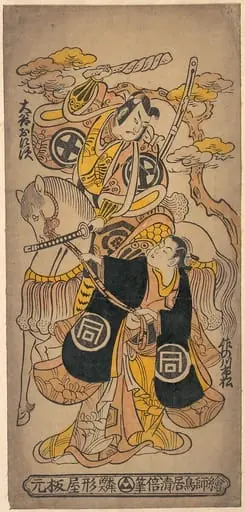
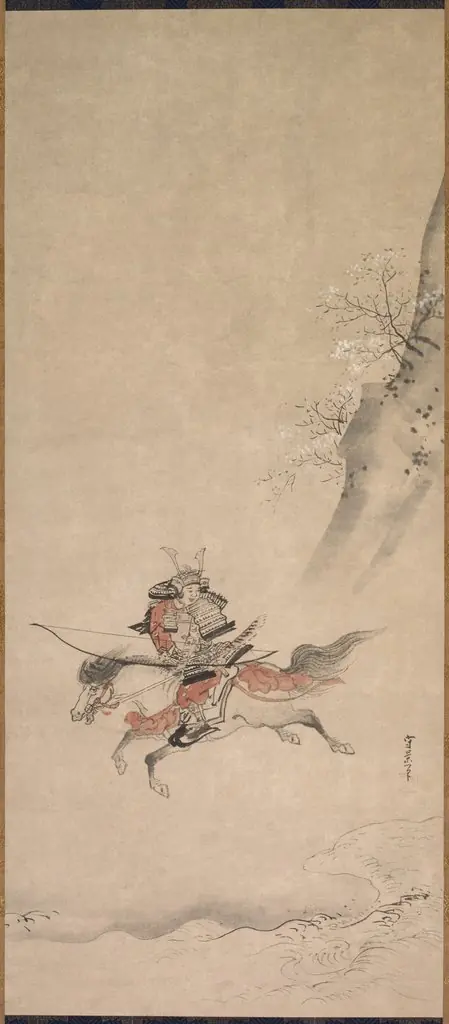
Created around 1604, this ink-and-color painting by Kusumi Morikage depicts a samurai mounted on a galloping horse. Executed in a style blending Japanese traditional aesthetics with emerging Edo-period sensibilities, the work is part of the Cleveland Museum of Art’s collection. Its restrained palette and deliberate composition reflect a focus on motion and dignity rather than ornamental detail.
Subject & Meaning
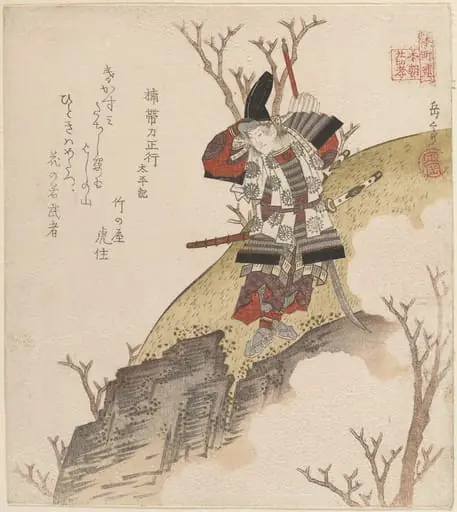
The figure represents a warrior in transit, armored and armed with a bow, suggesting readiness for duty or battle. The absence of narrative context invites contemplation of the samurai’s role as both protector and symbol of discipline. The horse’s dynamic posture reinforces themes of vigilance and controlled power, central to bushido ideals of the time.
Technique & Style
This approach prioritizes symbolic clarity over naturalism, aligning with contemporary Japanese painting conventions.
Morikage employs bold, clean outlines and flat areas of muted color to define form, avoiding realistic shading. The horse’s musculature and the rider’s stance are rendered with precision to suggest motion, while the sparse background, just a tree and rocks, keeps attention on the figure. This approach prioritizes symbolic clarity over naturalism, aligning with contemporary Japanese painting conventions.
History & Provenance
The painting entered the Cleveland Museum of Art’s collection in the 20th century, though its earlier ownership remains undocumented. It is one of few surviving works by Morikage from the early Edo period, making it a rare example of his equestrian subjects. Its preservation suggests it was valued within a collector’s circle, possibly linked to regional daimyo patronage.
Context
Painted shortly after the Battle of Sekigahara, this work emerged during Japan’s transition from civil war to centralized rule. While samurai no longer fought constant battles, their image remained potent in art and culture. Morikage’s depiction reflects a society honoring martial virtue even as peace took hold, blending historical memory with aesthetic restraint.
Legacy
Morikage’s approach influenced later Edo-period artists who favored stylized depictions of warriors over theatrical realism. This painting stands as a quiet testament to the endurance of samurai iconography in visual culture, not as propaganda, but as a contemplative representation of duty and presence. It remains a key reference for understanding early 17th-century Japanese secular painting.
Artist & collection