Artwork
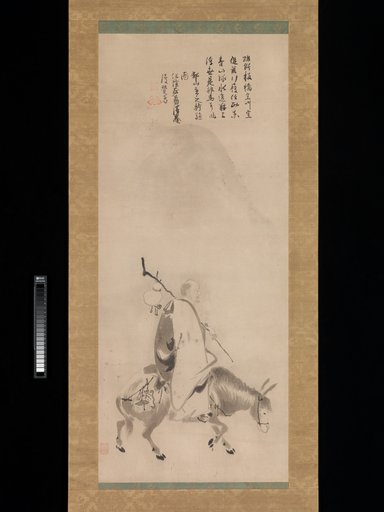
狩野内膳筆 沢庵宗彭賛 政黄牛・郁山主図|Zheng Huangniu and Yushanzhu
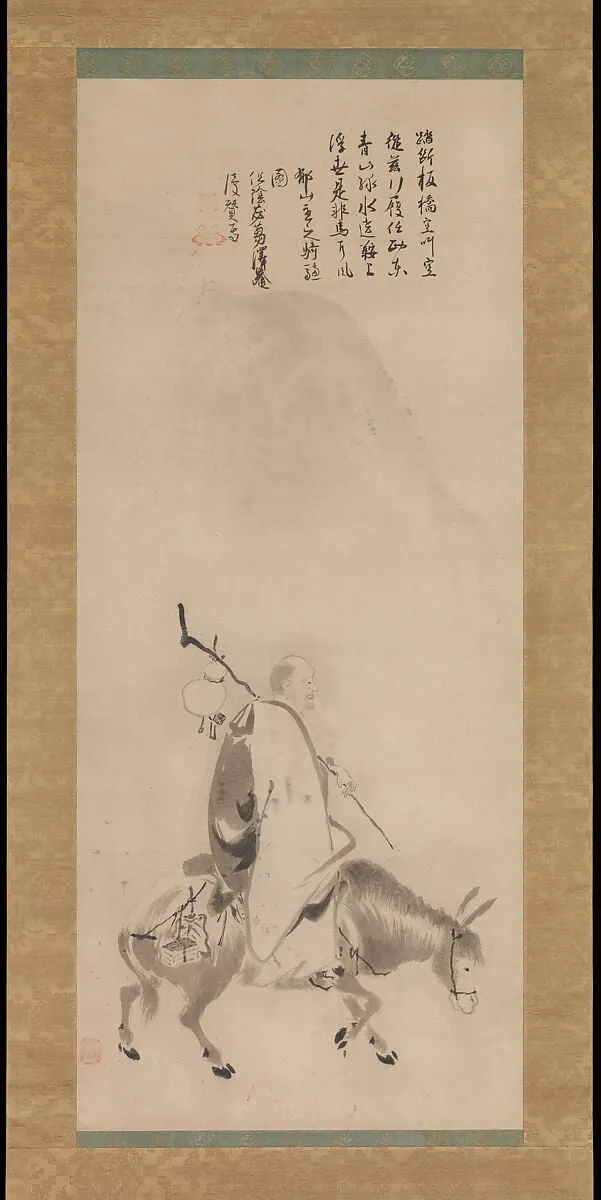
狩野内膳筆 沢庵宗彭賛 政黄牛・郁山主図|Zheng Huangniu and Yushanzhu is an ink painting by the Baroque artist Takuan Sōhō. It dates from 1616 and is held in the collection of the Metropolitan Museum of Art. This pair of ink-on-paper hanging scrolls, titled Zheng Huangniu and Yushanzhu, was created by the artist Kano Naizen in 1616.
About this work
Technique & Style
Stylistically classified as portraiture, the composition depicts human figures, specifically a man and a monk, alongside a donkey.
Executed in 1616, this pair of hanging scrolls utilizes ink applied on paper as its primary medium. The work is attributed to the artist Kanō Naizen, with inscriptions provided by the monk Takuan Sōhō. Stylistically classified as portraiture, the composition depicts human figures, specifically a man and a monk, alongside a donkey.
The handling of the medium reflects the conventions of Japanese painting from this period, focusing on linear definition and monochromatic tonal variation characteristic of ink wash techniques. The format consists of two distinct vertical scrolls intended for display as a set.
History & Provenance
This paired hanging scroll composition was produced in 1616, with the painting executed by Kanō Naizen and the accompanying inscription composed by Takuan Sōhō. Created in Japan, the work takes the form of ink on paper and depicts a man, a monk, and a donkey, indicating its function as a portrait pair of the two named subjects. The scrolls subsequently entered the collection of the Metropolitan Museum of Art, where they are presently held.
No further details regarding an original commission, intermediate ownership, or earlier provenance prior to the museum's acquisition are documented in the available sources.
The painting pair is held in the collection of the Metropolitan Museum of Art. The work was created in Japan in 1616. The provided sources do not specify an inventory or accession number, nor do they record any exhibition history for the scrolls.
Overview
This pair of ink-on-paper hanging scrolls, titled Zheng Huangniu and Yushanzhu, was created by the artist Kano Naizen in 1616. It portrays two monks, one of whom is the esteemed Zen teacher Takuan Sōhō, riding donkeys. Takuan Sōhō also contributed an inscription to the artwork. The composition captures these figures in a moment of quiet contemplation during their journey.
Subject & Meaning
The scrolls depict two monastic figures traversing a narrow path on donkeys. One monk carries a fan, while the other holds a scroll. The figure on the left is identified as Takuan Sōhō, a prominent Zen master recognized for his teachings on maintaining inner tranquility amidst turmoil.
The artist renders him as if captured in a pensive moment during his travels, reflecting his philosophical disposition.
Context
Created in the early Edo period, this work reflects the intersection of prominent artistic and spiritual figures of its time. Kano Naizen belonged to the influential Kano school of painting, known for its diverse commissions. The inclusion of Takuan Sōhō, a highly respected Zen teacher and advisor, as both a subject and an inscriber, underscores the cultural importance of Zen Buddhism and its practitioners in 17th-century Japan.
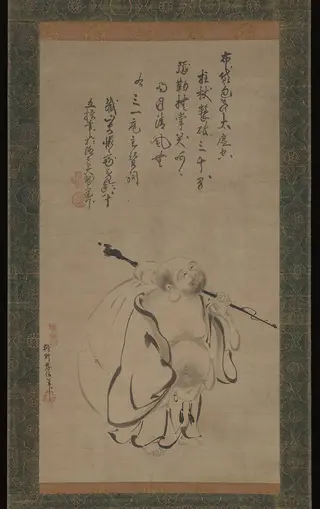
Artist & collection

 Kenshu, Monk with Shrimp
 Kenshu, Monk with Shrimp
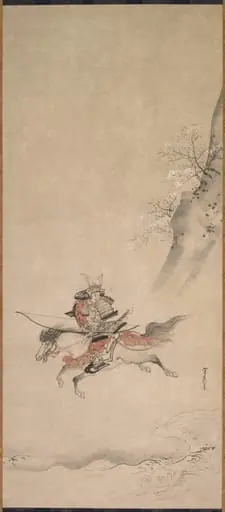 A Samurai on Horseback
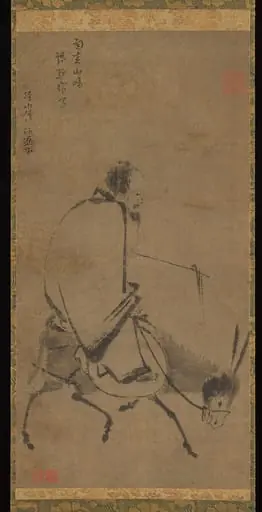 南宋 佚名 騎驢圖 軸|Chan master riding a mule
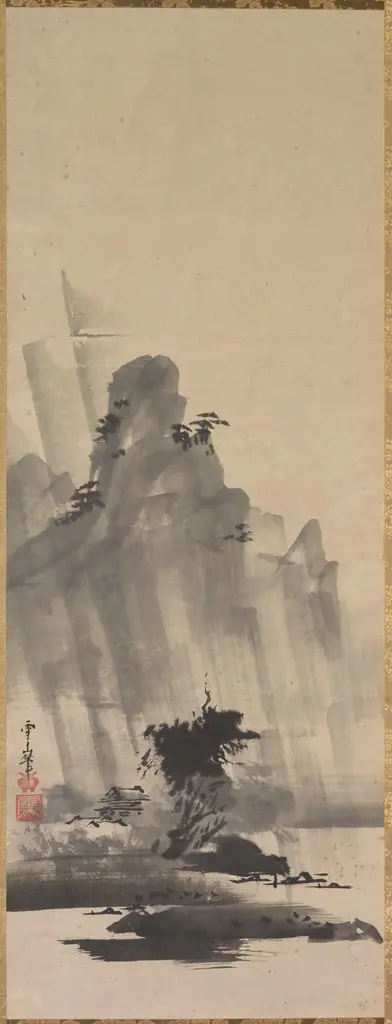 Mountain and River in Storm
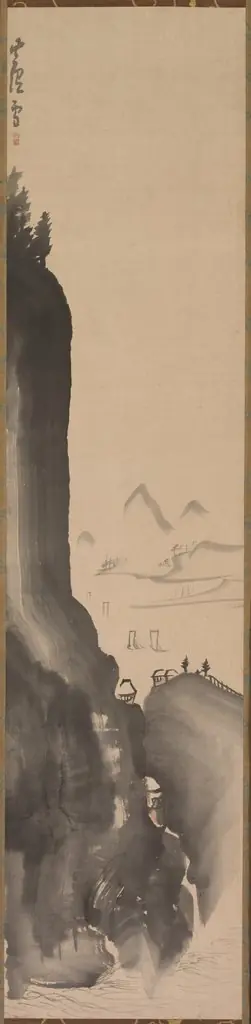 Mountains and Distant Boats
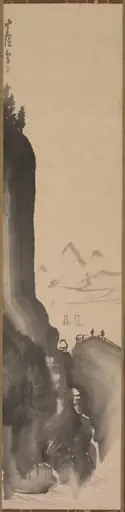 Mountains and Distant Boats
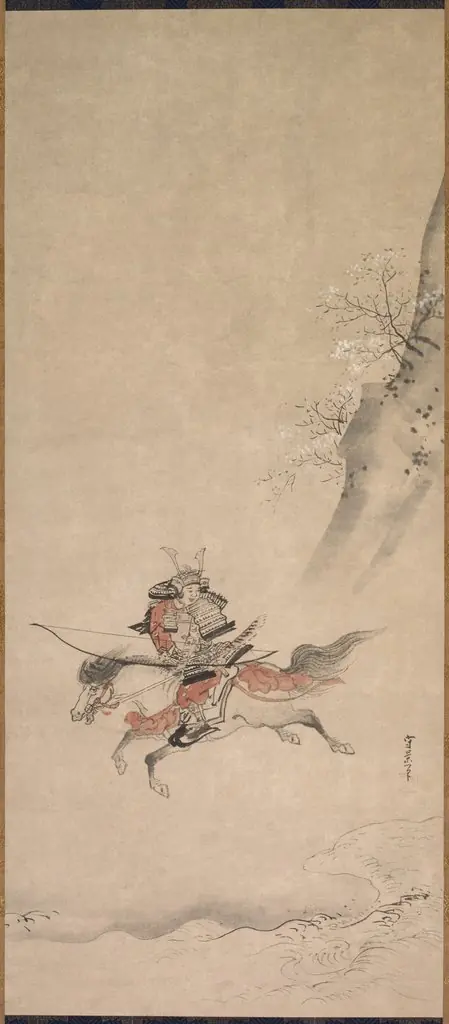 A Samurai on Horseback
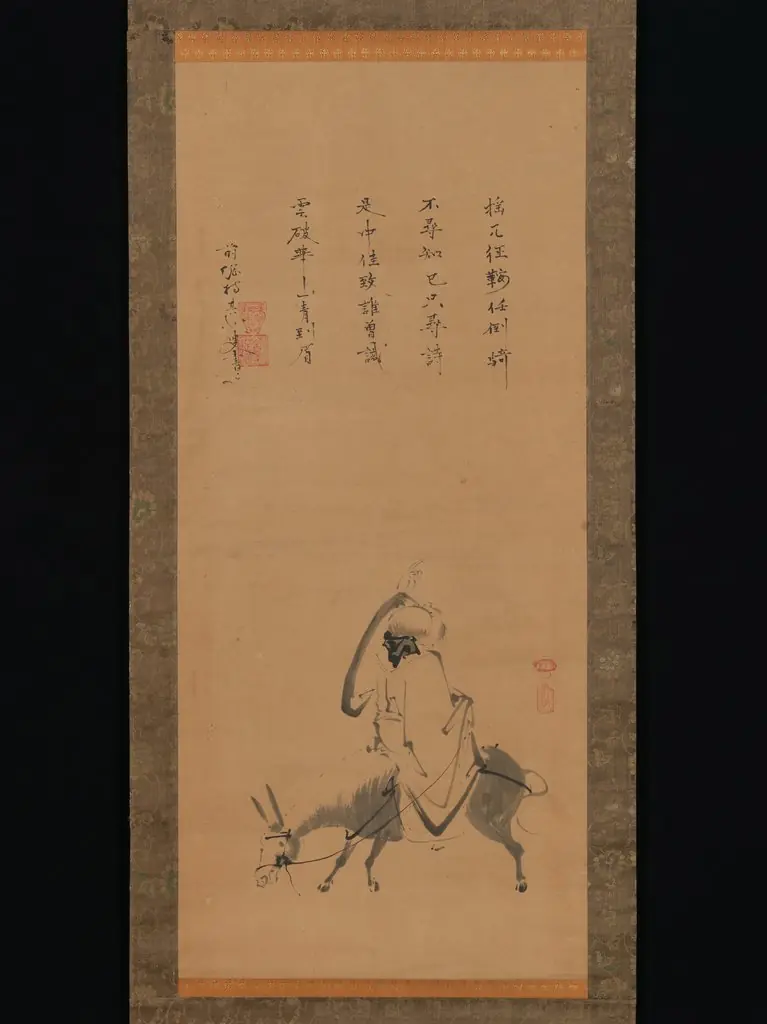 The Chinese Poet Pan Lang on a Donkey
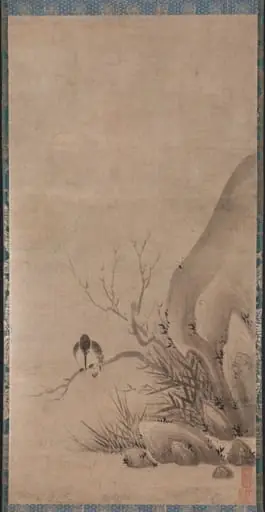 Kingfisher Perched above a Stream
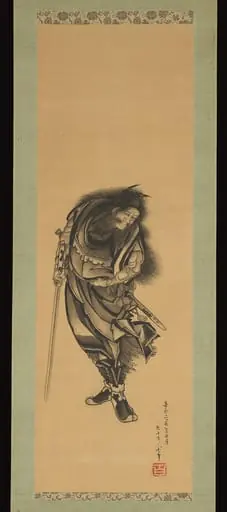 葛飾北斎筆 黒鍾馗|Black Shōki, the Demon Queller
- 狩野孝信筆 布袋図「拄杖擊破三千界。彌勒撫掌笑呵呵,明月清風無。」|Hotei