Artwork
Aurora (Dawn)
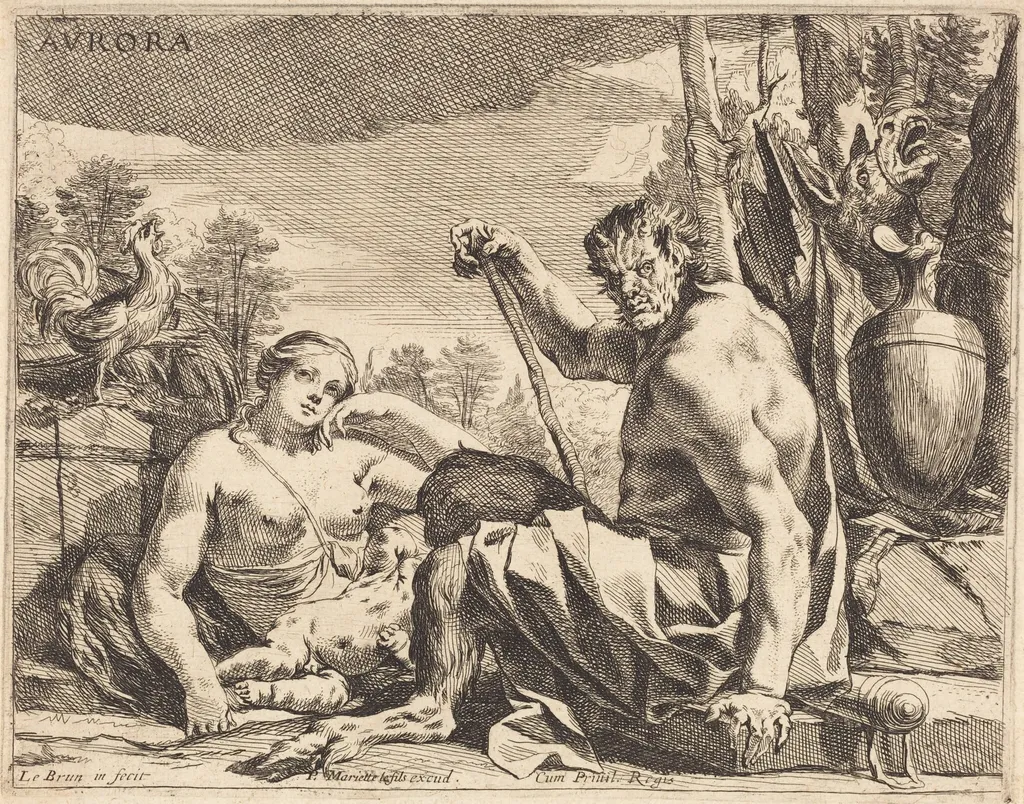
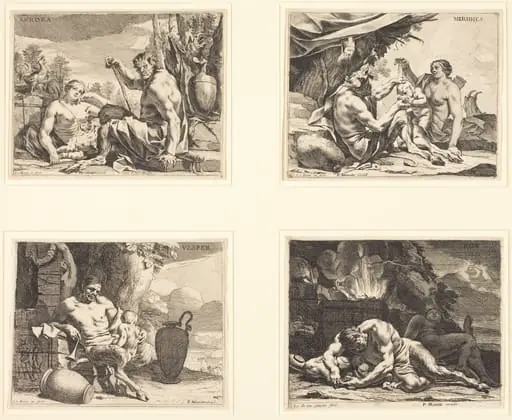
Aurora (Dawn) is an ink print by the Baroque artist Charles Le Brun. It dates from 1640 and is held in the collection of the National Gallery of Art.
- Inscription
- Inscribed:upper left in image: AURORA; across lower edge: LeBrun in fecti P. Mariette le fils excud. cum Privel. Regis
About this work
Overview
Aurora (Dawn), created around 1640 by Charles Le Brun, is a print made using etching and engraving techniques on laid paper. It depicts a dramatic woodland scene populated by three figures amid dense vegetation. The composition conveys emotional contrast through posture and expression, rendered with precise linear detail characteristic of 17th-century printmaking.
Subject & Meaning
The scene personifies dawn through symbolic figures: a wild, agitated man on the right, a serene woman cradling a child at center, and an implied natural force in the surrounding foliage. The man’s turmoil and the woman’s composure suggest a tension between chaos and order, possibly reflecting contemporary allegories of nature’s duality at day’s break.
Technique & Style
Le Brun employed fine, incised lines and deep shadowing to model form and depth, exploiting the precision of etching and engraving. The dense foliage and textured ground are built through cross-hatching, while the figures’ contrasting gestures are emphasized by sharp contours. The technique allows for intricate detail, enhancing the scene’s atmospheric intensity without color.
History & Provenance
Created during Le Brun’s early career in France, this print predates his later royal commissions. It reflects his engagement with mythological and allegorical themes before his rise as Louis XIV’s chief artist. The work likely circulated among collectors and artists, serving as a study in expressive figure composition and narrative tension.
Context
In mid-17th-century France, prints like this were valued for their ability to disseminate artistic ideas beyond painting. Le Brun’s work here aligns with a broader interest in classical allegory and emotional expression, influenced by Italian Mannerism and the emerging Baroque sensibility, though adapted to the quieter intimacy of print.
Legacy
Though less known than his later monumental works, Aurora (Dawn) demonstrates Le Brun’s early command of narrative and emotional contrast in printmaking. It contributes to understanding his development as an artist who would later shape French academic style, revealing his foundational interest in human expression within natural settings.
Own this work as a print
Artist & collection


 Mercury Killing Argus
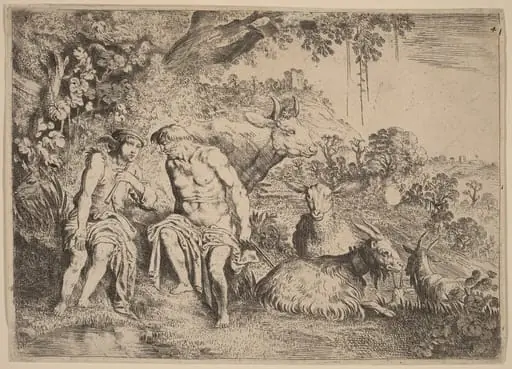 Mercury Lulling Argus to Sleep
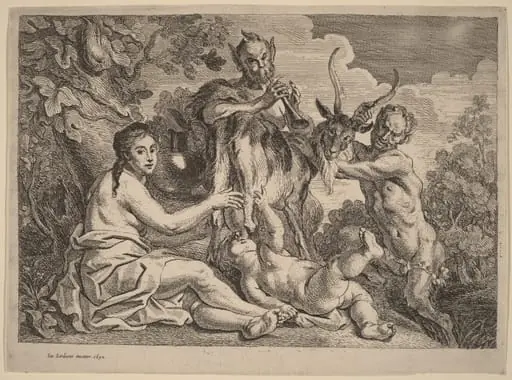 Jupiter Nourished by the Goat Amalthea
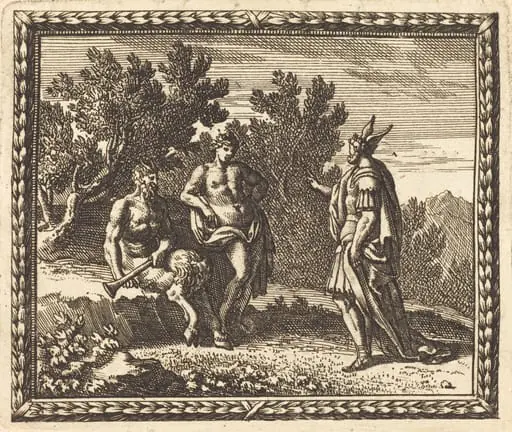 Midas with Apollo and Pan
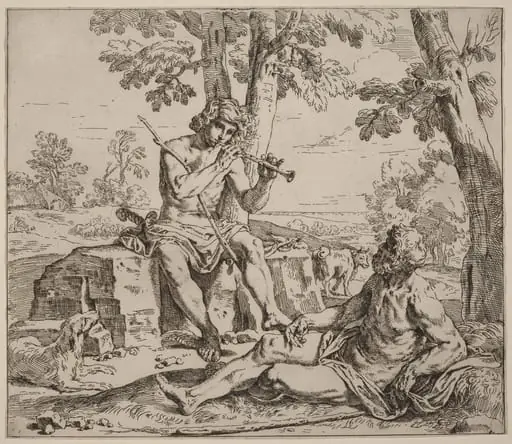 Mercury and Argus
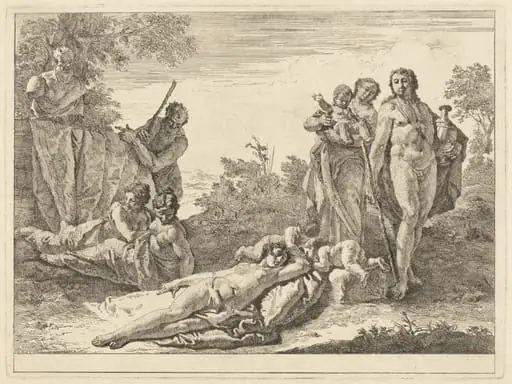 Nine Figures around a Herm of Pan
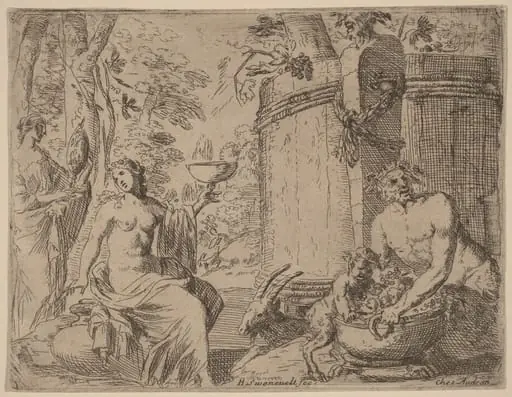 Two Nymphs and a Satyr before a Large Vat
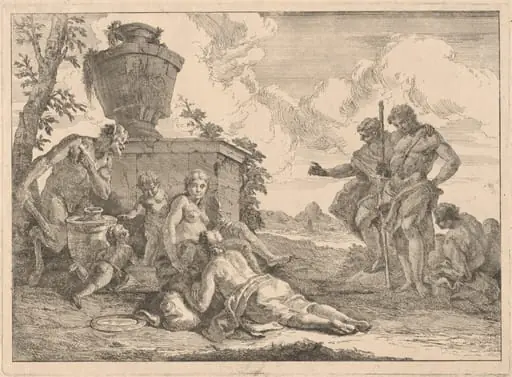 A Satyr with a Staff and Seven Other Figures
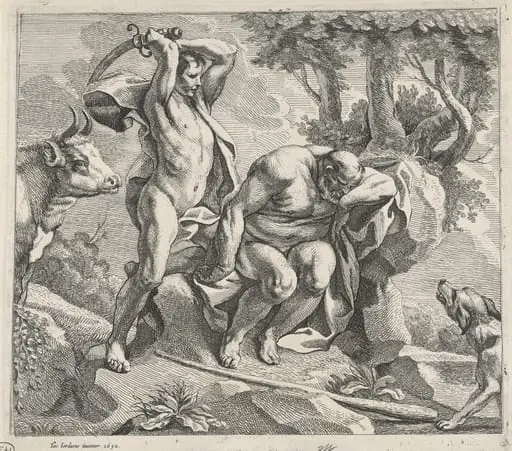
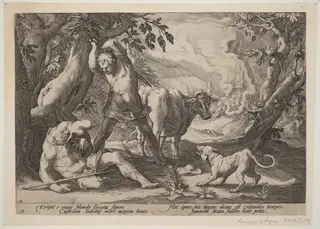 Landscape with Mercury Raising His Sword to Kill a Sleeping Argus
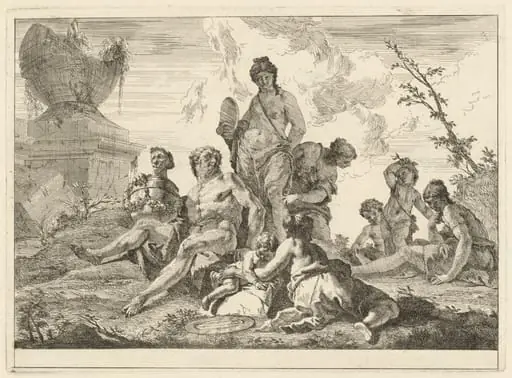 Venus and Vulcan with Three Nymphs and Three Cupids
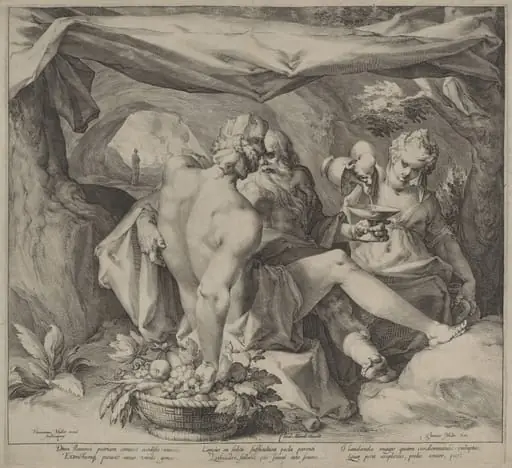 Lot and His Daughters