Artwork
Venus
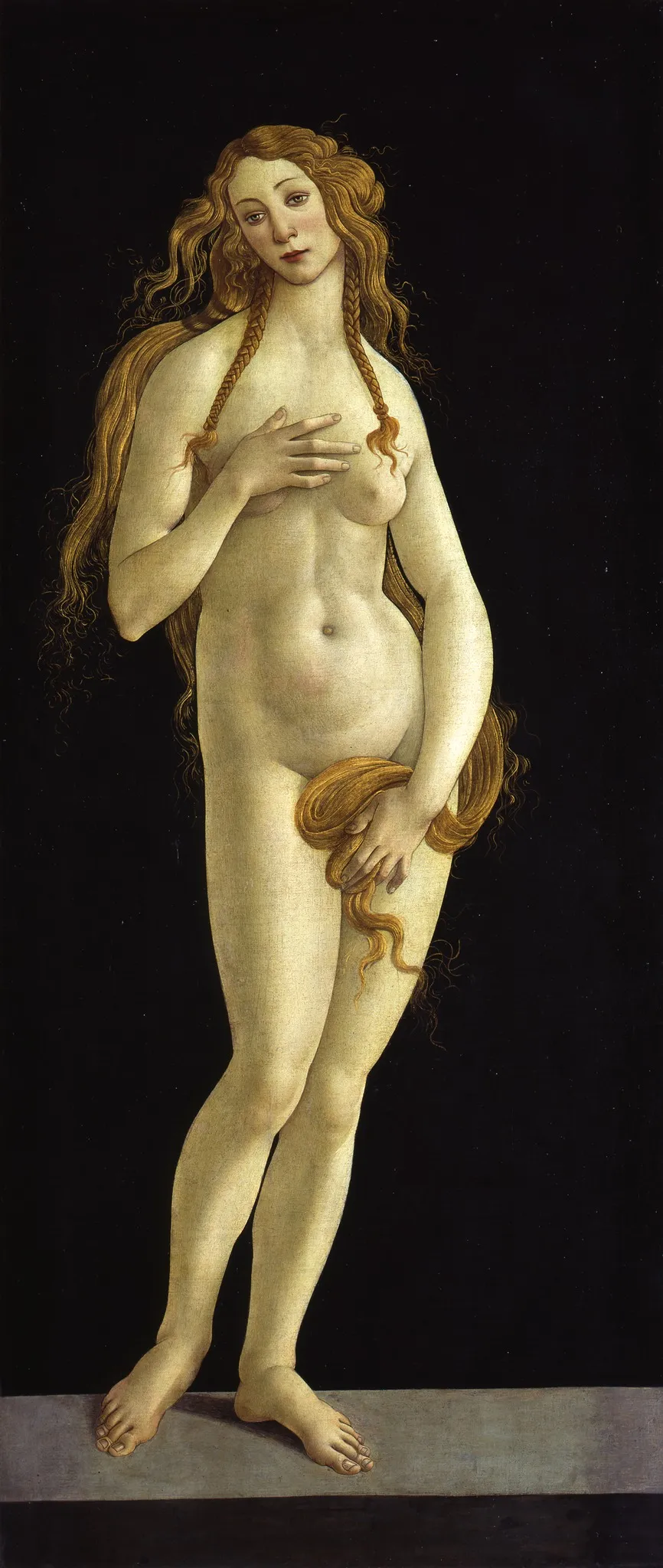
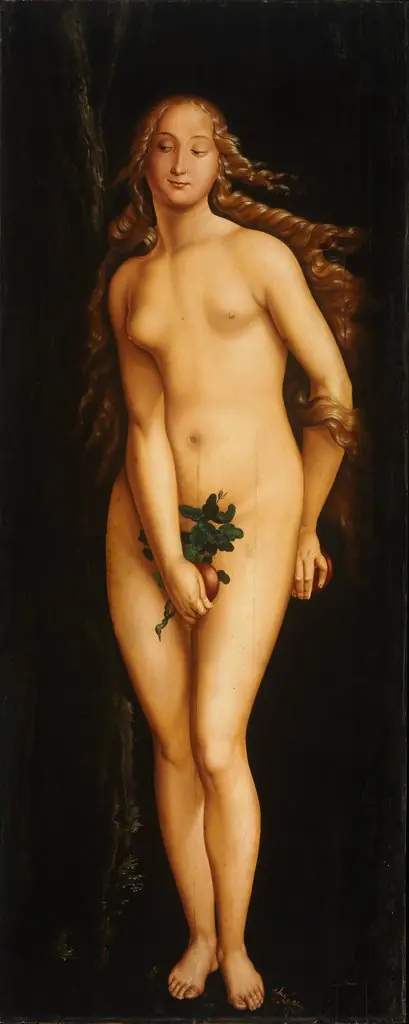
Venus is a paint painting by the Early Renaissance artist Sandro Botticelli. It dates from 1496 and is held in the collection of the Gemäldegalerie Berlin.
About this work
Subject & Meaning
The painting depicts Venus, the ancient Italic goddess of love, desire, and charm, who since antiquity has been identified with the Greek Aphrodite.
The painting depicts Venus, the ancient Italic goddess of love, desire, and charm, who since antiquity has been identified with the Greek Aphrodite. Botticelli renders her as the Venus Pudica, the modest Venus, a type founded by the antique Knidian Aphrodite of around 350 BCE. The near life-size goddess stands in contrapposto against a dark background, her hands and long golden hair shielding her body, her lowered gaze and flushed face conveying shame. The modest pose was intended to present Venus as a symbol of spiritual rather than carnal love.
The iconography draws on the antique Venus Medici, versions of which were visible in fifteenth-century Florence and which already by the 1830 Berlin gallery catalogue were recognized as the prototype for Botticelli's figure. Aby Warburg's research further linked the idealized face, with its high forehead, long neck, and delicate features, to Simonetta Vespucci, considered the most beautiful woman in Florence, a type Botticelli repeated across his female portraits.
Technique & Style
The work is an oil painting on canvas measuring 158.1 cm by 68.5 cm, created around 1496 in Italy. It depicts the goddess Venus in a modest, contrapposto pose, turning slightly toward the viewer while using her hands and long hair to cover her body, embodying the Venus pudica motif. The figure stands on a gray floor strip in an undefined space illuminated from the upper left, with a darkened background that emphasizes the golden, intricately styled hair.
This composition reflects Botticelli's engagement with the antique Venus pudica type, linking it to earlier Renaissance interpretations and to contemporary ideals of feminine beauty in Florence.
History & Provenance
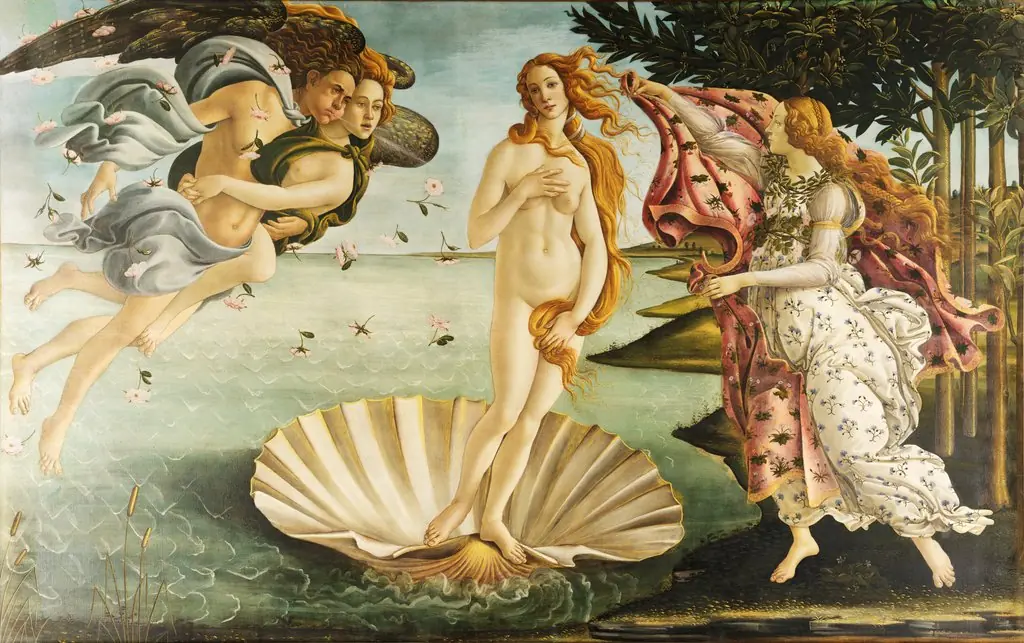
Botticelli's Venus was painted around 1496 in Italy, likely as a commission for Lorenzo di Pierfrancesco de' Medici's Villa di Castello, the same patron associated with the Primavera and The Birth of Venus. The painting was acquired in 1821 from the collection of Edward Solly for the Gemäldegalerie Berlin, where it remains.
Scholarly opinion has varied on its authorship. Wilhelm von Bode, director of the Gemäldegalerie from 1890 to 1905, considered it an autograph work by Botticelli and a study for The Birth of Venus. However, the art historian Giovanni Morelli argued in 1893 that it was a workshop production.
The painting is held in the Gemäldegalerie, Staatliche Museen zu Berlin, having entered the collection from the Edward Solly collection in 1821. It was exhibited in "The Botticelli Renaissance," shown at the Gemäldegalerie, Berlin (September 2015–January 2016), and later at the Victoria and Albert Museum, London (March–July 2016).
Context
The painting Venus by Sandro Botticelli, created around 1496, is a mythological work depicting the goddess Venus in a pose known as Venus pudica. It measures 158.1 cm by 68.5 cm and is executed in oil on canvas.
The artwork is housed in the Gemäldegalerie Berlin, where it has been part of the collection since 1821. Its provenance includes a possible commission for Lorenzo di Pierfrancesco de' Medici's villa and acquisition from the Edward Solly collection.
Critical reception highlights scholarly discussions around its interpretation as a study for Botticelli's more famous Birth of Venus. Art historian Wilhelm von Bode regarded it as an autograph work and a preparatory study, while Giovanni Morelli later questioned this attribution, suggesting it might be a workshop piece.
The iconography aligns with the classical Venus pudica type, linking it to ancient sculptures such as the Aphrodite of Knidos. Scholars like Aby Warburg have connected the figure's facial features to Simonetta Vespucci, reflecting Renaissance beauty ideals. The work has been exhibited in major shows, including "The Botticelli Renaissance" (2015–2016) at the Gemäldegalerie and later at the Victoria and Albert Museum. Literature on the piece includes studies by Barbara Deimling, Hans Körner, and Mark Evans, among others.
Legacy
The Berlin Venus has been central to scholarly reassessment of Botticelli's standing. Wilhelm von Bode, director of the Gemäldegalerie from 1890 to 1905, argued for its autograph status and identified it as a study for the Florentine Birth of Venus, a view that became established after the Uffizi painting was publicly displayed after 1840. Giovanni Morelli dissented in 1893, treating it instead as a workshop piece, a debate that shaped subsequent attribution literature.
The painting's iconographic significance lies in its use of the Venus Pudica type, which Botticelli employed in further Venus compositions set against dark backgrounds. Aby Warburg linked the figure's idealized features to Simonetta Vespucci, reinforcing the image's status as a touchstone of Quattrocento beauty. In 2015–2016 it featured in "The Botticelli Renaissance" at the Gemäldegalerie and the Victoria and Albert Museum, displayed alongside works by LaChapelle, Tomoko Nagao, and Andy Warhol, evidencing its continuing reception as a model for later artists.
Overview
Created in 1496, Sandro Botticelli’s oil painting titled Venus presents a solitary, nude female figure rendered against a stark black backdrop. The work is part of the collection of the Gemäldegalerie in Berlin and measures the artist’s engagement with classical mythology through a single, focused composition.
Artist & collection
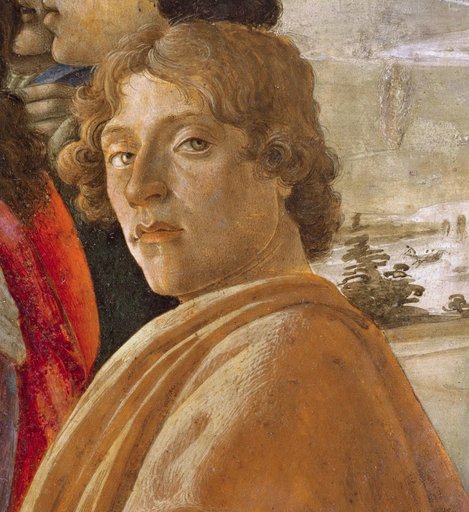
Artist
Alessandro di Mariano di Vanni Filipepi, better known as Sandro Botticelli or simply Botticelli, was an Italian painter of the Early Renaissance.