Artwork
Chess player's novella
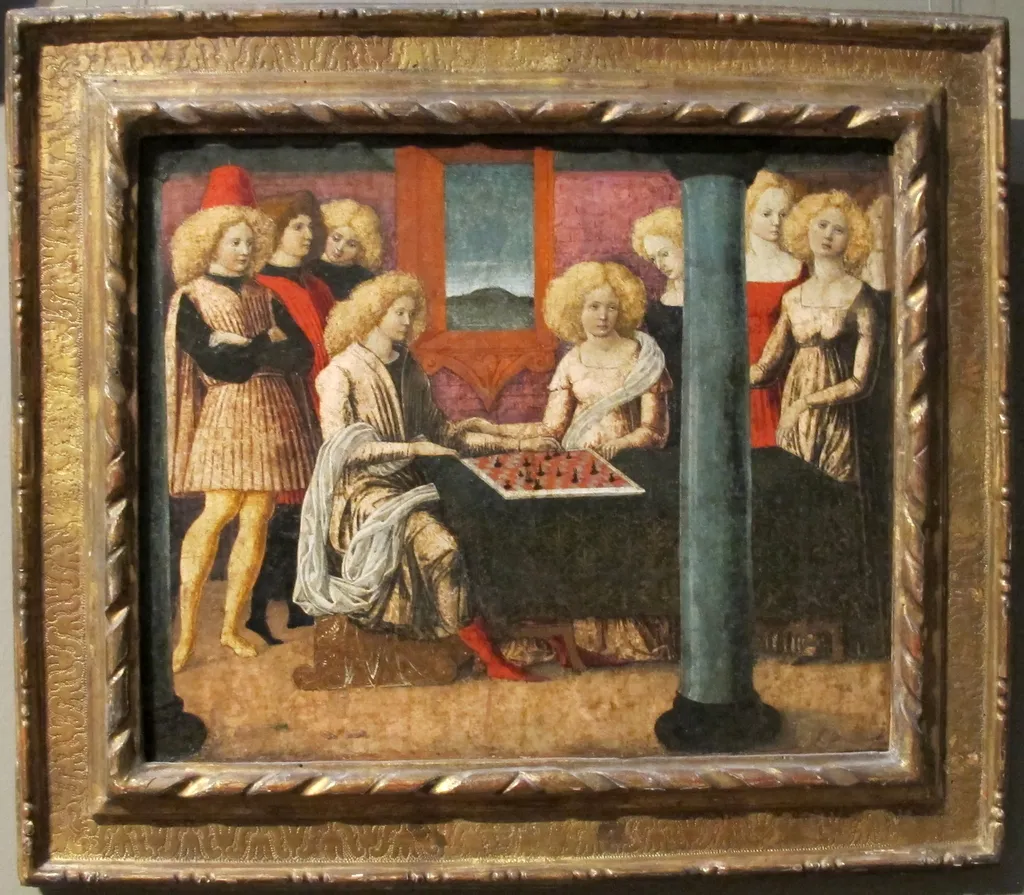
Chess player's novella is a tempera painting by the Early Renaissance artist Liberale da Verona. It dates from 1475 and is held in the collection of the Metropolitan Museum of Art.
About this work
Subject & Meaning
The second panel moves indoors to show the couple married, indicated by their interlocked arms behind a chessboard and the merging of their scarves into one.
The work comprises two tempera panels originally designed to decorate the front of a wedding chest, symbolically illustrating an unidentified Renaissance novella centered on courtship and marriage. The first scene depicts an outdoor courtship where a suitor gestures openly to a young woman leaning from a balcony; white scarves draped around them signify their growing bond of love.
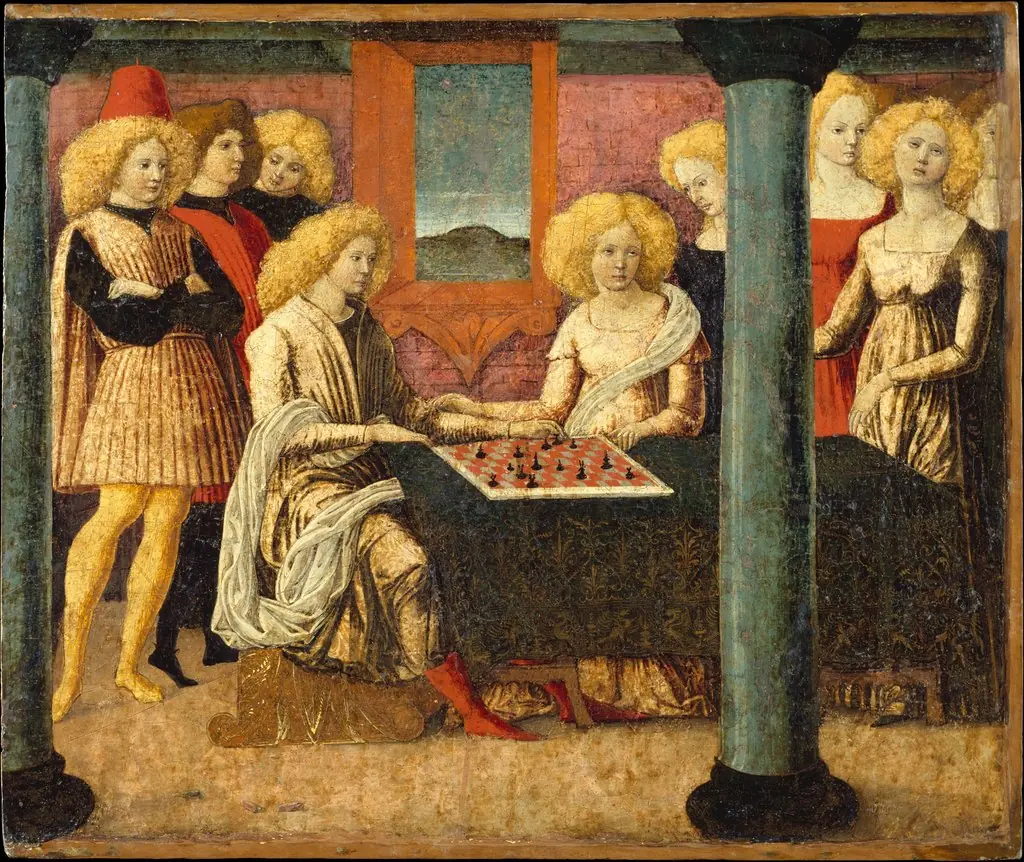
The second panel moves indoors to show the couple married, indicated by their interlocked arms behind a chessboard and the merging of their scarves into one. Here, the chess game serves as a metaphor for early marital skirmishes, surrounded by friends of both genders. The chessboard is rectangular with entirely black pieces, suggesting the artist prioritized symbolic meaning over realistic gameplay. The absence of heraldic crests suggests the patrons were wealthy bourgeoisie rather than nobility.
Technique & Style
The work is executed in tempera on wooden panels, measuring roughly 34.9 cm by 41.3 cm, and belongs to the Early Renaissance period while retaining linear Gothic motifs in the drapery and hairstyles. The panels were originally conceived as part of a wedding chest (cassone) and later separated, receiving Renaissance-style gold-leaf frames. The artist employs a symbolic chessboard to represent a marital allegory, with the black pieces emphasizing the ceremonial rather than literal game.
Figures are rendered as individualized portraits, and the composition combines an outdoor courtly interaction with an interior marital scene, reflecting both Gothic linearity and emerging Renaissance perspective.
History & Provenance
The two tempera panels that compose the Chess Player's Novella were painted by Liberale da Verona around 1475, during his Sienese period, and were originally created on commission to decorate the front of a wedding cassone. The absence of heraldic devices suggests the patrons belonged to the wealthy bourgeoisie rather than the nobility. The panels likely left their original function early, being reframed as independent artworks in carved, gold-leaf Renaissance frames, and may have been separated from one another at that stage.
The two panels entered the Metropolitan Museum of Art at different times and from different collections: the courtship scene arrived in 1943, while the chess-game scene followed in 1986. The Met's own catalogue entries date the panels between 1467 and 1476, a range consistent with the circa 1475 attribution.
Context
Chess player's novella is a pair of tempera panels painted by Liberale da Verona around 1475. Originally conceived as the front of a marriage chest, the works depict a courtship scene and a marital scene in which a game of chess serves as an allegory for wedded union. The panels were later acquired by the Metropolitan Museum of Art, entering the collection in 1943 and 1986.
Art-historical analysis places the pieces at the transition from International Gothic to Early Renaissance, noting the blend of linear Gothic detail with emerging perspectival space. Scholars read the imagery as reflecting humanist concerns with the symbolic representation of love and social status, situating Liberale's cassone paintings within the broader Veronese artistic tradition.
Legacy
The pair of tempera panels attributed to Liberale da Verona, commonly referred to as Chess player's novella, entered the Metropolitan Museum of Art in the mid-20th century and became a reference point for studies of Early Renaissance symbolism in domestic art. Scholars have linked the work's depiction of a courtship and a married couple playing chess to humanist interpretations of marriage, comparing it with later chess-themed paintings such as Giulio Campi's. The panels' transition from wedding-chest decoration to independent artworks, marked by Renaissance-style gold-leaf frames, illustrates their later re-evaluation as standalone paintings.
Overview
Liberale da Verona's Chess player's novella, created in 1475, is a tempera painting that captures a specific social interaction. This artwork, now part of The Metropolitan Museum of Art's collection, is representative of the Early Renaissance movement. It presents a detailed interior scene featuring multiple figures engaged in observation and play, offering insight into contemporary social customs and artistic conventions of the period through its careful composition and execution.
Own this work as a print
Artist & collection


 Saint Lawrence Arraigned Before the Prefect Valerianus
 strage degli innocenti
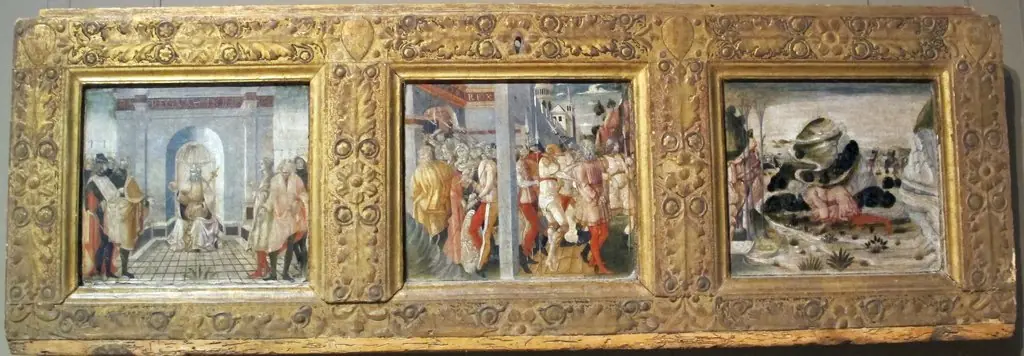 Scenes from the Life of King Nebuchadnezzar
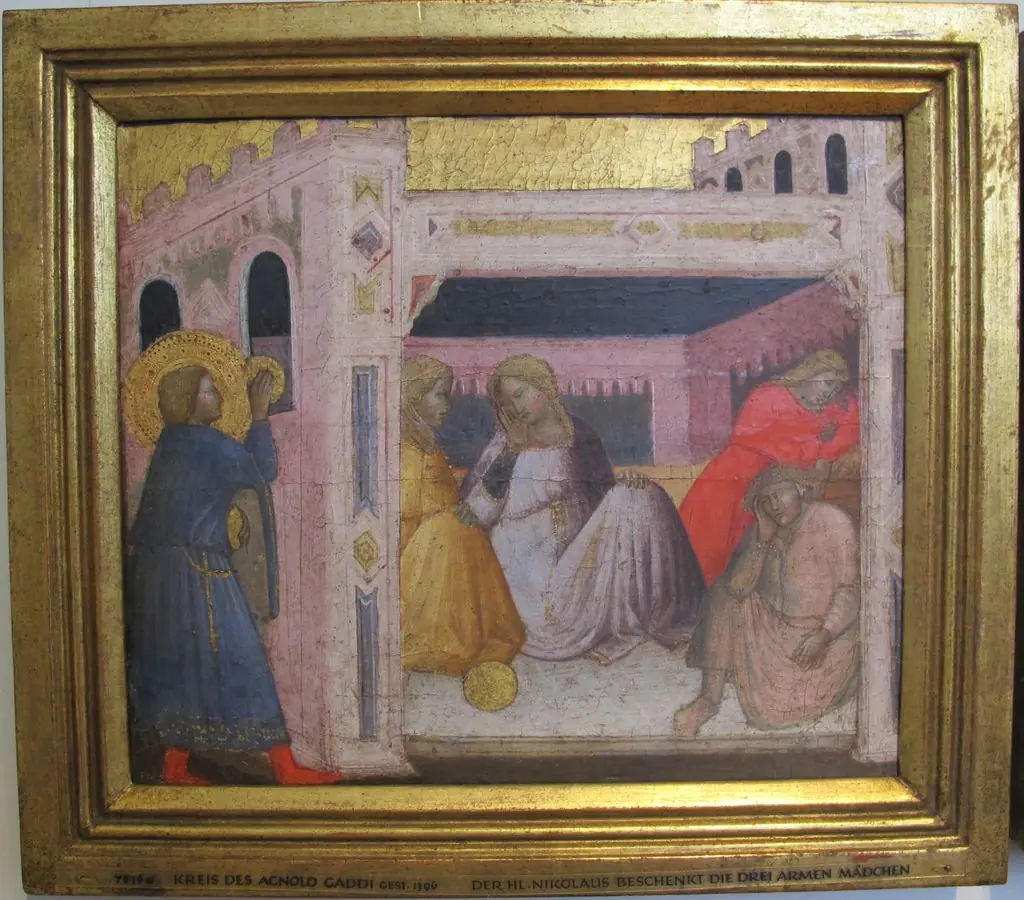 Stories of St. Nicholas. Saint Nicholas presenting Gifts to Three Pool girls
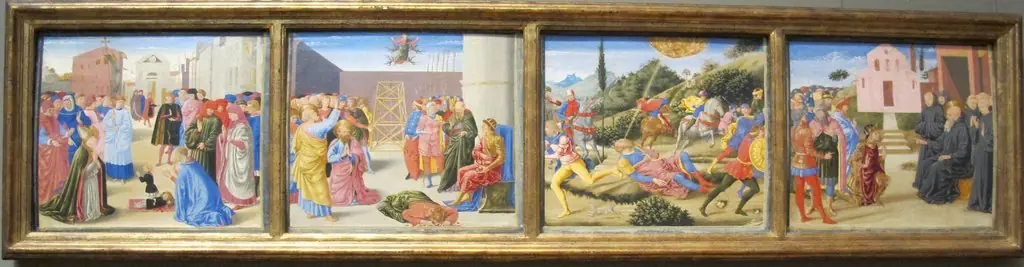 Predella with scenes from the Life of the Saint
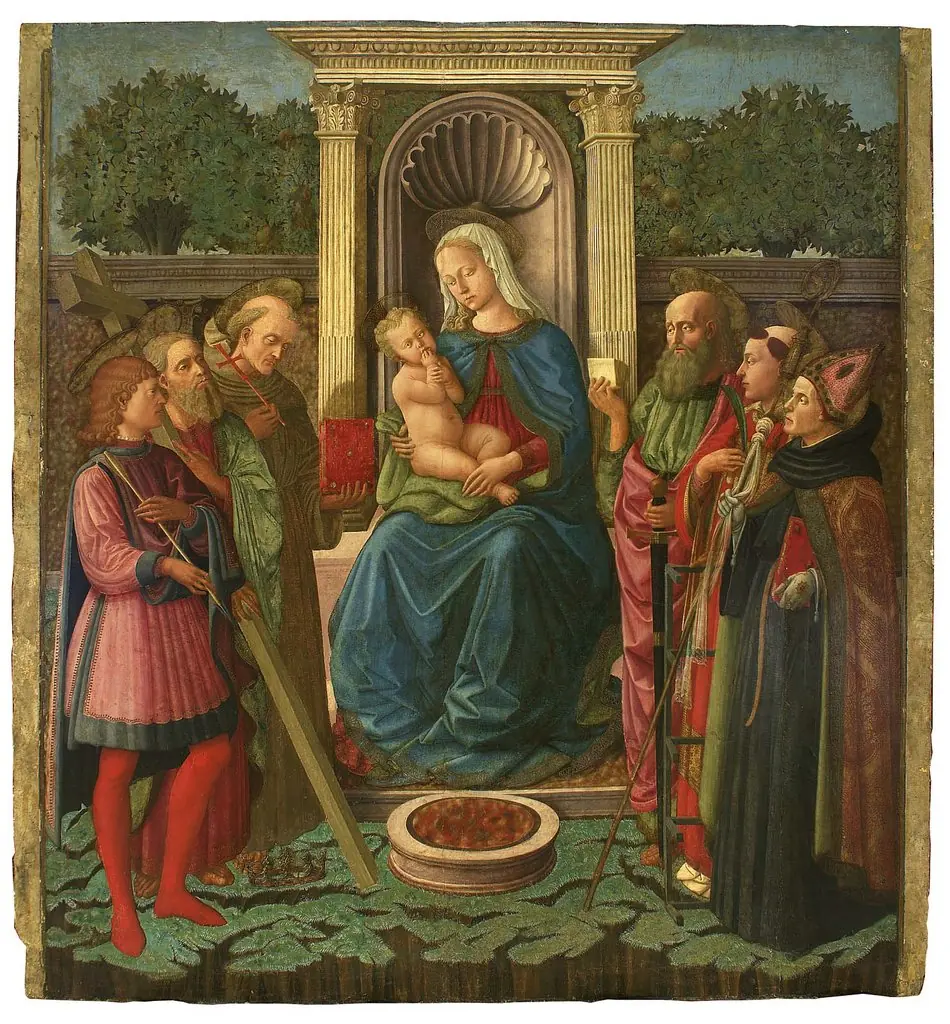 Virgin and Child Enthroned with Saints Sebastian, Andrew, Bernardino (?), Paul, Lawrence, and Augustine
 Christ and the Woman of Samaria
 The Meeting of Solomon and the Queen of Sheba; Cherub Holding Cornucopias of Cherries (recto and verso)
 Santa Lucia de' Magnoli Altarpiece
 The Legend of Cloelia
 Petrus heilt einen Lahmen
- The Chess Players