Artwork
The Legend of Cloelia
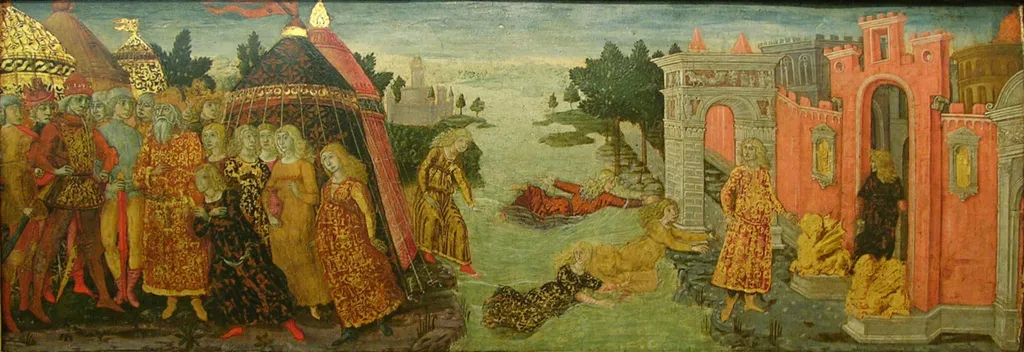
The Legend of Cloelia is an unspecified painting by the Early Renaissance artist Guidoccio Cozzarelli. It dates from 1490 and is held in the collection of the Metropolitan Museum of Art.
About this work
Technique & Style
Its elongated format suggests it may have originally served a decorative function, such as a predella panel or a cassone front.
Guidoccio Cozzarelli's The Legend of Cloelia is a painting executed in 1480. The artwork is a horizontal composition, measuring 38.4 cm in height by 109.9 cm in width. Its elongated format suggests it may have originally served a decorative function, such as a predella panel or a cassone front.
While the specific pigments and binder are not detailed in the available sources, the work falls within the tradition of late 15th-century Sienese panel painting. The collection record also notes the depiction of a male figure within the narrative scene.
Context
The Legend of Cloelia is a 1480 painting by Guidoccio Cozzarelli depicting a male figure, currently held in the Metropolitan Museum of Art. Scholars situate the work within the broader narrative of early Renaissance narrative painting and its revival of classical antiquity themes, though specific critical assessments of its reception remain sparse in the literature. Its stylistic analysis aligns with contemporary Florentine workshops, contributing to understandings of narrative figuration in pre-Mannerist art.
Contextual scholarship emphasizes the painting’s role in illustrating evolving depictions of female agency through the semi-legendary story of Cloelia, a Roman heroine associated with courage and liberation. The work’s presence in a major American collection underscores its significance in transatlantic art historical discourse, though further archival research may refine interpretations of its original patronage and devotional context.
Overview
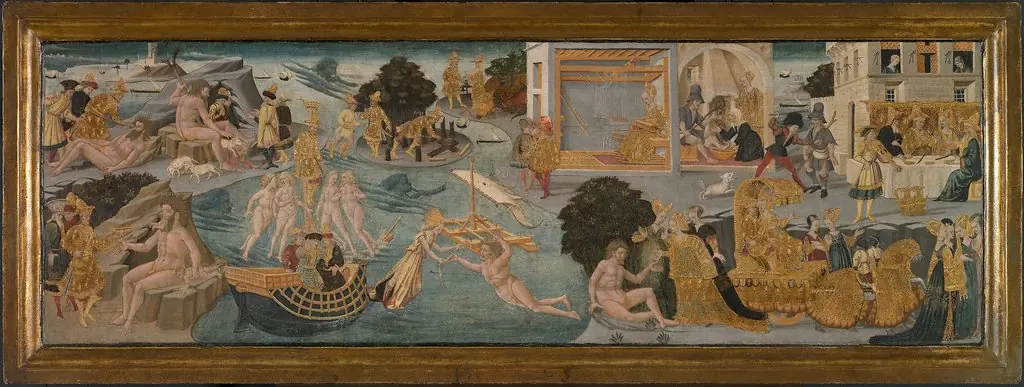
Created circa 1490, The Legend of Cloelia is an oil painting by Guidoccio Cozzarelli, a Sienese artist known for both panel work and miniature painting. The work is part of the Metropolitan Museum of Art’s collection and illustrates a narrative scene populated by numerous figures in vivid, patterned garments, set against a backdrop that includes a river, a bridge, and a distant cityscape.
Subject & Meaning
The composition portrays a dramatic episode drawn from the Roman legend of Cloelia, a young woman who escaped captivity. Central to the scene is a woman in a yellow dress beneath a canopy, while a kneeling man in red attends a fallen figure. The arrangement of characters and the inclusion of architectural elements suggest a storytelling intent rather than a snapshot of everyday life.
History & Provenance
Guidoccio Cozzarelli, a pupil and collaborator of Matteo di Giovanni, produced the work during the early Renaissance, a period when he was primarily engaged in religious commissions. The painting later entered the collection of the Metropolitan Museum of Art, where it remains on display as part of the museum’s European paintings holdings.
Artist & collection
Artist
Guidoccio Cozzarelli (1450–1517) was an Italian Renaissance painter and miniaturist.

- Apollo and the Muses
 Predella with scenes from the Life of the Saint
 The Story of Oenone and Paris (center panel)
 Story of Psyche
 The Adventures of Ulysses
 St Fredianus Diverts the River Serchio
 The Adventures of Ulysses
 Scenes of Country Life: Fishing
 The Massacre of The Innocents
 Brutus and Porcia
 The Betrayal of Christ
 Musicians