Artwork
The Chess Players
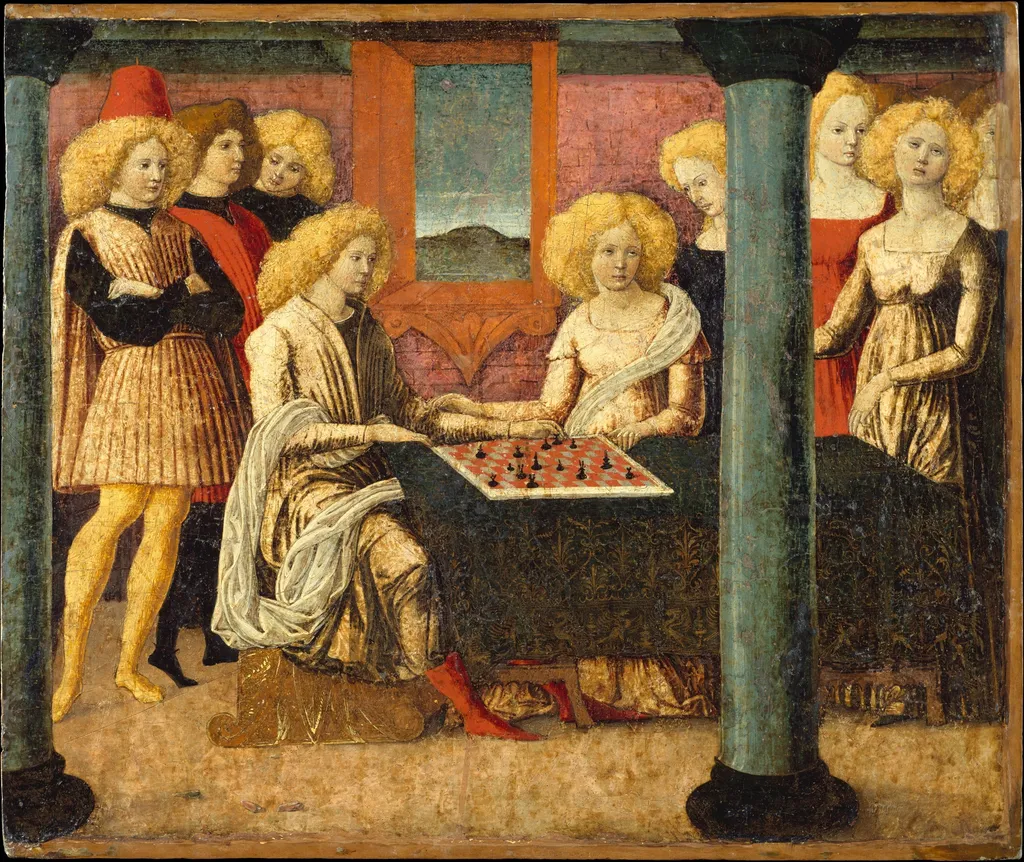
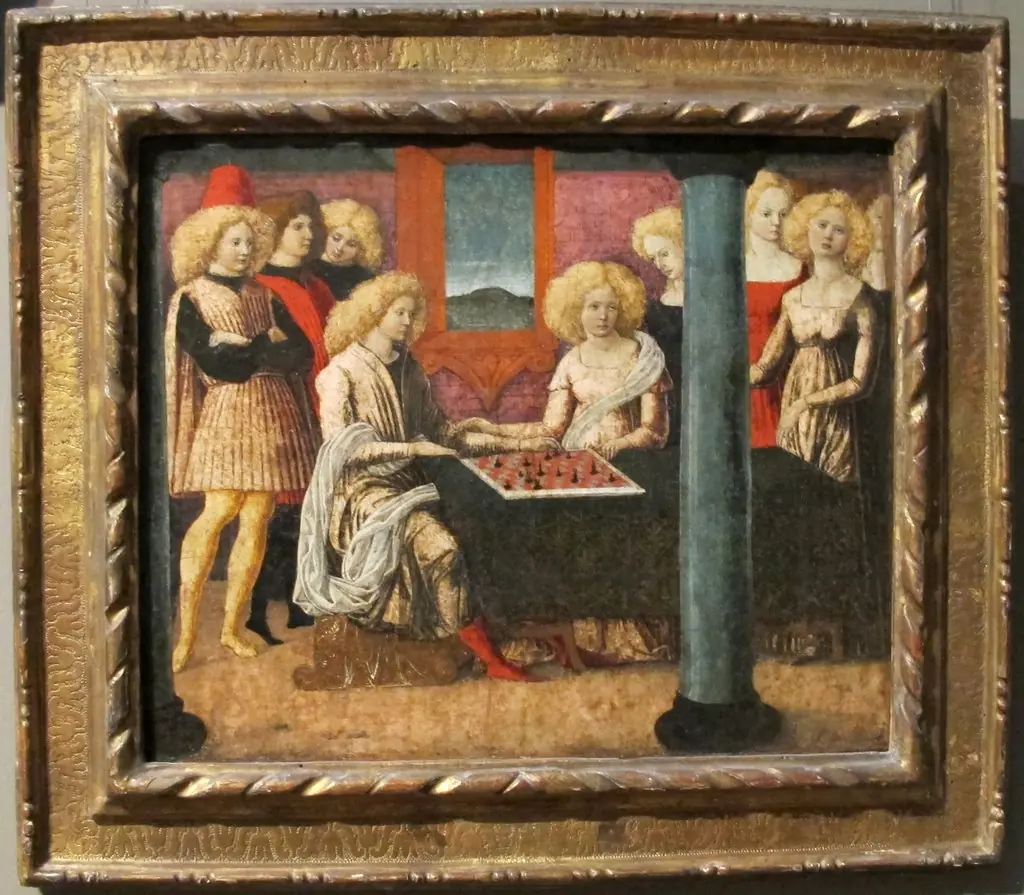
The Chess Players is a tempera painting by the Early Renaissance artist Liberale da Verona. It dates from 1475 and is held in the collection of the Metropolitan Museum of Art.
About this work
Subject & Meaning
The Chess Players shows a man and a woman seated at a chessboard inside a cassone panel, the game taking place before a window that opens onto a palace interior. The composition combines a literal depiction of a chess match with symbolic motifs of courtship and erotic tension, a common theme in fifteenth‑century Italian narrative painting. The figures are rendered with delicate detail, the woman positioned at the window and the man reaching toward her, suggesting a narrative moment of flirtation or contest.
The panel forms part of a tripartite decorative scheme that illustrates a literary episode, though the precise source remains unidentified; scholars have linked it to chivalric romance traditions and to allegorical treatises on chess.
Technique & Style
The artist renders figures with pale complexions and blond hair, reflecting specific Sienese aesthetic preferences of the period.
Attributed to Liberale da Verona and dated circa 1475, this work is a panel painting executed in tempera on wood. Originally created as one of two side panels decorating a cassone (marriage chest), the piece forms part of a continuous narrative scene alongside a third fragment held in Florence. The visible painted surface measures approximately 33.3 by 40.3 centimeters, cut from a larger wooden support.
Stylistically, the composition depicts an interior episode where a young woman, having lost a chess match against a male suitor, rests her hand on his arm while turning her head coquettishly. The artist renders figures with pale complexions and blond hair, reflecting specific Sienese aesthetic preferences of the period. The chessboard itself is depicted with non-standard dimensions, featuring fourteen squares across rather than the customary eight, and notably displays only black pieces.
History & Provenance
The Chess Players is one of a set of tempera-on-wood panels painted by Liberale da Verona around 1475 to adorn the sides of a marriage chest (cassone). The three panels originally formed a continuous narrative; the Berenson fragment, identified by Allen Weller in 1940 as the left-hand piece, was later shown to sit between the chess‑players and the window scenes. The chess‑players panel entered a private collection and was bequeathed to the Metropolitan Museum of Art by Maitland F. Griggs in 1943 (inventory 43.98.8).
Its companion panel, Scène d’une nouvelle, is also at the Met (inventory 1986.147). The remaining fragment remains in the Bernard and Mary Berenson collection at Villa I Tatti, Florence, which was bequeathed to Harvard University.
The Chess Players (Liberale da Verona, c. 1475) is held in the Metropolitan Museum of Art, New York, under accession number 43.98.8. It entered the museum as a bequest from Maitland F. Griggs in 1943. The provided sources do not record any exhibition history for this panel.
Context
Scholars identify this panel as part of a three-part cassone front created circa 1475, with the full sequence reconstructed after Allen Weller's 1940 discovery of a third fragment at Villa I Tatti. While the imagery echoes motifs from chivalric romances like Huon de Bordeaux or Boccaccio's Decameron, researchers have failed to pinpoint a single literary source, suggesting instead a synthesis of courtly love tropes. Patricia Simons emphasizes the scene's erotic undertones, while Keith Christiansen compares the interaction to episodes in La Châtelaine de Vergi.
Alternative interpretations link the work to allegorical treatises on chess, such as Évrard de Conty's Le livre des échecs amoureux moralisés. The non-standard chessboard and absence of a white king further complicate narrative readings, positioning the work within a complex intersection of marital symbolism, literary adaptation, and ethical allegory characteristic of late Quattrocento decorative painting.
Legacy
The Chess Players has become a reference point for the study of Renaissance cassone panels; the 1940 identification of a third fragment in the Berenson collection allowed scholars to reconstruct the original narrative sequence, a breakthrough that shaped subsequent interpretations of the work’s composition and narrative continuity. Its inclusion in the Metropolitan Museum of Art’s collection and the detailed cataloguing of its dimensions and material have made it a key example in exhibitions on narrative painting and gendered representations of chess. The panel’s depiction of a chess match between a man and a woman has been cited in analyses of medieval literary motifs and the erotic dimension of chess imagery, influencing scholarship on the intersection of visual art and chivalric literature.
Overview
The Chess Players is a painting executed on wood, presenting a domestic scene centered around a game of chess. Two women are engaged in the game, seated at a table with a distinctive red and white board. They are surrounded by six additional figures who observe the match.
The setting includes a room with a red wall and a window offering a view of mountains, all rendered with considerable detail.
Own this work as a print
Artist & collection

 Portrait of a Woman with a Man at a Casement
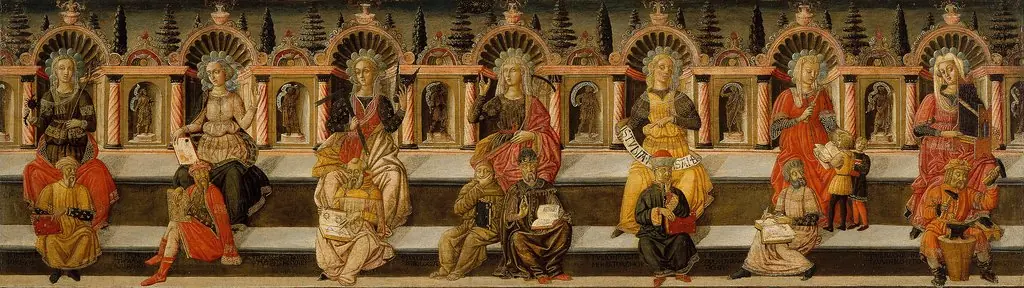 The Seven Liberal Arts
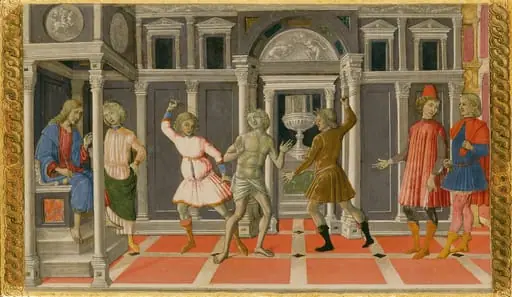 The Dream of Saint Jerome
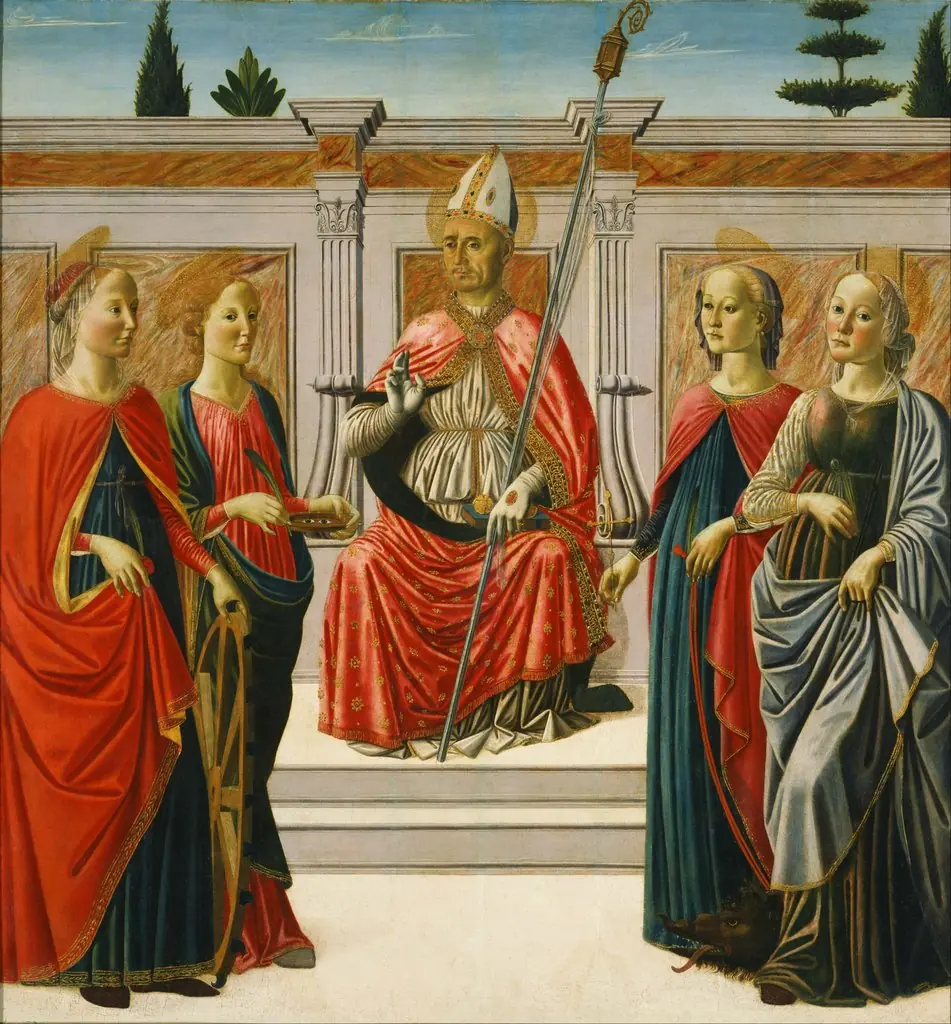 St. Nicolas and Sts. Catherine, Lucy, Margaret and Apollonia
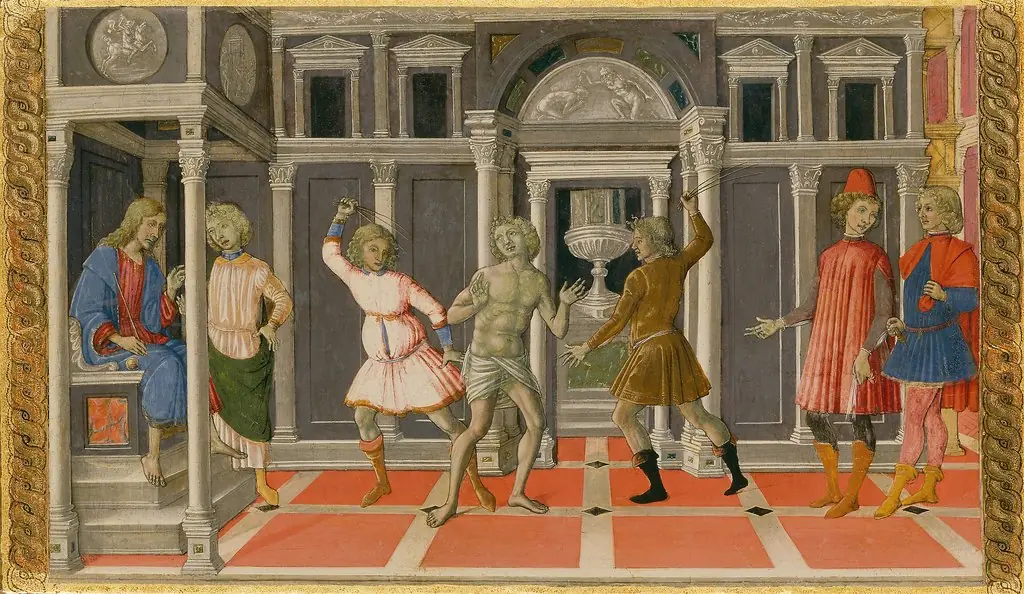 The Dream of Saint Jerome
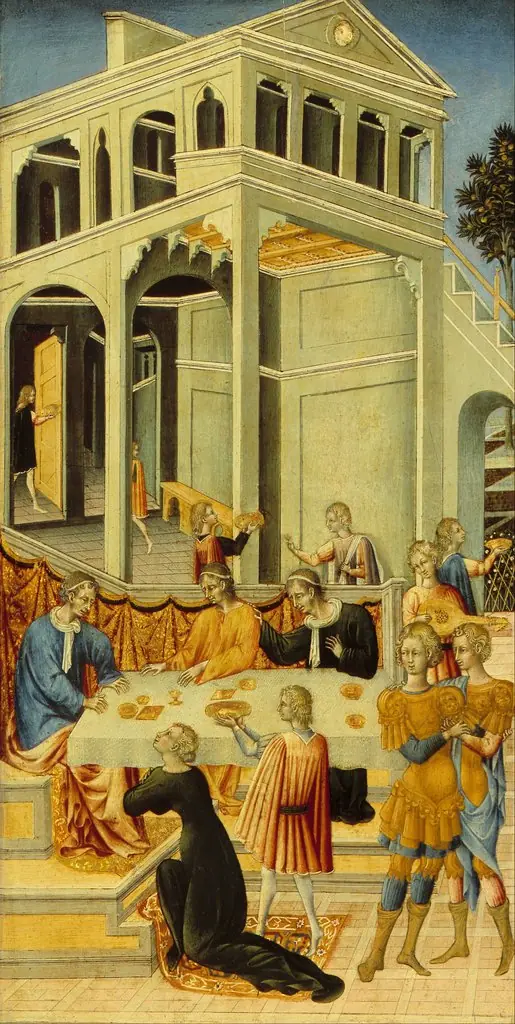 Salome Asking Herod for the Head of Saint John the Baptist
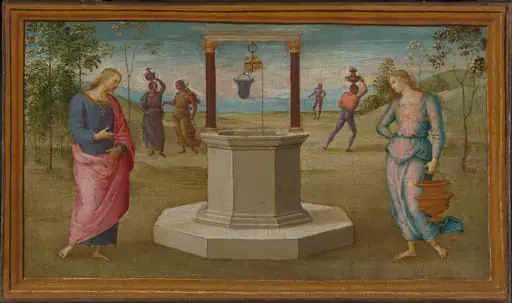 Christ and the Woman of Samaria
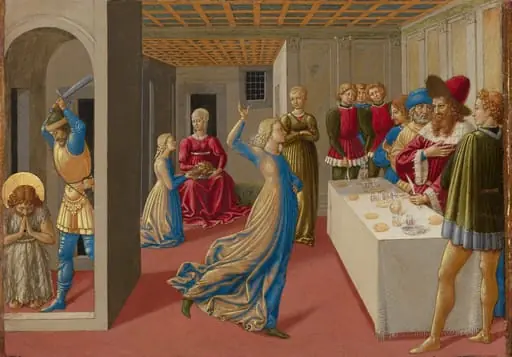 The Feast of Herod and the Beheading of Saint John the Baptist
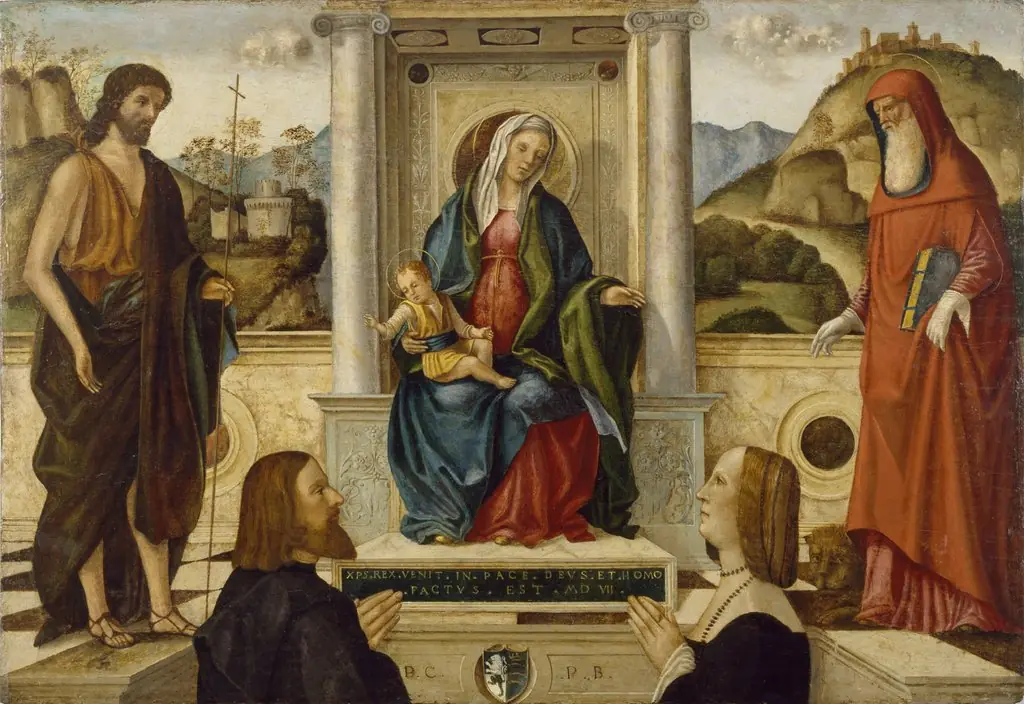 Madonna and Child Enthroned with Saints and Donor
 Goddess of Chaste Love
 The Reception of Helen at Troy by Priam and Hecuba
- Chess player's novella