Artwork
Canoeing
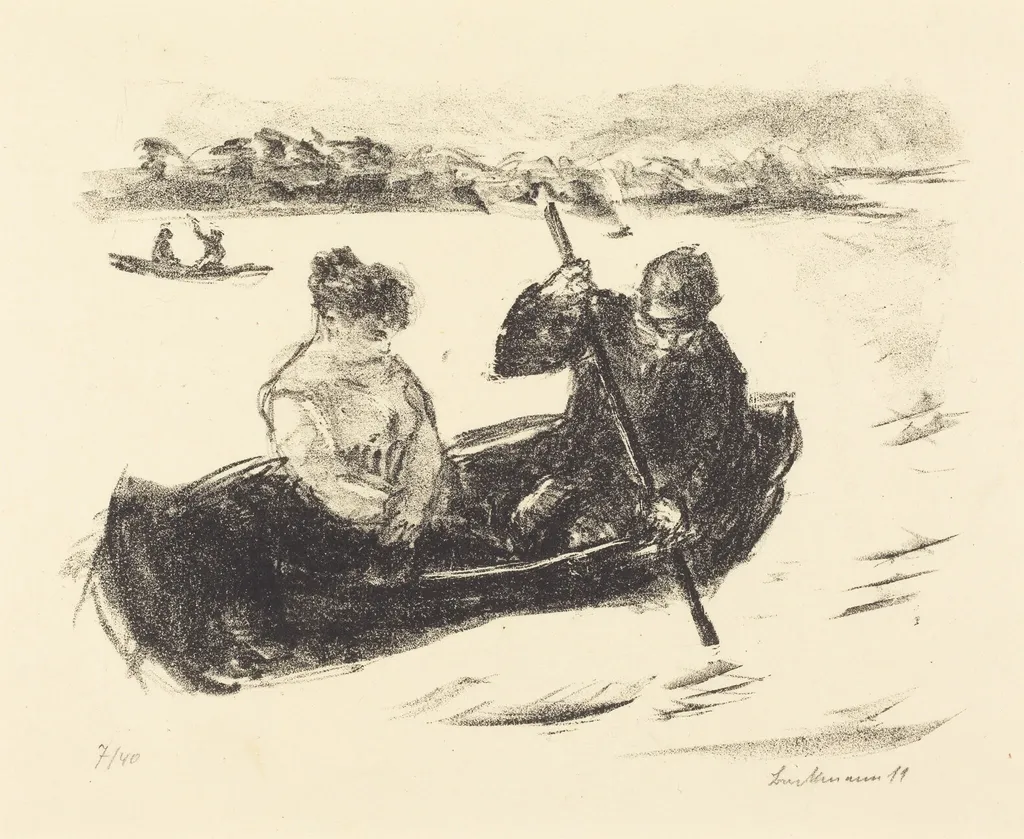
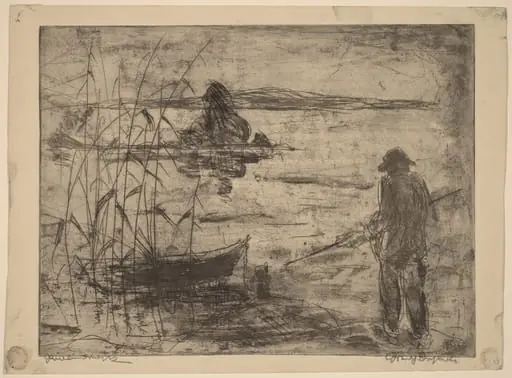
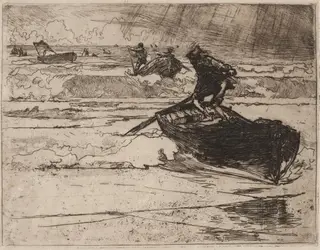
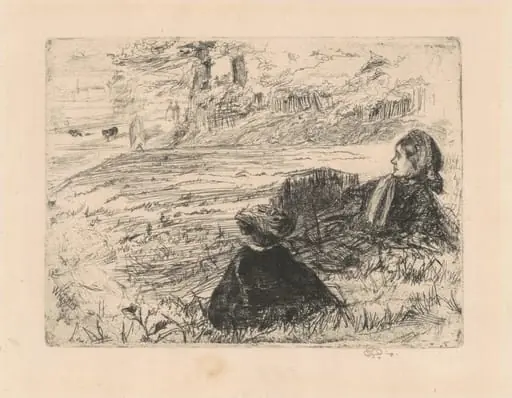
Canoeing is an ink print by Max Liebermann. It dates from 1919 and is held in the collection of the National Gallery of Art.
- Inscription
- Inscribed:the following all in graphite, lower right: Liebermann 19; lower left: 7/40; lower left by later hand: 14 / M63; upper left verso by later hand: V 2409
- Markings
- Marked:CM; Wm Verso, stamped in black ink: COMISION NACIONAL DE MUSEOS / Y MONUMENTOS HISTORICOS / JOSE LUIS BUSANICHE / SECRETARIO GENERALE
About this work
Overview
Canoeing is a 1919 lithograph by Max Liebermann, a prominent German artist associated with Impressionism. The print is executed in black on laid paper.
Subject & Meaning
The lithograph depicts two people in a canoe on calm water, with one paddling and the other sitting still. The scene reflects Liebermann's interest in everyday life and leisure activities, capturing a moment with a sense of immediacy.
Technique & Style
The loose, sketchy lines in Canoeing convey a sense of spontaneity. Liebermann used lithography, a technique that allows for direct drawing on stone or metal before printing on paper, to achieve this effect.
Own this work as a print
Artist & collection
Artist
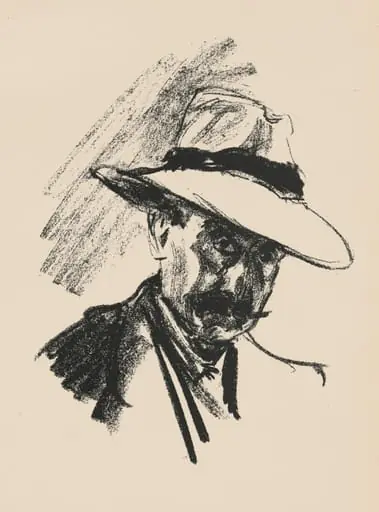
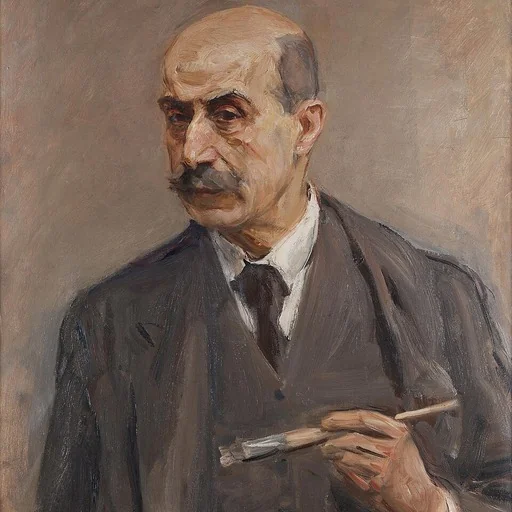
Max Liebermann (20 July 1847 – 8 February 1935) was a German painter and printmaker, and one of the leading proponents of Impressionism in Germany and continental Europe.