Artwork
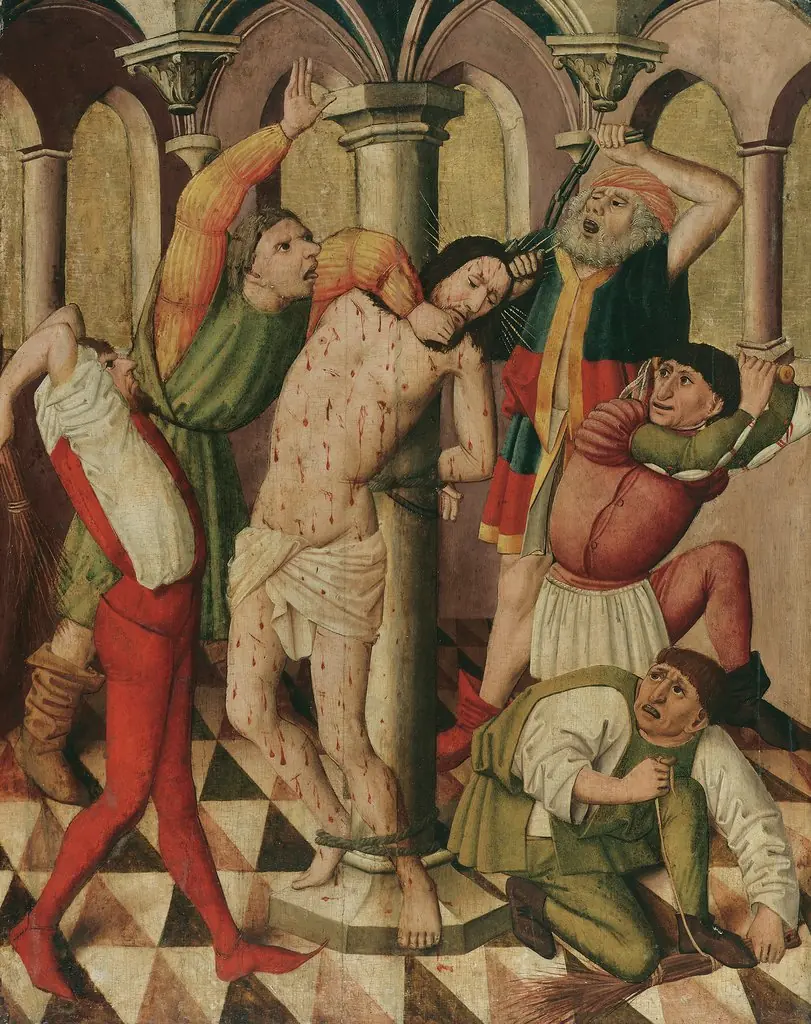
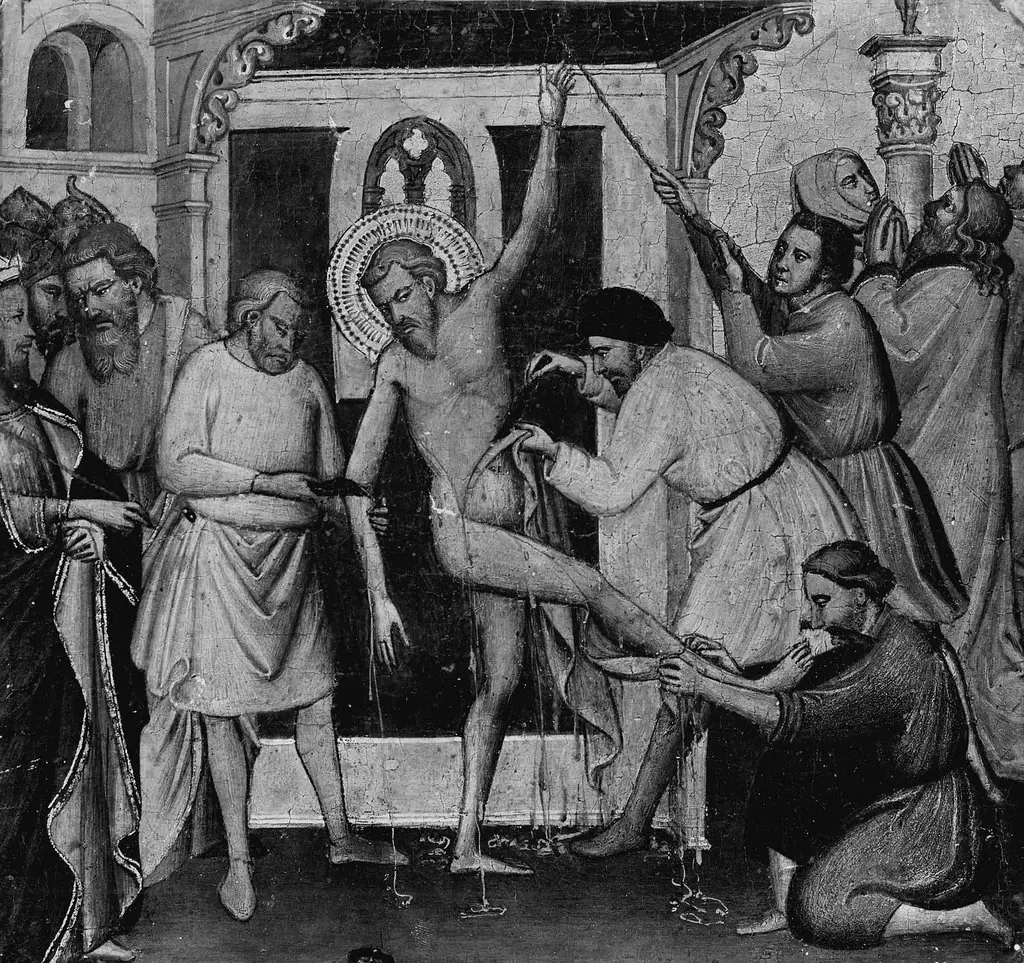
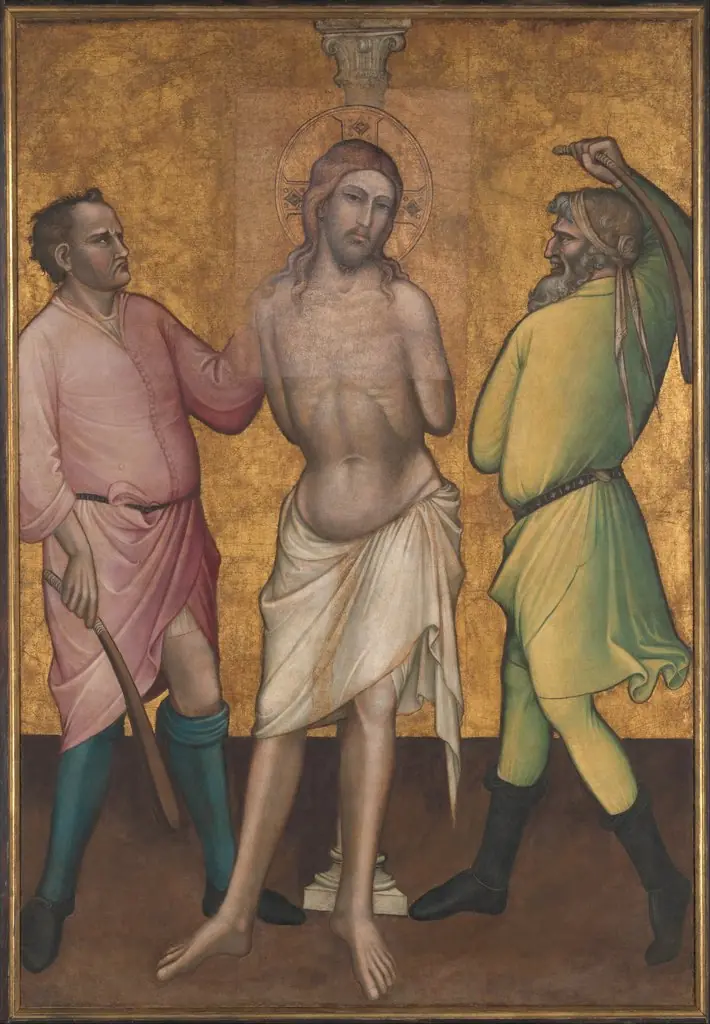
De geseling van Christus
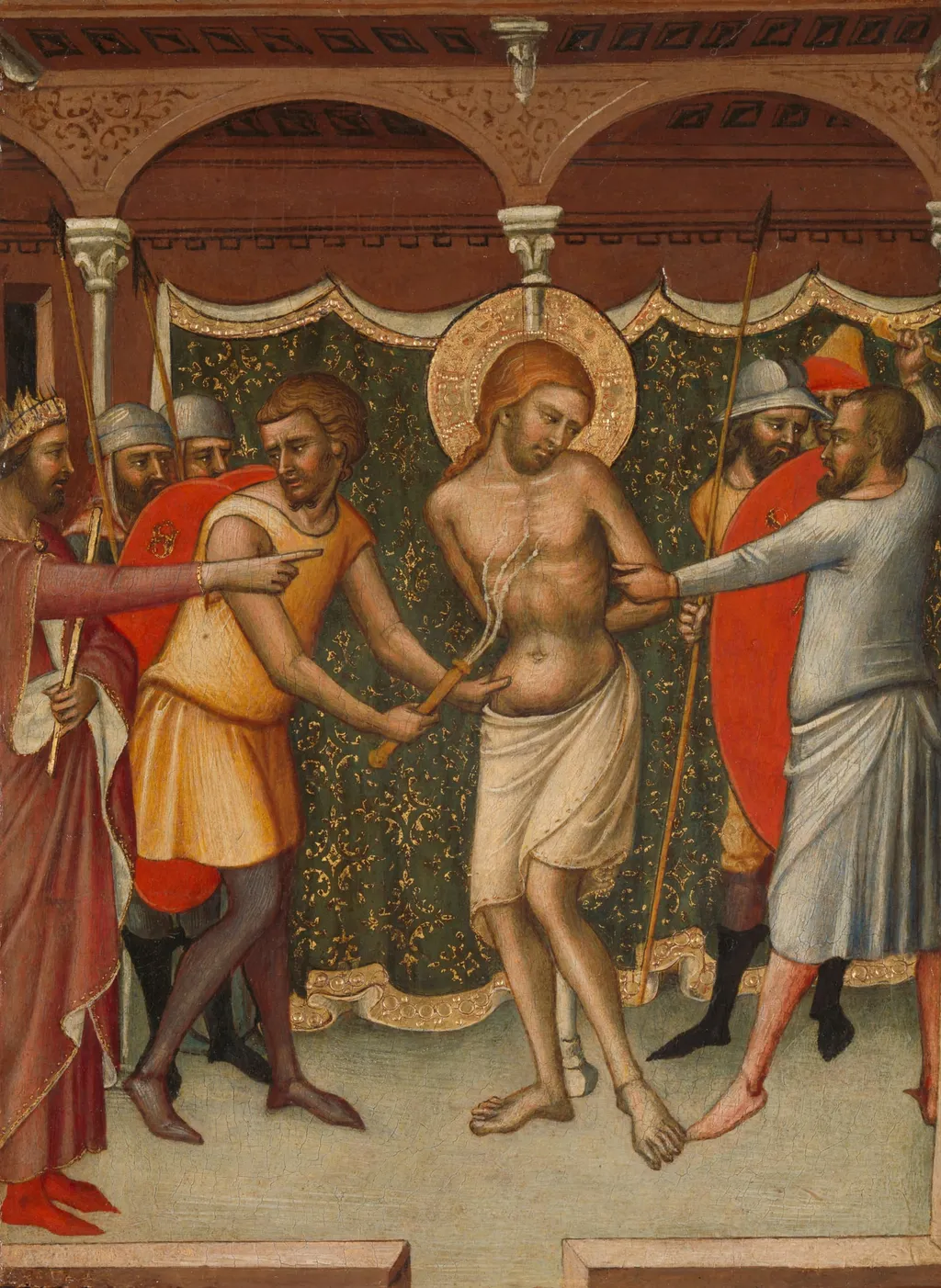
De geseling van Christus is an unspecified painting by the Italo Byzantine artist Luca di Tommè. It dates from 1365 and is held in the collection of the Rijksmuseum.
About this work
Overview
De geseling van Christus is a small panel painting originally part of a predella, the lower section of a large altarpiece. Unlike typical predella scenes featuring serene depictions of the Virgin and Child with saints, this work portrays a dramatic and violent episode.
Subject & Meaning
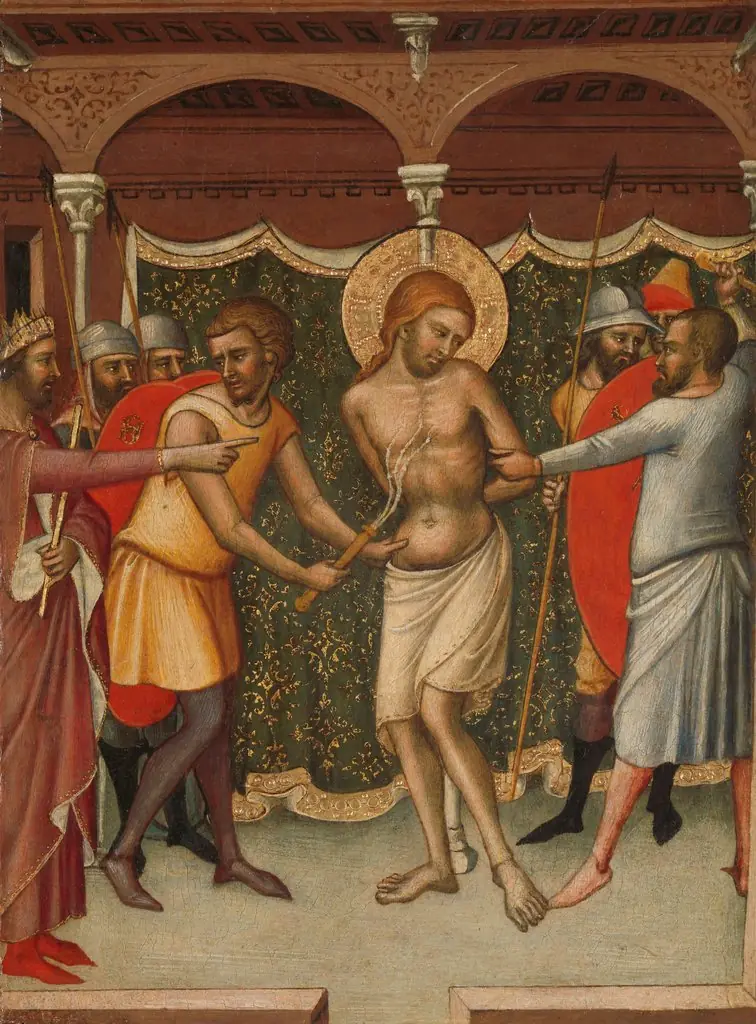
The painting depicts the Flagellation of Christ, showing him bound to a column as two men inflict lashes. The graphic representation of violence, emphasized by vivid red blood, conveys the intensity of the moment, contrasting with the simplified facial expressions.
Technique & Style
The artist employs strong chiaroscuro, characterized by sharp shadows, to create an immediate and dynamic effect. This use of light and dark enhances the scene's emotional impact, despite the flat and simple rendering of the figures' faces.
History & Provenance
Originally one of several panels on the base of a church altar's altarpiece, its specific provenance and artist remain unspecified in available information. It would have been viewed in a religious context, contributing to the narrative sequence of the altarpiece.
Context
Created in a period where altarpiece conventions often dictated traditional main panels, the predella offered artists occasional freedom in subject choice and interpretation, as seen in this work's vivid depiction of a pivotal, yet gruesome, biblical moment.
Own this work as a print
Artist & collection
Artist
Luca di Tommè (or Luca Thome) (c. 1330–1389) was an Italian painter active between 1356 and 1389 in Siena. He worked in the style established by earlier Sienese painters Duccio, Simone Martini, Pietro Lorenzetti and…