Artwork
Bacchus and Ariadne
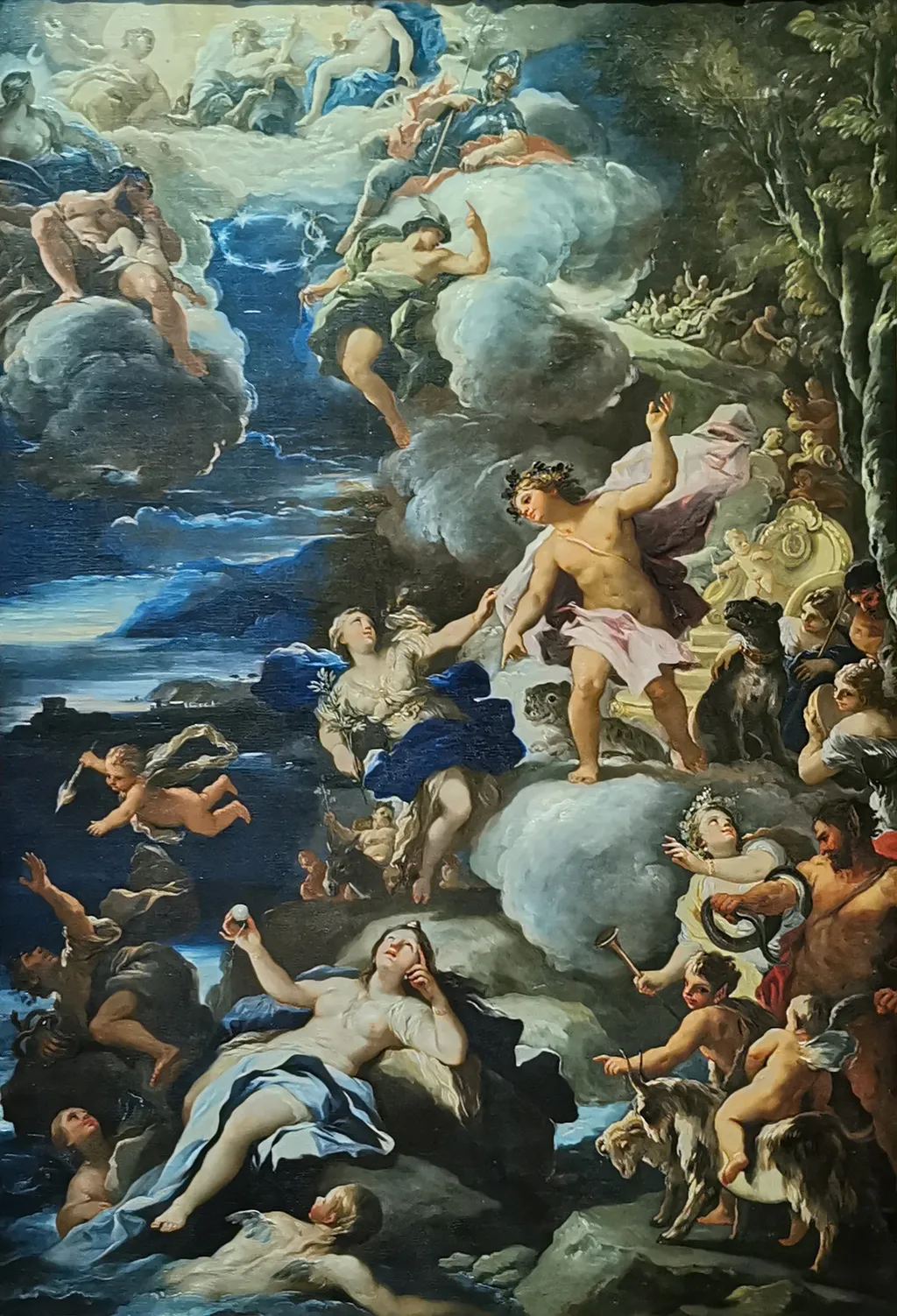
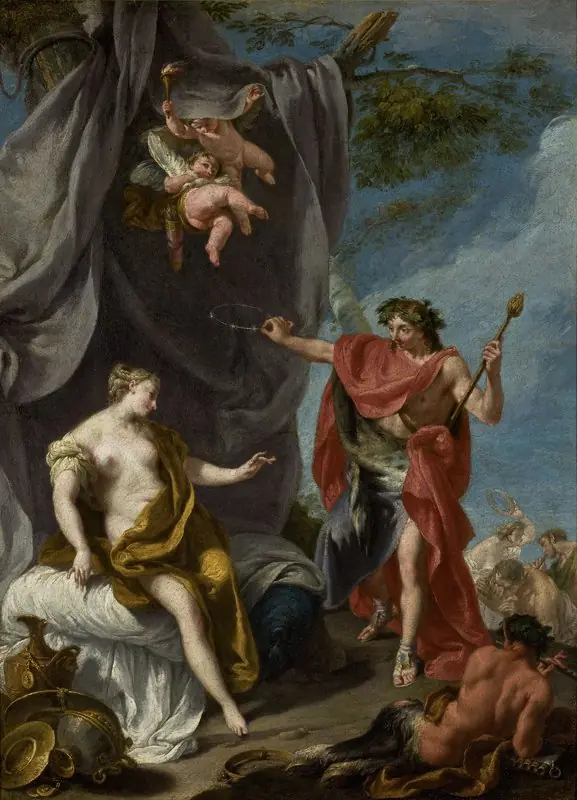
Bacchus and Ariadne is an oil painting by the Early Baroque Italian artist Luca Giordano. It dates from 1692 and is held in the collection of the Staatliche Kunstsammlungen Dresden.
About this work
Subject & Meaning
The oil painting depicts the mythological moment of Bacchus discovering Ariadne on Naxos, with the god shown leaping from his chariot to embrace her.
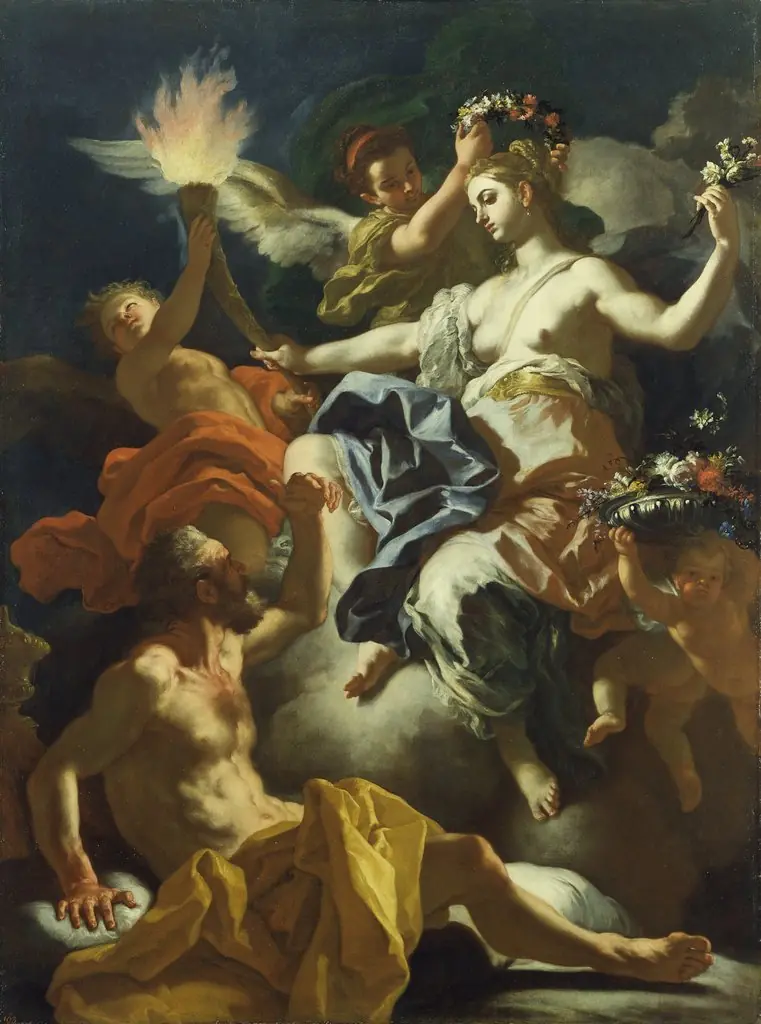
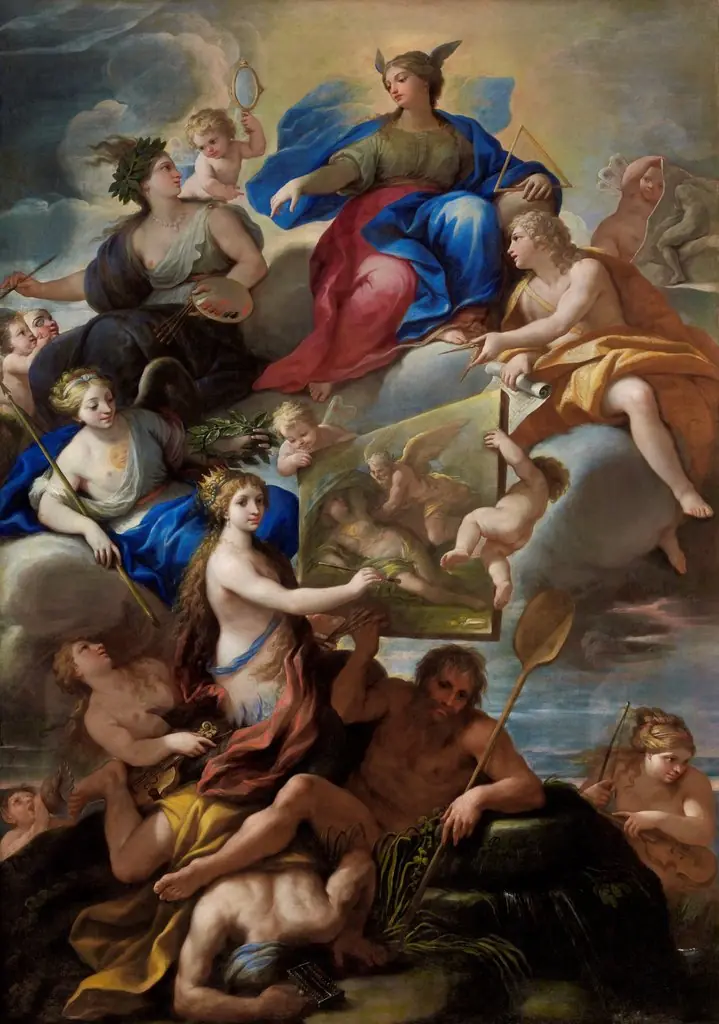
The oil painting depicts the mythological moment of Bacchus discovering Ariadne on Naxos, with the god shown leaping from his chariot to embrace her. Bacchus, the Roman god of wine and ecstasy, symbolizes divine passion and the transformative power of love, while Ariadne represents abandoned beauty finding redemption through divine intervention. Jupiter, Juno, Venus, Saturn, Diana, Mercury, Mars, Laocoön, and other minor figures populate the composition, referencing broader mythological narratives of fate and divine hierarchy.
The work functions as an allegory for the union of earthly sorrow and celestial joy, reflecting Baroque interpretations of classical mythology as vehicles for spiritual and emotional allegory.
The painting measures 263 cm in height and 180 cm in width, executed in oil on canvas around 1682 for the Gemäldegalerie Alte Meister in Dresden, where it remains part of the Staatliche Kunstsammlungen Dresden collection.
Technique & Style
Luca Giordano's Bacchus and Ariadne, executed in 1682, is an oil painting on canvas. The work measures 263 cm in height and 180 cm in width, presenting a substantial mythological scene. Stylistically, the piece belongs to the genre of mythological painting, depicting the central figures of Bacchus and Ariadne alongside a host of other deities and characters including Jupiter, Juno, Venus, Saturn, Diana, Mercury, Mars, and Laocoön.
The medium of oil paint on canvas allows for the rich narrative detail characteristic of Giordano's output during this period.
History & Provenance
Luca Giordano executed the mythological painting Bacchus and Ariadne in 1682. Created using oil paint on canvas, the work measures 263 cm in height and 180 cm in width. The composition depicts a complex scene featuring numerous deities, including Jupiter, Juno, Venus, Saturn, Diana, Mercury, and Mars, alongside the figures of Laocoön.
The painting is currently held in the collection of the Staatliche Kunstsammlungen Dresden, where it resides within the Gemäldegalerie Alte Meister.
The work is held in the Gemäldegalerie Alte Meister, part of the Staatliche Kunstsammlungen Dresden. It is inventoried as 263 cm × 180 cm oil on canvas, accessioned in 1682.
It has been exhibited as part of the permanent holdings of the Gemäldegalerie Alte Meister in Dresden; specific traveling exhibitions are not documented in the provided sources.
Overview
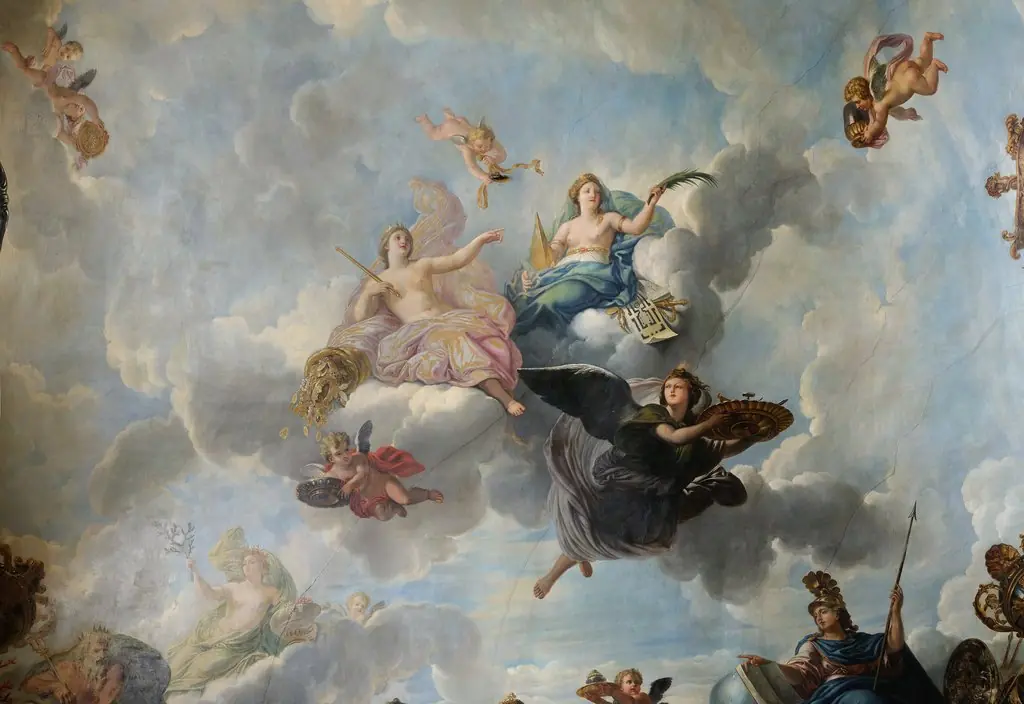
Luca Giordano’s oil on canvas, dated 1692, presents a mythological tableau titled “Bacchus and Ariadne.” The composition is housed in the Gemäldegalerie Alte Meister, where it occupies a prominent position among the museum’s Baroque holdings. The work captures a moment of divine celebration, rendered in a luminous palette of blues, greens, and pinks that convey a sense of ethereal movement.
Context
Giordano, a prolific Neapolitan artist, was known for synthesizing the dramatic vigor of Caravaggio with the decorative elegance of the Roman school. “Bacchus and Ariadne” reflects the period’s fascination with mythological subjects as allegorical vehicles for exploring human emotion, while also showcasing the artist’s skill in orchestrating complex, multi‑figure compositions within a cohesive visual space.
Own this work as a print
Artist & collection

Artist
Luca Giordano was an Italian late-Baroque painter and printmaker in etching. Giordano was one of the most celebrated artists of the Neapolitan Baroque, whose vast output included altarpieces, mythological paintings and…