Artwork
Verheißung an Joachim und Begegnung von Joachim und Anna an der Goldenen Pforte
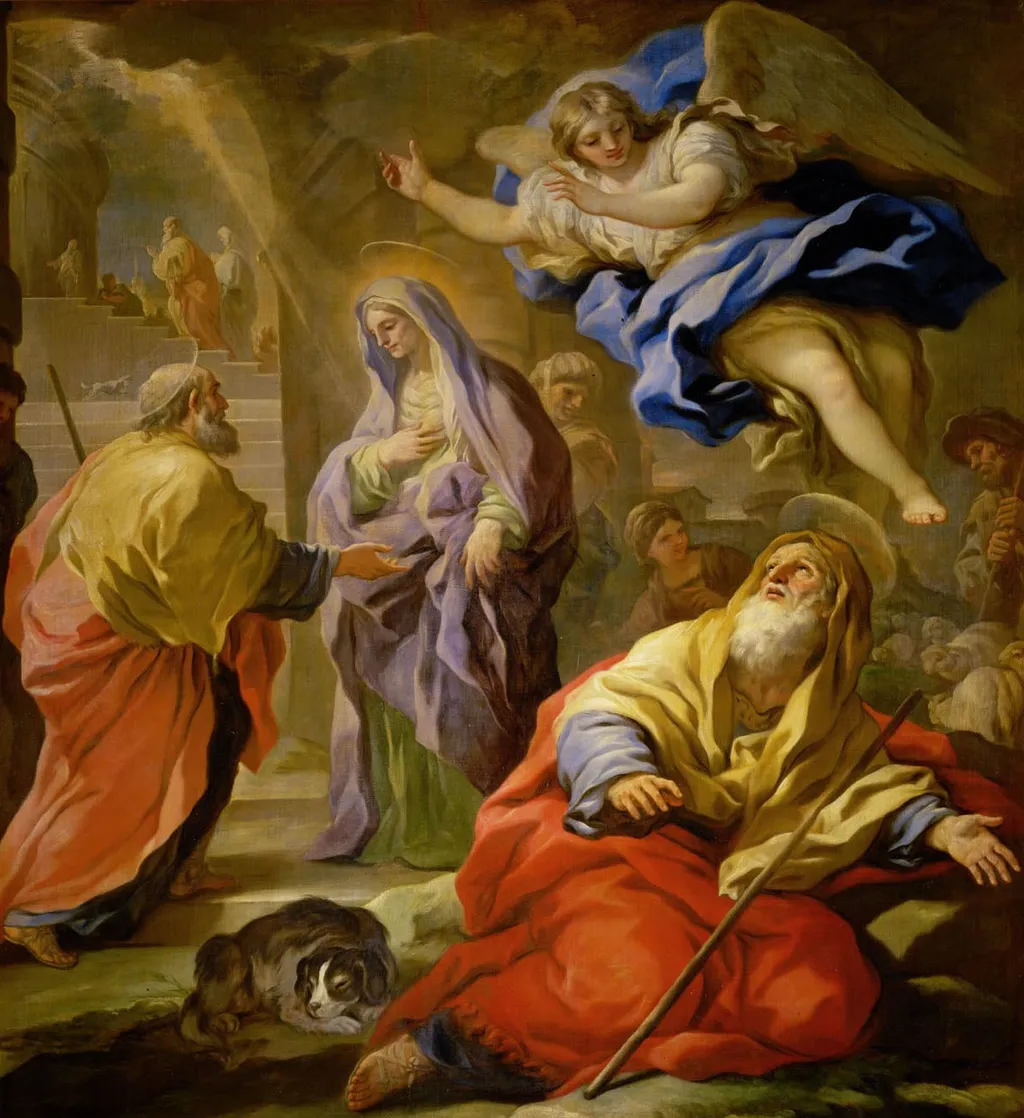
Verheißung an Joachim und Begegnung von Joachim und Anna an der Goldenen Pforte is an unspecified painting by the High Baroque Italian artist Luca Giordano. It dates from 1698 and is held in the collection of the Kunsthistorisches Museum.
About this work
Overview
Luca Giordano’s 1698 oil painting, titled Verheißung an Joachim und Begegnung von Joachim und Anna an der Goldenen Pforte, portrays the biblical encounter of Joachim and Anne at Jerusalem’s Golden Gate. Executed in the late Baroque period, the work now belongs to the collection of Vienna’s Kunsthistorisches Museum, where it is displayed among other 17th‑century religious canvases.
Subject & Meaning
The composition centers on a serene woman in a blue robe, cradling an infant, identified as Anne with the unborn John the Baptist. Opposite her stand Joachim, one kneeling in a gesture of supplication and the other upright, both directing their attention to the holy pair. An angelic figure hovers above, pointing downward, underscoring divine approval of the promised birth.
Technique & Style
Soft modeling of drapery and the subtle rendering of a dog at the foreground add naturalistic details within the otherwise heightened spiritual scene.
Giordano employs dramatic chiaroscuro, allowing the illuminated figures to emerge from a tenebrous, cloud‑filled sky. The contrast of light on the central figures against the dark background creates a three‑dimensional effect typical of Baroque theatricality. Soft modeling of drapery and the subtle rendering of a dog at the foreground add naturalistic details within the otherwise heightened spiritual scene.
History & Provenance
Completed in 1698, the canvas entered the imperial collections of the Habsburgs in the early 18th century, eventually becoming part of the Kunsthistorisches Museum’s holdings after the museum’s foundation in 1891. Its accession record notes the work as a representative example of Giordano’s later output, reflecting his prolific activity after returning to Italy from Spain.
Context
Giordano, a prolific Neapolitan painter, was renowned for synthesizing the dynamic vigor of Caravaggio with the luminous colorism of the Venetian school. This painting aligns with Counter‑Reformation iconography that emphasized miraculous births and divine intervention, themes frequently commissioned for churches and private devotional spaces in the late 1600s.
Artist & collection

Artist
Luca Giordano was an Italian late-Baroque painter and printmaker in etching. Giordano was one of the most celebrated artists of the Neapolitan Baroque, whose vast output included altarpieces, mythological paintings and…

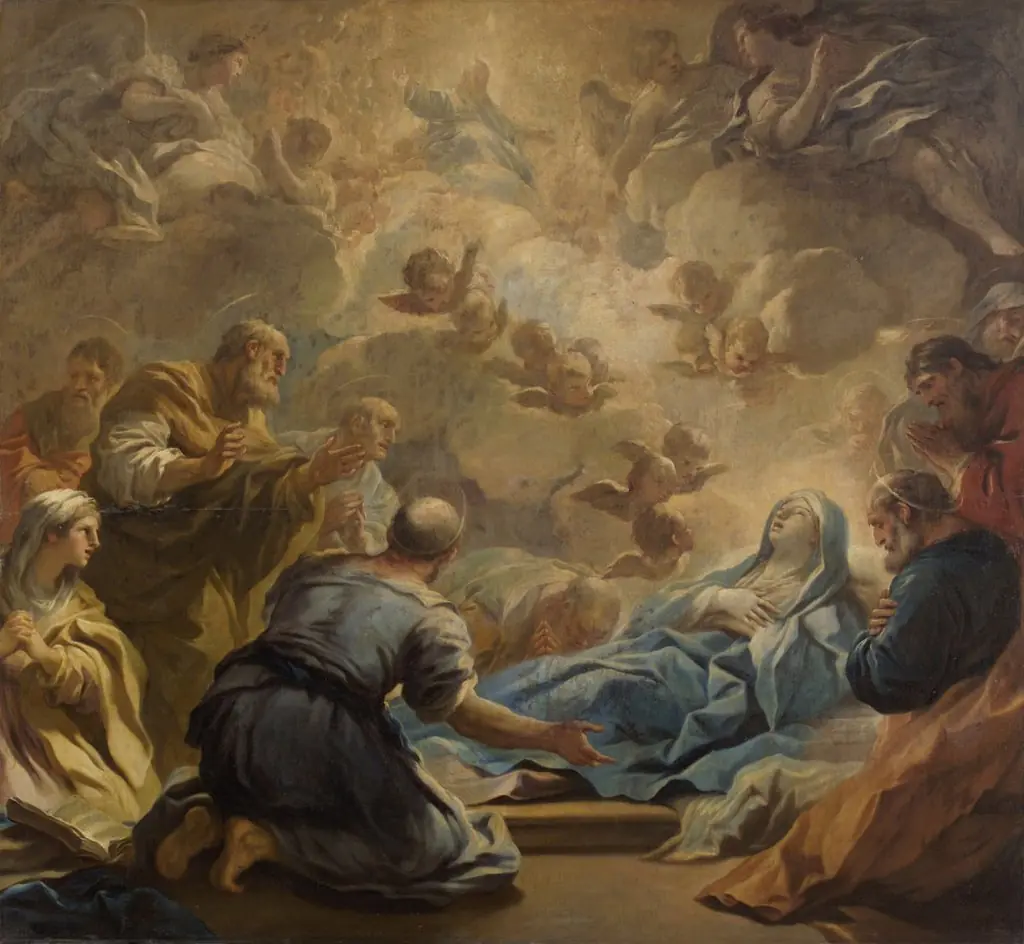 Tod Mariae
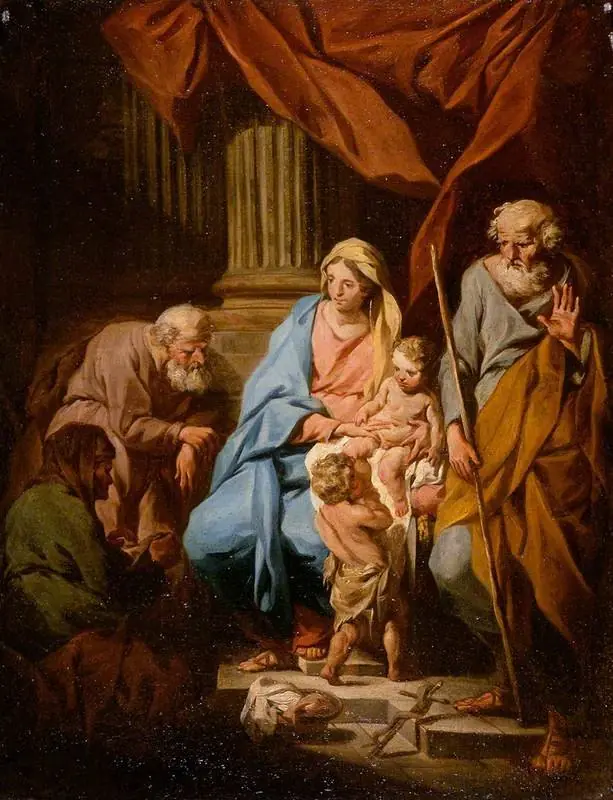 The Holy Family with Saints Elisabeth and Zaccharias and the Infant Saint John
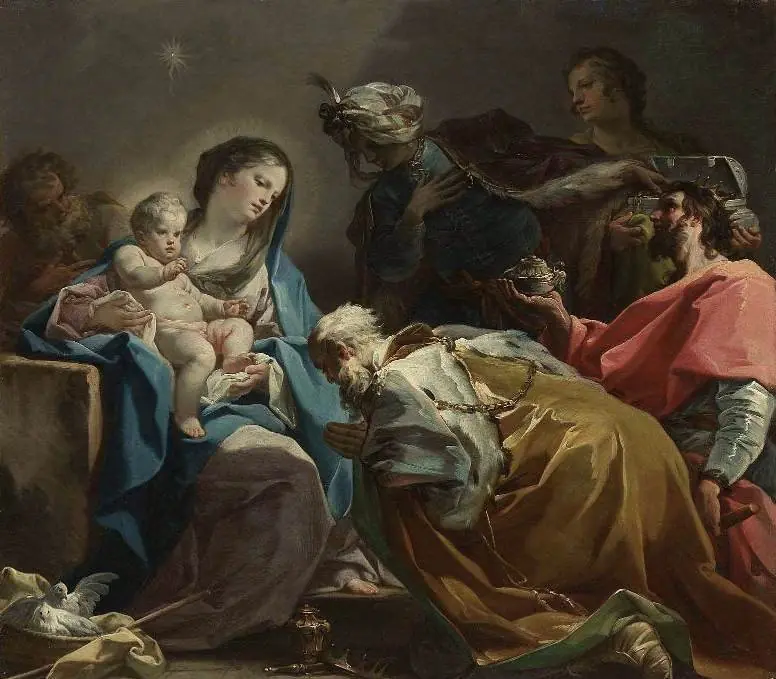 Adoration of the Magi
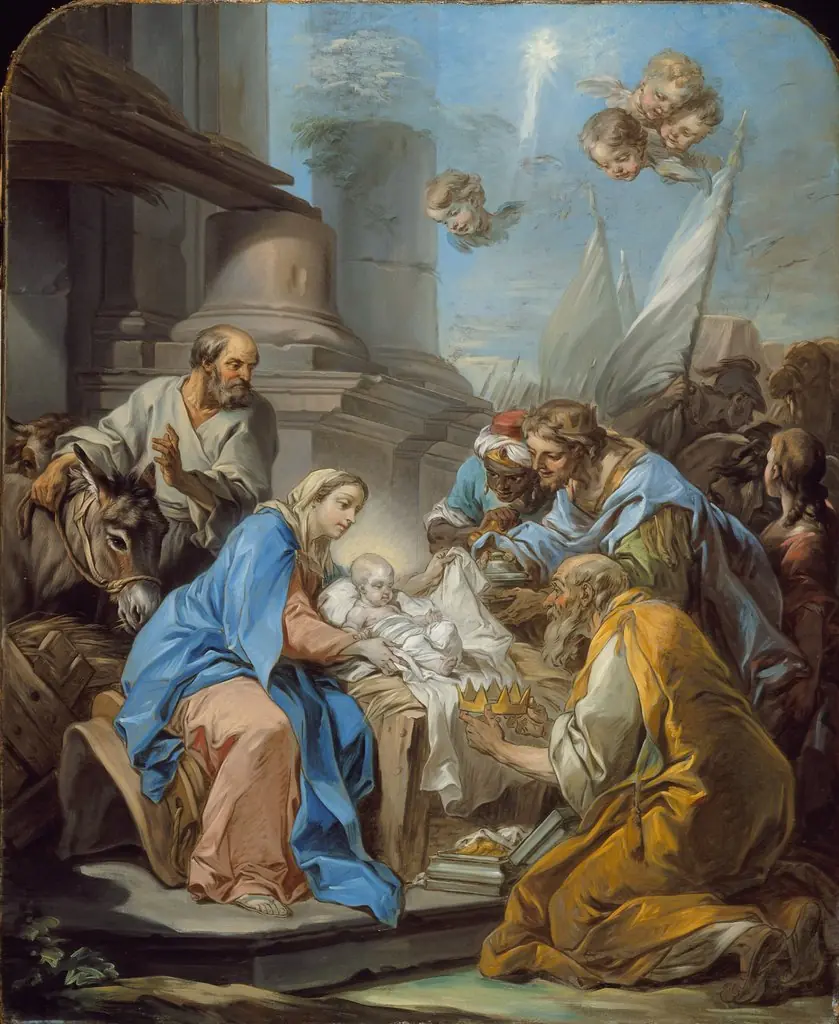 The Adoration of the Magi
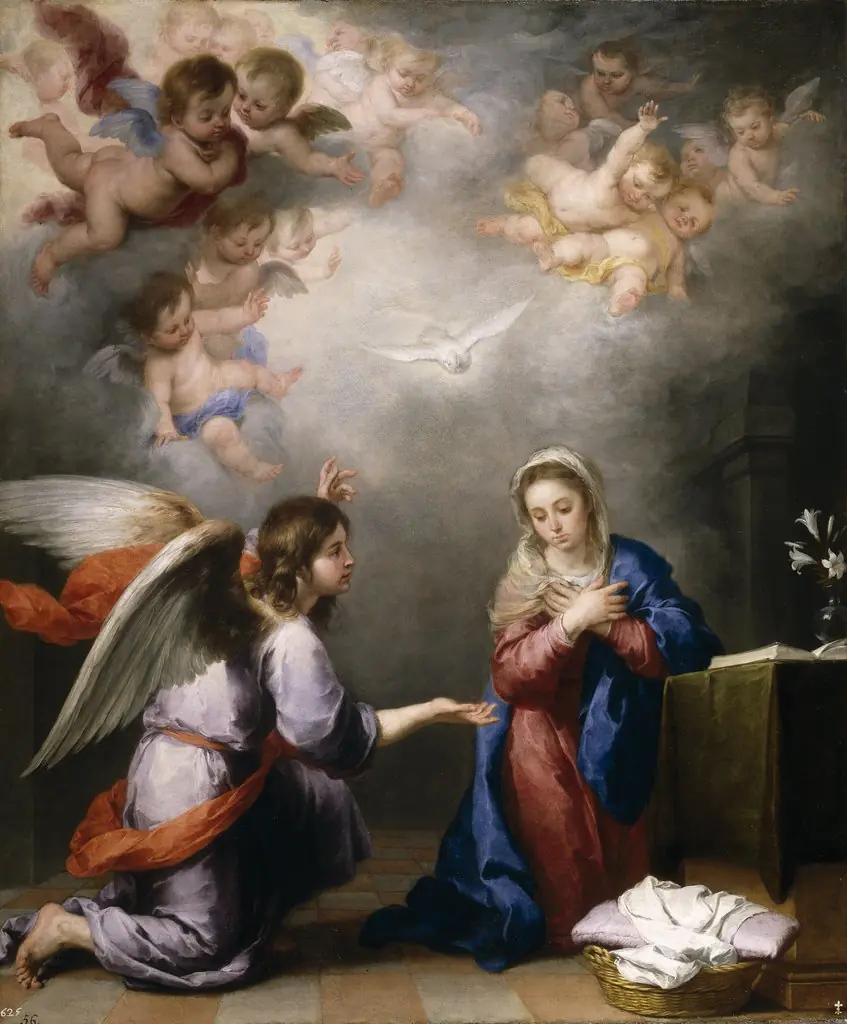 The Annunciation
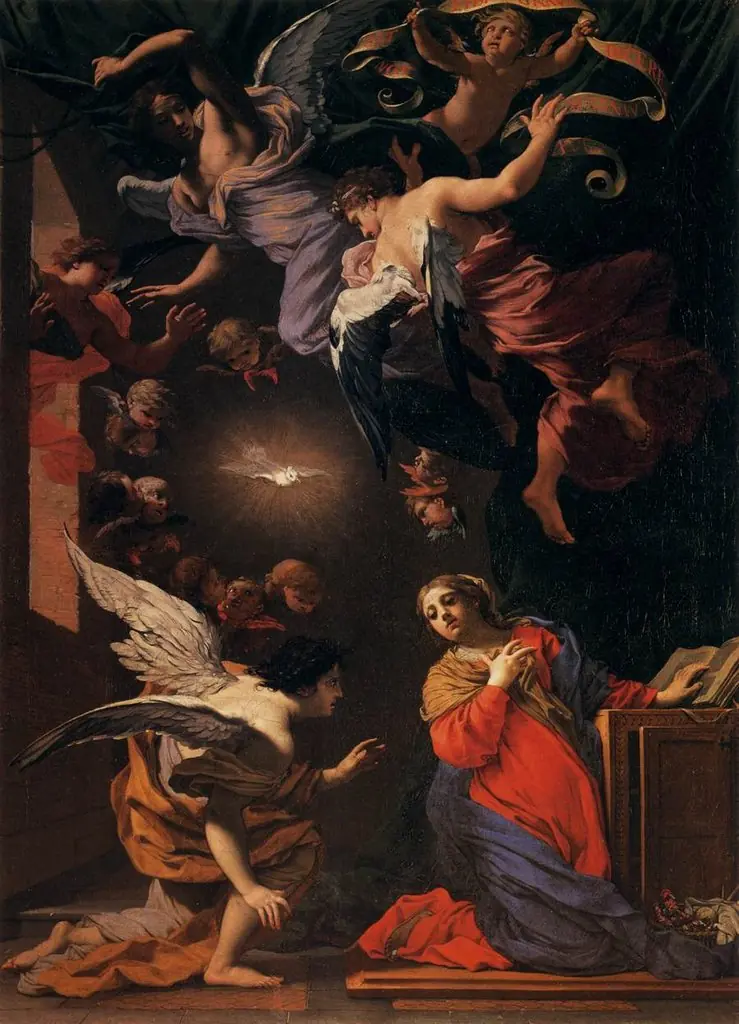 L'annonciation avec des anges
 Presentation of Christ in the Temple
 The Holy Family with Saint Elizabeth and Saint Zacharias with their Infant Saint John