Artwork
Penitent Saint Jerome
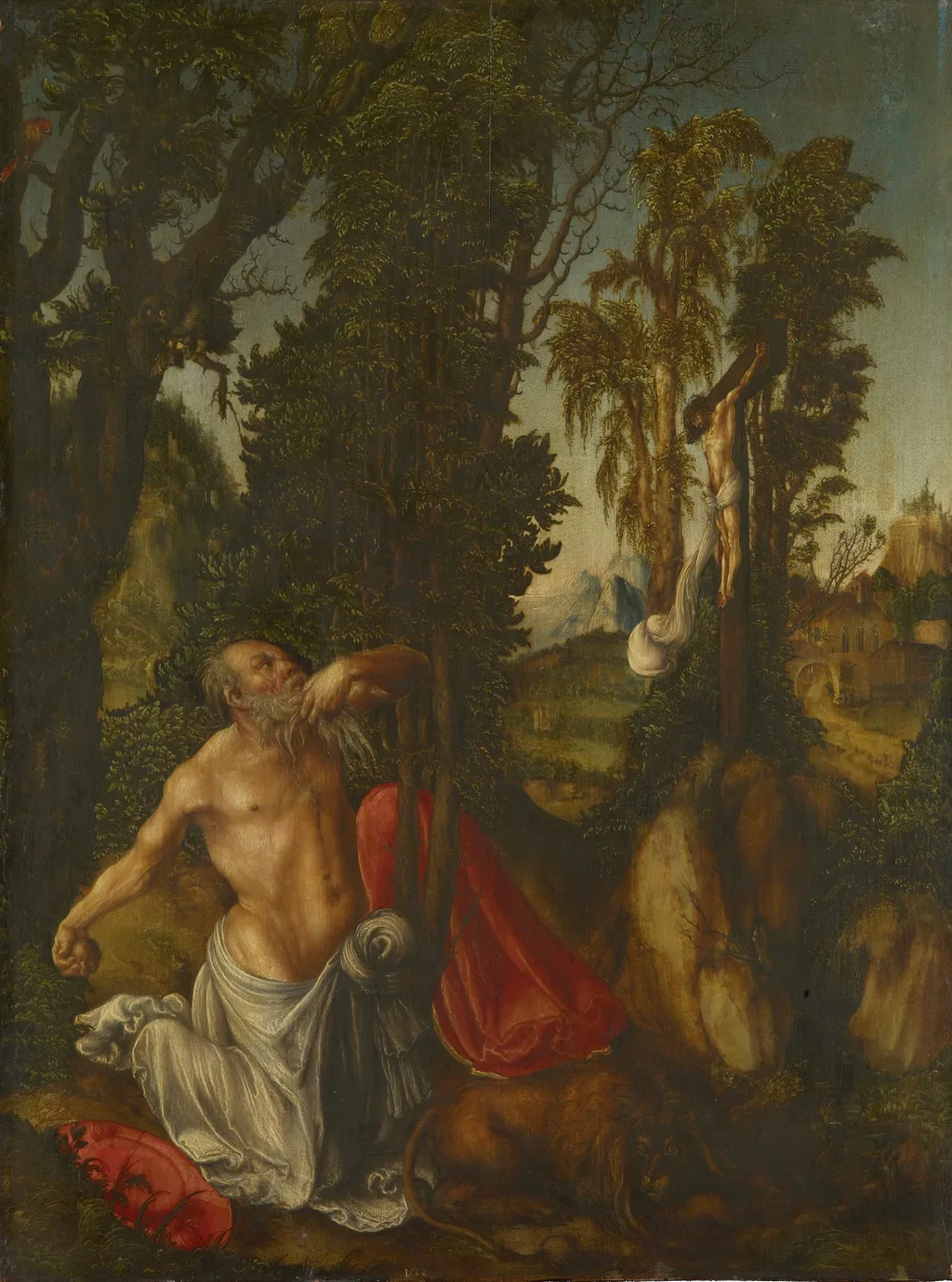
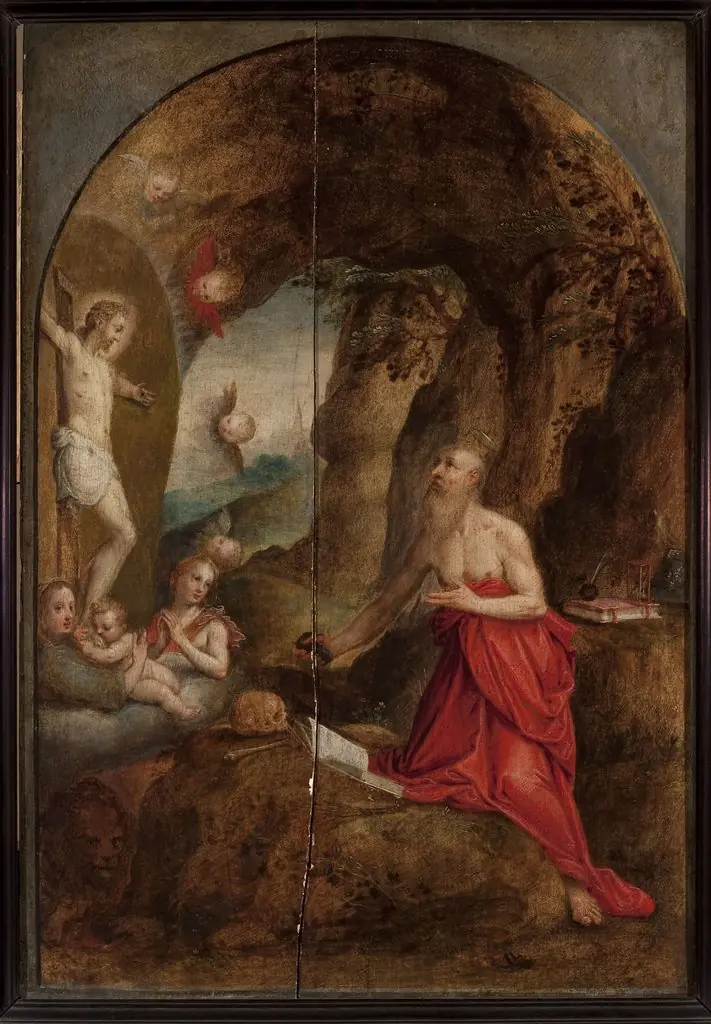
Penitent Saint Jerome is a wood painting by the Northern Renaissance artist Lucas Cranach the Elder. It dates from 1502 and is held in the collection of the Kunsthistorisches Museum.
About this work
Subject & Meaning
By portraying Jerome outside of civilized society, the image embodies the concept of religious devotion achieved through solitude and self-denial.
Executed in 1502 on a limewood panel, this religious painting by Lucas Cranach the Elder depicts Jerome in the wilderness. The work focuses on the subject of the penitent saint, a traditional iconographic theme representing spiritual isolation and asceticism. By portraying Jerome outside of civilized society, the image embodies the concept of religious devotion achieved through solitude and self-denial.
Technique & Style
The work is executed in limewood as a painted panel, measuring 55.5 cm in height and 41.5 cm in width. Cranach rendered the figure of Jerome in the wilderness with fine brushwork that emphasizes the saint’s ascetic pose and contemplative expression, while the carved wood provides a smooth support for the delicate surface treatment. The handling of light and shadow on the flesh tones demonstrates a refined modeling typical of early‑16th‑century German religious painting, and the overall composition retains a crisp linear outline that defines the figure against a muted background.
History & Provenance
Penitent Saint Jerome is a limewood painting executed in 1502 by Lucas Cranach the Elder. It entered the collection of the Kunsthistorisches Museum, where it remains today, and has been documented in the museum's records since its inception on 1502-01-01. The work measures 55.5 cm in height and 41.5 cm in width and depicts the saint Jerome in the wilderness in a religious context.
The painting is held in the collection of the Kunsthistorisches Museum. Created in 1502, this work on limewood depicts the main subject of Jerome in the wilderness. The provided sources do not list a specific inventory or accession number for the piece. Additionally, no exhibition history is documented in the available records.
Context
Penitent Saint Jerome by Lucas Cranach the Elder, painted in 1502 on limewood, exemplifies early 16th-century German religious art within the broader Cranach oeuvre and the transitional period before the Reformation. Its depiction of Jerome in the wilderness reflects contemporary devotional practices and the artist's exploration of solitary penitence, situating the work amid Cranach's development of narrative religious imagery that bridged late Gothic tradition and emerging Renaissance aesthetics. The painting's presence in the Kunsthistorisches Museum collection underscores its significance as a representative example of Cranach's mature style and his engagement with thematic concerns of spiritual isolation that influenced subsequent German art.
Overview
Created in 1502 by Lucas Cranach the Elder, this work on a lime‑wood panel portrays a solitary figure in a moment of penitence. The composition is held in the Kunsthistorisches Museum, where it is displayed as an example of early 16th‑century Northern religious art.

Own this work as a print
Artist & collection
Artist
Lucas Cranach the Elder was a German Renaissance painter and printmaker in woodcut and engraving.