Artwork
The Flagellation; (reverse) The Madonna of Mercy
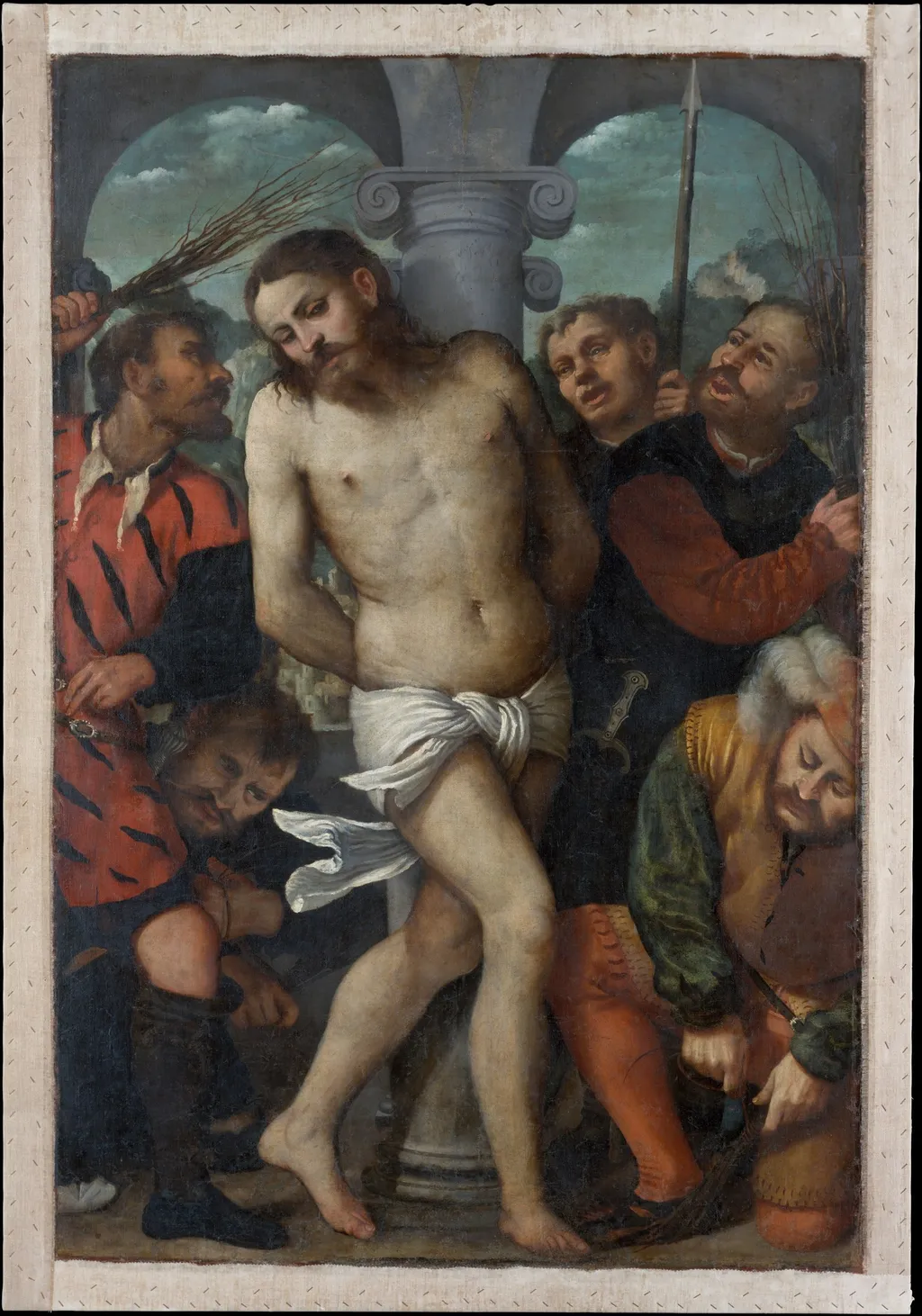
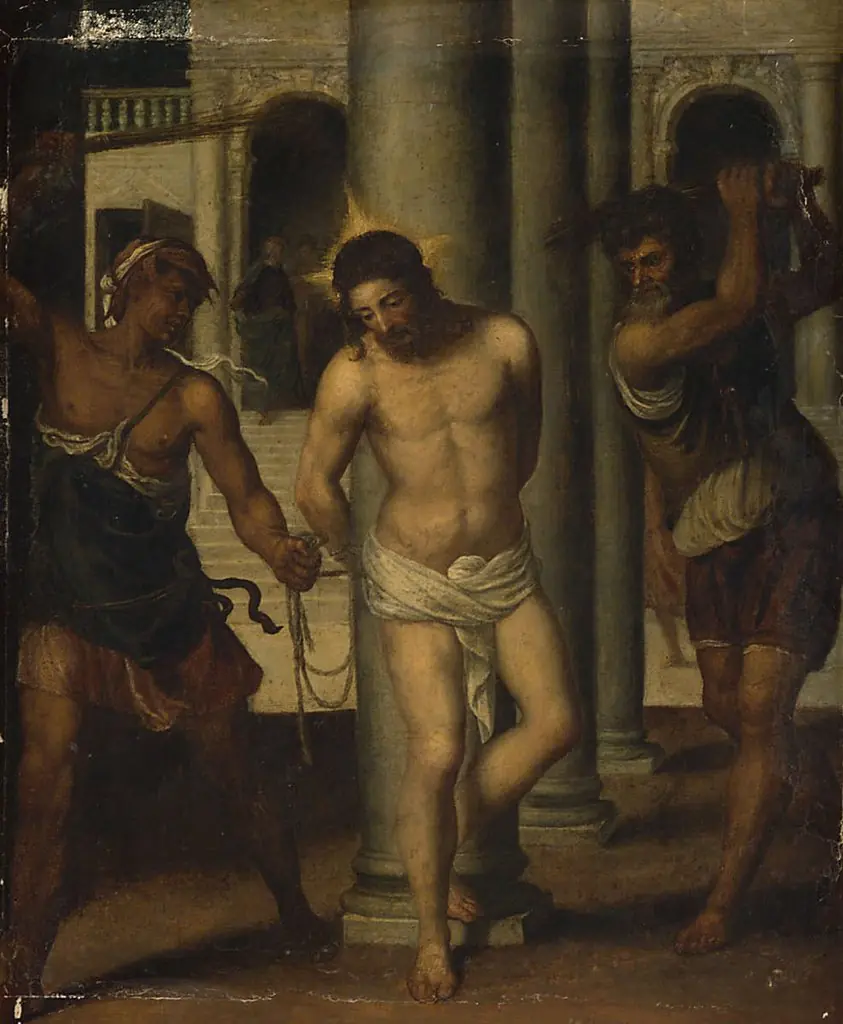
The Flagellation; (reverse) The Madonna of Mercy is an unspecified painting by the Mannerist artist Girolamo Romanino. It dates from 1540 and is held in the collection of the Metropolitan Museum of Art.
About this work
Subject & Meaning
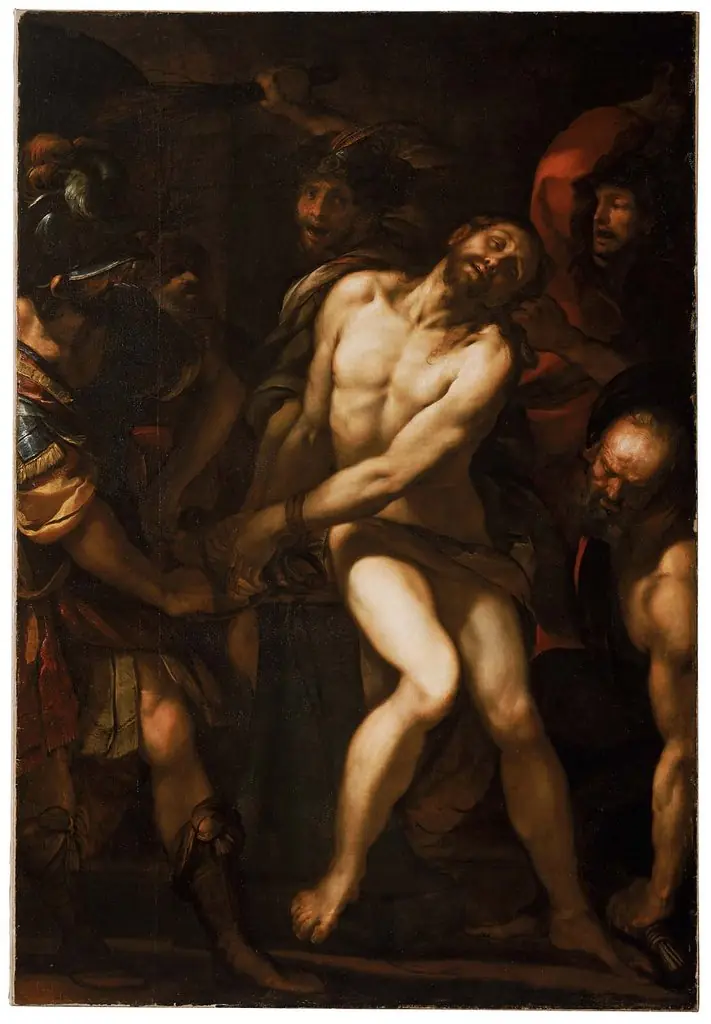
On the recto, The Flagellation depicts Christ bound to a column while being scourged, emphasizing suffering and sacrifice within Christian iconography.
The double-sided panel presents two distinct religious scenes. On the recto, The Flagellation depicts Christ bound to a column while being scourged, emphasizing suffering and sacrifice within Christian iconography. The reverse side shows The Madonna of Mercy, where the Virgin Mary spreads her cloak to shelter a diverse group of faithful beneath it.
The Madonna's protective gesture symbolizes divine intercession and refuge for humanity, while the juxtaposition of the two scenes underscores the theological connection between Christ's Passion and the promise of salvation through Mary's intercession.
Technique & Style
The Flagellation; (reverse) The Madonna of Mercy is a religious painting executed by Girolamo Romanino in 1540. The work functions as a double-sided panel, featuring the titular scenes on its opposing faces. Measuring 180 cm in height and 120.7 cm in width, the piece is classified as a painting within the religious genre.
It is currently held in the collection of the Metropolitan Museum of Art, where the physical dimensions and material classification remain consistent with its status as a significant mid-sixteenth-century panel painting.
History & Provenance
The Flagellation, with The Madonna of Mercy on its reverse, was created by Girolamo Romanino in 1540. The work is a religious painting executed on a double-sided panel measuring approximately 180 cm in height by 120.7 cm in width. It is held in the collection of the Metropolitan Museum of Art.
No further details regarding its commission, intermediate ownership, or chain of custody prior to its acquisition are documented, and no specific accession number is provided in the available records.
Overview
Girolamo Romanino, an Italian painter active in the Veneto and Lombardy regions, completed The Flagellation around 1540. This painting is notable for being double-sided, featuring a religious narrative on its obverse and The Madonna of Mercy on its reverse. The work, which reflects the artist's engagement with Mannerist aesthetics, is presently housed in the collection of The Metropolitan Museum of Art.
Own this work as a print
Artist & collection

Artist
Girolamo Romani, known as Romanino (c. 1485 – c. 1566), was an Italian High Renaissance painter active in the Veneto and Lombardy, near Brescia. His long career brought forth several different styles.