Artwork
Portrait of the Elector John Frederic the Magnanimous of Saxony (1503-1554)
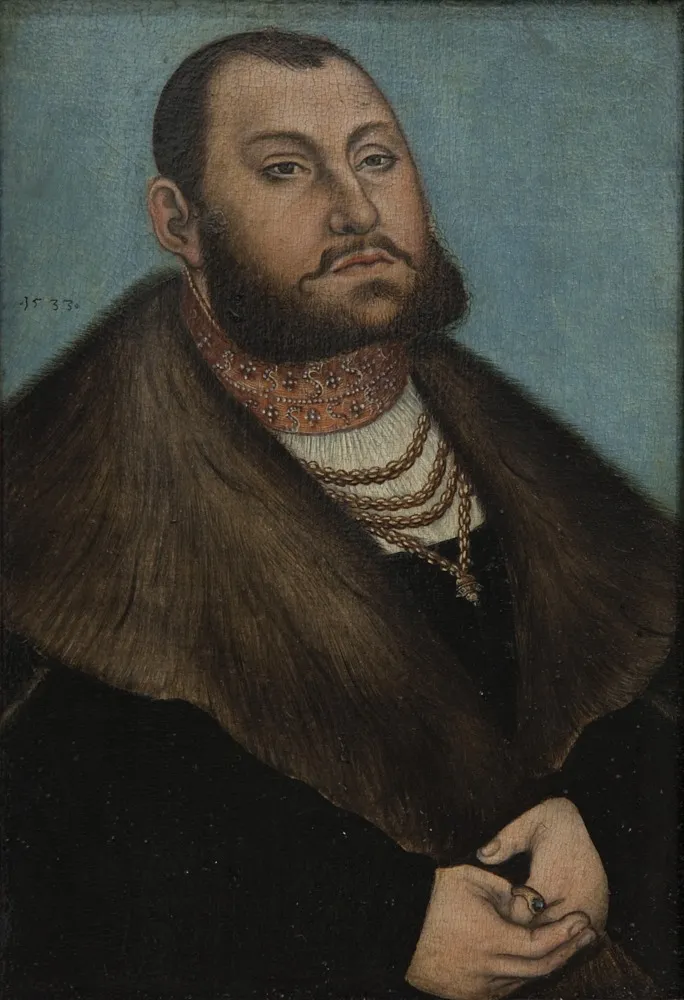
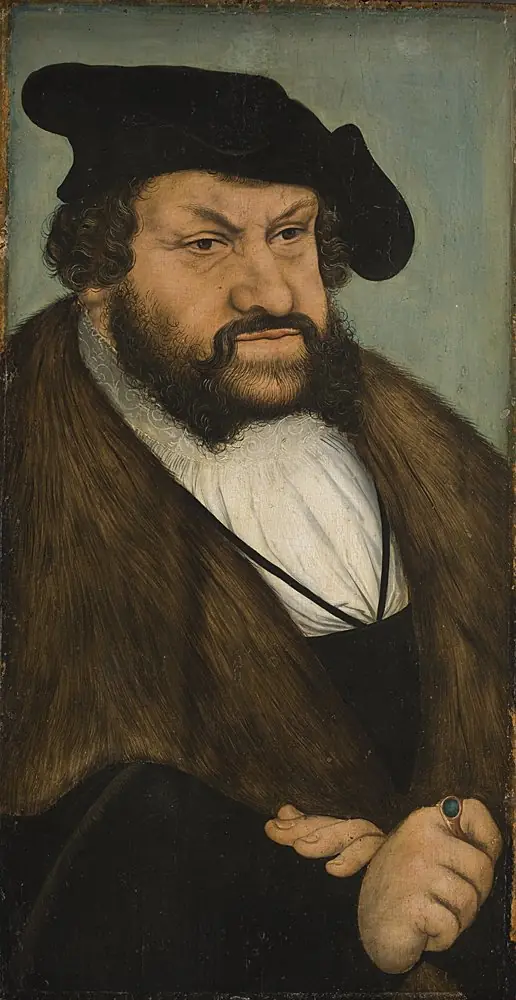
Portrait of the Elector John Frederic the Magnanimous of Saxony (1503-1554) is an oil painting by the Northern Renaissance artist Lucas Cranach the Elder. It dates from 1533 and is held in the collection of the Statens Museum for Kunst.
About this work
The artist's use of oil paint and attention to detail in the subject's clothing and accessories are notable.
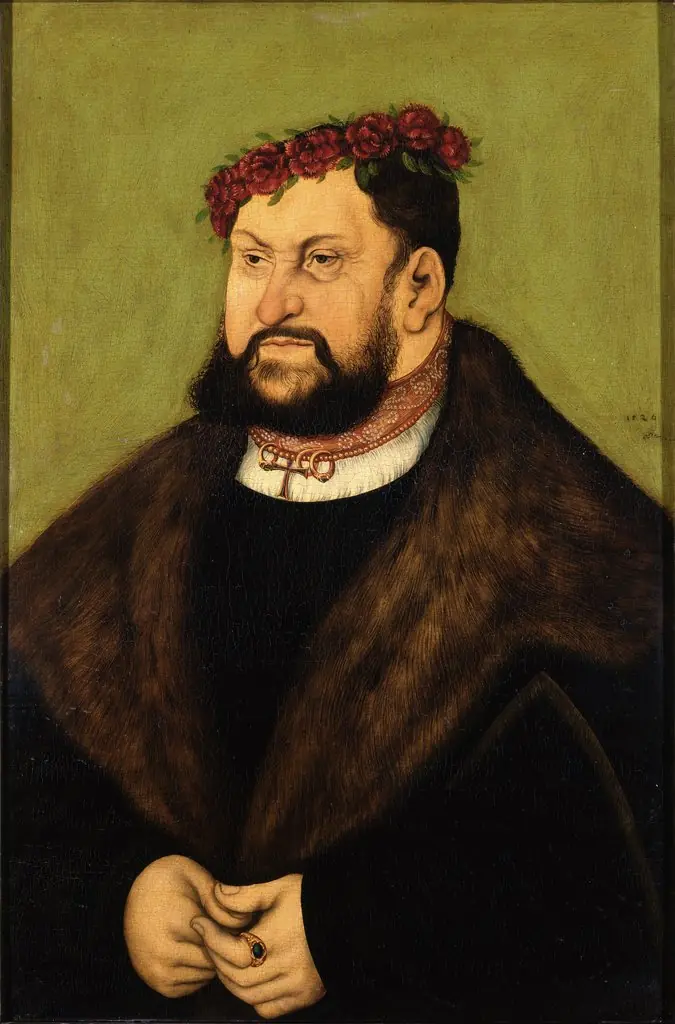
The painting depicts a man with a dark beard and hair, wearing a black coat with a fur collar. He has a white turtleneck underneath, adorned with a brown, beaded collar and multiple gold necklaces. His right hand is visible, holding a ring on his finger.
The man's attire suggests a formal or ceremonial setting, possibly from the 16th century. The artist's use of oil paint and attention to detail in the subject's clothing and accessories are notable.
To learn more about the artist behind this portrait, explore the works of Lucas Cranach the Elder.
Subject & Meaning
The portrait depicts John Frederick I (1503–1554), Elector of Saxony, rendered as a bust-length likeness by Lucas Cranach the Elder in 1533. The work belongs to the genre of portraiture, with the sitter identified as the principal subject. Cranach, who served as court painter to the Saxon electors, produced numerous likenesses of John Frederick during his tenure, and the painting belongs to a tradition of dynastic and princely imagery centered on the ruler.
As a representation of a reigning Protestant elector, the portrait functions as an image of political and confessional authority. Small-scale panel portraits of this type were typically intended for intimate courtly display and diplomatic exchange, allowing the elector's likeness to circulate among allies, family members, and noble correspondents. The painting's subject and format thus convey both the personal identity of John Frederick and his standing as a leading figure of sixteenth-century Saxony.
Technique & Style
The work is an oil painting executed on wooden panel, typical of Lucas Cranach the Elder's practice in the 1530s. The composition presents a half-length portrait of John Frederick I, rendered with the courtly elegance and refined modeling characteristic of Northern Renaissance portraiture. The surface retains its original handling, showing no significant degradation, and the stylistic treatment of drapery and facial features reflects Cranach's mature approach to courtly representation.
History & Provenance
The portrait of John Frederick I of Saxony was painted by Lucas Cranach the Elder in 1533 as a likeness of the elector. It was created to commemorate his status and authority within the Saxon court. The work entered the collection of the Statens Museum for Kunst, where it remains today.
The painting was executed in oil on panel and measures 20 cm by 14 cm. It depicts John Frederick I, who reigned from 1503 to 1554. The portrait was commissioned to reflect his political role during a period of religious and dynastic upheaval in the Holy Roman Empire.
The painting is held in the collection of the Statens Museum for Kunst in Copenhagen, as recorded in the Wikidata entry for the work. The same source identifies it as part of the museum's holdings, with no separate inventory or accession number provided in the available materials.
No exhibition history is documented in the supplied sources.
Legacy
The portrait of John Frederick I, Elector of Saxony, painted by Lucas Cranach the Elder in 1533, contributed to the visual iconography of early Reformation princes. Its representation of Elector John Frederic the Magnanimous informed later depictions of Saxon leadership and was cited in 19th-century art historical studies of Cranach's oeuvre. The work remains part of the permanent collection at Statens Museum for Kunst, where it is studied in the context of Northern Renaissance portraiture.
Overview
Lucas Cranach the Elder painted this oil portrait in 1533, presenting the Saxon Elector John Frederick I (1503‑1554). The work is part of the collection of the Statens Museum for Kunst, where it is displayed as an example of early‑modern court portraiture.
Context
The painting reflects the visual language of 16th‑century German princely portraiture, where elaborate dress and jewelry signaled rank. Cranach, as court painter to the Saxon electors, regularly depicted his patrons in similar ceremonial garb, linking personal identity with the broader political landscape of the Reformation.
Artist & collection
Artist
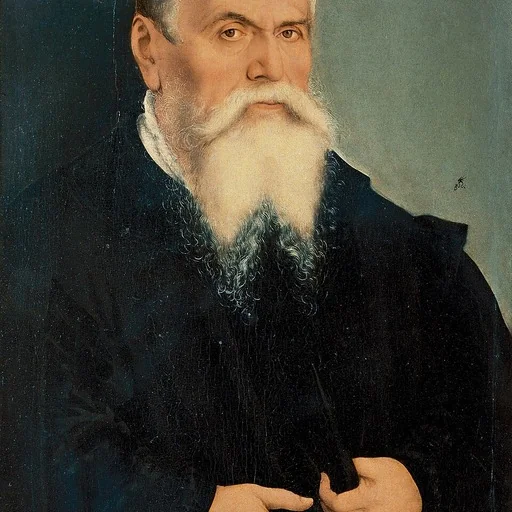
Lucas Cranach the Elder was a German Renaissance painter and printmaker in woodcut and engraving.

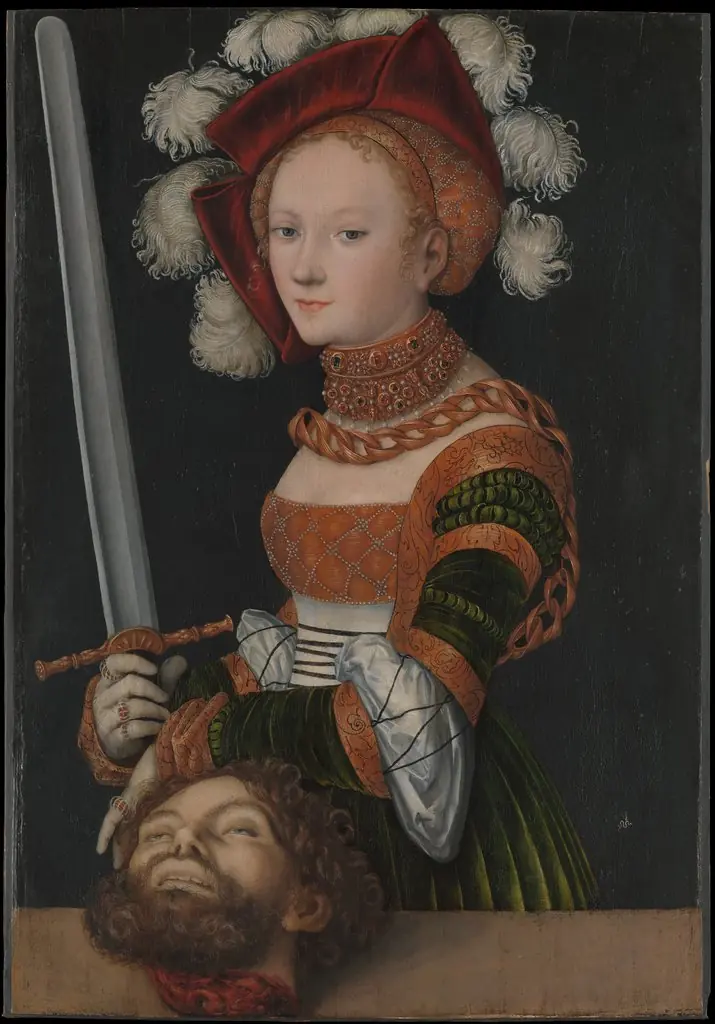
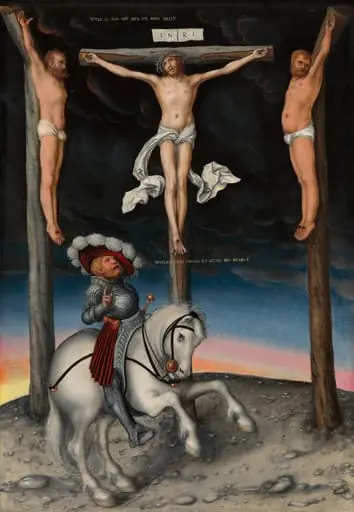
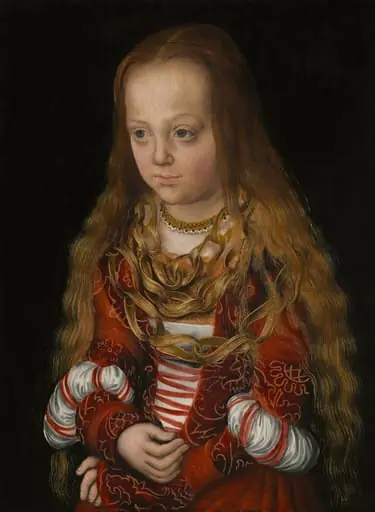
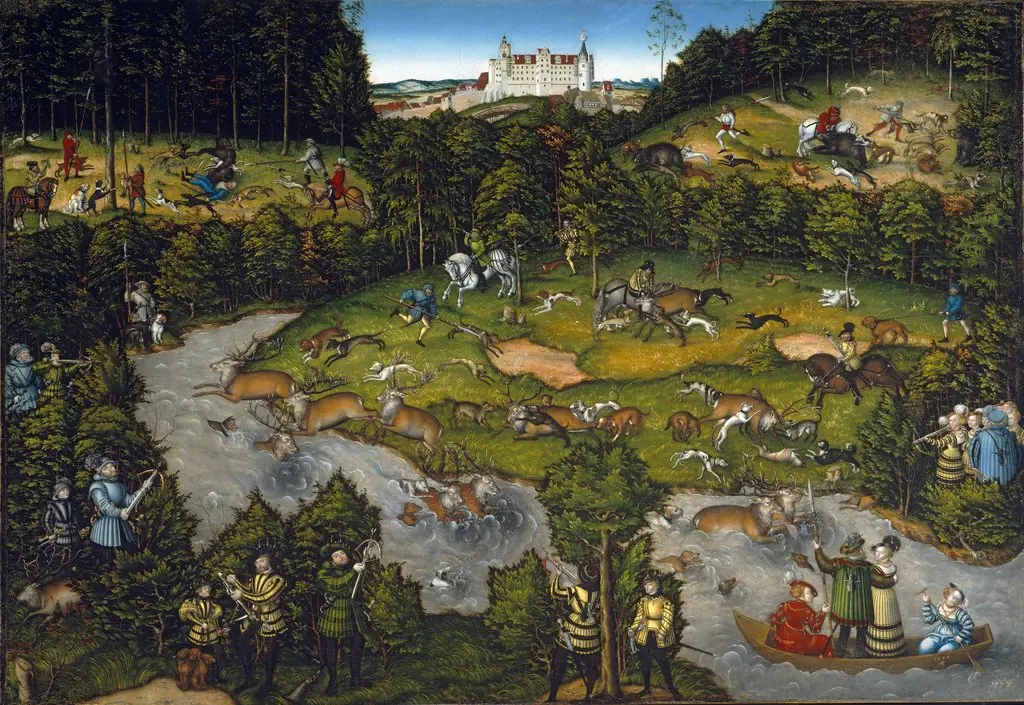
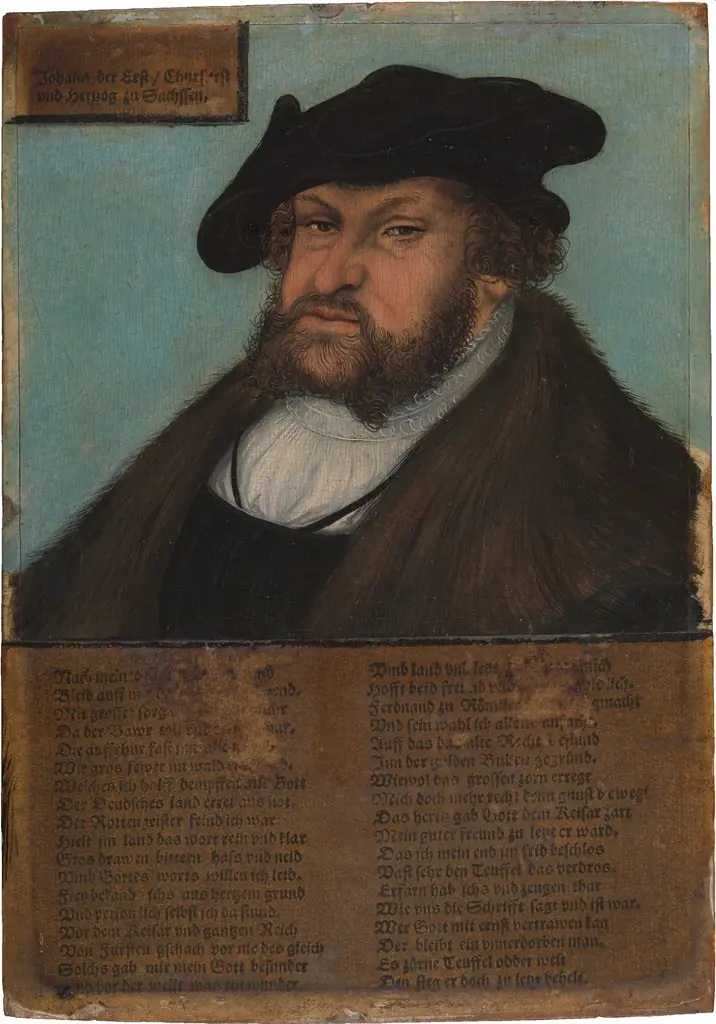
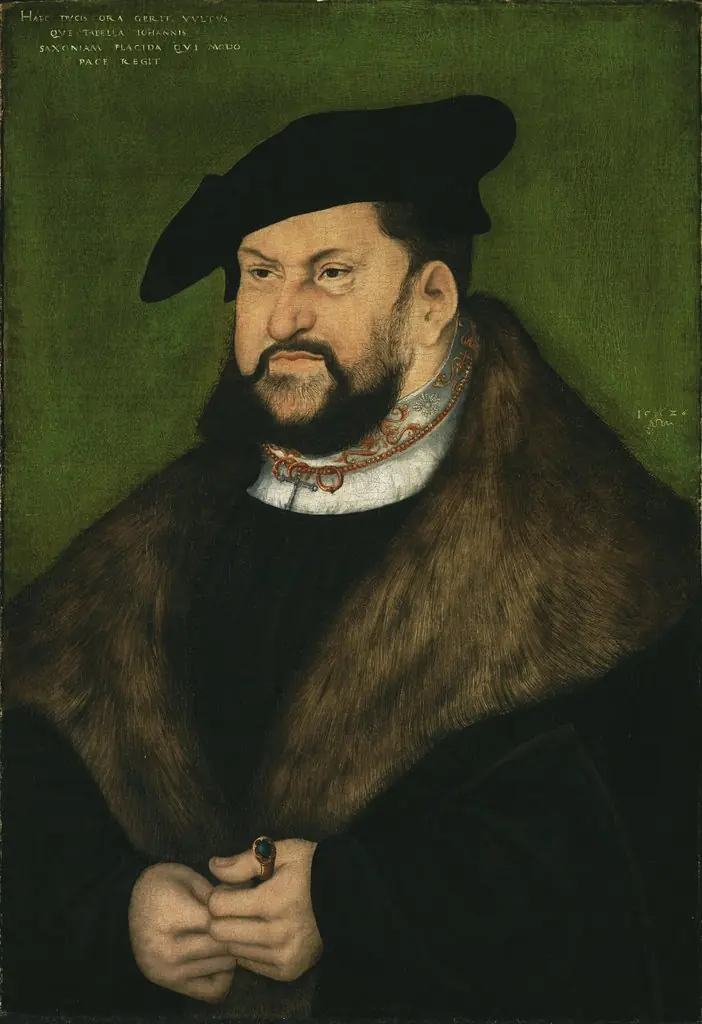
- Portrait of Johannes the Steadfast, Elector of Saxony
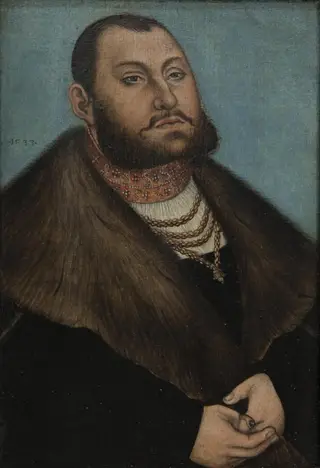 Portrait of the Elector John Frederic the Magnanimous of Saxony (1503-1554)
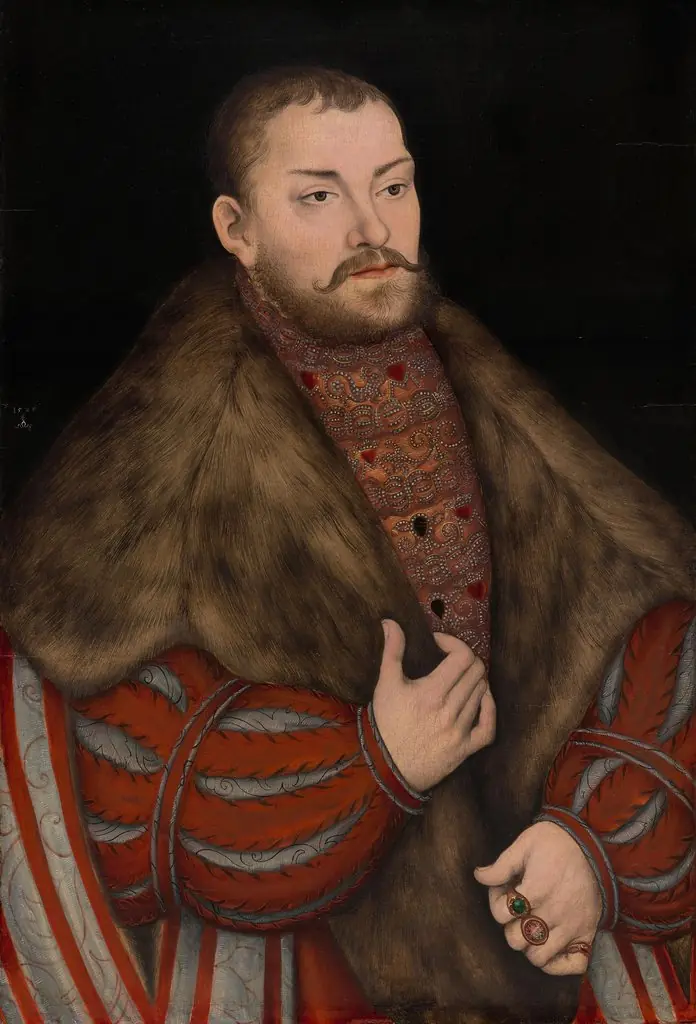 Portrait of Joachim II, Elector of Brandenburg
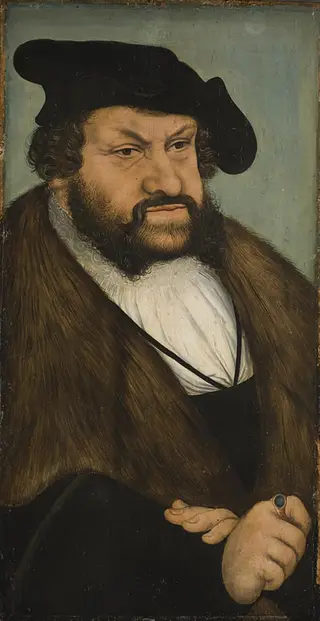 Portrait of the Elector John the Steadfast of Saxony (1468-1532)
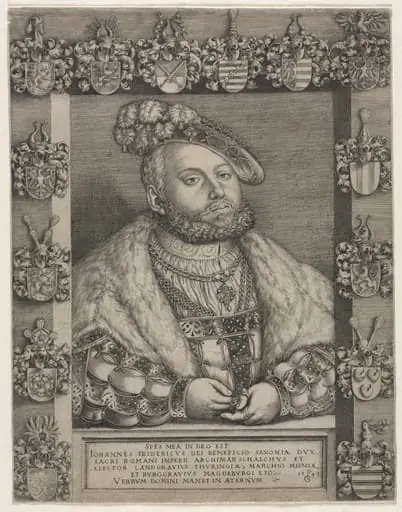 Portrait of John Frederick I, "The Magnanimous," Elector of Saxony
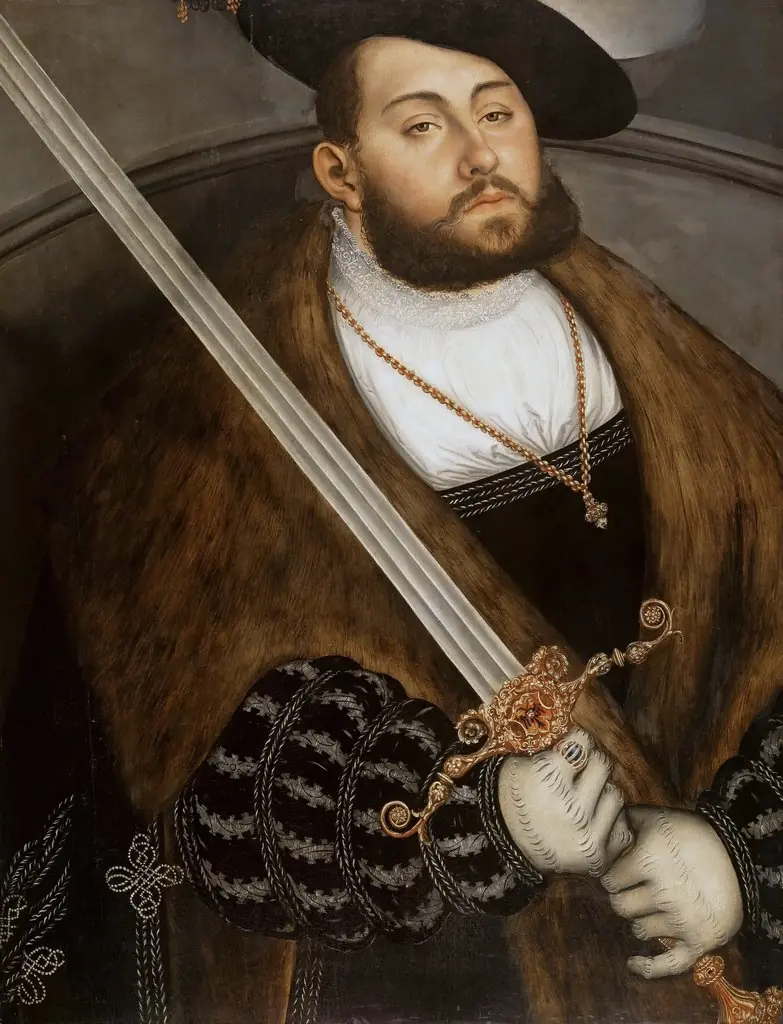 Johann Friedrich I, the Magnanimous, Elector of Saxony
 Portrait of the Elector John the Steadfast of Saxony (1468-1532)
 Johann the Steadfast, Elector of Saxony
 John Frederick, Elector of Saxony