Artwork
Portrait of an Architect
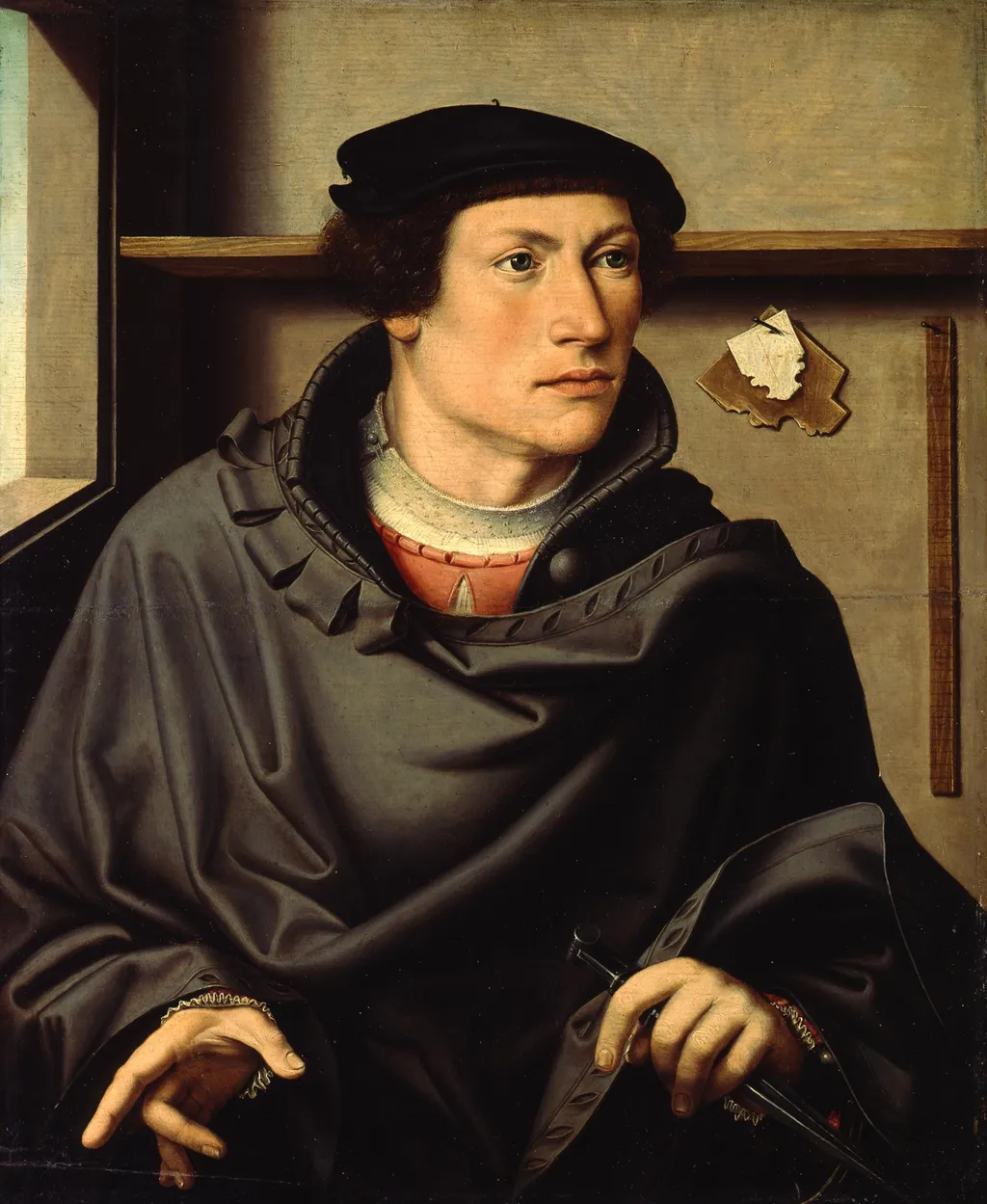
Portrait of an Architect is an oil painting by the Northern Renaissance artist Ludger tom Ring the Elder. It dates from 1520 and is held in the collection of the Gemäldegalerie Berlin.
About this work
Overview
The work is held in the Gemäldegalerie, Berlin, where it is catalogued under the German title Bildnis eines Architekten.
Portrait of an Architect is an oil painting on panel by the German artist Ludger tom Ring the Elder, dated to 1520. Measuring 53 by 43 centimeters, the half-length portrait depicts an unidentified male architect in three-quarter view, holding the tools of his profession against a muted interior setting. The work is held in the Gemäldegalerie, Berlin, where it is catalogued under the German title Bildnis eines Architekten. The painting is significant as a rare early-sixteenth-century German portrait of a professional figure, demonstrating the Northern Renaissance integration of individual likeness with occupational symbolism. Its attribution has occasioned scholarly discussion, with some earlier sources listing a possible association with Hans Holbein the Younger, though the work is now firmly credited to tom Ring.
Subject & Meaning
The sitter is an unidentified male architect, presented not as an idealized type but as a specific individual engaged in intellectual labor. He wears a black beret and voluminous dark gray cloak with a high collar, beneath which a white ruffled shirt and red garment are visible. His right hand rests on a ledge while his left holds a compass. Behind him, a wooden shelf supports a T-square hanging on the wall and a folded paper pinned nearby, with a window at the far left admitting light that illuminates his face and hands. These attributes, compass, T-square, and pinned paper, function as clear professional signifiers, identifying his occupation with the precision and measurement central to architectural practice. The direct gaze and measured expression convey seriousness and intellectual authority rather than warmth, while subtle asymmetries in the features, the slight tilt of the mouth, the variation in eye shape, emphasize individual character over idealization. The restrained palette of blacks, grays, and warm earth tones with touches of red and white reinforces the sober dignity appropriate to a professional identity.
Technique & Style
The painting is executed in oil on panel, a medium that allowed tom Ring the detailed rendering of textures and subtle tonal gradations characteristic of Northern European practice. The surface is smoothly painted with careful attention to the textures of fabric and flesh, and subtle modeling gives roundness to the face and drapery. Light entering from a window at the left is carefully orchestrated to illuminate the face and hands while leaving portions of the clothing in shadow, creating depth and volume without dramatic contrast. The composition is balanced and frontal, with the figure occupying most of the frame and background elements providing contextual narrative without distracting from the sitter's presence. The handling demonstrates particular skill in depicting material qualities, from the voluminous cloak to the crisp white of the ruffled shirt. The overall effect is one of quiet realism, avoiding the flatter, more linear qualities of earlier German portraiture in favor of a more sculptural, three-dimensional presence.
History & Provenance
The painting is dated to 1520, a significant year in tom Ring's career, marking his establishment in Münster and his marriage to Anna Rorup. The work's provenance before its acquisition by the Gemäldegalerie, Berlin, is not documented in the available sources. It is now held in that museum's collection, where it is accessible to the public. The painting has been exhibited and reproduced under varying attribution formulas, with some sources marking it as attributed to tom Ring and others listing it more confidently under his name. The Alamy stock photograph taken on 3 May 2018 confirms its presence in Berlin at that date. No specific exhibition history beyond its permanent display is recorded in the provided sources.
Context
Ludger tom Ring the Elder was born circa 1496 in Münster and died there on 3 April 1547 during a plague epidemic. Trained at least partly in the Netherlands, he had established himself in Münster by 1520 and became a member of the Painters' Guild sometime before 1530. He was widely respected as a portrait painter, though his practice also encompassed murals, decorative works, engraving, and design for print. The year 1520 also saw him take the nineteen-year-old engraver Heinrich Aldegrever into his studio as a partner. The Münster rebellion of 1533, during which he left the city and returned only after order was restored, shaped the later phase of his career, which involved restoring works damaged or destroyed during the upheaval. The Portrait of an Architect belongs to the period of his early maturity, before these disruptions, and reflects the prosperity and professional confidence of the Münster artistic community. The tom Ring family itself became a dynasty of painters across three generations, with Ludger's sons Hermann, Ludger the Younger, and Herbert all entering the profession. The family's versatility extended to architecture and design, as suggested by compasses appearing in their portraits. Some of Ludger tom Ring the Elder's works were originally attributed to Hans Holbein the Younger, a confusion that attests to the quality of his portraiture and its participation in the broader Northern Renaissance idiom.
Legacy
The Portrait of an Architect occupies a modest but telling place in the history of German Renaissance portraiture. As a depiction of a professional man identified by his tools rather than by heraldic or devotional context, it anticipates the growing secularization of portraiture in sixteenth-century Northern Europe. The work's attribution history, including its occasional association with Holbein, reflects the high esteem in which tom Ring's portraiture was held and the difficulty of distinguishing hands within the dense network of Northern Renaissance workshops. Within the tom Ring family legacy, the painting exemplifies the professional identity that the family cultivated across generations, not only as painters but as versatile designers and, by their own visual testimony, practitioners of architecture and measurement. The work's residence in the Gemäldegalerie, Berlin, ensures its continued visibility within the canon of German Renaissance art, though it has not attracted the same extensive scholarly literature as the tom Ring sibyl series or the works of the artist's more famous contemporaries. Its survival offers a valuable index of how professional identity could be constructed visually in the early sixteenth century, at the intersection of craft, intellect, and emerging individualism.
Own this work as a print
Artist & collection
Artist
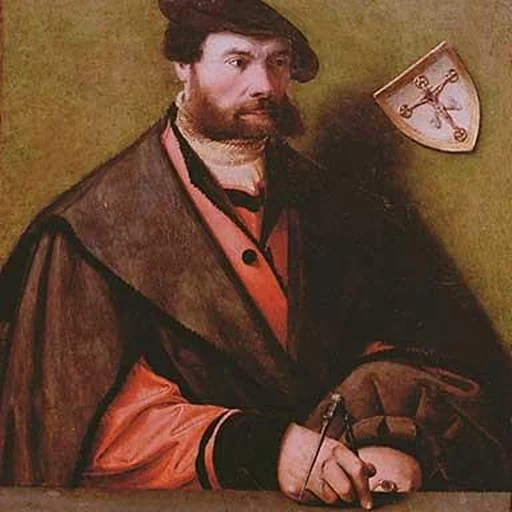
Ludger tom Ring the Elder (c.1496, Münster - 3 April 1547, Münster) was a German painter, engraver and decorative artist.

- Portrait of a Man
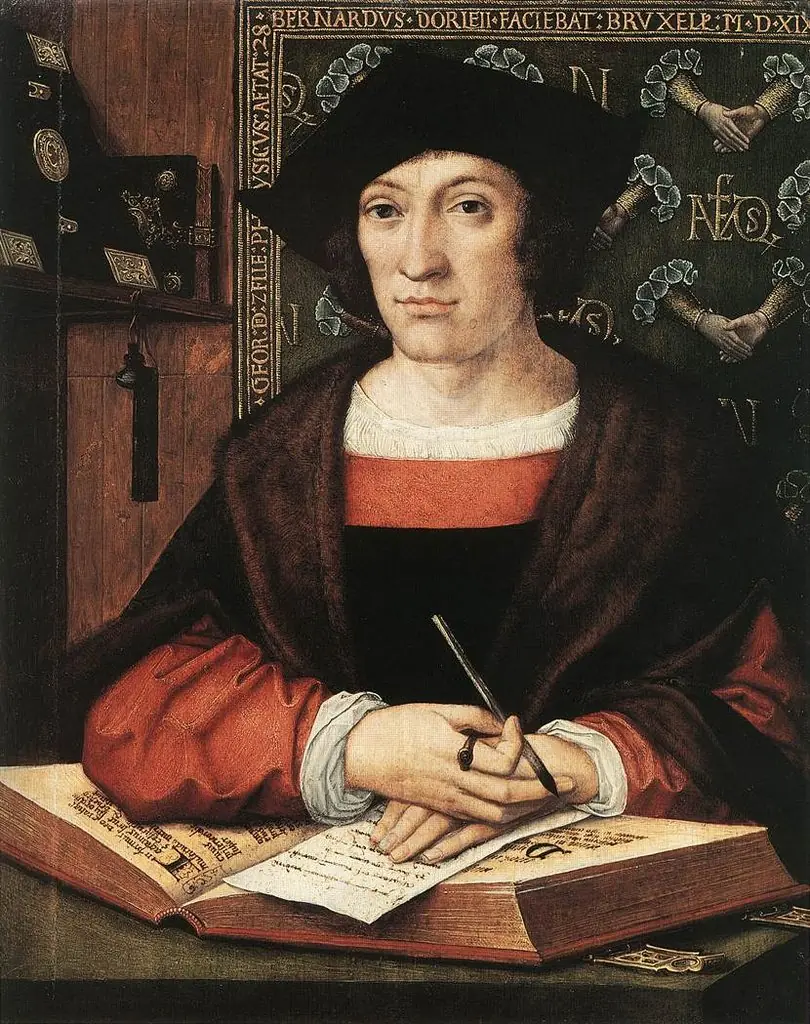 Joris van Zelle
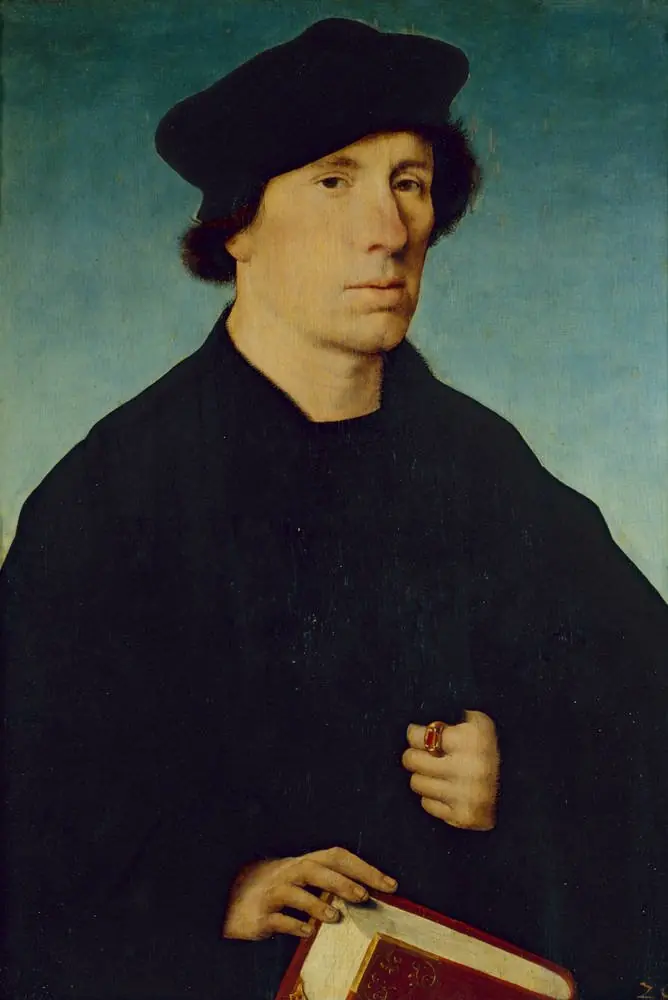 Portrait of a Beardless Man
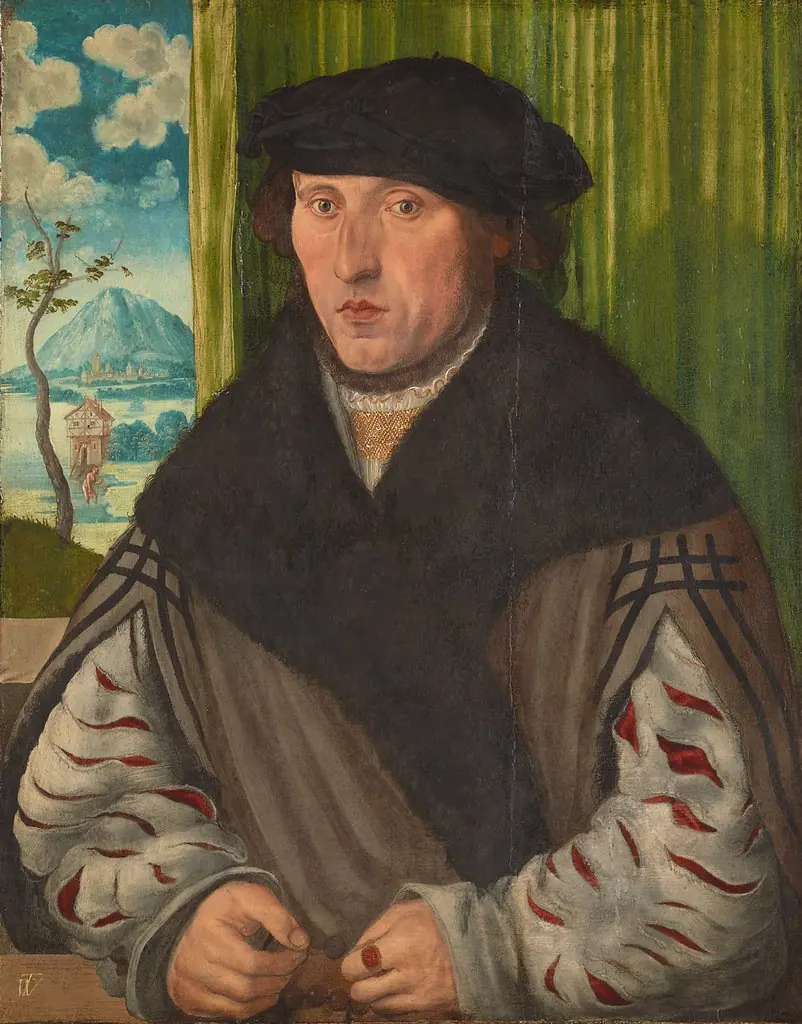 Männliches Bildnis
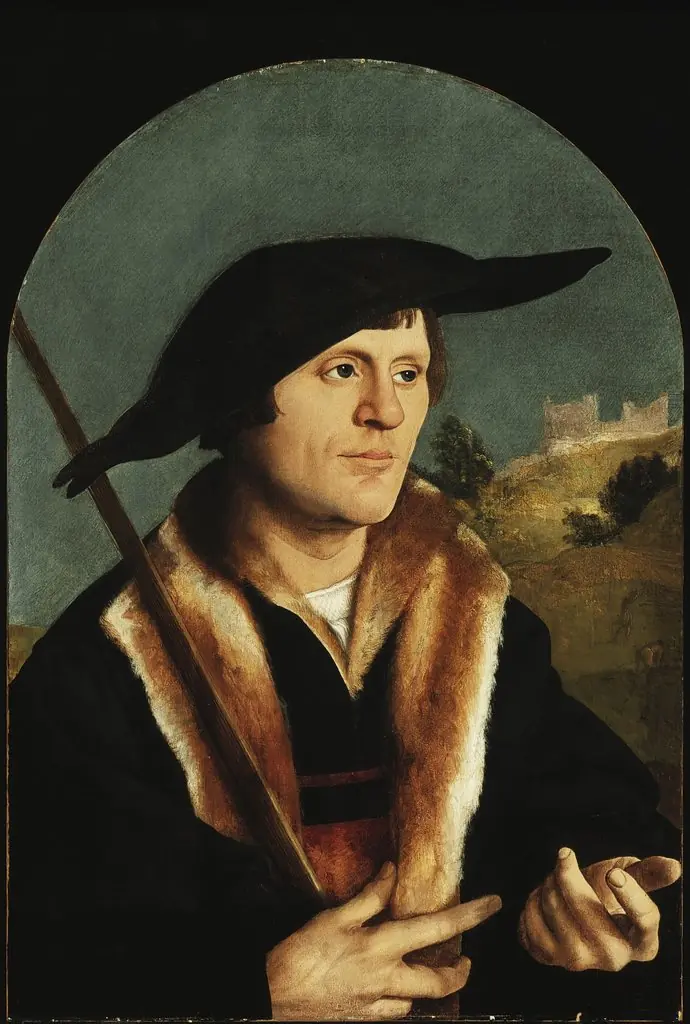 Pilgrim
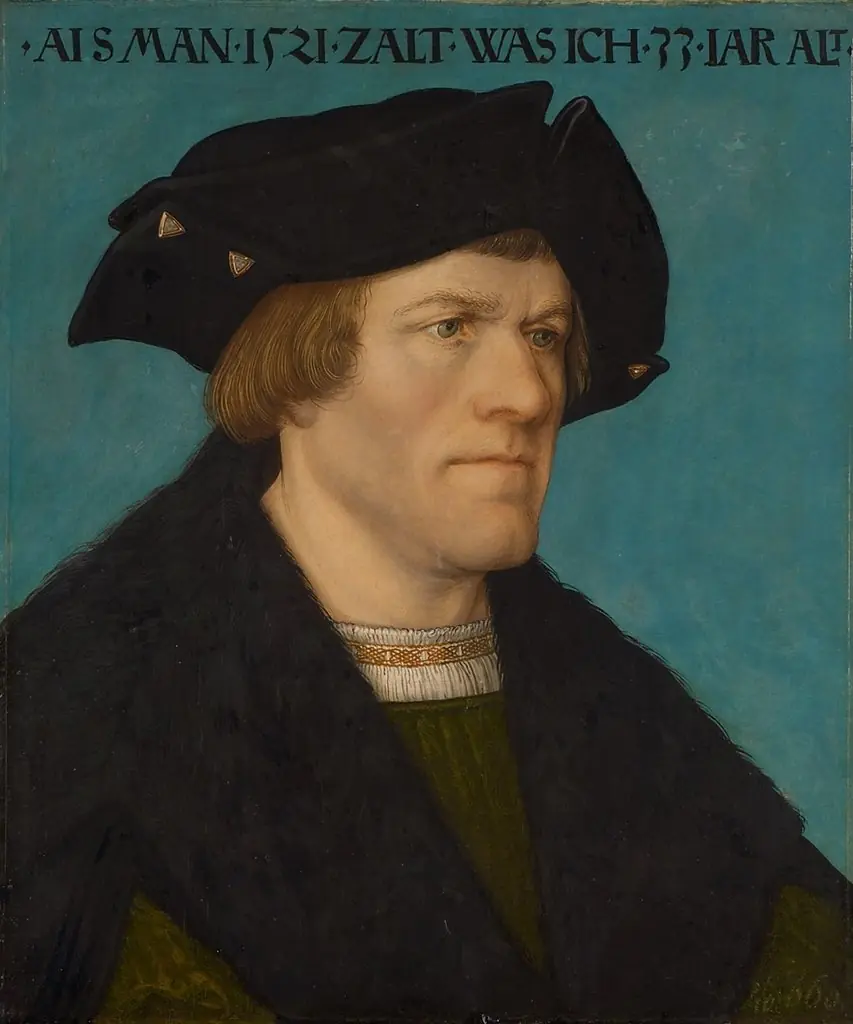 Portrait of a beardless man
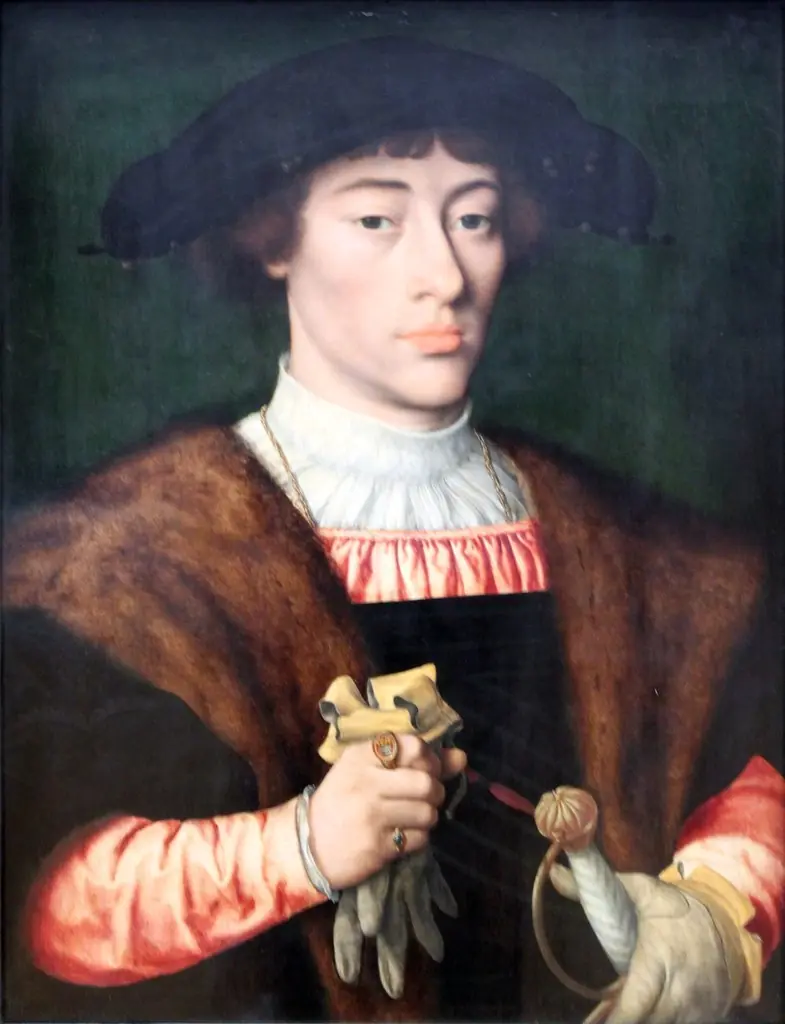 Portrait of a Man with Gloves
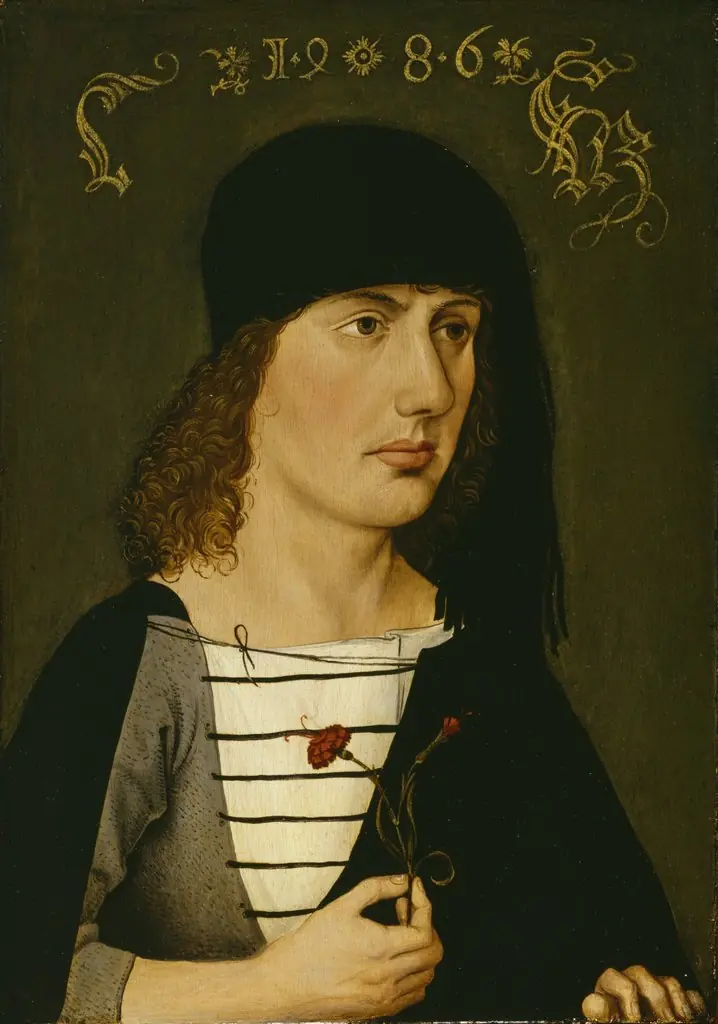 A Young Man
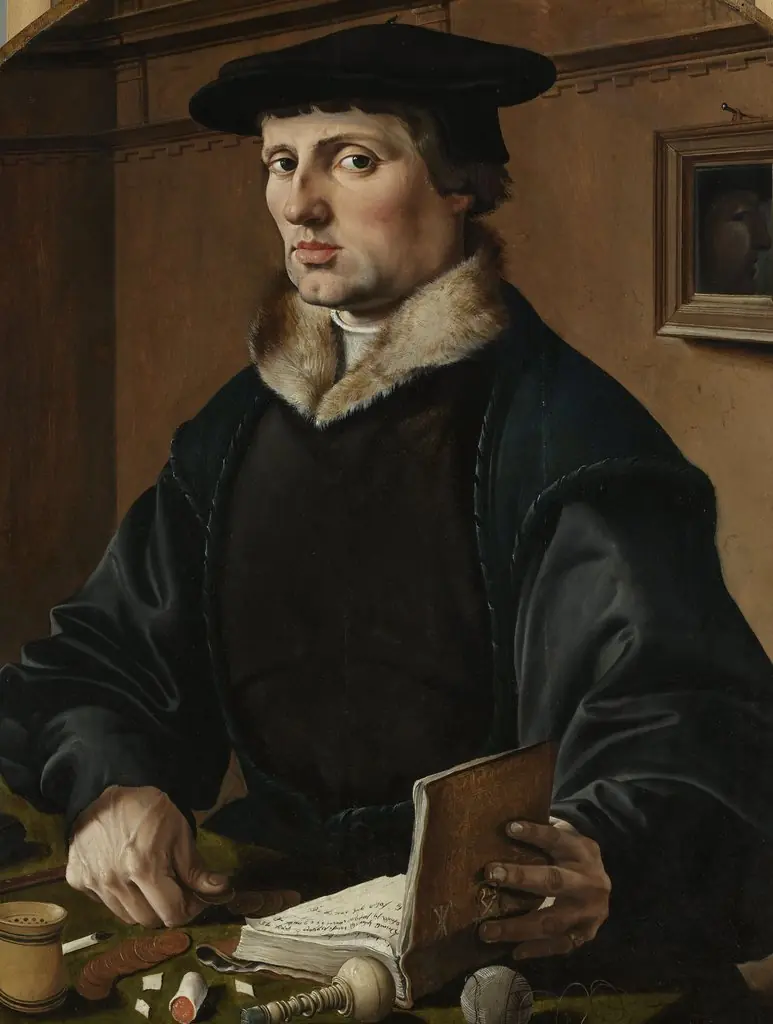 Portrait of (possibly) Pieter Gerritsz Bicker, pendant of (possibly) his wife Anna Codde
 Portrait of a Young Man (Lyons)
 Portrait of a Haarlem Citizen
 Portrait of a Man