Artwork
The Fire Boss
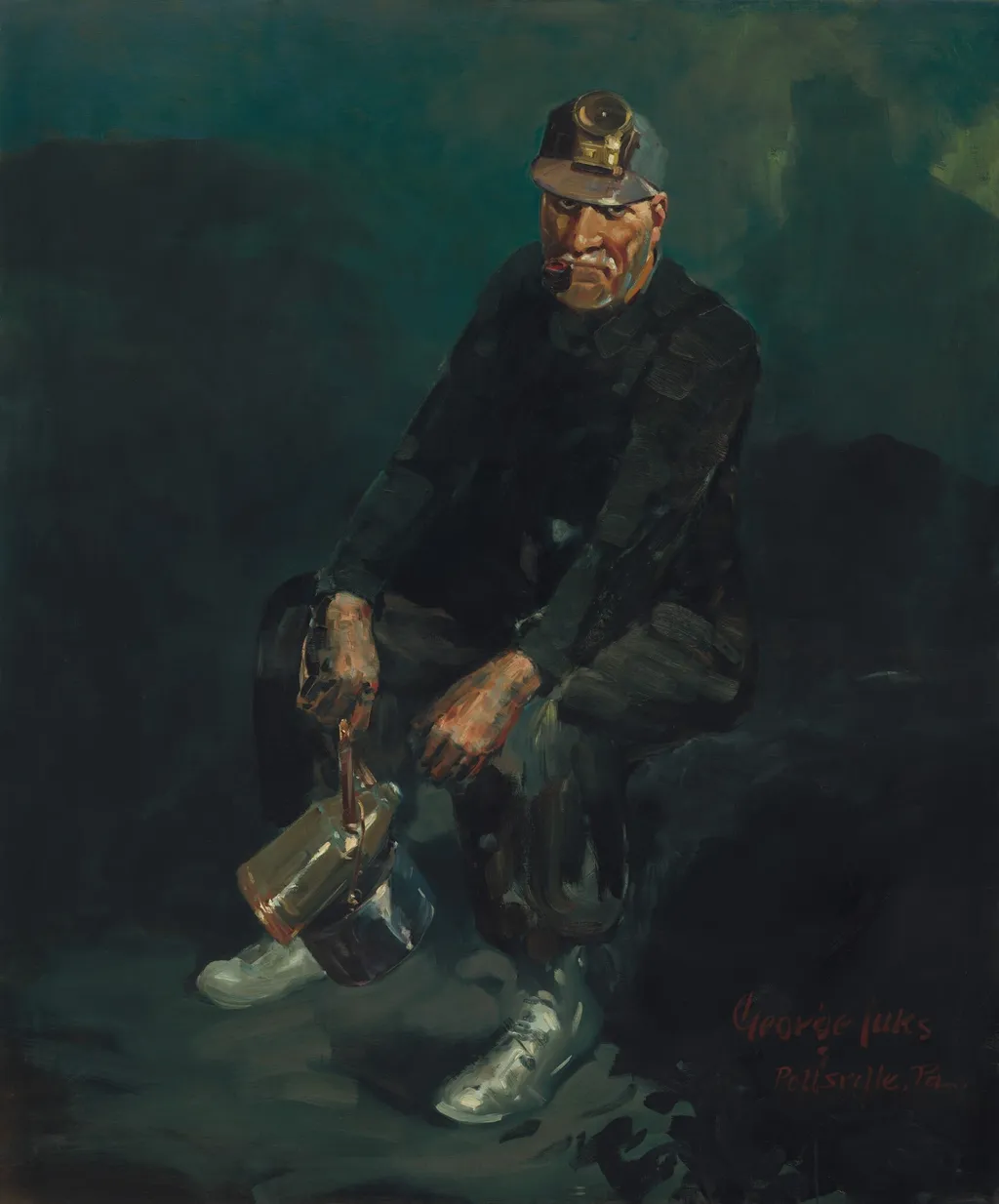
The Fire Boss is an oil painting by the Ashcan School artist George Luks. It dates from 1925 and is held in the collection of the National Gallery of Art.
- Inscription
- Inscribed:lower right: George Luks / Pottsville. Pa.
About this work
Technique & Style
The palette is earthy and subdued-ochres, umbers, and muted reds-contrasted by sharp highlights that define facial planes and calloused skin.
Executed in 1925, The Fire Boss is an oil-on-canvas portrait by George Luks measuring approximately 153.1 x 128 cm. The handling is marked by thick, gestural brushwork and a vigorous impasto that animates the sitter's craggy features and work-worn hands, aligning with Luks's Ashcan School idiom. The palette is earthy and subdued-ochres, umbers, and muted reds-contrasted by sharp highlights that define facial planes and calloused skin. Compositionally, the figure is set against a dark, loosely brushed background that collapses space, focusing attention on the subject's direct, weary gaze and the emblematic red shirt that signals his occupational role.
History & Provenance
George Luks created the oil-on-canvas portrait The Fire Boss in 1925. Following the artist's death in 1933, the work entered his estate and was subsequently sold at Parke-Bernet Galleries in New York on April 5, 1950, as lot number 80. It was later acquired by Hildegarde Sosenko and Anna Sosenko of New York, who sold it at the same auction house on January 6, 1954, as lot number 42 for $400.
The 1954 sale catalogue erroneously listed the transaction date as 1940. Chester Dale, a New York collector, purchased the painting at that 1954 auction and gifted it to the National Gallery of Art in Washington, D.C., later that same year.
The painting entered the collection of the National Gallery of Art in Washington, D.C., in 1954 as a gift from Chester Dale. Prior to this acquisition, the work passed through the artist's estate and was sold at Parke-Bernet Galleries in New York on April 5, 1950, and again on January 6, 1954, where it fetched $400 before being purchased by Dale.
While specific inventory numbers are not detailed in the available records, the work's provenance is well-documented from Luks's death through its transfers at auction houses to its final donation. The provided sources do not list specific public exhibitions or loan history for the piece.
Overview
George Luks's The Fire Boss, painted in 1925, is an oil-on-canvas portrait. This work exemplifies Luks's focus on depicting the lives of ordinary people, particularly those in working-class environments. The painting captures a solitary figure, offering a glimpse into the daily existence of an urban laborer, a common theme for the artist and his contemporaries.
Subject & Meaning
The painting presents a man seated, dressed in dark work attire and a hat. He holds a lunch box and appears to be smoking a cigarette, suggesting a moment of respite from labor. His appearance strongly indicates he is an industrial worker, possibly captured during a break or immediately after his shift. This portrayal aligns with Luks's consistent interest in the dignity and reality of everyday working individuals.
Context
George Luks was a prominent member of the Ashcan School, an American art movement that emerged in the early 20th century. This group distinguished itself by its commitment to depicting the unvarnished realities of urban life and its inhabitants, moving away from idealized subjects. Luks's background as a newspaper illustrator in Philadelphia, following European training, informed his direct and observational approach to capturing the working class of New York's Lower East Side.
Own this work as a print
Artist & collection

Artist
George Benjamin Luks (August 13, 1867 – October 29, 1933) was an American artist, identified with the aggressively realistic Ashcan School of American painting.

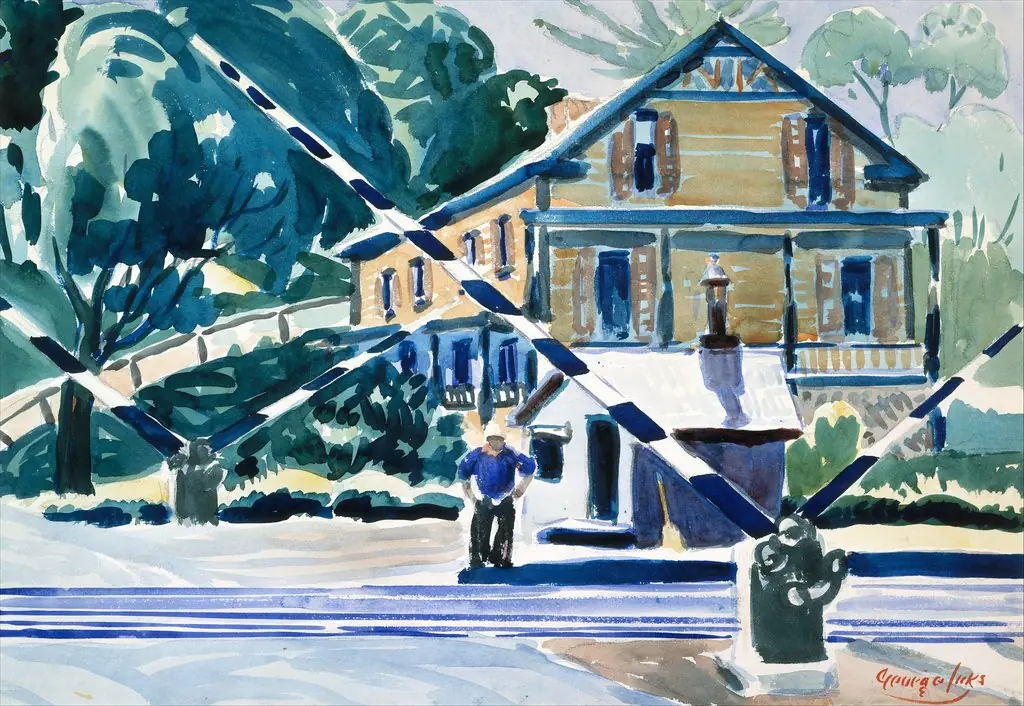
- Eino Leinon muotokuva
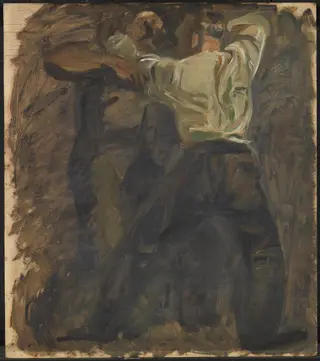 Two Men Fighting
![Untitled. [Man seated on a chair], by Elizabeth Berry](https://artifactworldgallery.com/img/elizabeth-berry--untitled-man-seated-on-a-chair--0bac0e2530519c79-w320.webp) Untitled. [Man seated on a chair]
Untitled. [Man seated on a chair]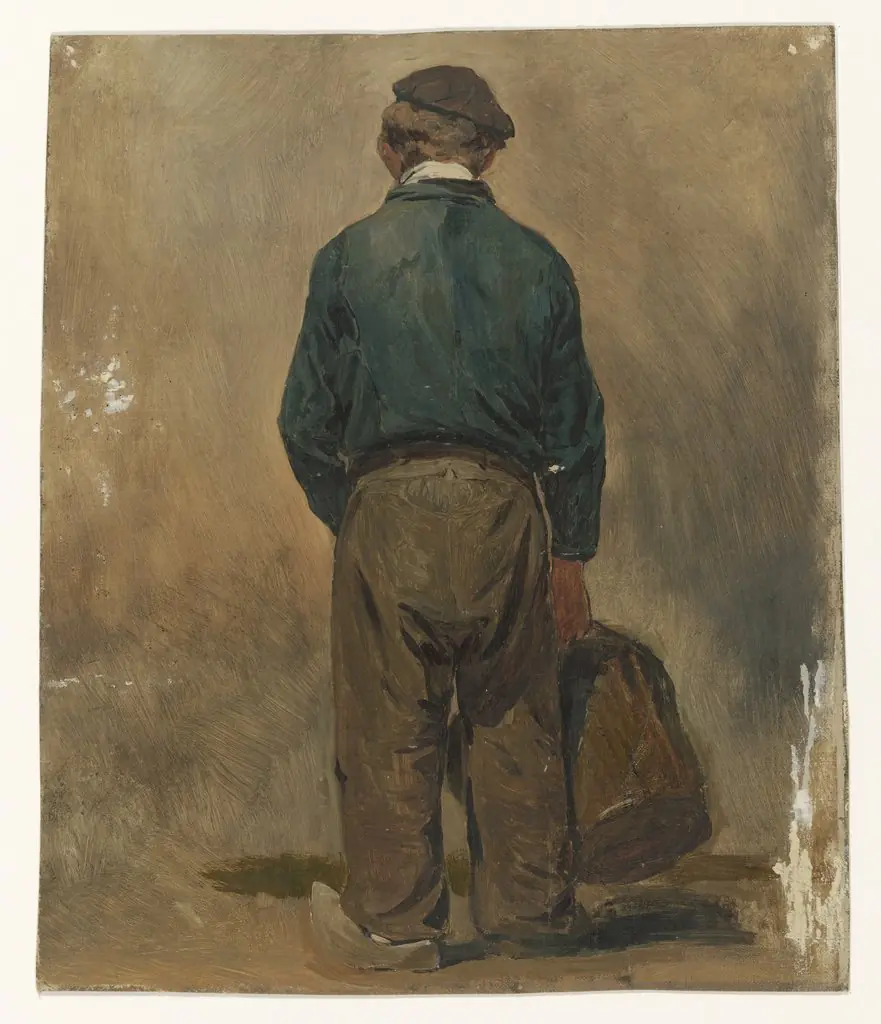 Visser met een mand, van achteren gezien
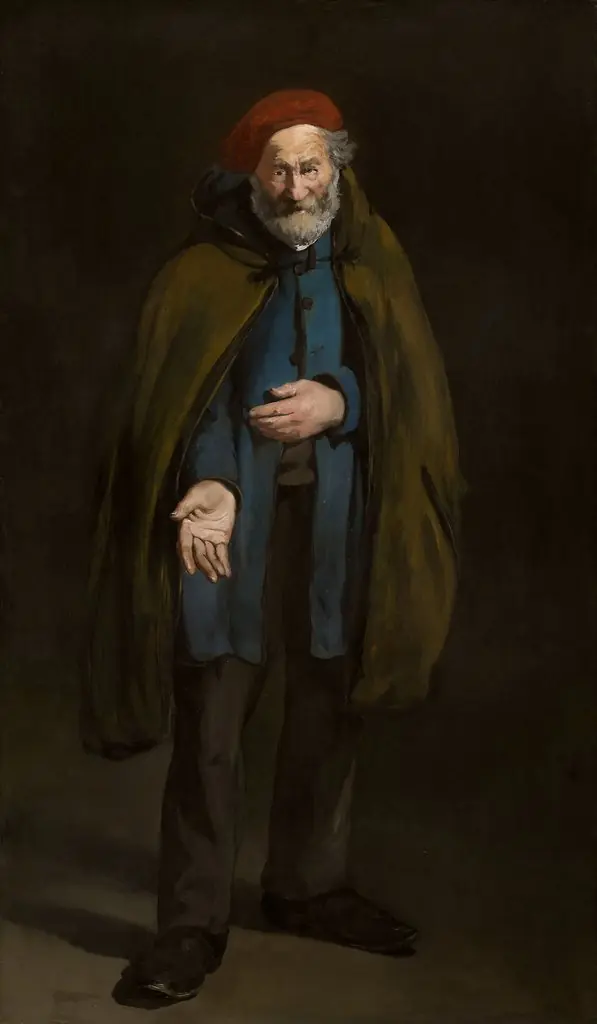 Beggar with a Duffle Coat (Philosopher)
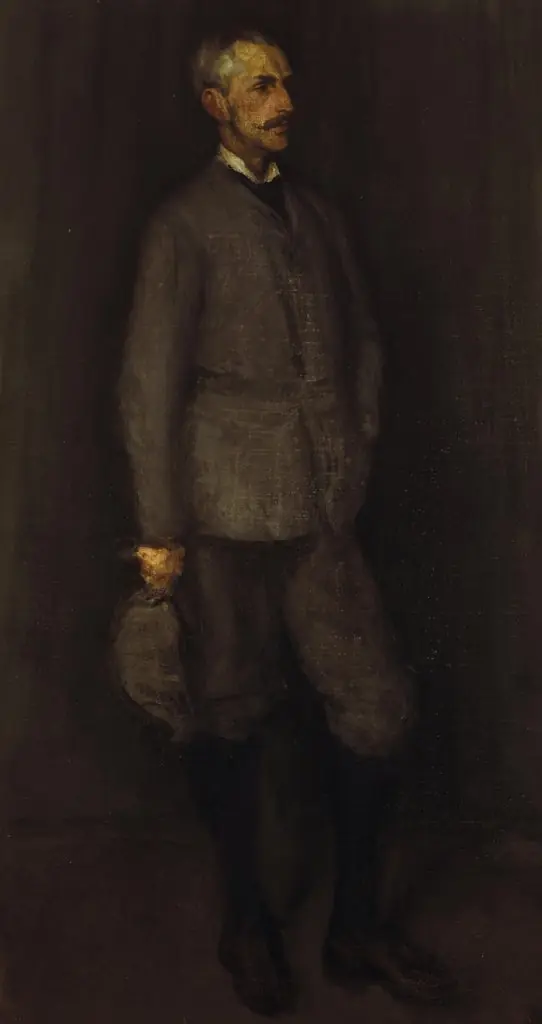 Arrangement in Grey and Green. Portrait of John James Cowan
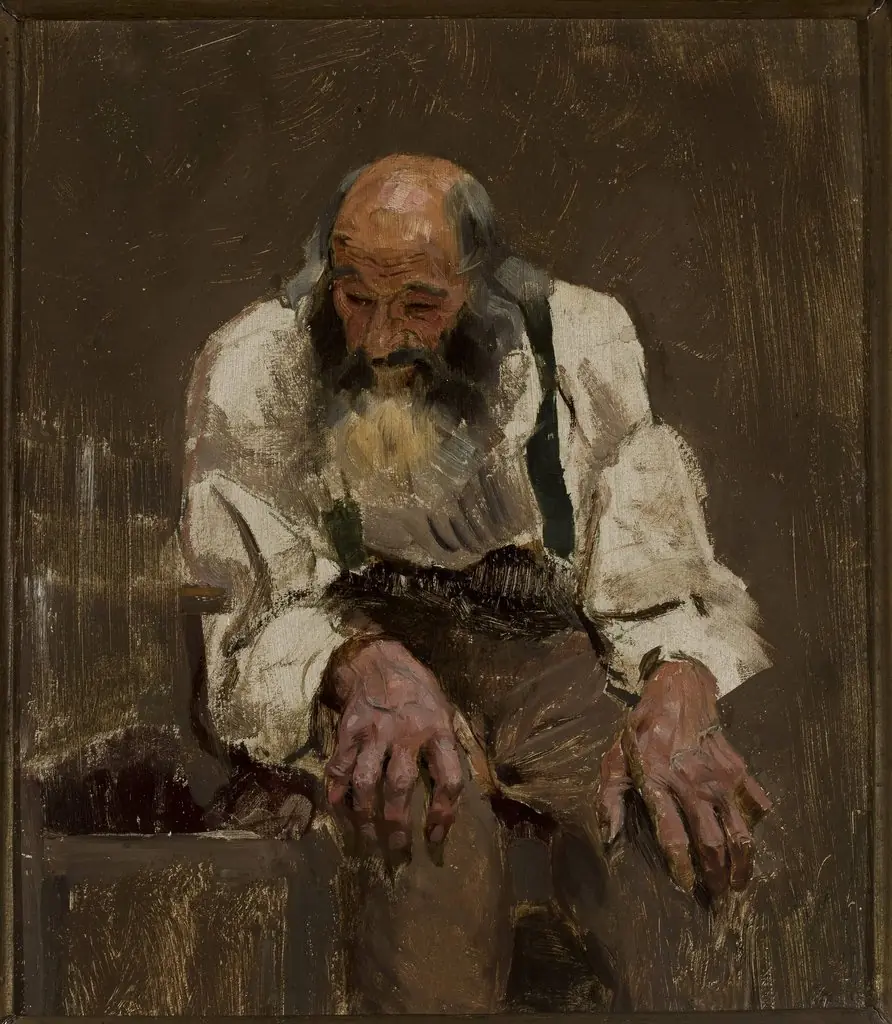 Jew
Jew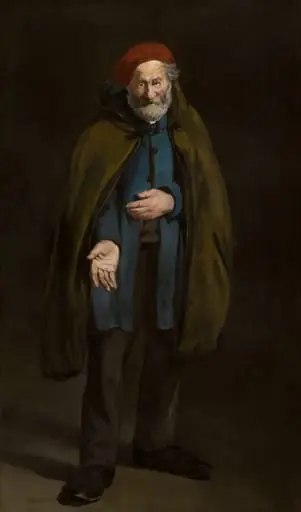 Beggar with a Duffle Coat (Philosopher)
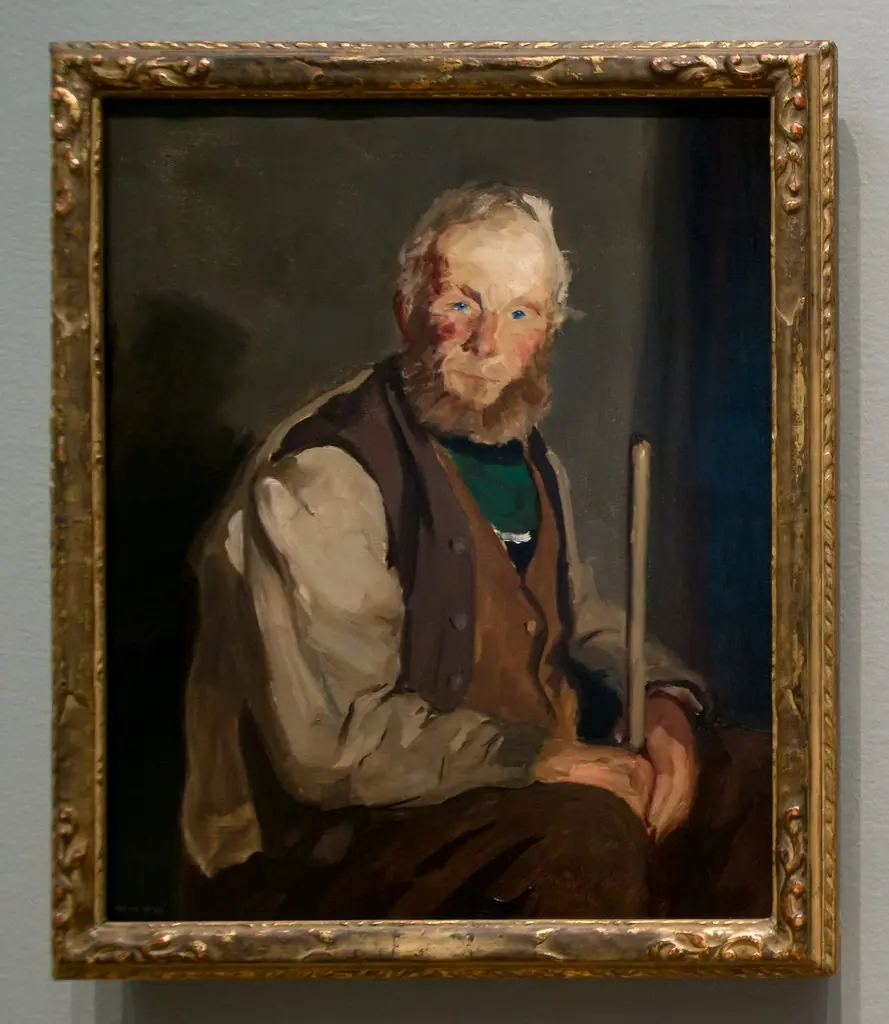 Himself
 Portrait of a Man in Costume
 Studiu pentru "Execuția lui Horia"
 Self-Portrait