Artwork
The Marriage of Placidia and Constantius
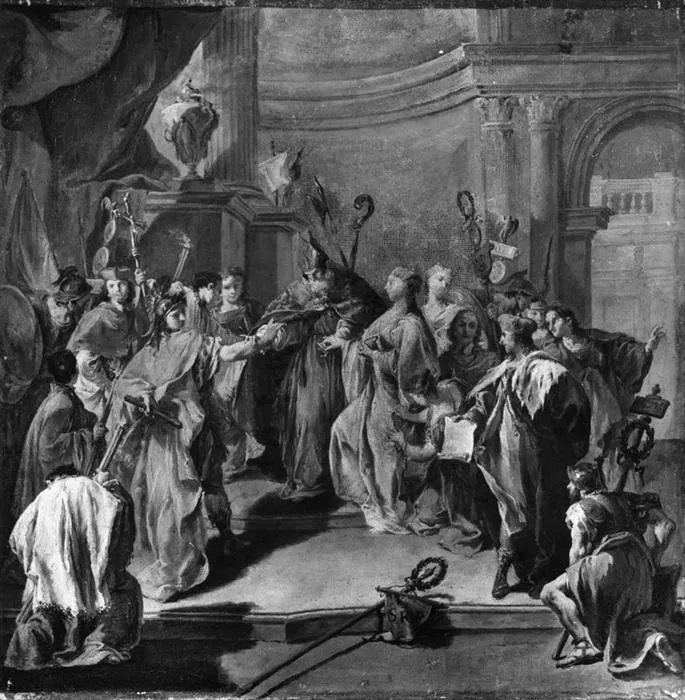
The Marriage of Placidia and Constantius is an unspecified painting by the Rococo painting artist Giambattista Pittoni. It dates from 1740 and is held in the collection of the Hermitage Museum.
About this work
Overview
Its subject, drawn from late Roman imperial history, exemplifies the eighteenth-century Venetian interest in historical and ceremonial narrative.
The Marriage of Placidia and Constantius is an oil on canvas painting by the Venetian artist Giambattista Pittoni, dated to 1740. Measuring 60 by 60 centimeters, the work is held in the collection of the Hermitage Museum in Saint Petersburg, where it was acquired in 1926. The painting belongs to a group of small-scale historical compositions by Pittoni that demonstrate his meticulous attention to detail and preference for intimate, finely wrought scenes over large monumental formats. Its subject, drawn from late Roman imperial history, exemplifies the eighteenth-century Venetian interest in historical and ceremonial narrative.
Subject & Meaning
The painting depicts the marriage of Galla Placidia, sister of Emperor Honorius, to Constantius III, who served as co-emperor. This union represented a significant moment in Roman imperial politics during the early fifth century. The composition centers on a ceremonial exchange between the principal figures: a robed male figure wearing a tall, ornate headdress extends his hands toward a woman in flowing garments who reaches forward to meet him. The discarded crown and scepter lying on the steps in the foreground suggest themes of power, transition, and perhaps the tension between political alliance and personal union. Numerous attendants bearing staffs, standards, and ceremonial objects populate the scene, while kneeling figures to the left and right reinforce the ritual formality of the event. The arrangement of gesturing arms and turned bodies directs the viewer's attention toward the central conjugal moment, embedding the private marriage within a public, political context.
Technique & Style
Pittoni executed the work in oil on canvas, working within a square format of modest dimensions. The palette is restrained, rendered predominantly in grisaille tones that lend the scene an austere, classical gravity. Light enters from the left, illuminating faces and fabrics while casting deep shadows in the architectural recesses, a handling that creates dramatic spatial depth and focuses attention on the human drama. The brushwork appears loose and painterly, with visible strokes in both the drapery and architectural elements, suggesting a practiced spontaneity despite the work's small scale. The classical architectural setting, with its columns, arched doorway, and heavy draped curtains, provides a stage-like space for the ceremonial action. This combination of detailed finish in the figures with freer handling in the surroundings is characteristic of Pittoni's approach to these intimate historical compositions, which were valued as independent works rather than as preparatory sketches for larger paintings.
History & Provenance
The painting was created circa 1740, during Pittoni's mature period when he had established his reputation as one of the leading painters of the Venetian school. The work entered the Hermitage Museum in 1926, having previously belonged to the collection of Issupoff. Its acquisition by the Soviet museum reflected the broader pattern of important European paintings entering Russian state collections during the early Soviet period. The painting has been documented in scholarly literature including works by T. Fomiciova (1961), L. Coggiola Pittoni (1933), Franca Rava Boccazzi (1974), and H. Voss (1933), indicating sustained scholarly attention to Pittoni's oeuvre across the twentieth century. It remains on public view at the Hermitage Museum in Saint Petersburg.
Context
Giambattista Pittoni (1687-1767) was a central figure in eighteenth-century Venetian painting, active during a period when the city maintained its significance as a center of artistic production despite its declining political power. His historical and mythological compositions, including this work, participated in the broader European tradition of history painting that sought elevated subjects from classical antiquity and early Christianity. The choice of Galla Placidia and Constantius III as subjects reflects the period's fascination with the later Roman Empire and its dynastic politics. The painting is related compositionally and thematically to another Pittoni work, Honorius Appoints Constantius as Co-Emperor, held at the Pushkin Museum in Moscow, which similarly treats the political fortunes of this imperial family. Together these works demonstrate Pittoni's engagement with serialized historical narrative and his capacity to convey complex political events through focused, emotionally resonant scenes. Scholarly attention to Pittoni's small-scale works, as documented by Fomiciova, Coggiola Pittoni, Rava Boccazzi, and Voss, has helped establish their autonomous artistic value within his oeuvre.
Legacy
The Marriage of Placidia and Constantius occupies a significant place within Pittoni's body of work as a representative example of his small-format historical paintings. These works, once potentially misunderstood as models for larger compositions, are now recognized as deliberate artistic statements that capitalized on Pittoni's strengths in detailed, intimate narration. The painting's residence in the Hermitage Museum has ensured its visibility within one of the world's major encyclopedic collections, contributing to ongoing study of Venetian eighteenth-century painting. Its pairing in scholarly discussion with the Pushkin Museum's related canvas indicates the emergence of a broader understanding of Pittoni's serial approach to historical subjects. The work continues to serve as a touchstone for discussions of how Venetian painters of the Settecento negotiated the demands of history painting, with its requirement for moral and political gravity, within the increasingly intimate formats favored by contemporary collectors and the artist's own aesthetic preferences.
Artist & collection
Artist
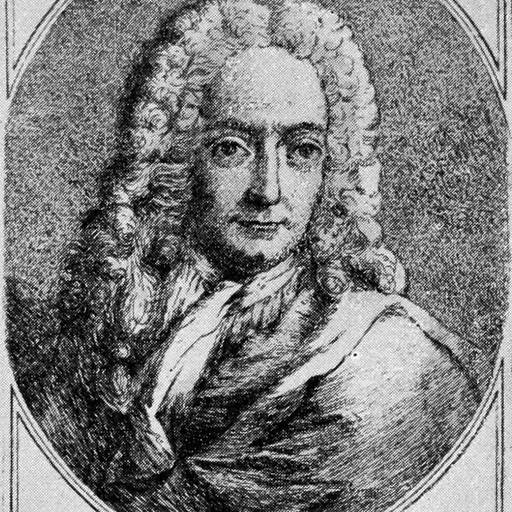
Giambattista Pittoni or Giovanni Battista Pittoni (6 June 1687 – 6 November 1767) was a Venetian painter of the late Baroque or Rococo period.

 Death of Dido
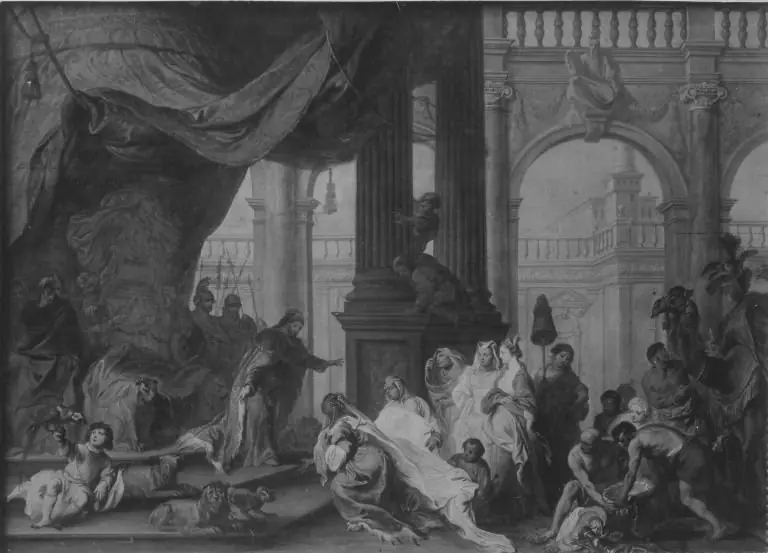 Salomon receives the Queen of Sheba
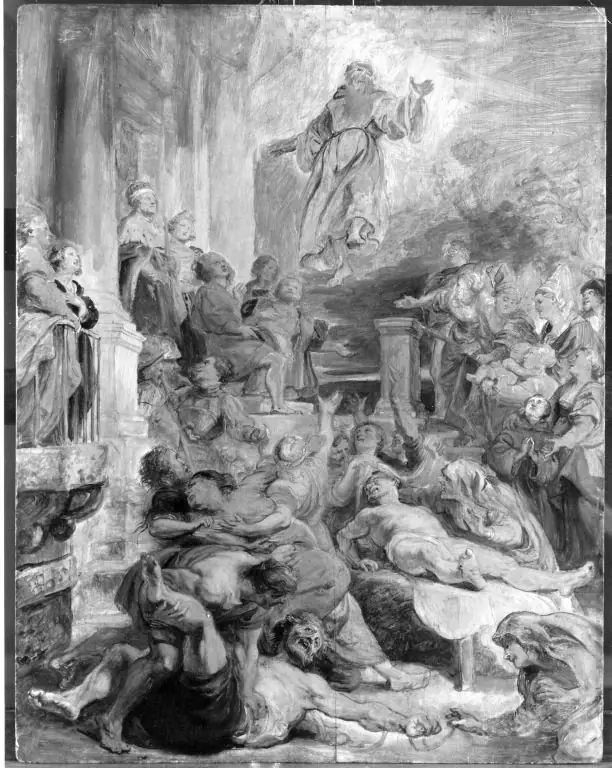 Miracles of St. Francis of Paola (Sketch)
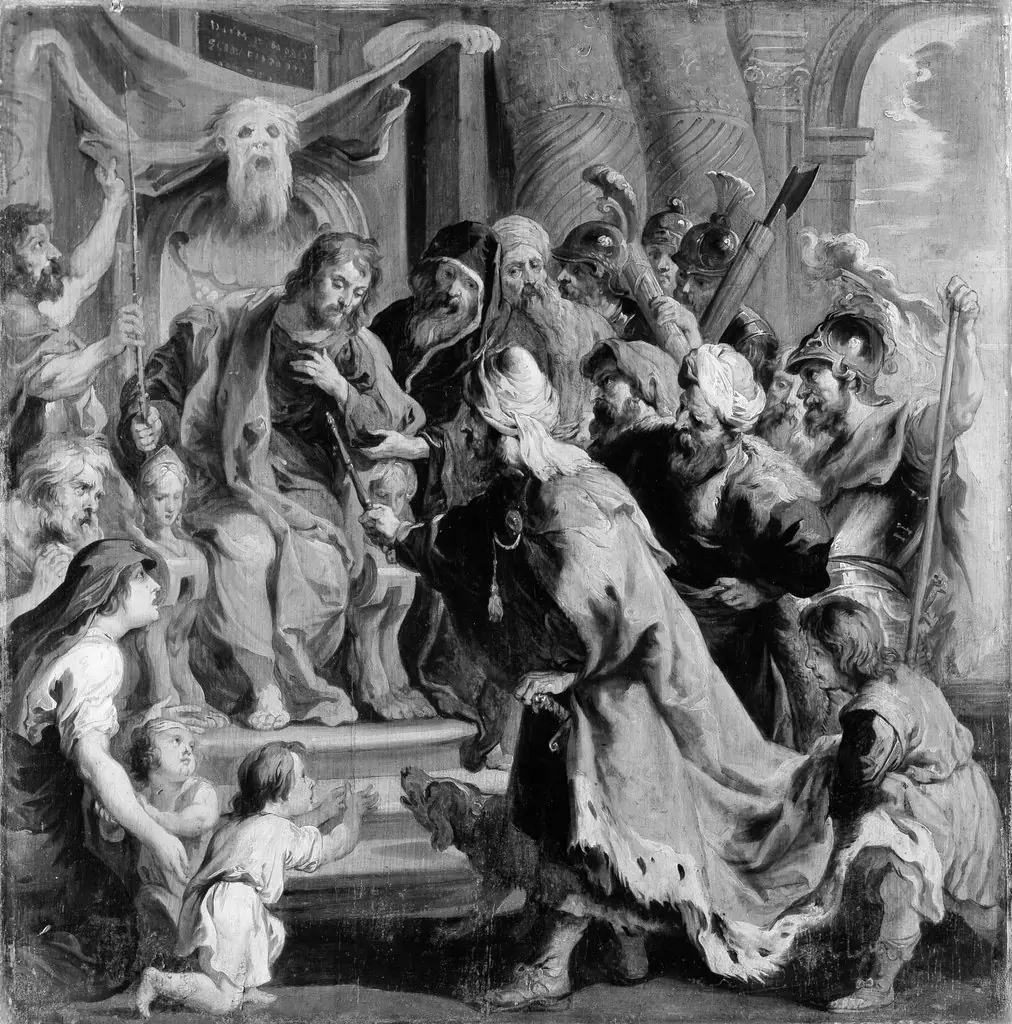 Cambyses Appointing Otanes Judge
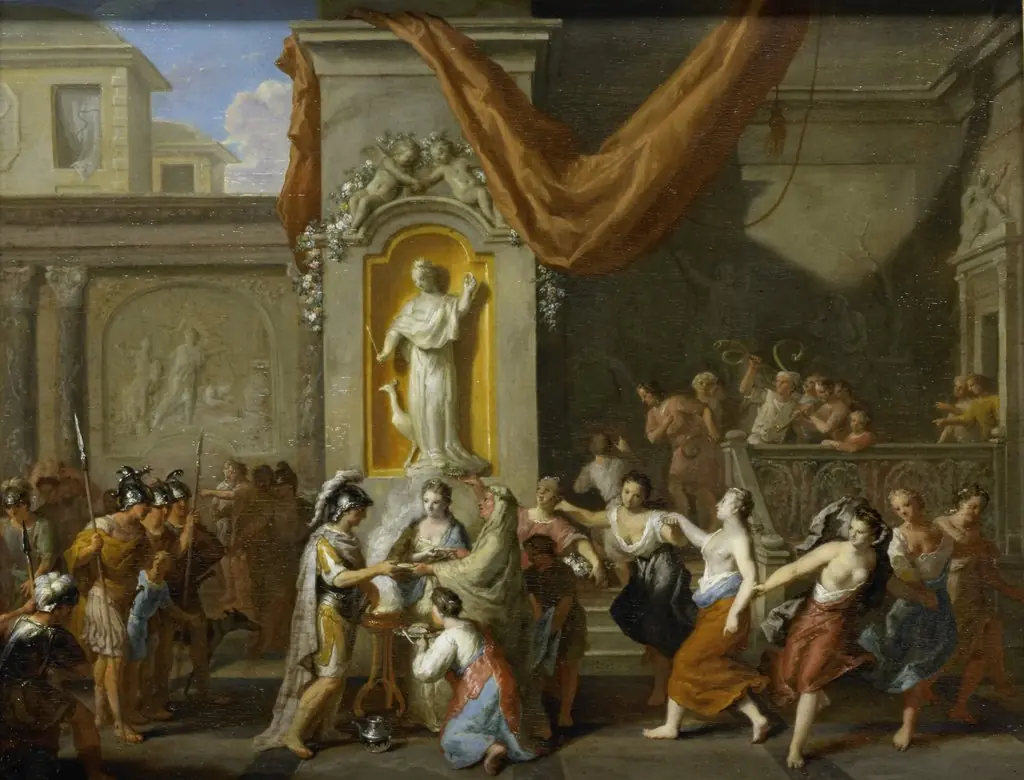 Marriage of Alexander the Great, King of Macedonia, with Roxana of Bacteriane
 A Pleasure House
 Allegory on the Crowning of Charles II
 Funny company
 Karneval
 Allegory of Happiness
 Mythological Scene
- The Marriage of Alexander the Great and Roxane of Bactria