Artwork
Descent of the Cross
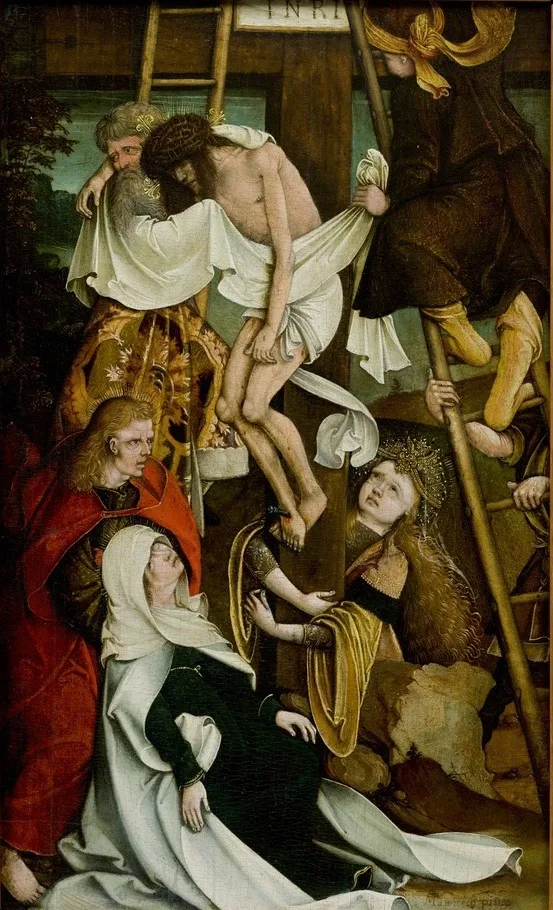
Descent of the Cross is an oil painting by the Northern Renaissance artist Mair von Landshut. It dates from 1500 and is held in the collection of the Bonnefanten Museum.
About this work
Subject & Meaning
The composition includes a wooden ladder, the Virgin Mary, Saint John, and other mourning figures, all arranged around the central body of Jesus.
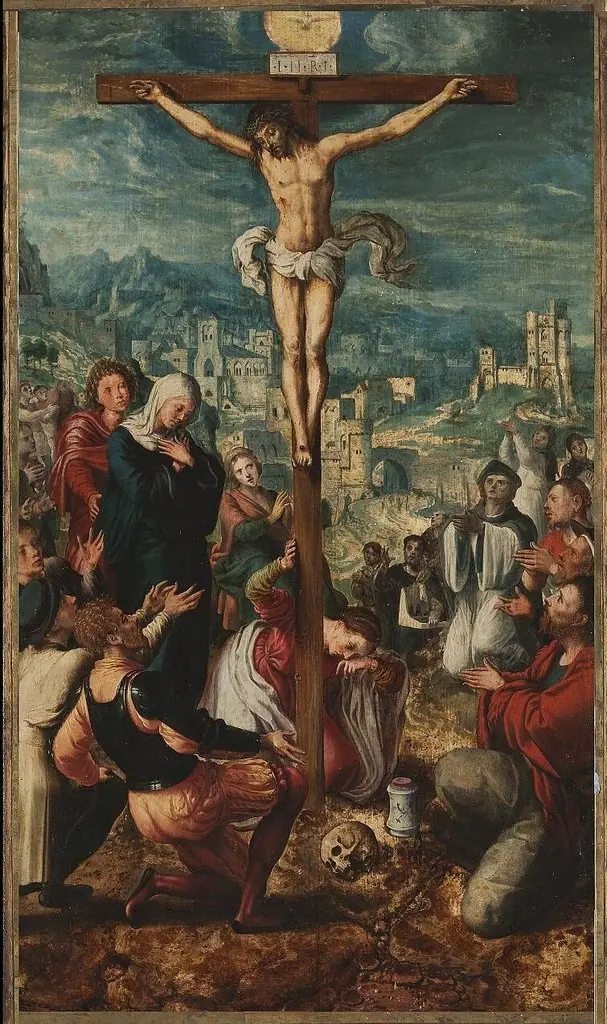
Descent of the Cross portrays the moment of Christ's removal from the crucifix, a scene drawn from the biblical narrative of the Passion. The composition includes a wooden ladder, the Virgin Mary, Saint John, and other mourning figures, all arranged around the central body of Jesus. In the late-Gothic/early-Renaissance tradition the ladder functions as a symbol of removal and salvation, while the grieving participants embody communal lament.
The work conveys theological ideas of sacrifice and redemption, emphasizing the human response to divine suffering. Executed in oil on panel around 1500, the painting measures 42 cm by 25.5 cm and is held in the collections of the Bonnefanten Museum and the Groninger Museum.
Technique & Style
The Descent of the Cross is executed in oil paint on a panel support. Measuring 42.0 cm in height and 25.5 cm in width, the work belongs to the religious art genre. The painting depicts the biblical scene of the Descent from the Cross, featuring Jesus Christ along with various men and women, and includes a ladder as a key compositional element.
The piece is attributed to Mair von Landshut, with some sources also suggesting a connection to Bernhard Strigel.
History & Provenance
Created around 1500, this panel painting depicting the Descent from the Cross is attributed to Mair von Landshut, with some records also associating Bernhard Strigel. Executed in oil on panel and measuring 42.0 by 25.5 cm, the piece was once in the private collection of Cornelis Hoogendijk.
It subsequently became part of the Dutch national holdings, managed by several successive state institutions including the Stichting Nederlands Kunstbezit, the Rijksdienst Beeldende Kunst, and the Instituut Collectie Nederland. Today the work belongs to the Cultural Heritage Agency of the Netherlands Art Collection and is located at either the Bonnefanten Museum or the Groninger Museum. No inventory number or exhibition history appears in the cited documentation.
Context
The Descent of the Cross, dated to around 1500, stands as a significant example of early 16th-century religious art in the German tradition. Scholarly attribution for the panel painting has historically oscillated between Mair von Landshut and Bernhard Strigel, reflecting the complex workshop dynamics of the period. The work's iconography, depicting the removal of Jesus Christ from the cross alongside figures of men and women, aligns with standard devotional imagery of the era.
Its physical presence in major Dutch collections, including the Bonnefanten Museum and the Groninger Museum, underscores its place within the cultural heritage of the Netherlands. The painting's survival and continued display highlight its value for understanding stylistic exchanges between artists active in the Swabian and Bavarian regions around the turn of the century.
Legacy
The Descent of the Cross by Mair von Landshut, created circa 1500, is regarded as an important example of early 16th-century German religious painting. Its stature is reflected in the fact that the work is part of the holdings of the Bonnefanten Museum and the Groninger Museum, both of which preserve notable examples of the period's art. The painting, executed in oil on panel and measuring 42 cm by 25.5 cm, exemplifies the technical and thematic concerns of early 16th-century devotional art.
Overview
Mair von Landshut's Descent of the Cross, completed in 1500, is an oil painting from the Northern Renaissance. This work, now housed in the Rijksmuseum, portrays the solemn moment when Christ's body is taken down from the cross. The German artist, active in Bavaria, employed oil paint to render this significant religious narrative, characteristic of the period's devotional art.
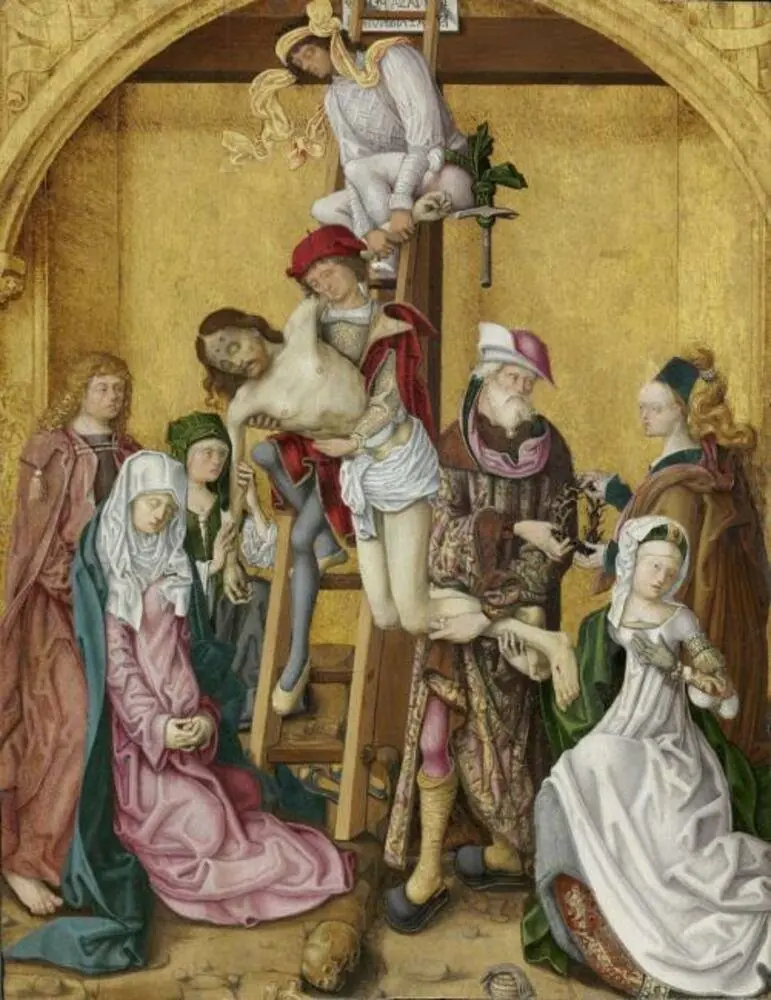
Artist & collection

Artist
Mair von Landshut (active c. 1485–1504 or later) was a German engraver, painter, and designer of woodcuts, who worked in Bavaria. He probably came from Freising near Munich, and worked in both towns, as well as…

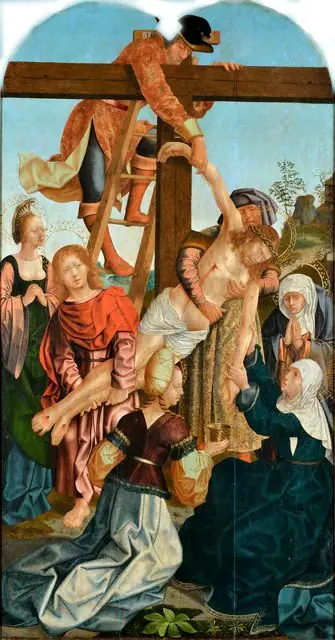 Descida da Cruz
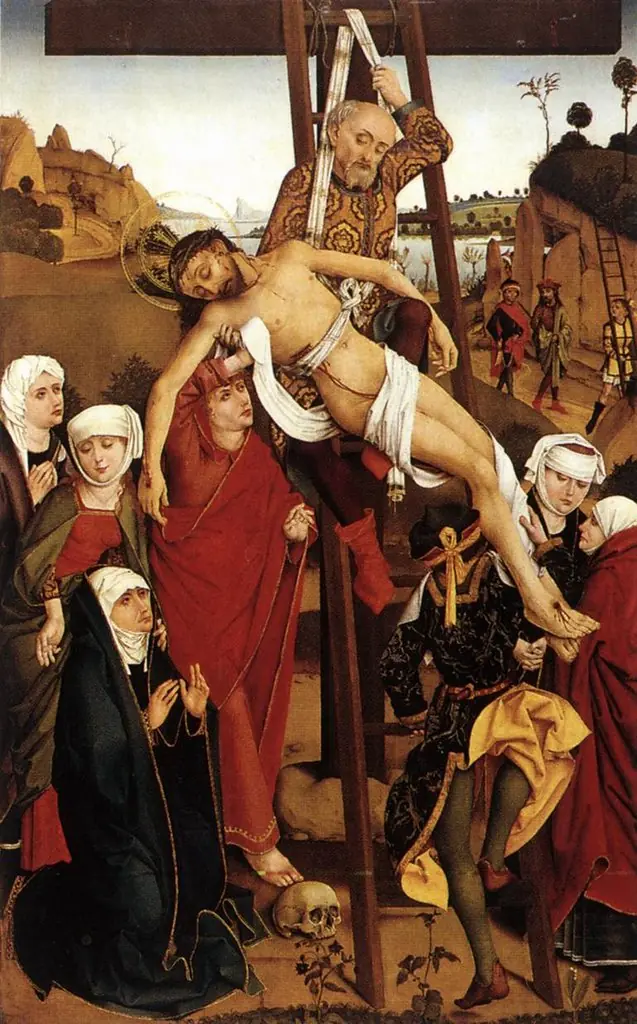 Hofer Altar: Kreuzigung Christi
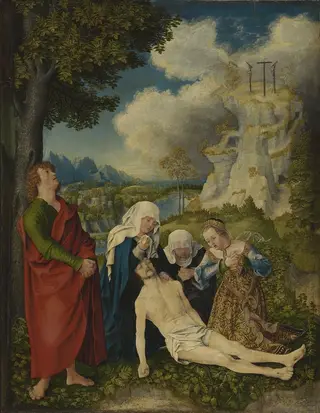 Lamentation of Christ
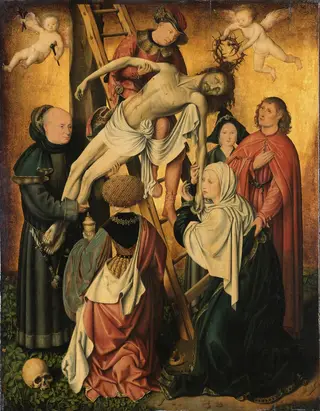 Kreuzabnahme
 Crucifixion
 Crucifixion
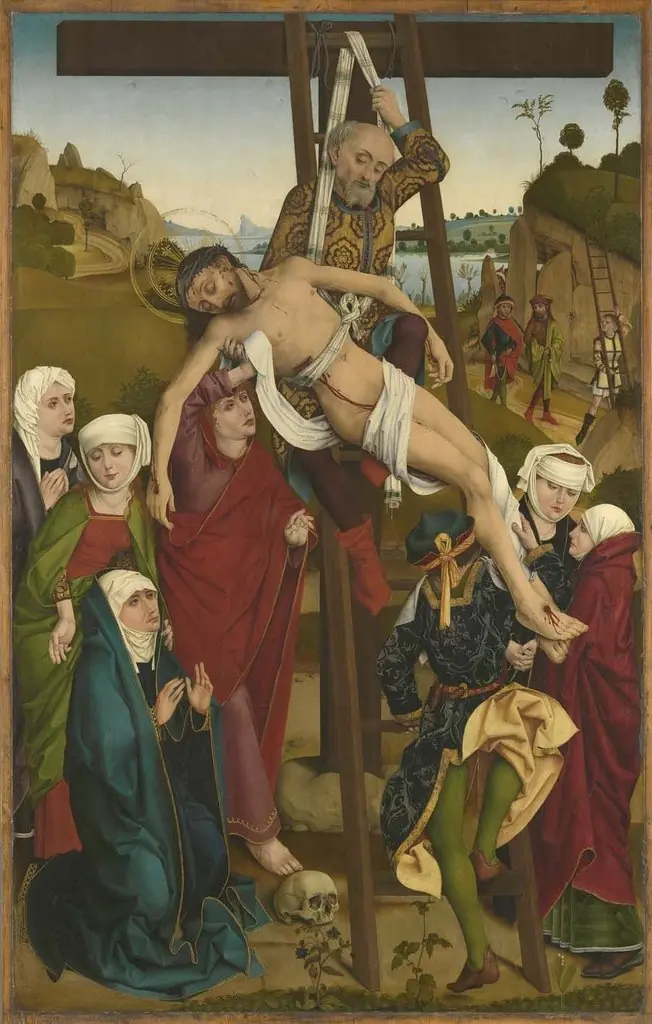 Hofer Altar: Kreuzabnahme Christi (Rückseite: Geburt Christi)
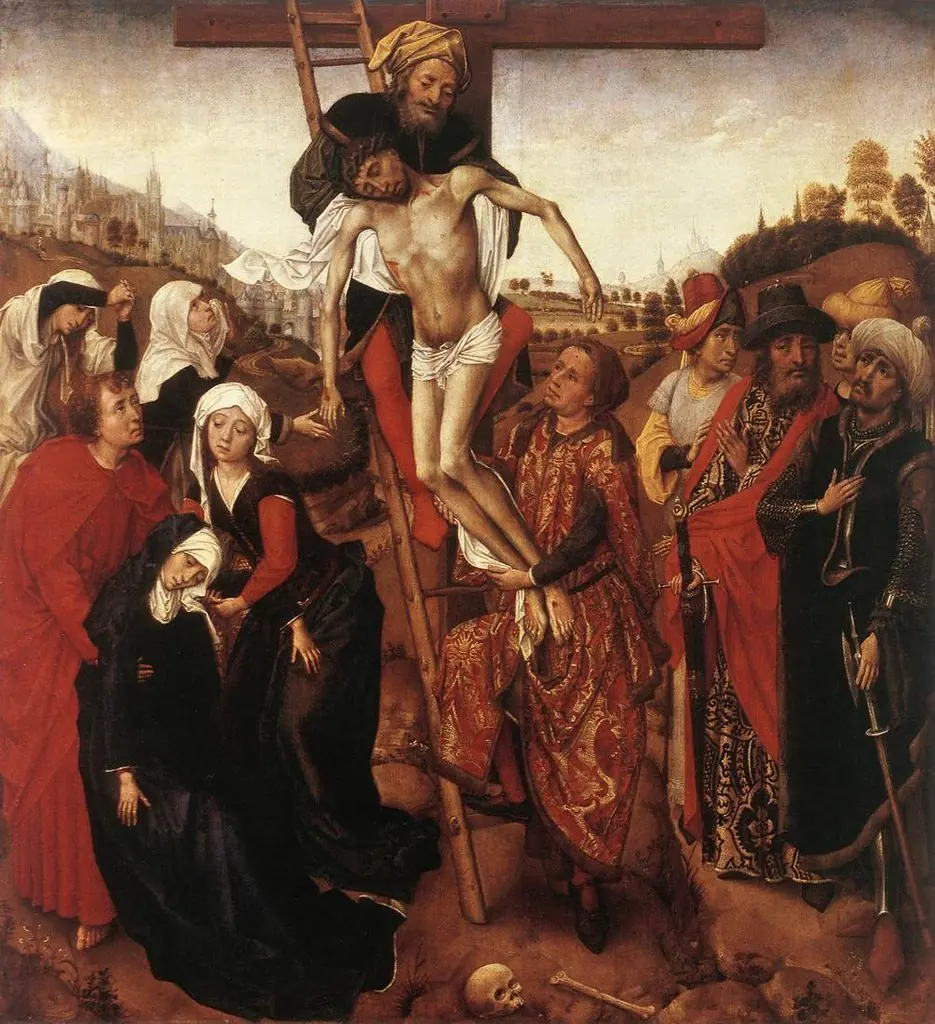 Deposition by Vrancke van der Stockt in the Alte Pinakothek
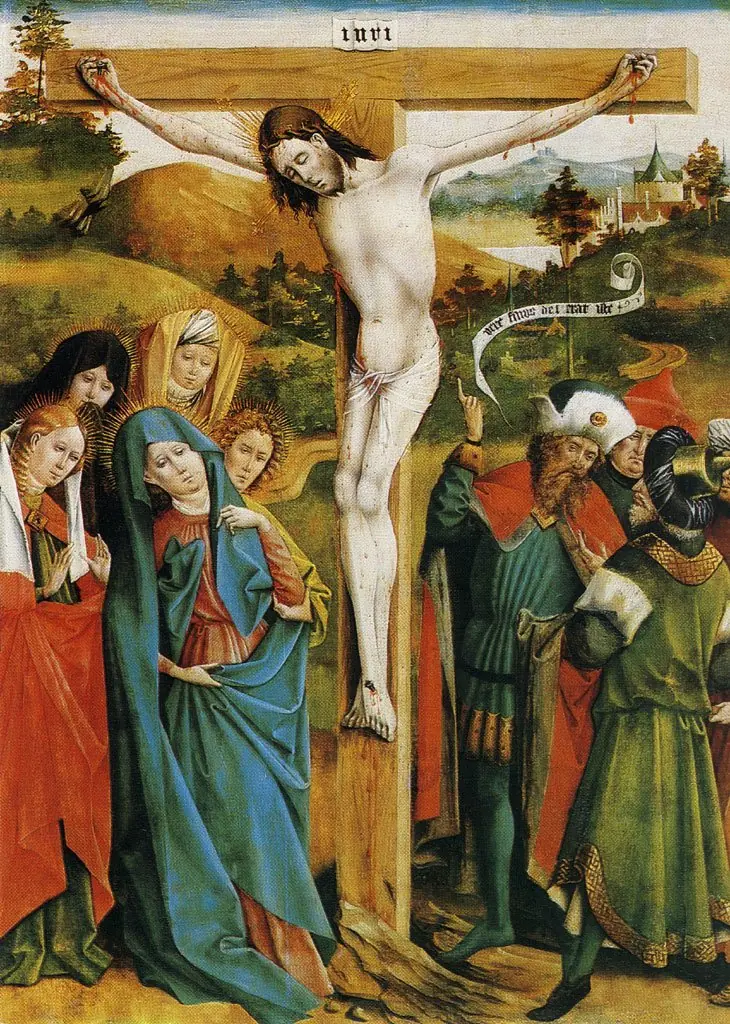 Crucifixion of Christ
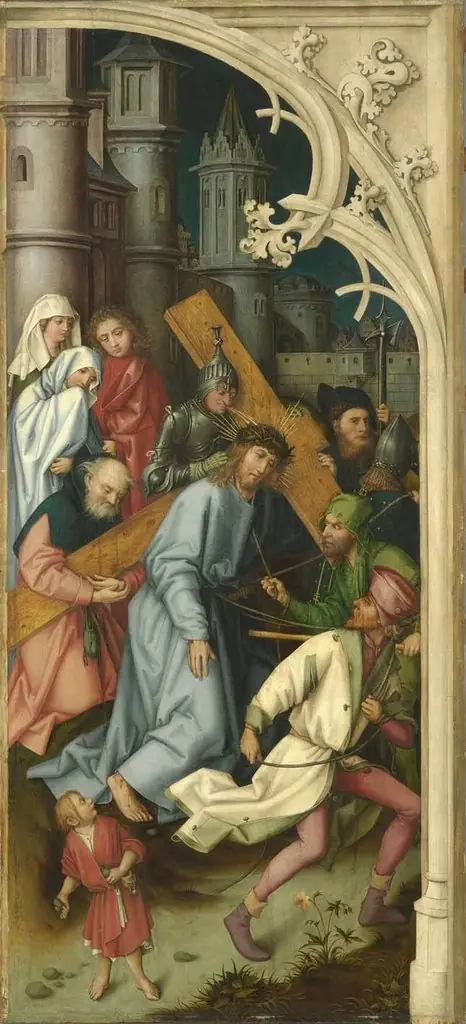 Kaisheimer Altar: Kreuztragung Christi
 Triptych:Crucifixion of Jesus (central panel)
- The Descent from the Cross