Artwork
The Garden of the Fortuny Residence
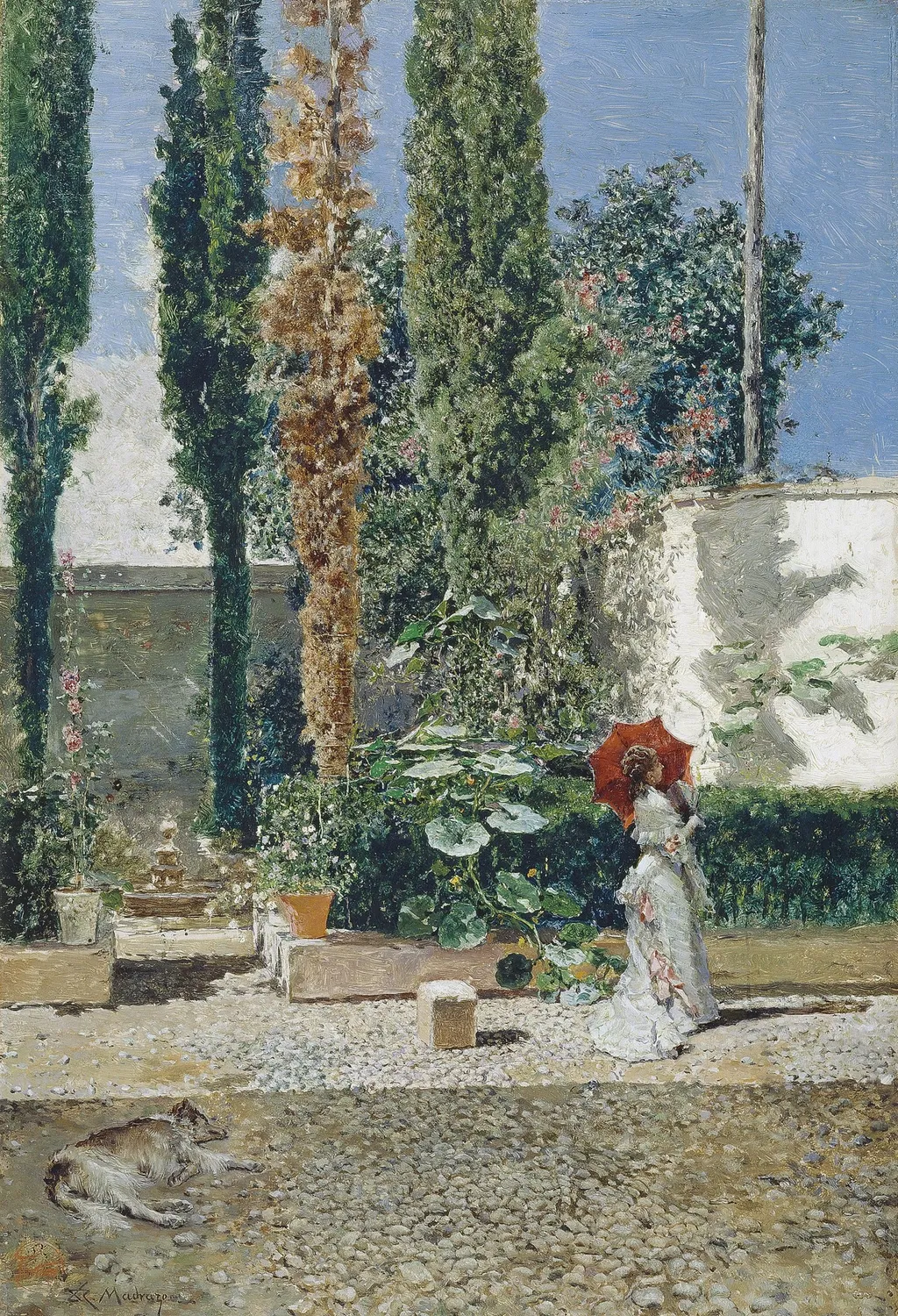
The Garden of the Fortuny Residence is an oil painting by the Impressionist artist Mariano Fortuny Marsal. It dates from 1872 and is held in the collection of the Museo del Prado.
About this work
Subject & Meaning
The work evokes Velázquez's view of the Villa Medici garden in Rome.
The painting depicts the garden of the rented house at number 1 Realejo Bajo in Granada, at the foot of the Alhambra, where Fortuny settled with his family around 1870. The composition is structured around strong vertical cypress trees, whose tops appear cropped, and horizontal bands of sky painted between them, with a whitewashed wall marking the horizon. A hedge forms another horizontal plane closer to the viewer, while a path leads in the background to a fountain, characteristic of southern Spanish towns, which serves as the vanishing point organizing the depth of the scene through gradations of light and shadow. In the foreground, a stone path is rendered with meticulous detail. The work evokes Velázquez's view of the Villa Medici garden in Rome. Fortuny captured the textures of plants and trees and the luminous atmosphere of a summer day, using almost no black for shadows, a trait associated with Impressionism. After Fortuny's death in 1874, Raimundo de Madrazo completed the canvas, adding a sleeping dog in the shade and the figure of Cecilia de Madrazo, the artist's widow, strolling beneath a vibrant red parasol in the French fashion and carrying a fan, introductions that lend the scene greater intimacy.
Technique & Style
Executed in oil on panel, the work measures 40 × 28 cm. Fortuny established a vertical rhythm with tall cypresses silhouetted against the sky, their tops truncated, then laid down broad horizontal passages of sky between them using compact, fluid strokes.
The garden’s warm southern light is articulated by a whitewashed wall that marks the horizon, while a low hedge and distant fountain provide horizontal counterpoints and a vanishing point. In the foreground, a stone path is rendered with careful detail; Fortuny left space to introduce a sleeping dog, though only its preparatory lines survive. He avoided black for shadows, favoring chromatic transitions typical of contemporary plein-air practice.
After Fortuny’s death in 1874, Raimundo de Madrazo completed the composition by adding the sleeping dog with quick, assured strokes, inserting a figure of Cecilia de Madrazo strolling under a vivid red parasol, and unifying the foreground shadow.
History & Provenance
Mariano Fortuny Marsal began work on The Garden of the Fortuny Residence in 1872 while residing in Granada, Spain, where he painted the garden of his rented home in the Realejo Bajo district near the Alhambra. The painting was initially left incomplete following Fortuny's death in 1874, after which his brother-in-law Raimundo de Madrazo finished it around 1877. Madrazo added key figures including a sleeping dog and Fortuny's wife Cecilia, who is depicted under a red umbrella holding a fan, as well as refining compositional elements such as shadows and spatial depth. The work, created in oil on panel, is housed in the Museo del Prado and reflects Fortuny's engagement with Spanish landscape traditions and the influence of artists like Velázquez.
The painting is held by the Museo Nacional del Prado in Madrid, as recorded in the work's cataloguing data and confirmed by both the Italian and Spanish reference articles on the piece. The Prado's own collection entry lists the work as an oil on panel measuring 40 × 28 cm, dated 1872.
No specific inventory or accession number is provided in the available sources. Likewise, no exhibition history is documented beyond the general bibliographic references cited in the Spanish-language article, which point to a 1989 Fortuny exhibition organized by the Fundación Caja de Pensiones in Barcelona and a 2001 monograph by María del Mar Nicolás published by the Fundación Universitaria Española. None of these entries specify that this particular painting was included in the 1989 show.
Context
The Garden of the Fortuny Residence occupies a unique position in art history as a collaborative work initiated by Mariano Fortuny Marsal and completed posthumously by his brother-in-law, Raimundo de Madrazo. While Fortuny began the painting around 1872 during his residence in Granada, the work remained unfinished at his death in 1874 and was concluded circa 1877. Madrazo added significant elements, including a sleeping dog and a figure of Fortuny's widow, Cecilia, which introduced a new level of intimacy to the scene. Art historical analysis highlights the painting's technical affinity with Impressionism, particularly in its avoidance of black for shadows and its capture of atmospheric light. The composition also references earlier traditions, drawing parallels to Velázquez's depictions of the Villa Medici garden, thereby situating Fortuny's work within a continuum of Spanish landscape painting that bridges academic tradition and modern sensibility.
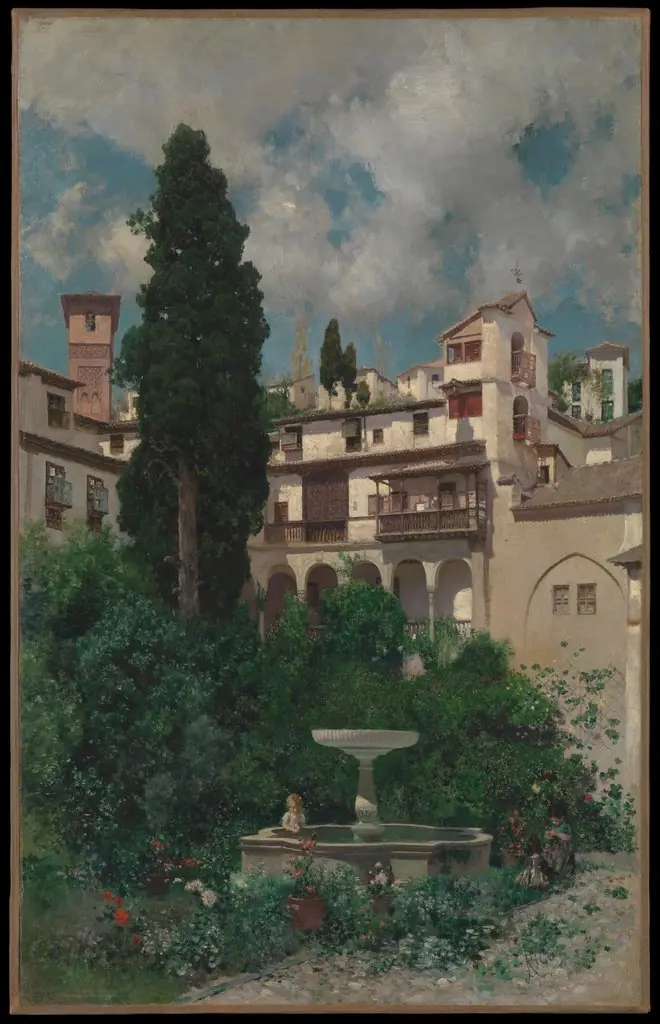
Own this work as a print
Artist & collection
Artist
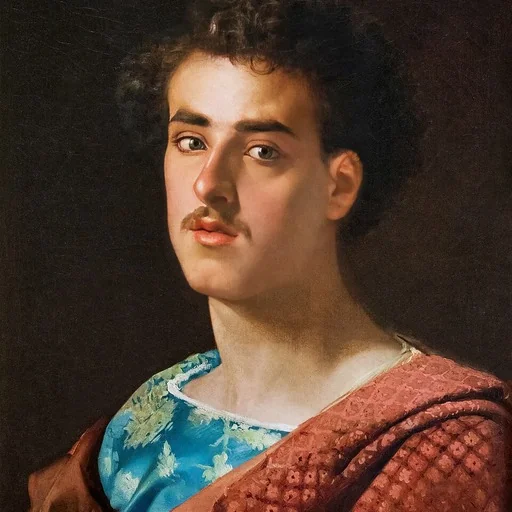
Mariano Fortuny y Marsal (Catalan: Marià Fortuny i Marsal, pronounced; June 11, 1838 – November 21, 1874) was a Spanish painter known for works focusing on Romantic fascination with Orientalist themes, historicist genre…

- A Spanish Garden
 Gardens of the Generalife
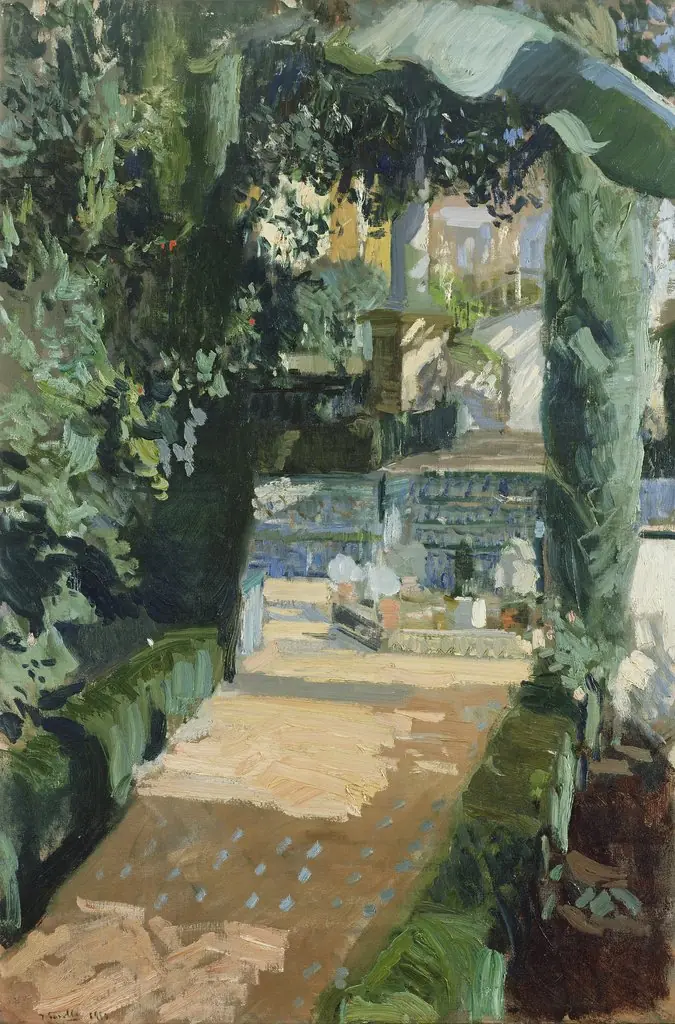 Court of the Dances, Alcázar, Sevilla
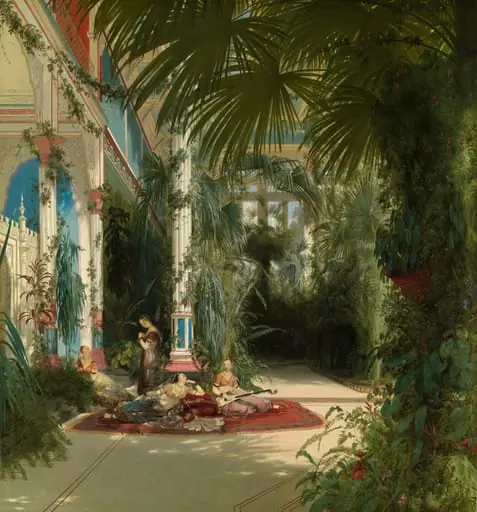 The Interior of the Palm House on the Pfaueninsel Near Potsdam
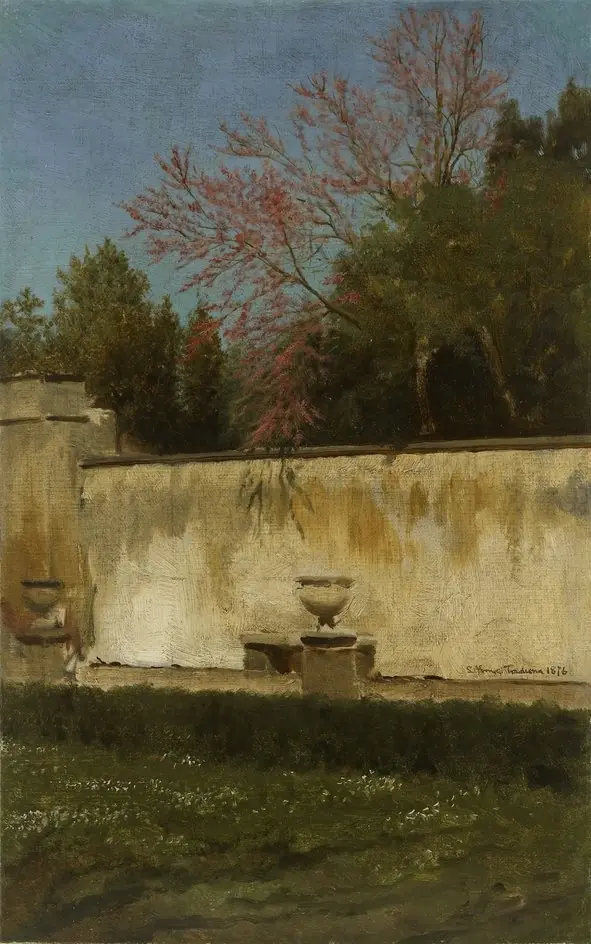 A Corner of the Gardens of the Villa Borghese
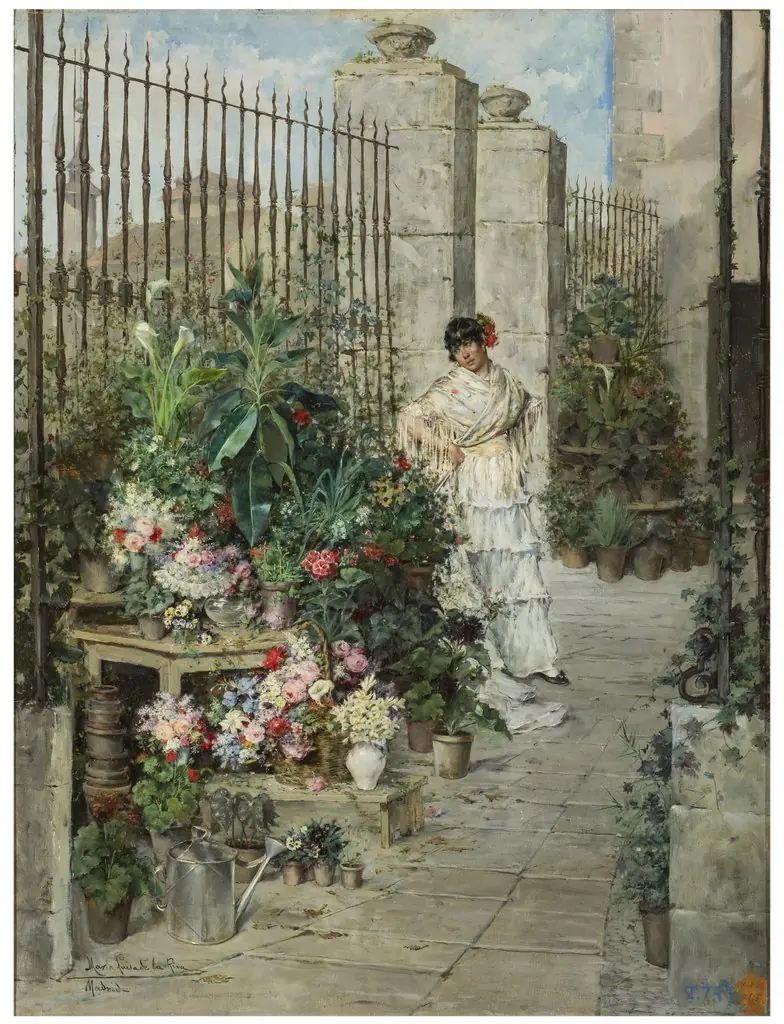 Puesto de flores
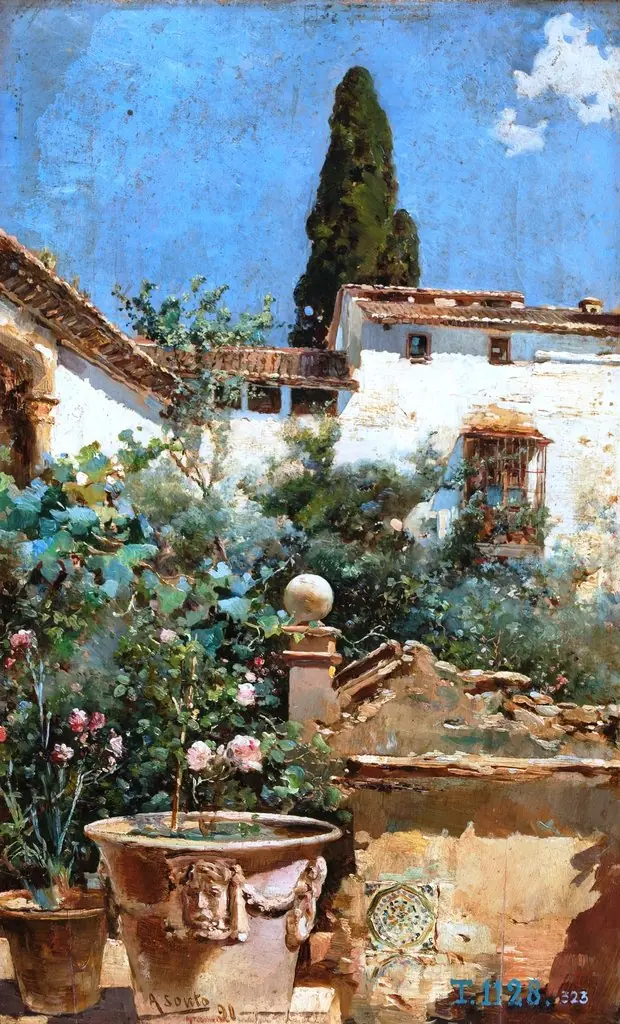 Paisaje de Granada
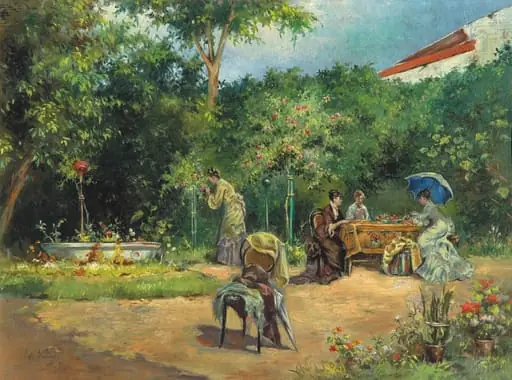 În grădină
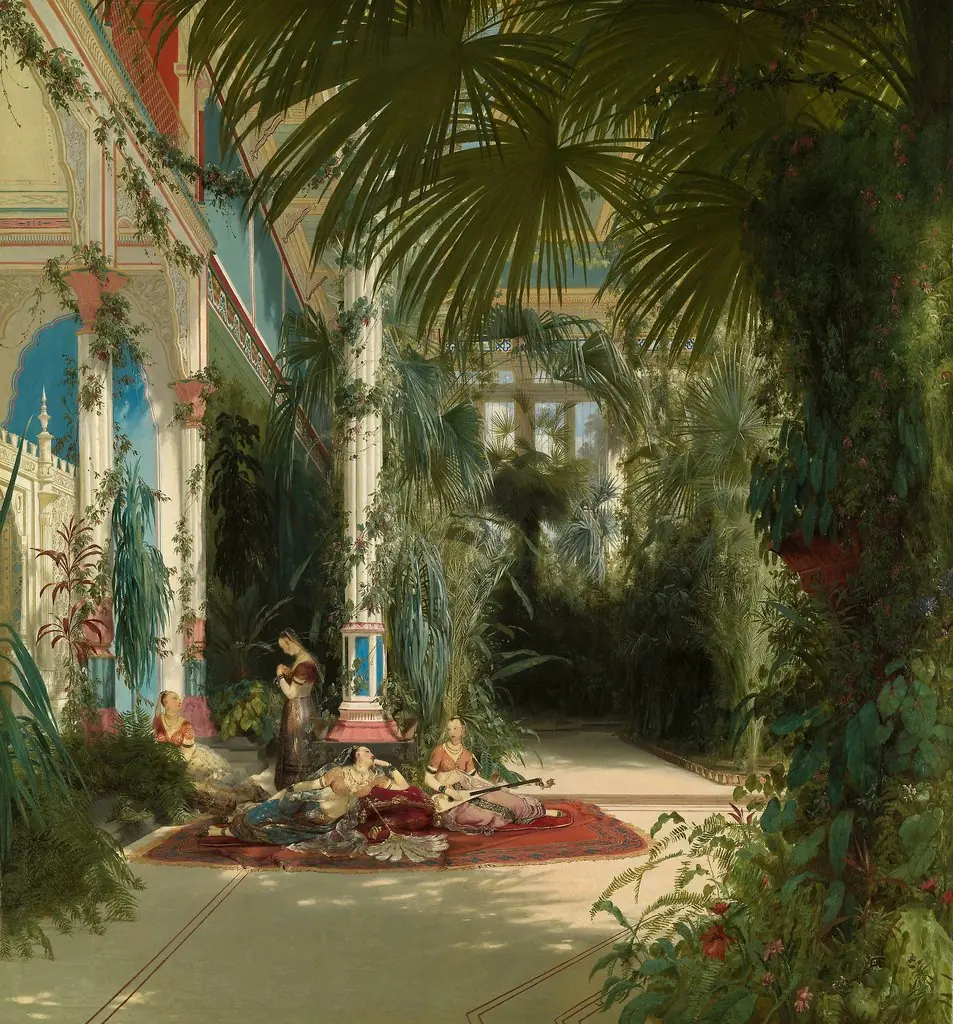 The Interior of the Palm House on the Pfaueninsel Near Potsdam
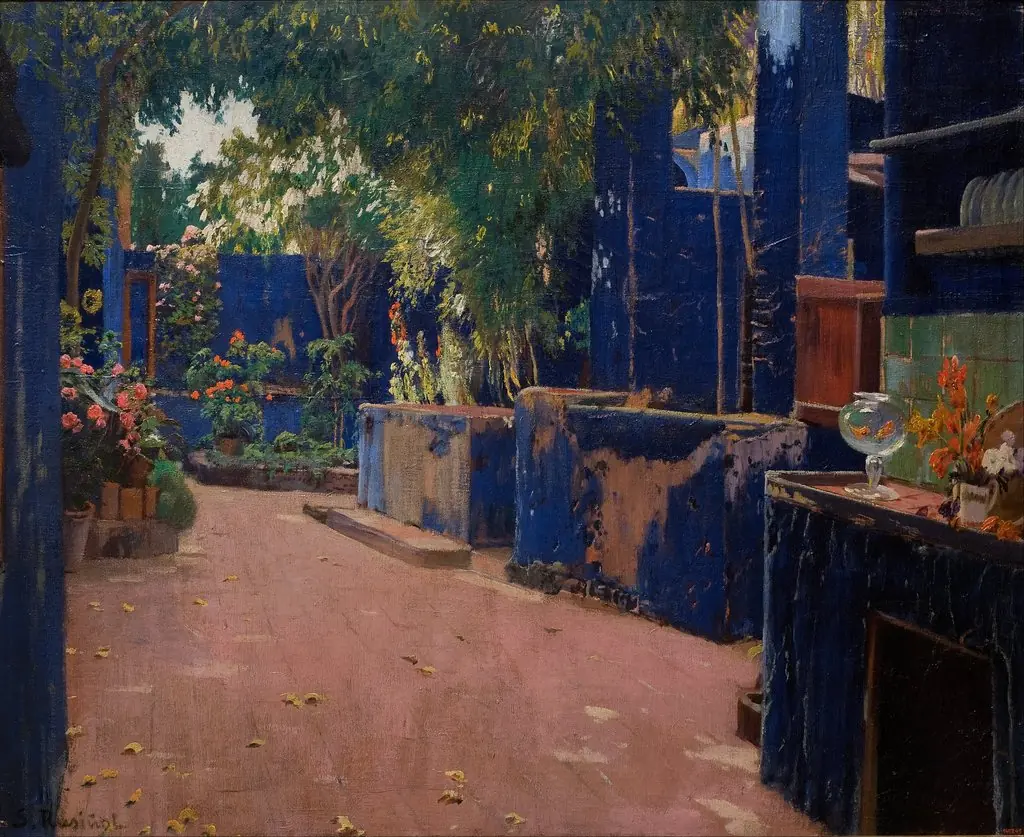 Blue Courtyard
 The Spring of léri in Chassagne
 La Torre de las Damas in the Alhambra, Granada