Artwork
The Immaculate Conception
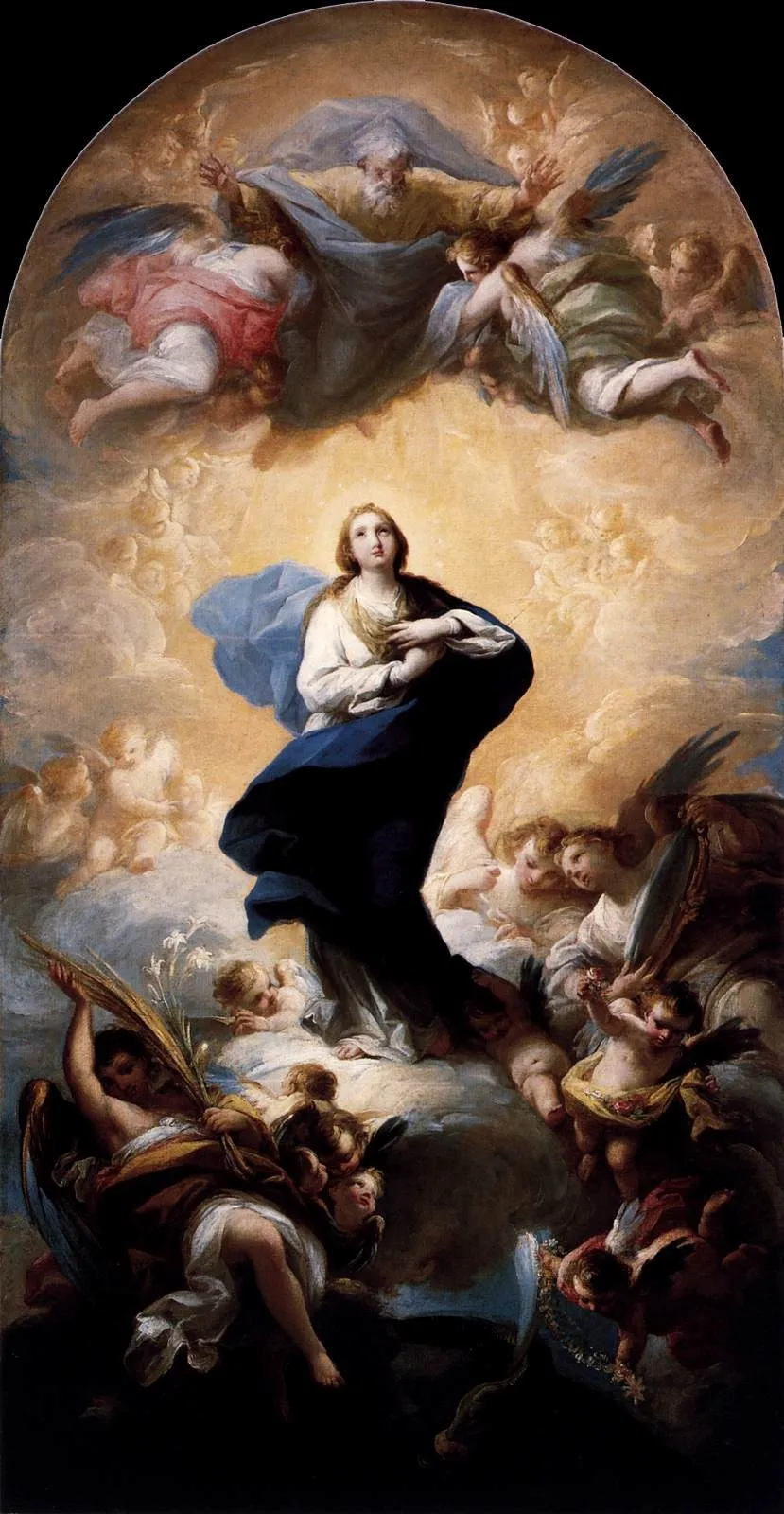
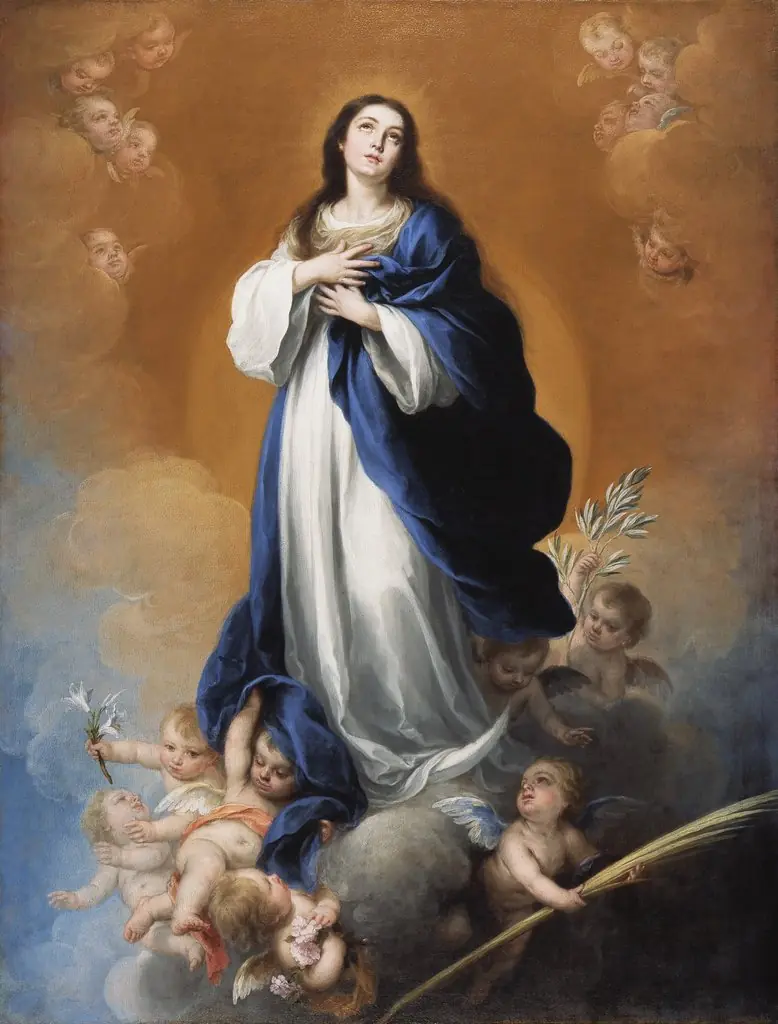
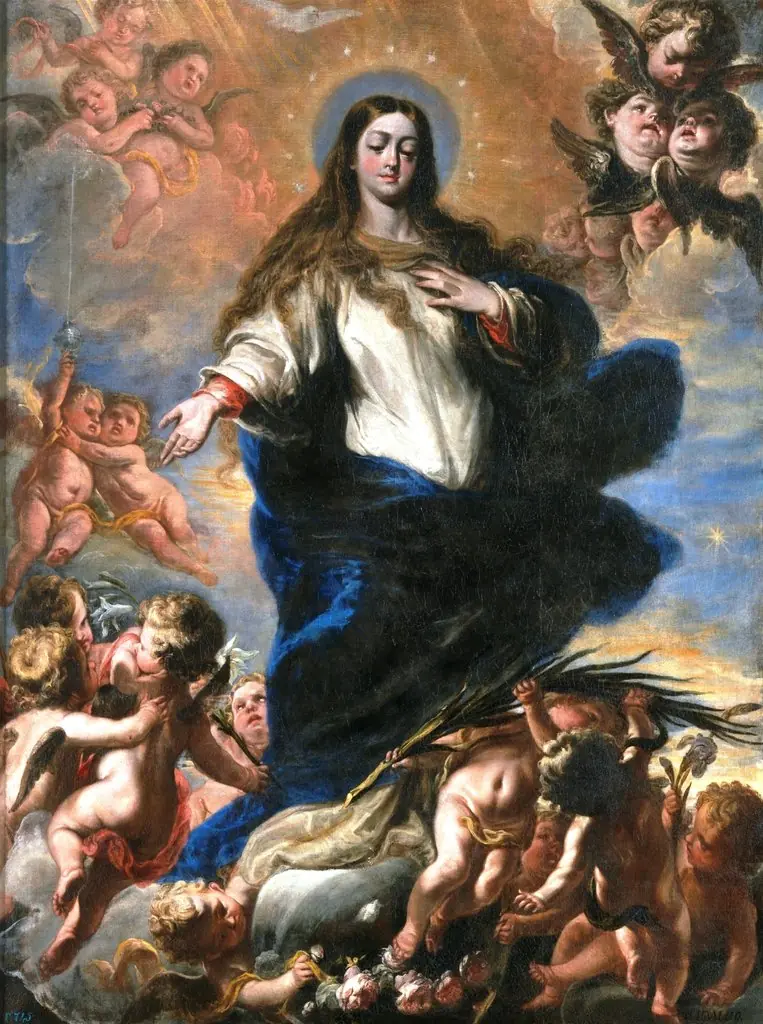
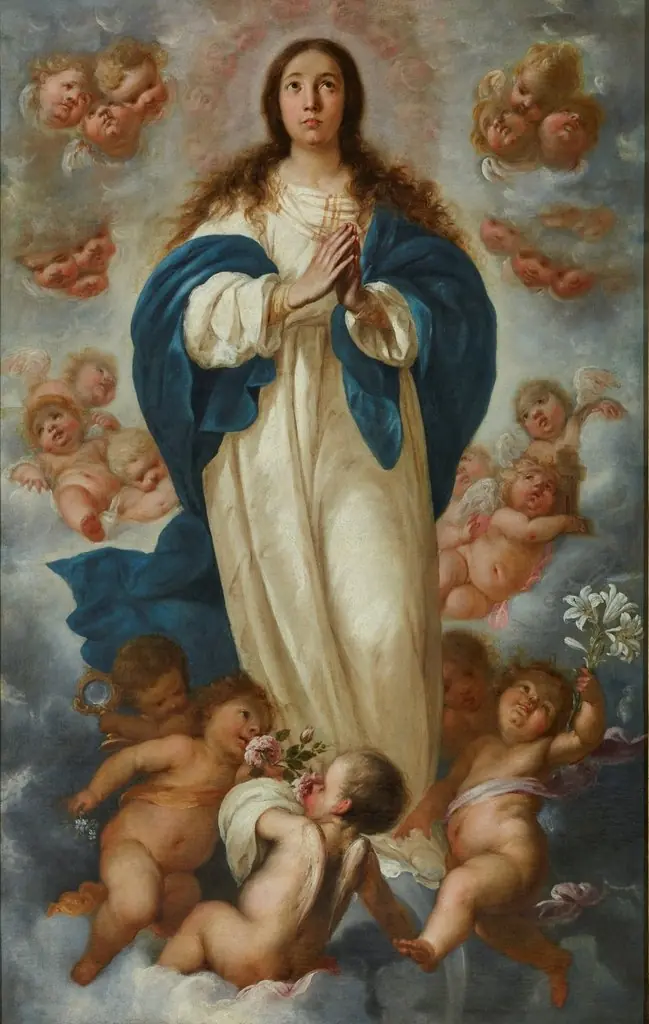
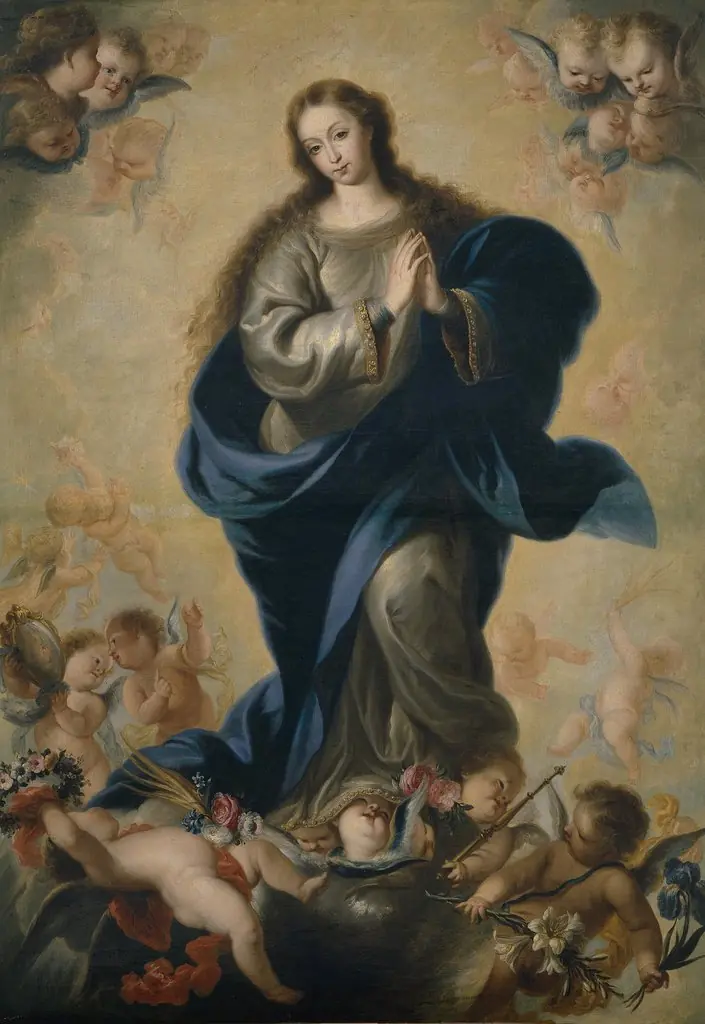
The Immaculate Conception is an oil painting by the Rococo painting artist Mariano Salvador Maella. It dates from 1791 and is held in the collection of the Museo del Prado.
About this work
Subject & Meaning
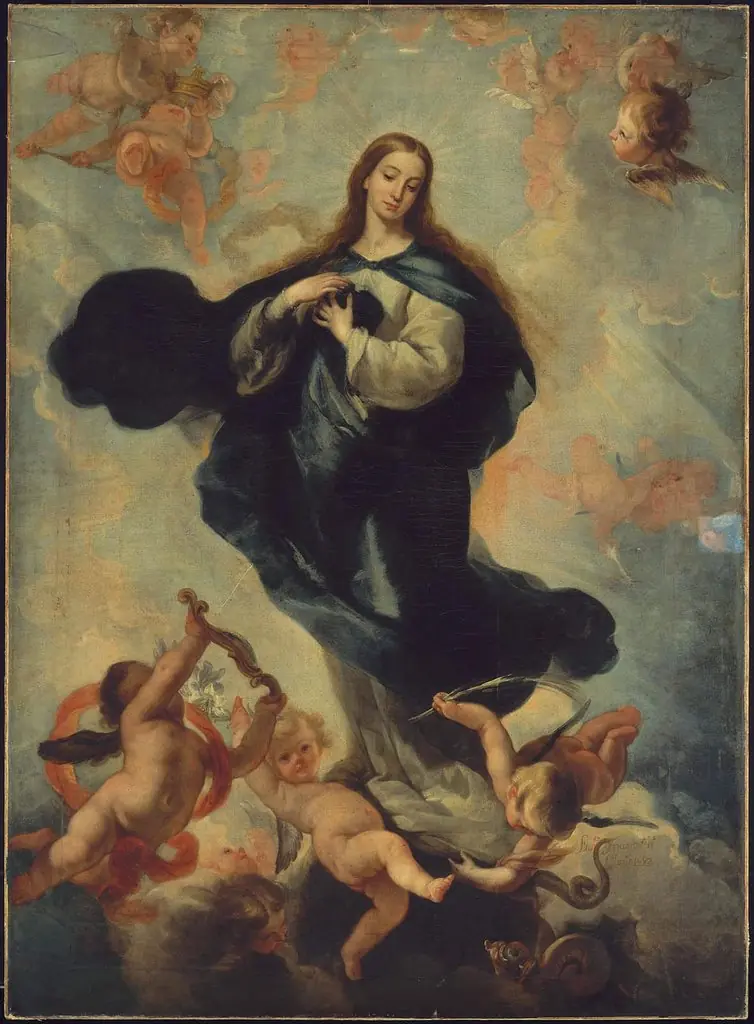
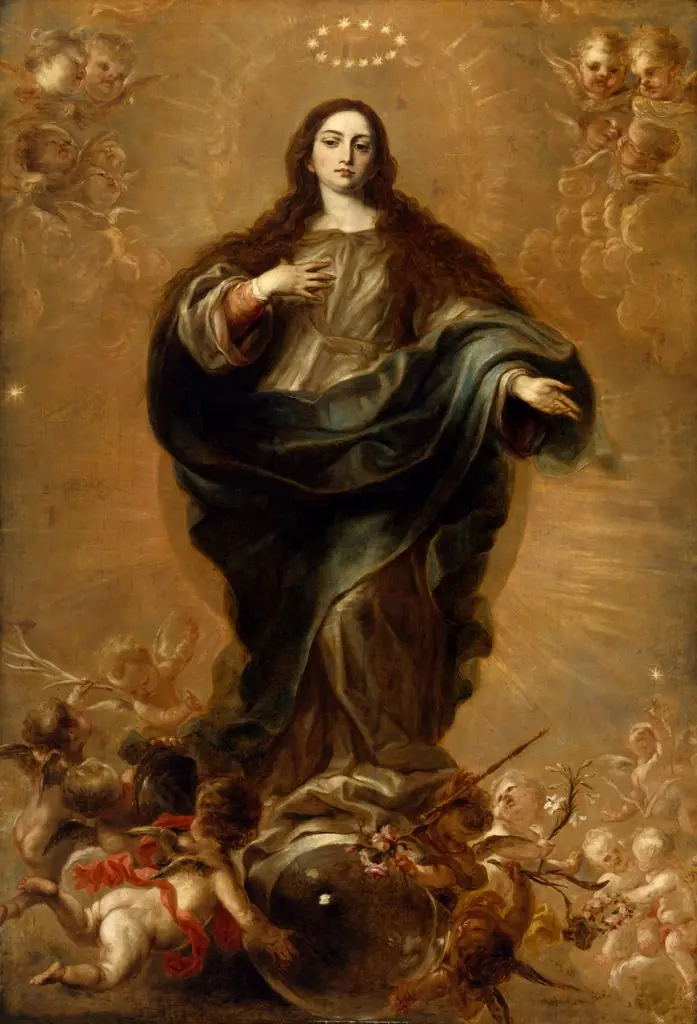
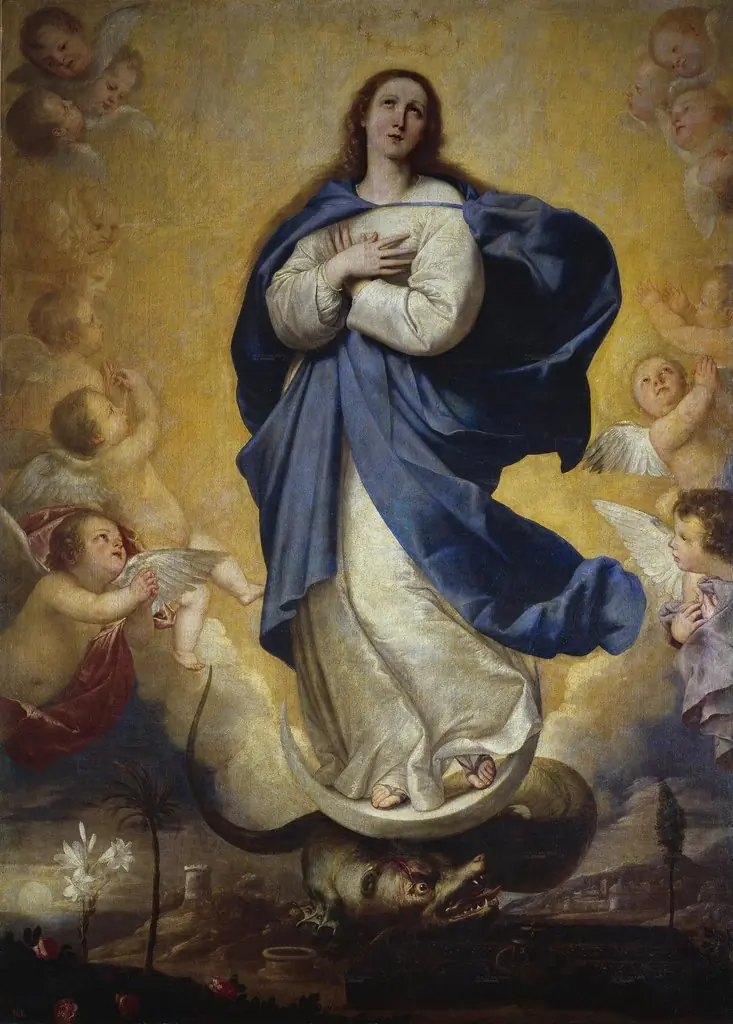
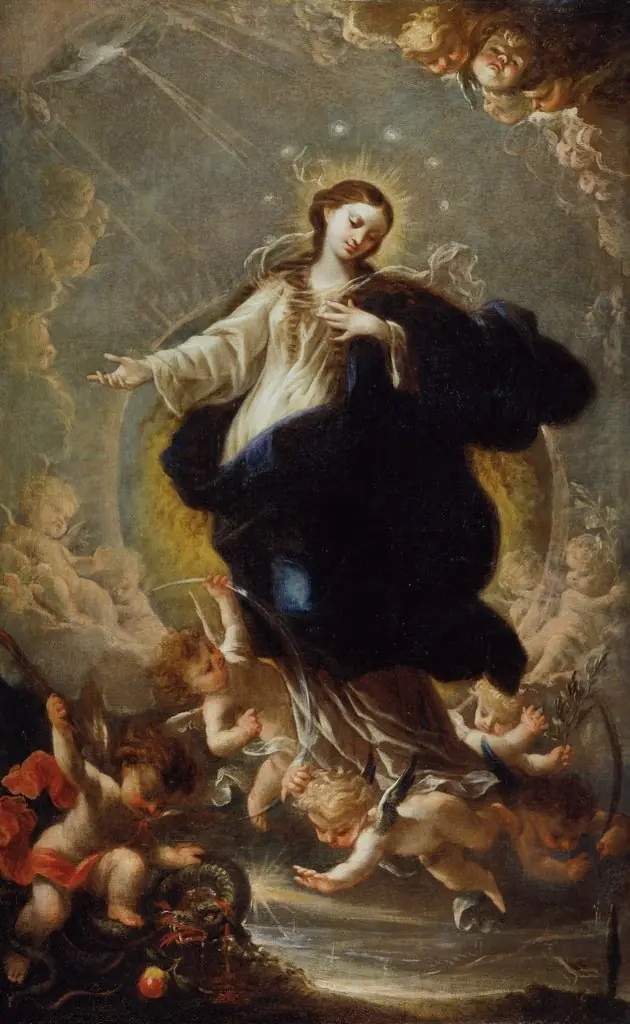
Mariano Salvador Maella's 1781 oil painting depicts the Immaculate Conception of the Virgin Mary as its central religious subject.
Mariano Salvador Maella's 1781 oil painting depicts the Immaculate Conception of the Virgin Mary as its central religious subject. The composition incorporates specific iconographic elements associated with royal patronage and divine authority, notably featuring the insignia of the Order of Charles III. An orb is also present within the imagery, serving as a traditional symbol of global sovereignty and Christ's dominion.
These visual components combine to represent the theological doctrine of Mary's conception without original sin, framed within the context of Spanish royal devotion.
Technique & Style
The Immaculate Conception is executed in oil paint on canvas, a standard support for late eighteenth-century Spanish religious painting. Its canvas measures 142 cm in height by 74 cm in width, giving the composition a distinctly vertical, elongated format suited to a devotional subject.
The work belongs to the religious genre and is classified as a painting, consistent with Maella's practice as a court painter working in a restrained, academic style rooted in the Spanish Baroque tradition.
No information is available in the provided sources regarding the painting's handling, surface condition, or specific stylistic qualities such as palette or brushwork.
History & Provenance
The work was painted in 1781 by Mariano Salvador Maella, as indicated by internal records and the museum’s cataloguing.
It entered the collection of the Museo del Prado, where it remains held today. The canvas depicts the Immaculate Conception of Mary and was produced in oil on canvas with dimensions of 142 cm in height by 74 cm in width.
Context
Mariano Salvador Maella emerged as a prominent religious painter in late 18th-century Spain, active during the reign of Charles III when the royal court commissioned numerous devotional works. His 1781 canvas The Immaculate Conception exemplifies the era's blend of Neoclassical clarity and Counter-Reformation piety, reflecting broader Spanish artistic currents of the period. The work's composition, featuring the Virgin crowned by celestial roses amid clouds, aligns with Counter-Reformation iconography while demonstrating Maella's technical mastery of oil on canvas.
Today housed in Madrid's Museo del Prado, the painting remains a key example of Spanish religious art from the late Bourbon era.
Overview
Mariano Salvador Maella’s 1791 oil painting, titled The Immaculate Conception, presents a celestial scene in which a serene female figure hovers above a cloud‑filled sky. She is surrounded by a host of angels, some playing instruments, others gesturing upward, while a group of kneeling figures below looks toward her. The composition is dominated by soft blues, warm golds and a luminous halo that emphasizes the central figure’s divinity.
Artist & collection

Artist
Mariano Salvador Maella Pérez (21 August 1739 – 10 May 1819) was a Spanish painter known primarily for his portraits and religious frescoes.