Artwork
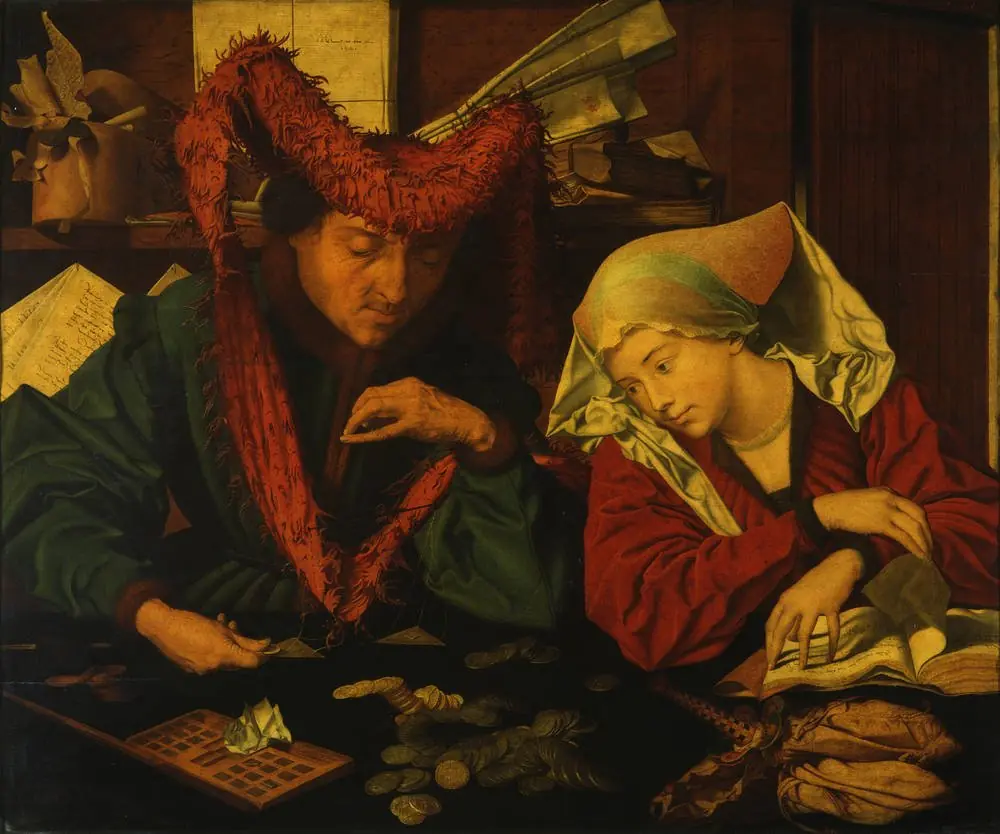
The Moneychanger and his Wife
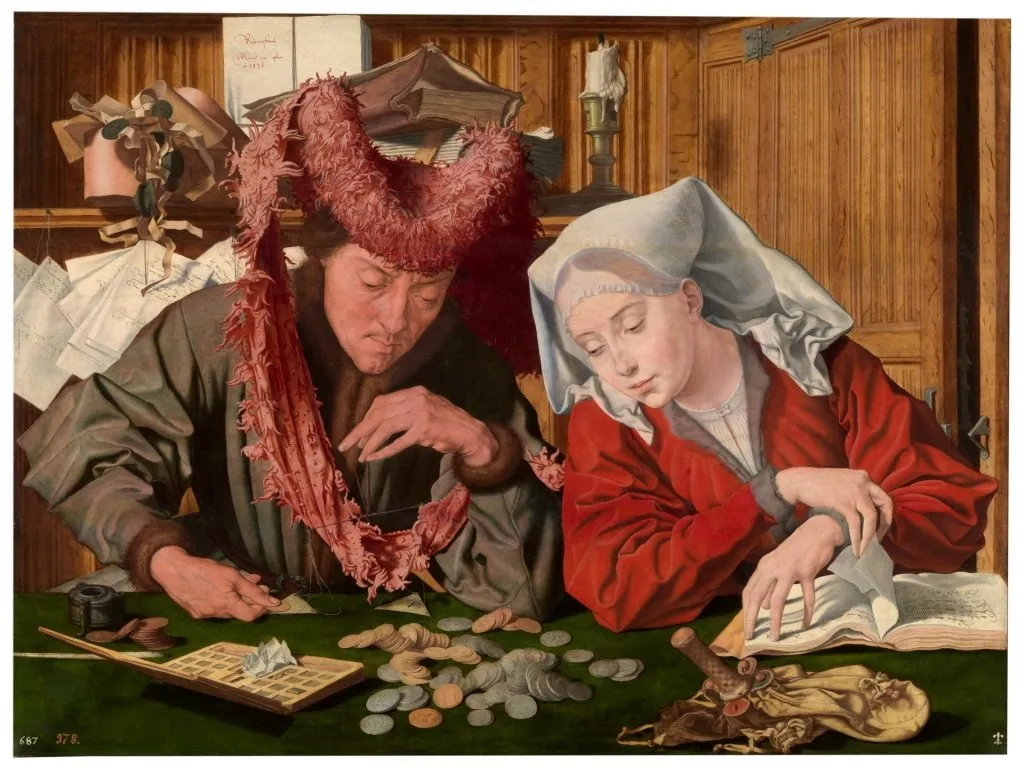
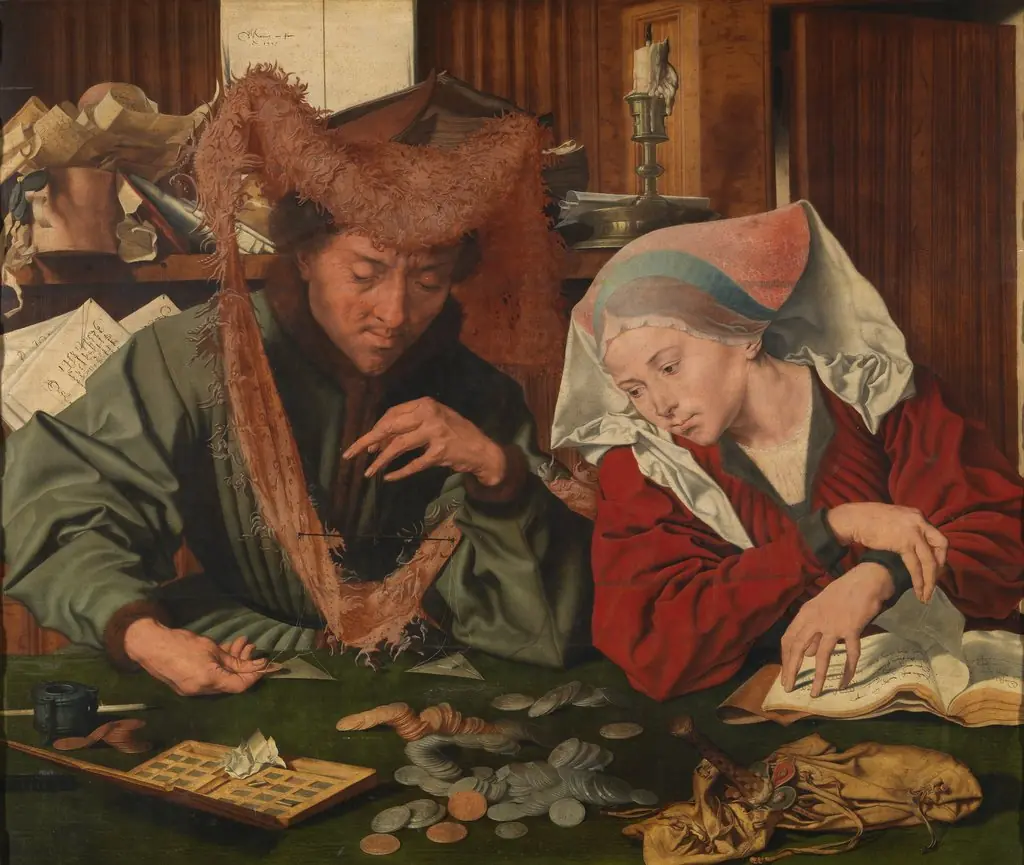
The Moneychanger and his Wife is an oil painting by the Northern Renaissance artist Marinus van Reymerswaele. It dates from 1538 and is held in the collection of the Museo del Prado.
About this work
Subject & Meaning
A specific element of iconography includes the depiction of the Golden Fleece, which appears within the scene alongside the monetary instruments.
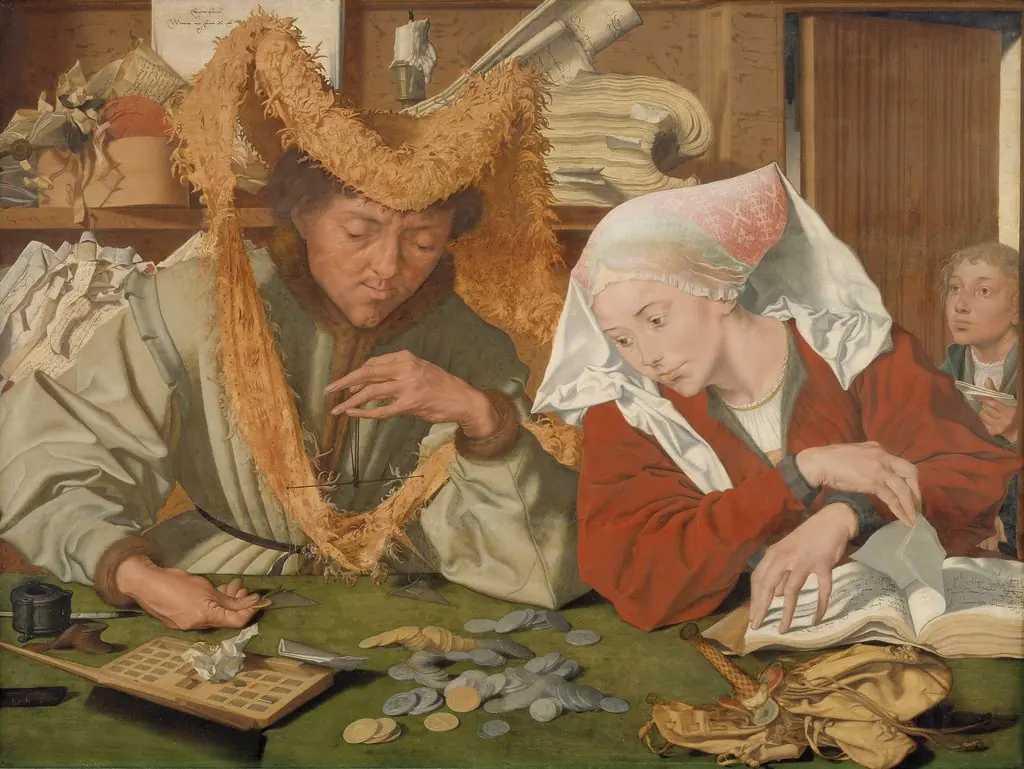
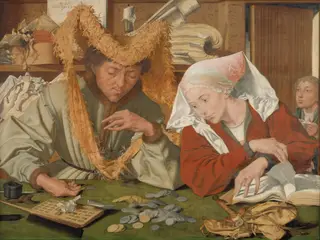
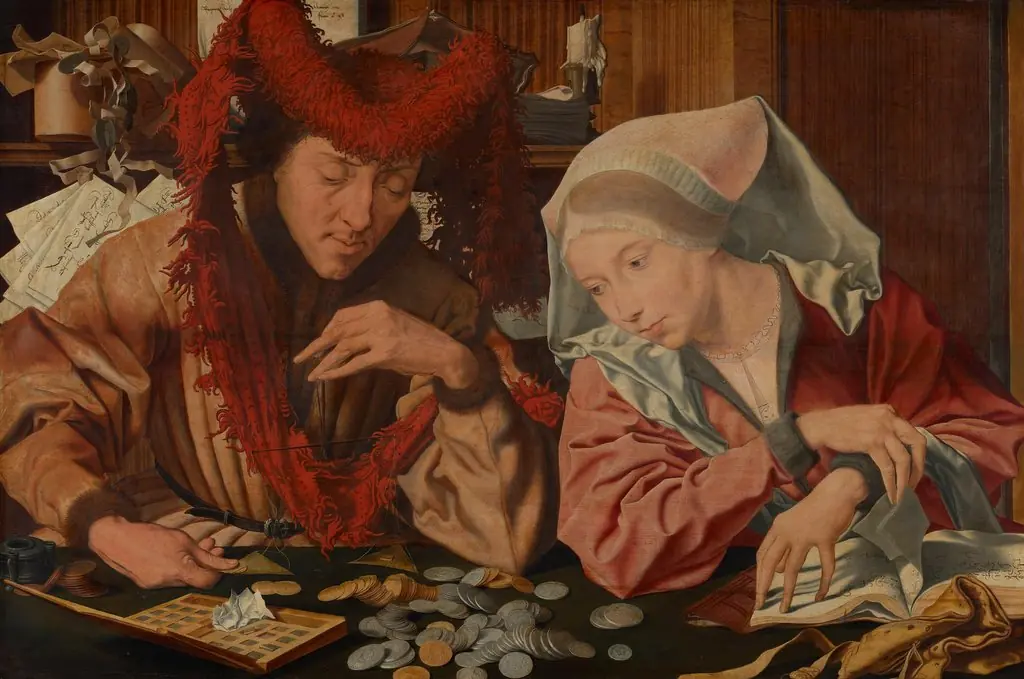
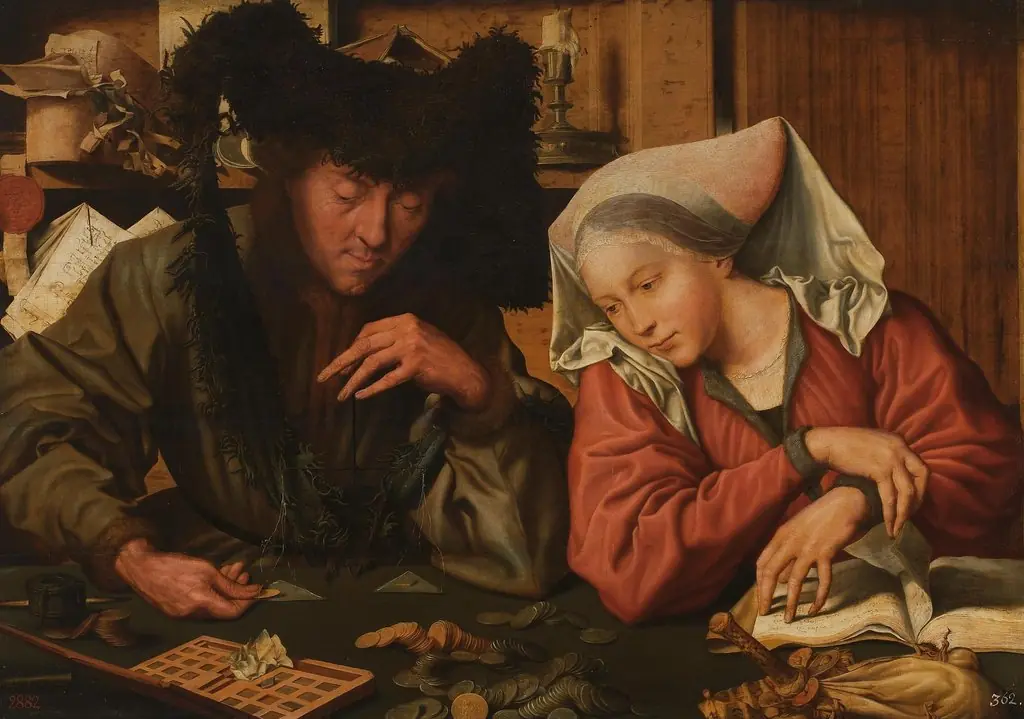
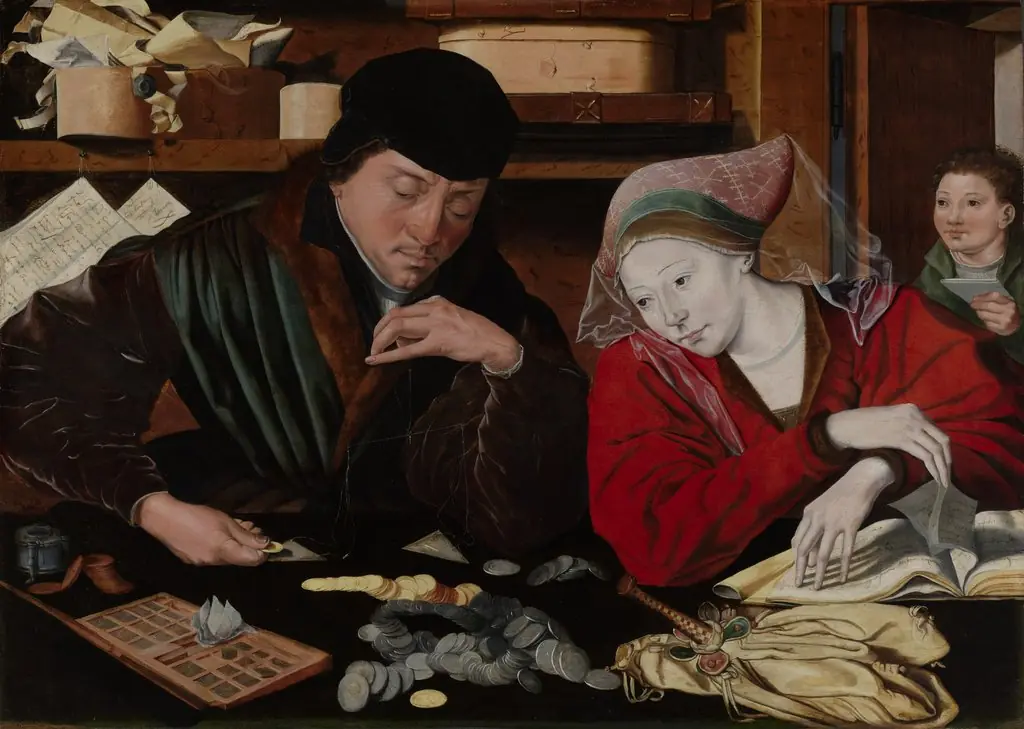
The painting depicts a moneychanger and his wife engaged in the weighing and recording of coins, surrounded by the tools of their trade including a book, pen, and inkwell. The presence of these objects highlights the commercial activities of the figures, focusing on the precise measurement of wealth. A specific element of iconography includes the depiction of the Golden Fleece, which appears within the scene alongside the monetary instruments.
The work represents a detailed observation of financial transactions, capturing the material culture associated with banking and exchange in the sixteenth century.
Technique & Style
The work is executed in oil paint on a wooden panel, a medium and support documented in the source. Its formal qualities include a tightly rendered domestic interior where the couple is positioned centrally, with careful attention to texture in the fabric and objects such as the book, pen, and inkwell. The composition emphasizes linear clarity and a restrained palette, reflecting the stylistic conventions of early Netherlandish painting in the 1530s.
The handling of light and detail contributes to a precise, almost documentary realism characteristic of van Reymerswaele’s genre scenes.
History & Provenance
The Moneychanger and his Wife was created in 1538 by Marinus van Reymerswaele, executed in oil paint on panel. The painting was later acquired by Elisabeth Farnese, after which it passed into the Spanish royal collections under Charles III of Spain and subsequently Ferdinand VII of Spain. It is now held in the Museo del Prado, where it forms part of the museum's holdings of Northern European painting.
The work's documented ownership chain traces from Farnese through the Spanish Bourbon monarchs before entering the national collection, with no further commission or creation details recorded beyond the 1538 dating.
The painting is currently held by the Museo del Prado in Madrid. Its provenance traces through Elisabeth Farnese, Charles III of Spain, and Ferdinand VII of Spain before reaching the museum's collection. The work is cataloged within the Prado's inventory as an oil-on-panel painting created in 1538. No specific accession number or exhibition history is provided in the available records.
Context
Marinus van Reymerswaele painted The Moneychanger and his Wife in 1538, a work reflecting Northern Renaissance interest in quotidian mercantile scenes and moralizing subject matter. The painting's composition, featuring a ledger, inkwell and Golden Fleece, underscores contemporary concerns with fiscal honesty and the virtues of trade, aligning with the moralizing trends seen in contemporaneous Northern art. Its inclusion in the collection of the Museo del Prado, once owned by Spanish royalty such as Ferdinand VII and Elisabeth Farnese, highlights its circulation among elite patrons and its perceived value as an exemplar of early Netherlandish genre painting.
Scholarship emphasizes its role within van Reymerswaele's oeuvre as a leading figure in Antwerp's market scenes, situating the work amid broader discussions of economic symbolism in 16th‑century European art.
Overview
Created in 1538 by the Dutch painter Marinus van Reymerswaele, this oil work shows a seated couple immersed in a financial transaction. The man, clad in a brown jacket with a red scarf, handles a spread of coins, while his wife, dressed in a red jacket and white head covering, reads from a book. The scene unfolds against a backdrop of wooden cabinets laden with papers and other accounting paraphernalia.
Artist & collection
Artist
Marinus van Reymerswaele or Marinus van Reymerswale (c. 1490 – c. 1546) was a Dutch Renaissance painter mainly known for his genre scenes and religious compositions. After studying in Leuven and training and working as…