Artwork
The Tax Collector and His Assistant
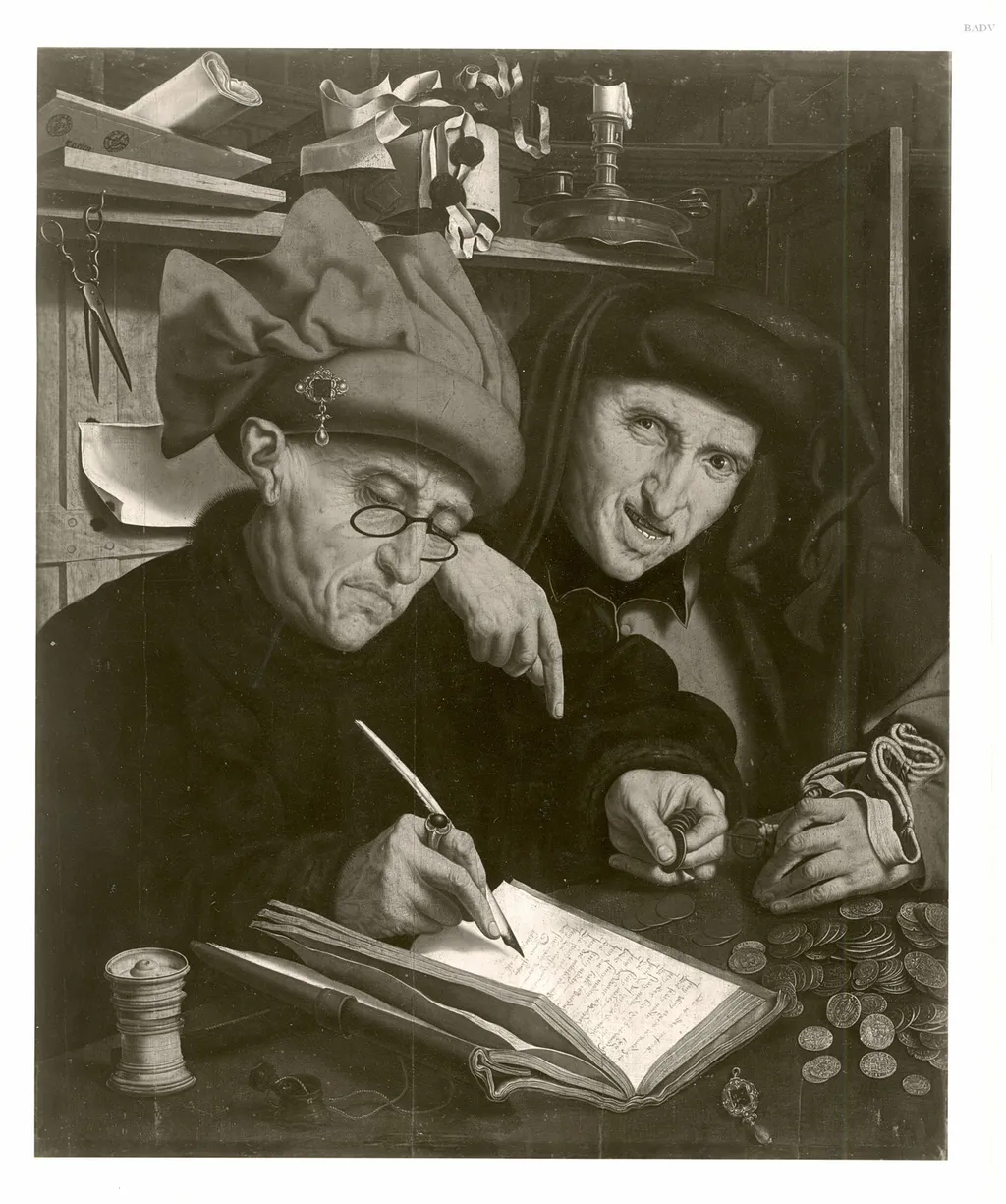
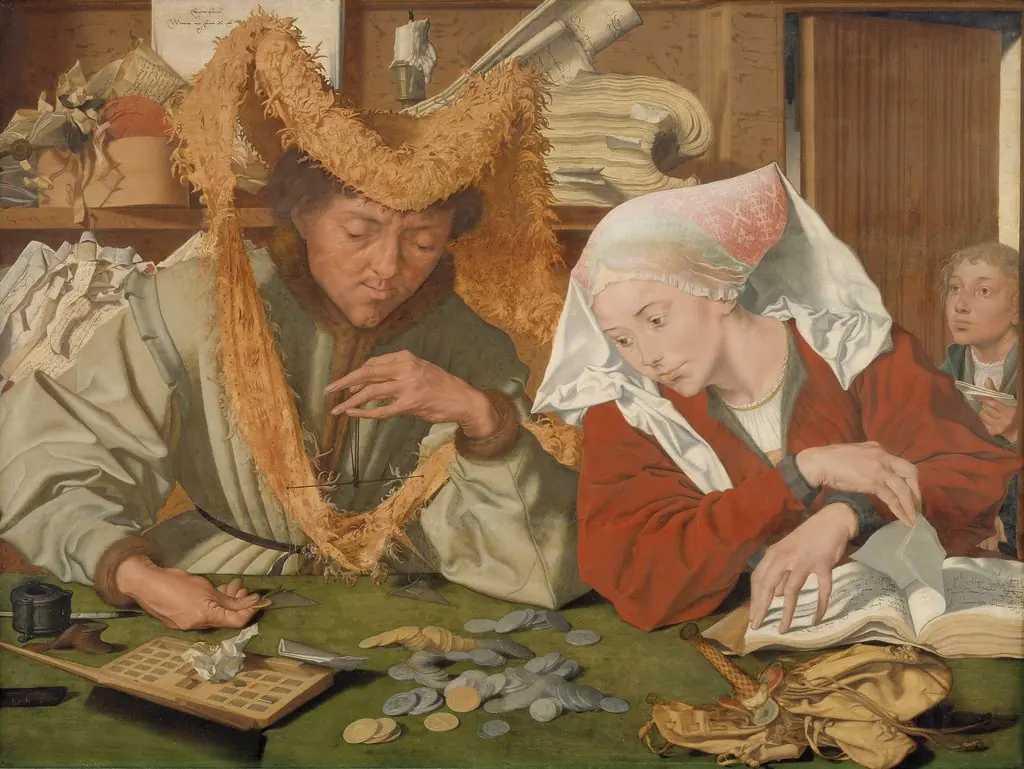
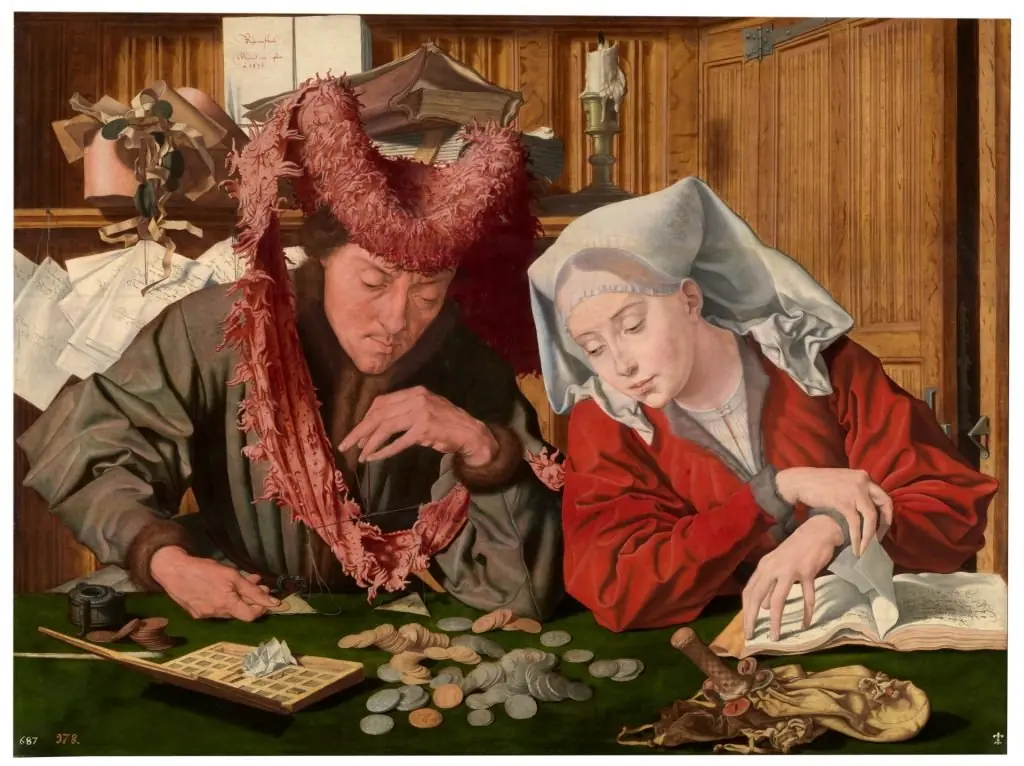
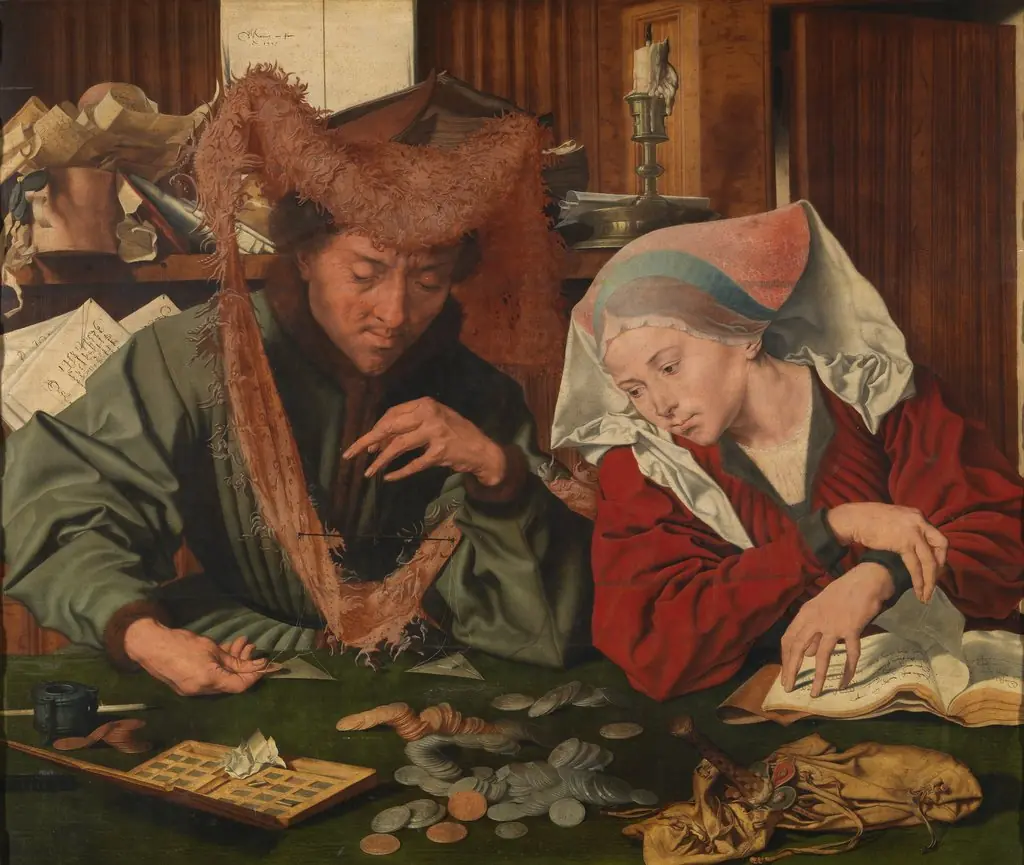
The Tax Collector and His Assistant is an oil painting by the Northern Renaissance artist Marinus van Reymerswaele. It is held in the collection of the Munich Central Collecting Point.
About this work
Subject & Meaning
These elements function as iconographic cues that underscore the collector’s role in governing municipal finances and the transient nature of wealth.
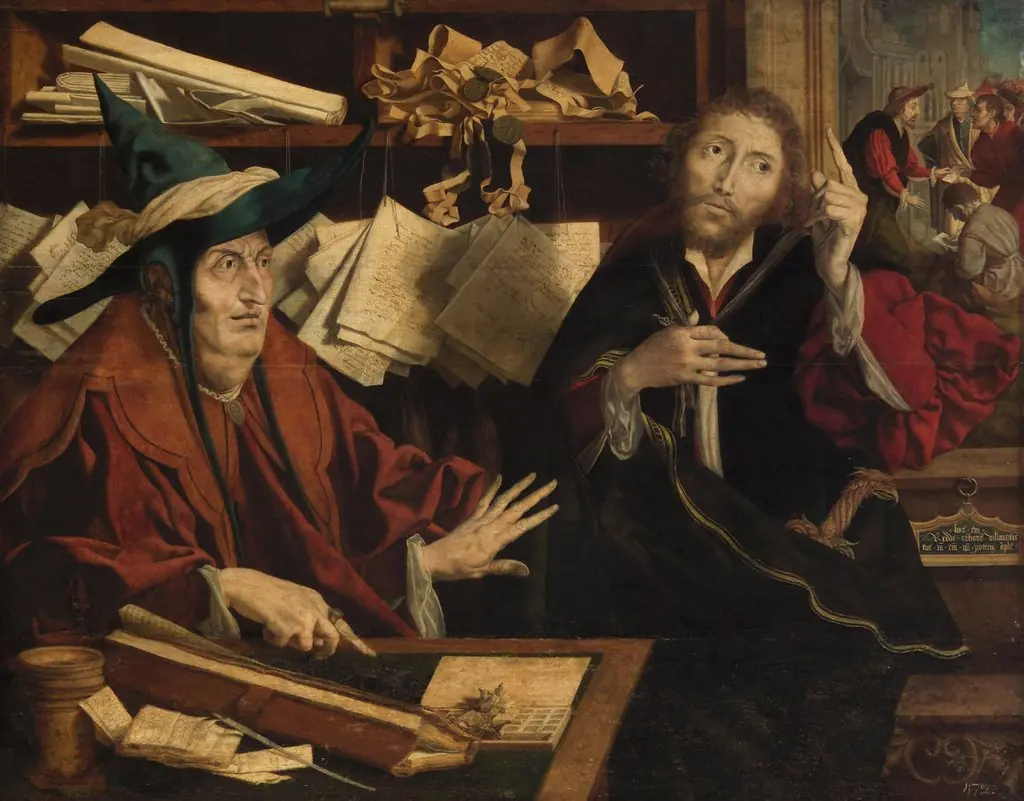
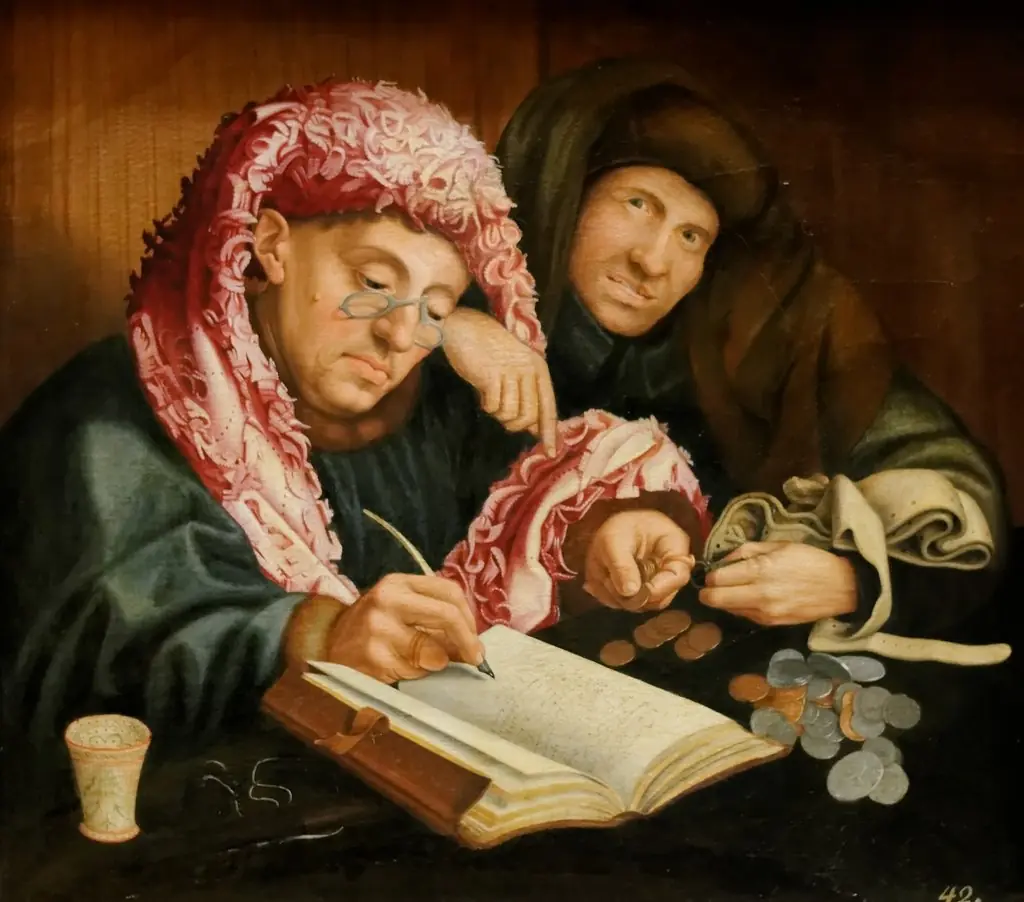
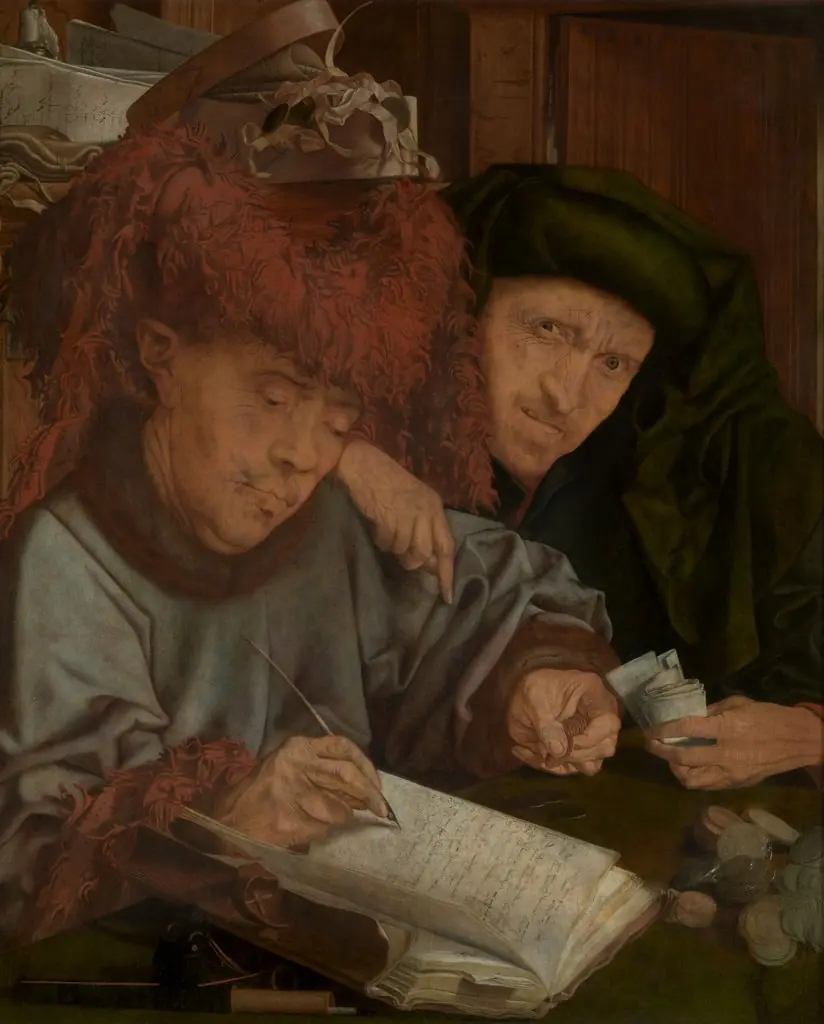
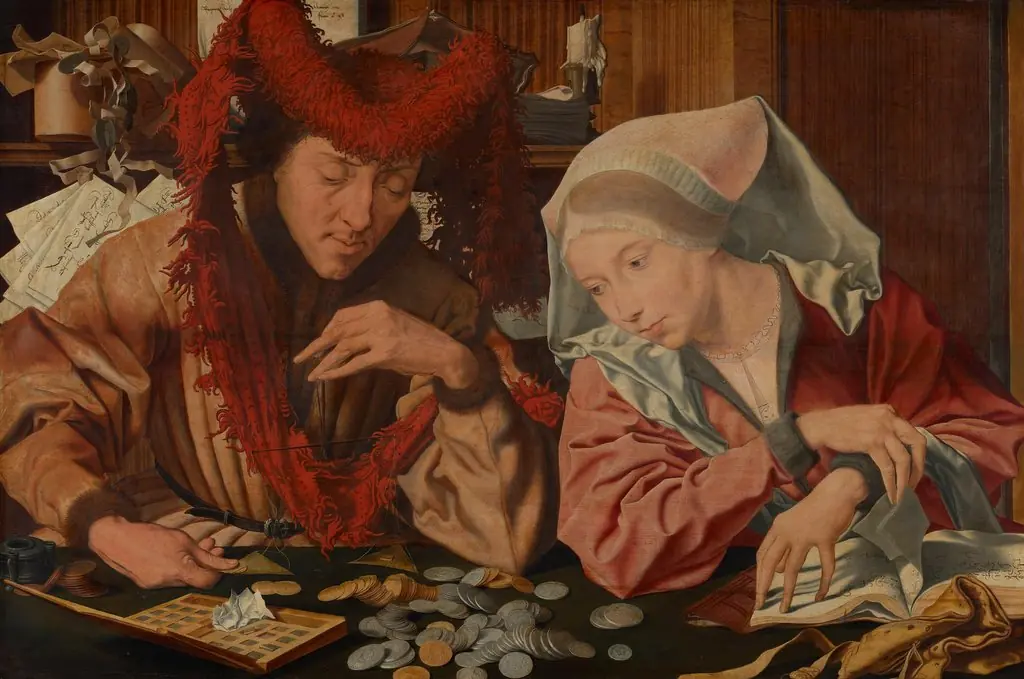
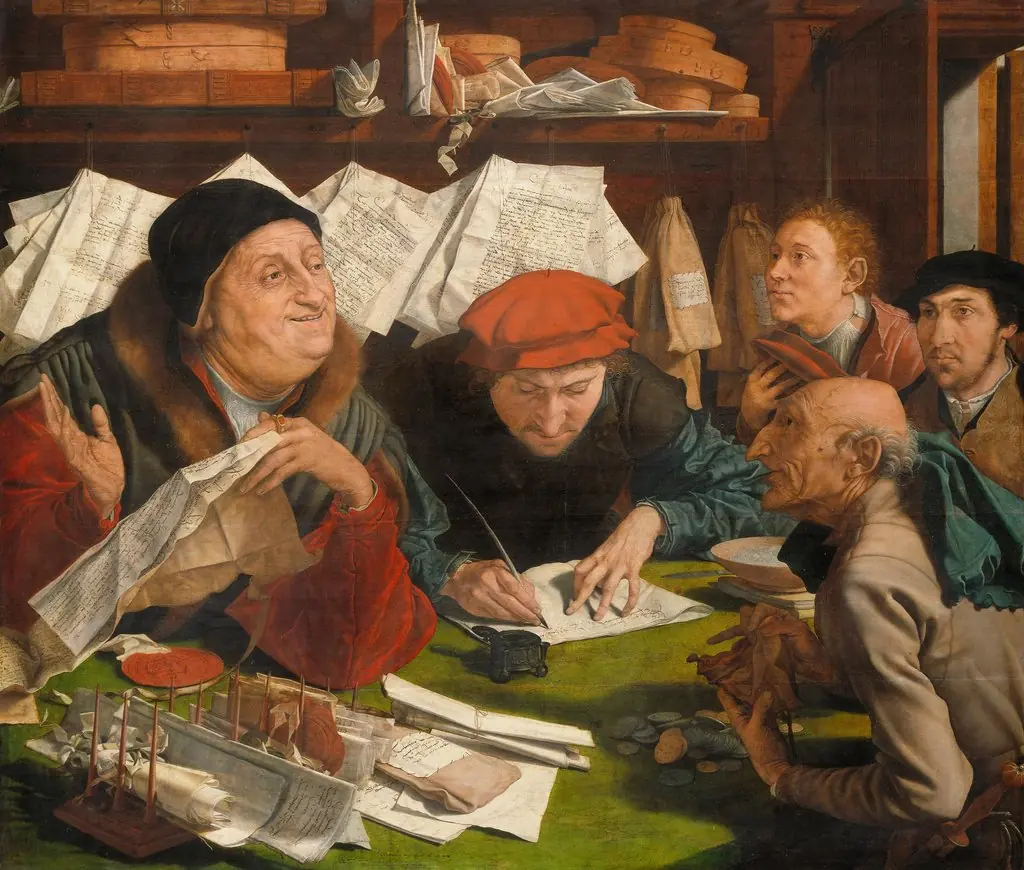
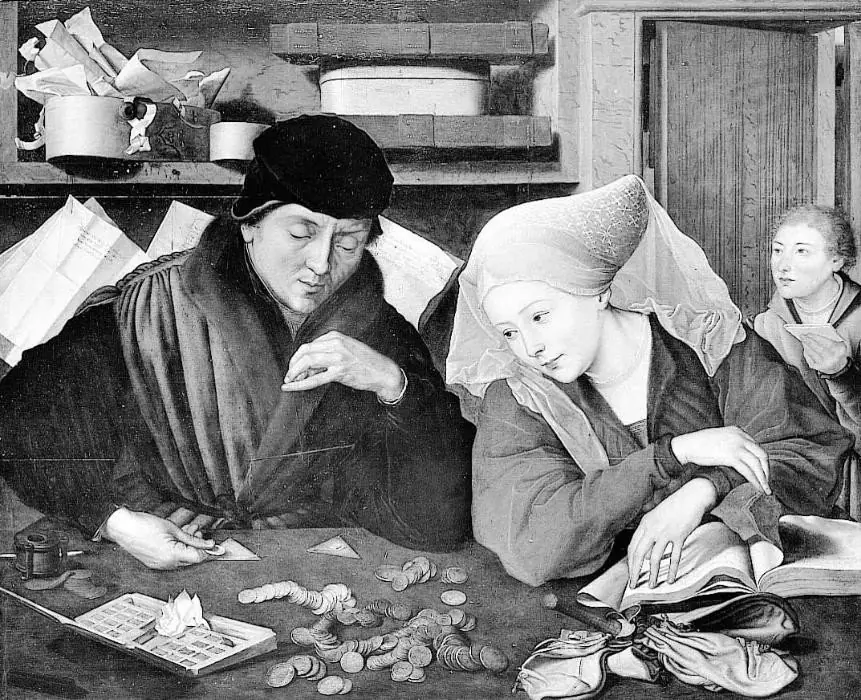
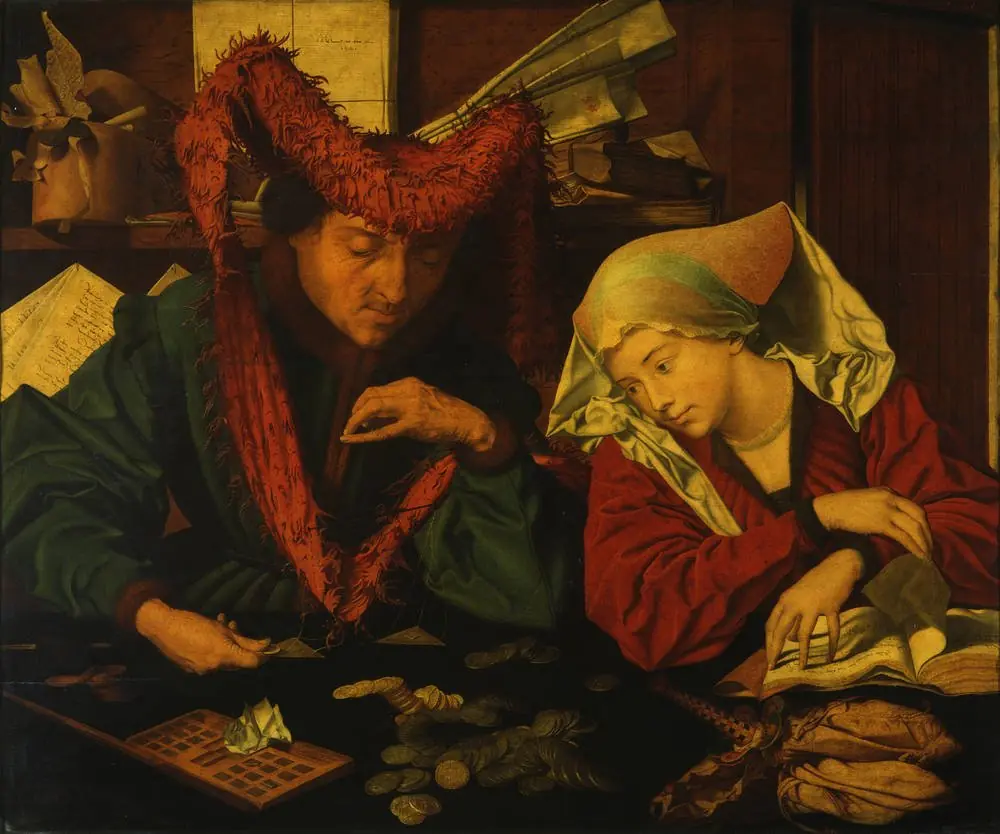
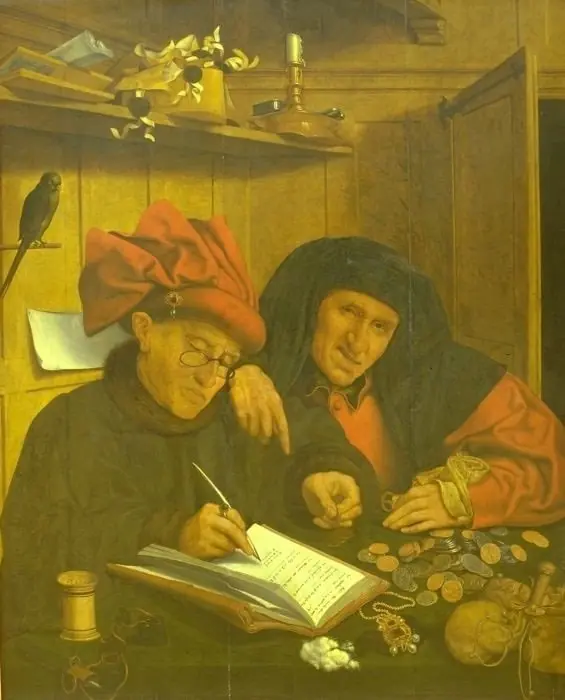
The painting, titled The Tax Collector and His Assistant and executed by Marinus van Reymerswaele in 1552, portrays a tax collector positioned at a doorway, a ledger in one hand and a pair of scissors in the other, while an assistant holds a coin bag. The composition includes a ledger, coin, scissors, and an open doorway, visual symbols of fiscal authority, accounting, and the moment of revenue collection in early‑modern urban settings. These elements function as iconographic cues that underscore the collector’s role in governing municipal finances and the transient nature of wealth.
By rendering a routine bureaucratic act, the work comments on the social impact of taxation and the material culture of fiscal administration in the sixteenth century.
Technique & Style
The work is an oil painting executed on a wooden panel, reflecting the medium typical of Netherlandish genre scenes in the mid‑16th century.
Its formal composition emphasizes a realistic depiction of a tax collector and his assistant, with careful rendering of accounting tools such as a ledger, coin, and scissors, underscoring the genre’s focus on everyday financial activity.
The painting’s handling is evident in the precise brushwork that defines surface texture and the modest scale of the figures within the architectural setting.
History & Provenance
Marinus van Reymerswaele executed this oil painting on panel in 1552. The work depicts a tax collector and his assistant engaged in counting coins and managing ledgers within an interior setting.
The painting's ownership history includes tenure in the collection of the Federal Republic of Germany and storage at the Munich Central Collecting Point following World War II. It was previously held by the Führermuseum before entering the holdings of the Bavarian State Painting Collections, where it is currently housed at the Alte Pinakothek in Munich.
The painting is held in the collection of the Bavarian State Painting Collections and is currently located at the Alte Pinakothek in Munich. Its historical trajectory includes periods within the Führermuseum and the Munich Central Collecting Point, and it is also associated with the art collection of the Federal Republic of Germany. The provided sources do not contain specific inventory numbers or a detailed record of public exhibitions for this work.
Context
Marinus van Reymerswaele’s 1552 oil painting The Tax Collector and His Assistant exemplifies Northern Renaissance genre scenes that scrutinize contemporary financial administration. Depicting a tax collector, his assistant, a ledger, coins and scissors within a doorway, the composition reflects the era’s preoccupation with accounting and fiscal authority. As a leading figure in Flemish genre painting, van Reymerswaele frequently explored everyday trades, and this work contributes to scholarly understandings of how visual culture recorded economic practices.
The painting’s inclusion in the Bavarian State Painting Collections at the Alte Pinakothek underscores its recognized historical and artistic significance.
Overview
The Tax Collector and His Assistant, an oil painting from 1552 by the Dutch artist Marinus van Reymerswaele, portrays two figures engaged in financial work. This piece, characteristic of the Northern Renaissance, is currently housed in the collection of the Alte Pinakothek. It offers a glimpse into the daily activities of money handlers during the mid-16th century.
Own this work as a print
Artist & collection
Artist
Marinus van Reymerswaele or Marinus van Reymerswale (c. 1490 – c. 1546) was a Dutch Renaissance painter mainly known for his genre scenes and religious compositions. After studying in Leuven and training and working as…