Artwork
The Merchant and his Wife
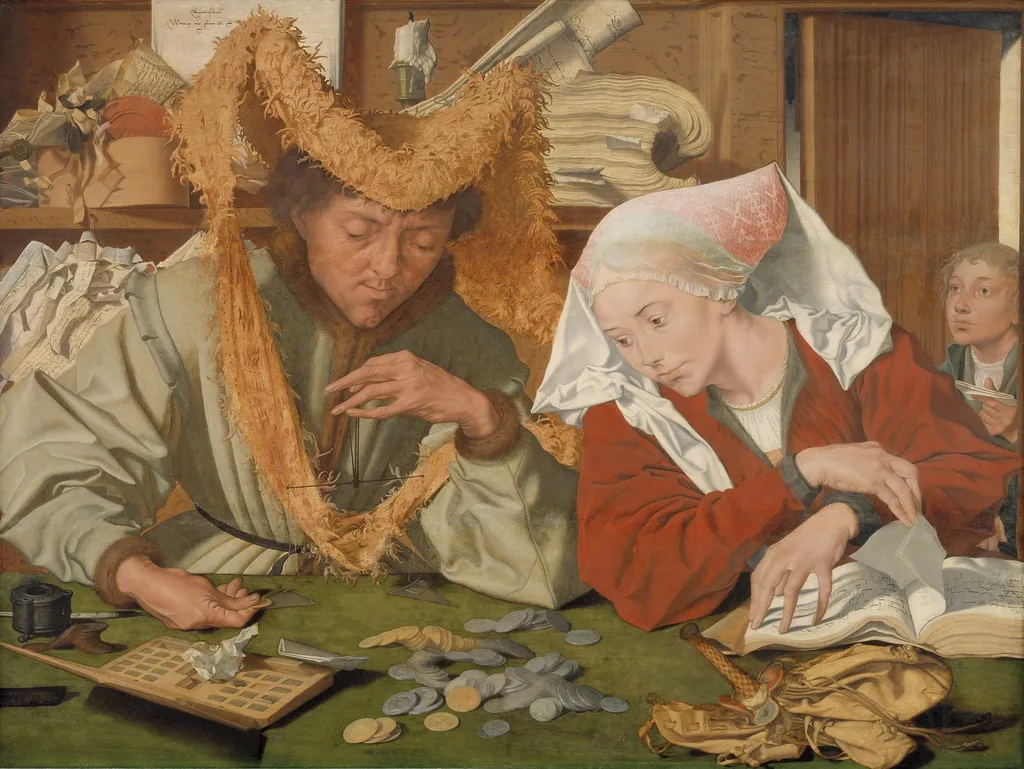
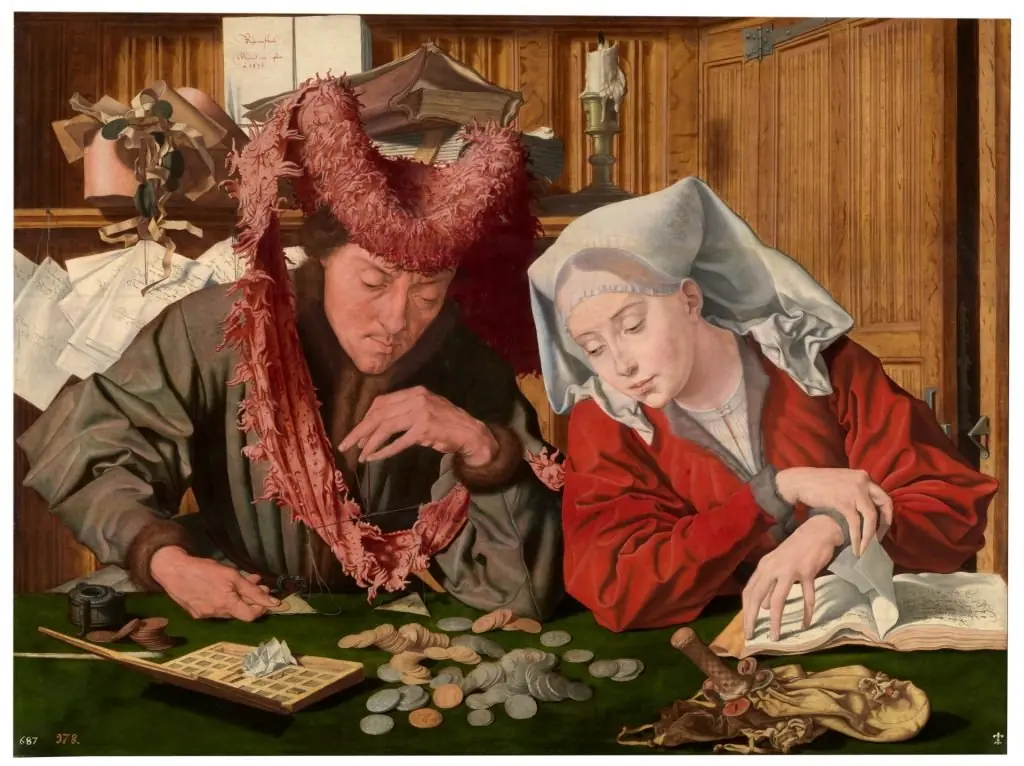
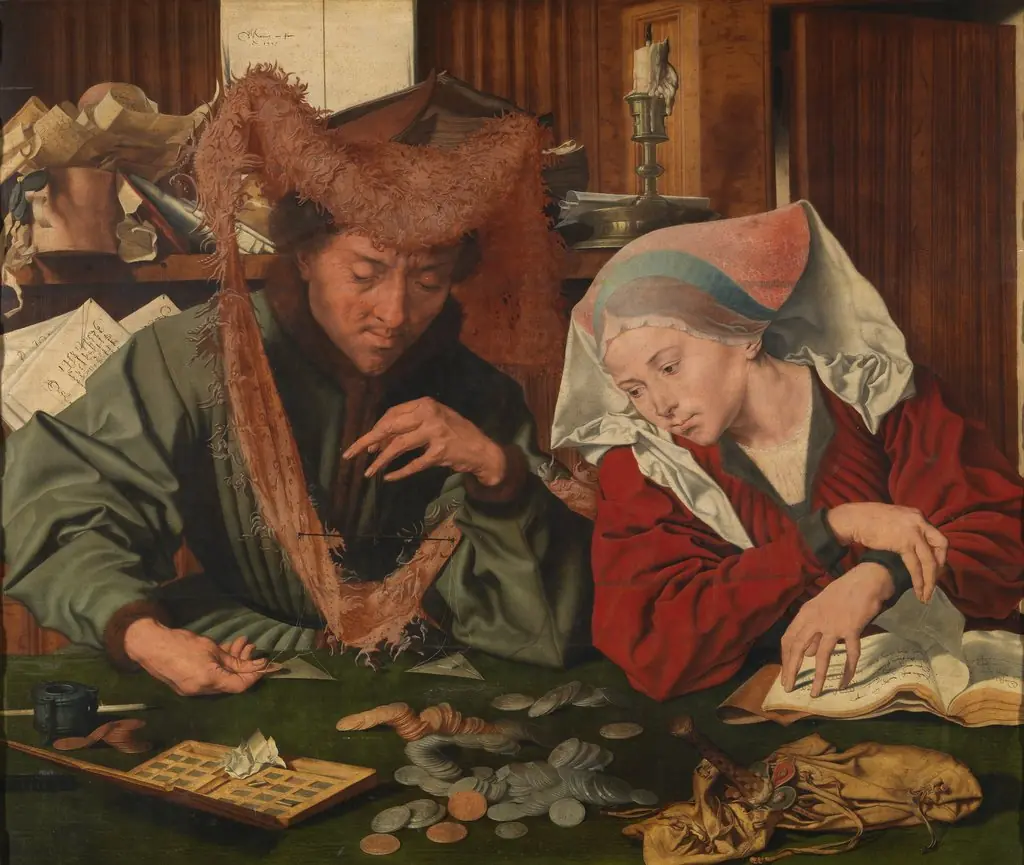
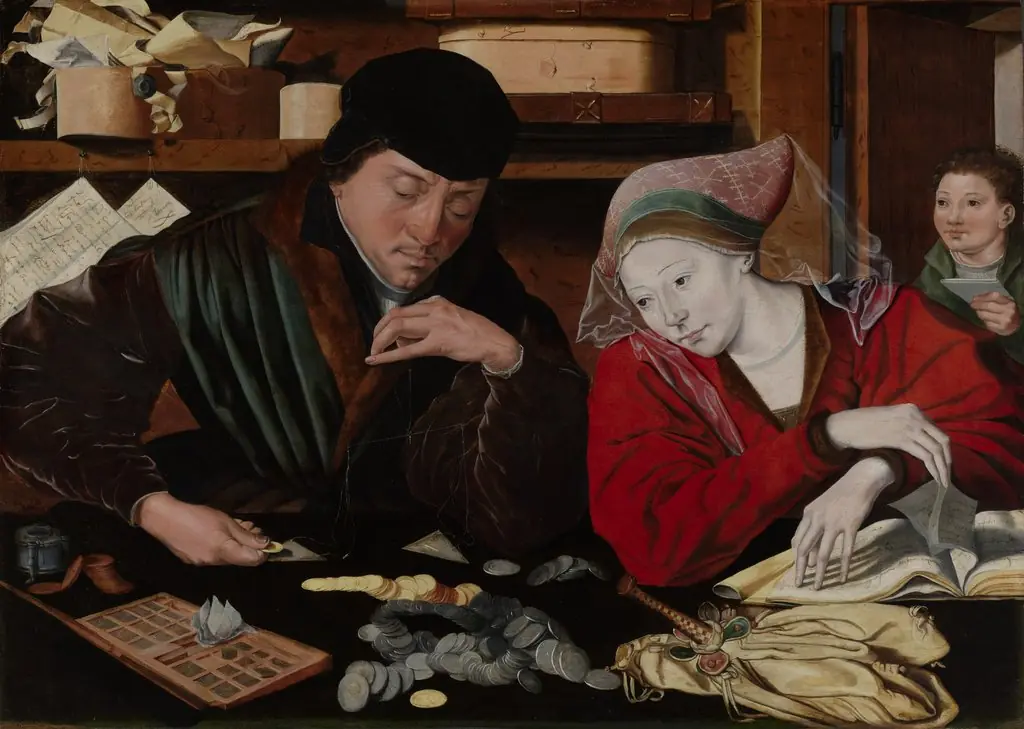
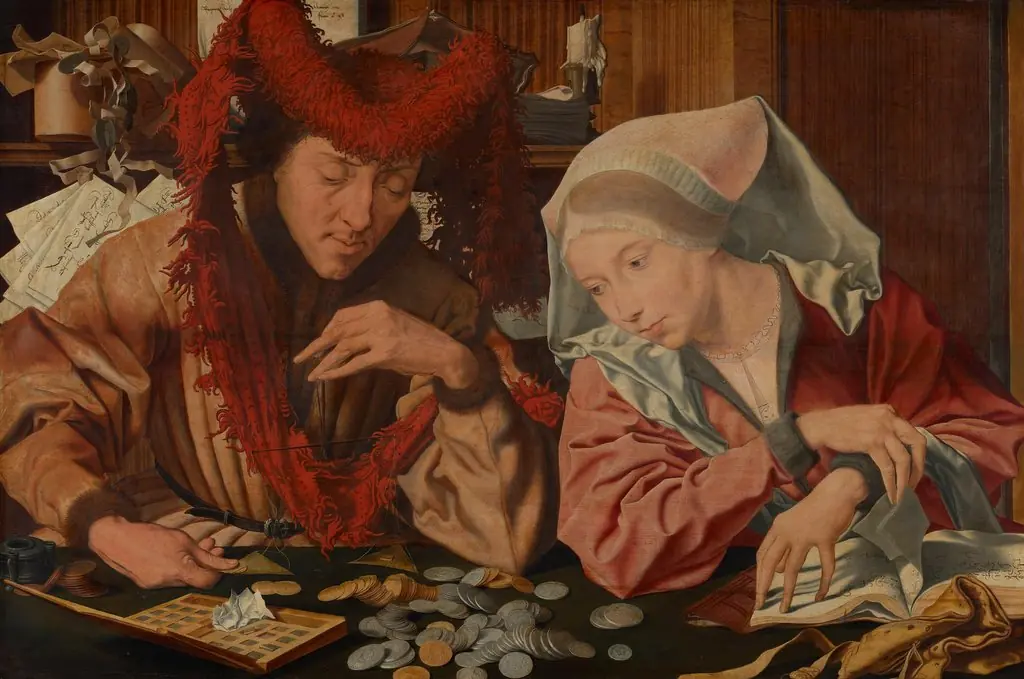
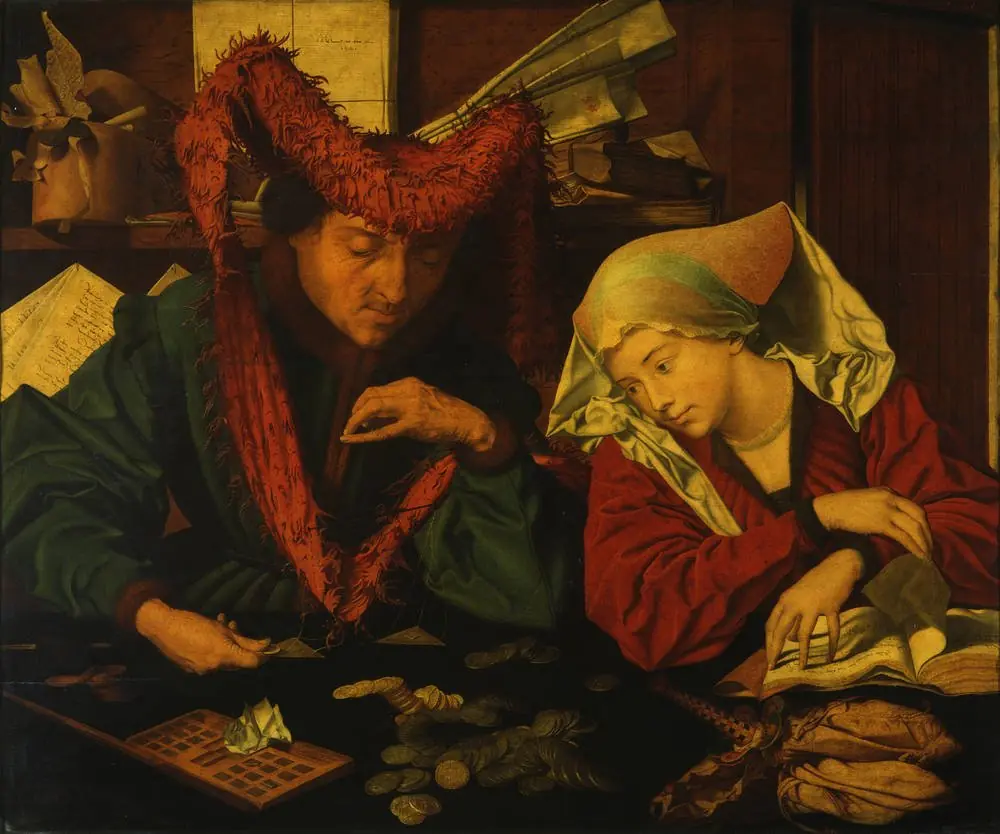
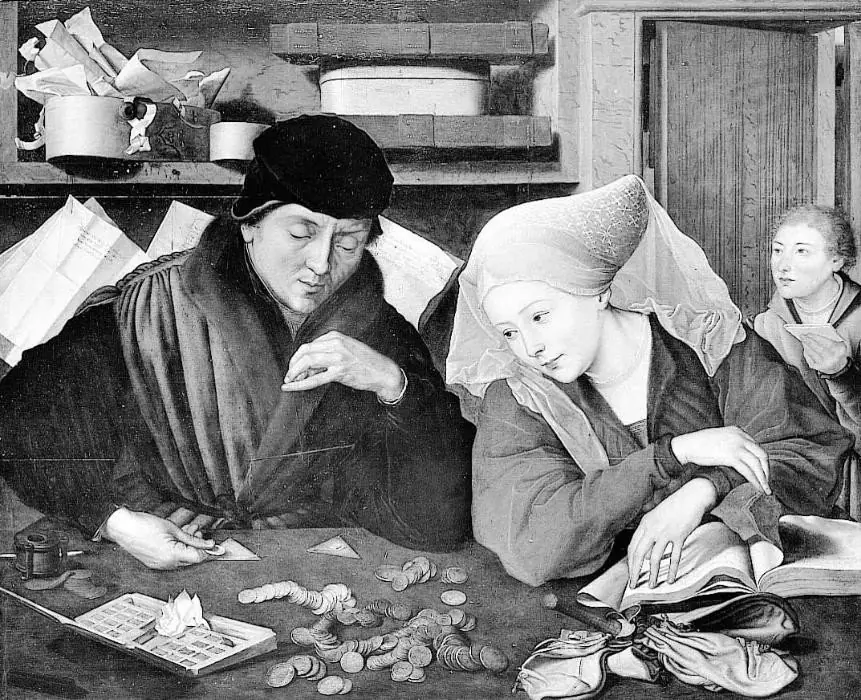
The Merchant and his Wife is an oil painting by the Northern Renaissance artist Marinus van Reymerswaele. It dates from 1540 and is held in the collection of the Statens Museum for Kunst.
About this work
Subject & Meaning
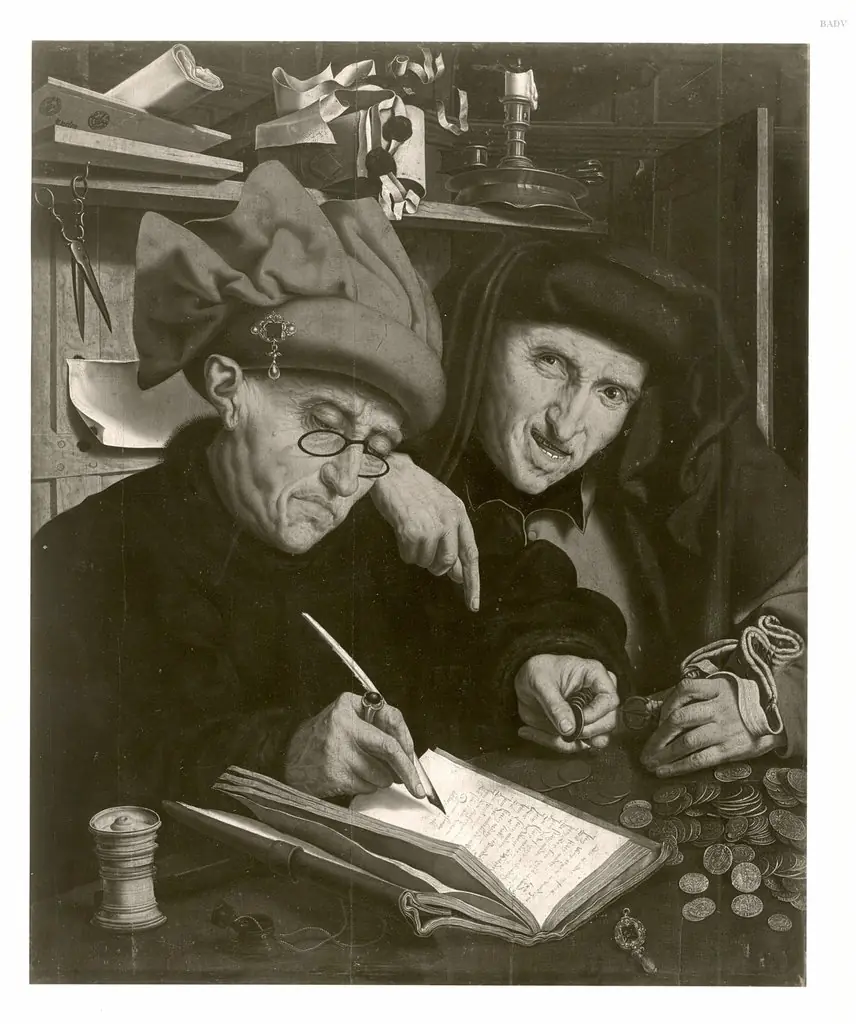
The painting presents a merchant identified as a money changer alongside his wife, a composition that emphasizes contemporary fiscal activity.
The painting presents a merchant identified as a money changer alongside his wife, a composition that emphasizes contemporary fiscal activity. The male figure holds a balance and a coin, attributes that signal the role of a money changer and the regulation of trade. The presence of the woman, dressed in modest attire, suggests the domestic partnership that supported commercial enterprises.
Together the symbols of currency and the couple's interaction convey a commentary on the intersection of private wealth and public duty in sixteenth-century Antwerp, reflecting the sitter's status and the broader economic climate of the period.
Technique & Style
The Merchant and his Wife is an oil painting on wooden panel, created by Marinus van Reymerswaele in 1540. The work measures 86 cm in height by 115.5 cm in width and is classified as a genre scene. It portrays a money changer and his wife with a coin and balance, a composition typical of Northern Renaissance genre subjects.
The painting's execution in oil on panel allows fine detail and a naturalistic rendering of materials, reflecting the conventions of early Netherlandish art. The piece belongs to the collection of the Statens Museum for Kunst.
History & Provenance
The Merchant and his Wife is an oil-on-panel painting executed by Marinus van Reymerswaele in 1540. The work depicts a money changer alongside his wife, characteristic of the artist's genre scenes focusing on financial figures. It is currently held in the collection of the Statens Museum for Kunst in Copenhagen, where it measures 86 cm in height and 115.5 cm in width. No prior exhibition history is documented in the available sources.
Context
The Merchant and his Wife, painted by Marinus van Reymerswaele in 1540, exemplifies early Northern Renaissance genre scenes that intertwine domestic and commercial motifs. Its oil-on-panel format, measuring 86 cm by 115.5 cm, is part of the permanent collection at the Statens Museum for Kunst. Scholars note that van Reymerswaele's focus on such genre subjects reflects broader trends in Netherlandish painting toward documenting contemporary economic life in sixteenth-century Antwerp.
Overview
Marinus van Reymerswaele’s oil painting The Merchant and his Wife (c. 1540) presents a domestic interior in which a man and a woman share a crowded wooden table. The male figure, barefoot and wearing a disheveled hat, is absorbed in counting coins, while his spouse, dressed in red with a white cap, studies an open book. The composition is populated with scattered money, a chessboard, an inkwell, and shelves of rolled papers illuminated by a hanging lantern.
Own this work as a print
Artist & collection
Artist
Marinus van Reymerswaele or Marinus van Reymerswale (c. 1490 – c. 1546) was a Dutch Renaissance painter mainly known for his genre scenes and religious compositions. After studying in Leuven and training and working as…