Artwork
The Banker and his Wife
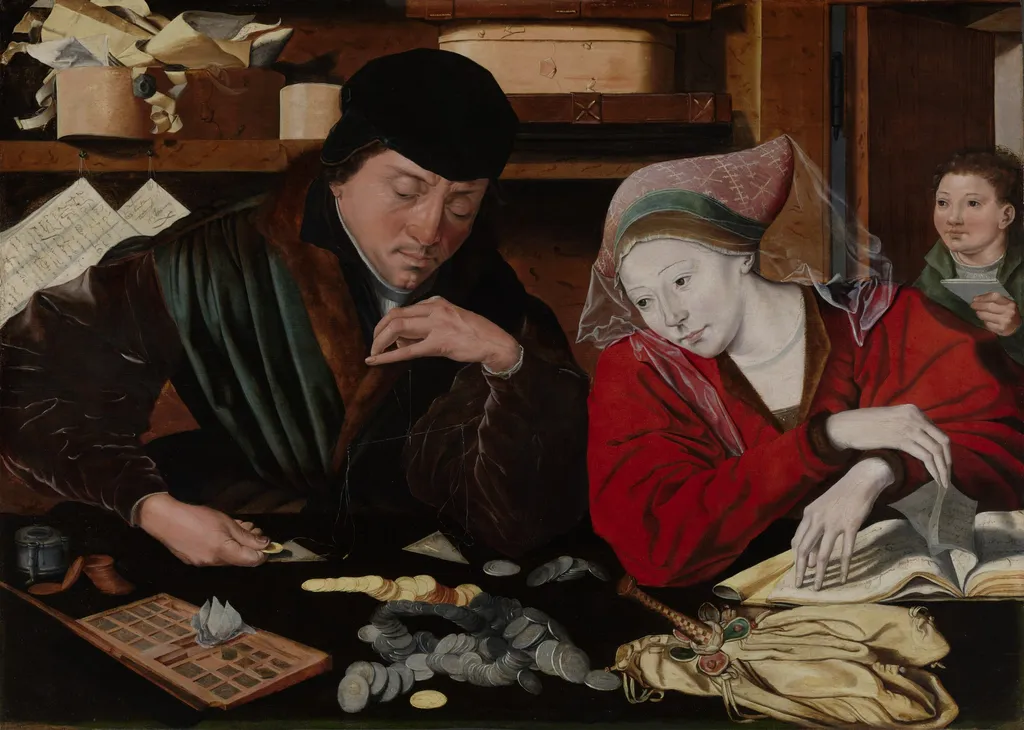
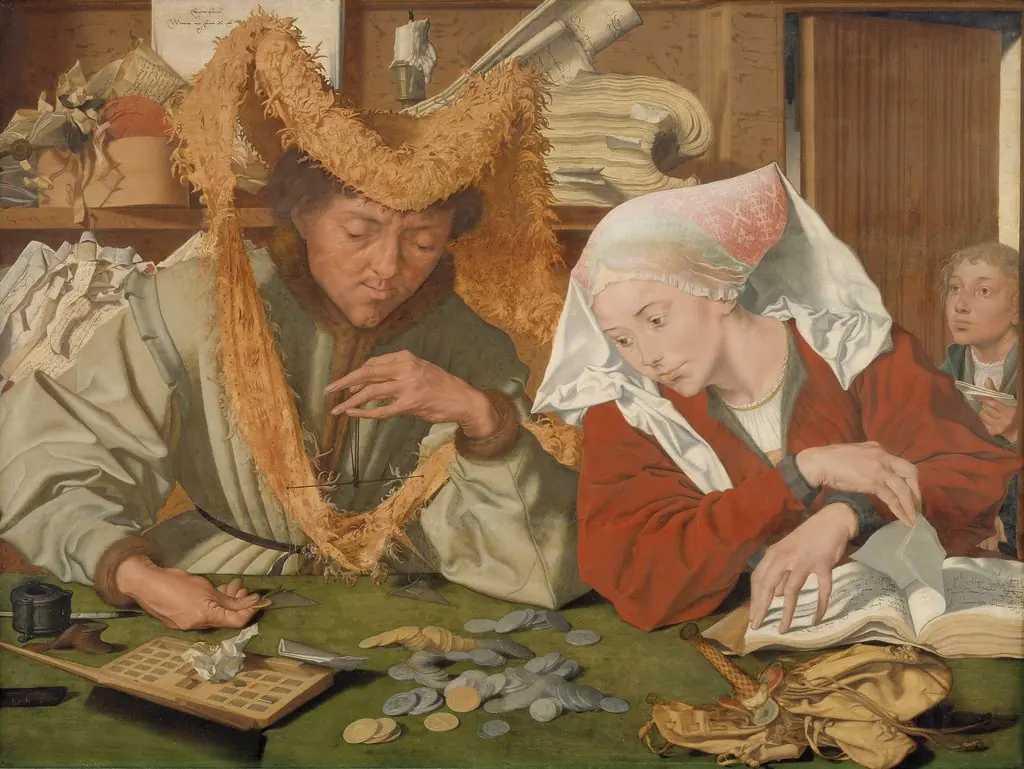
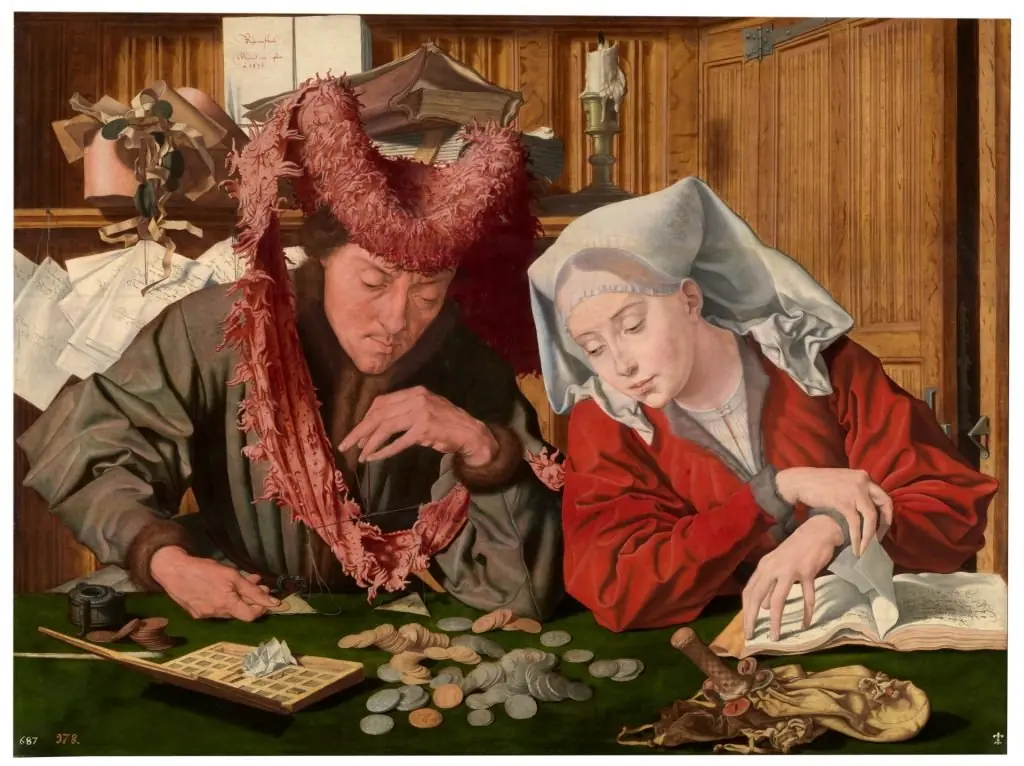
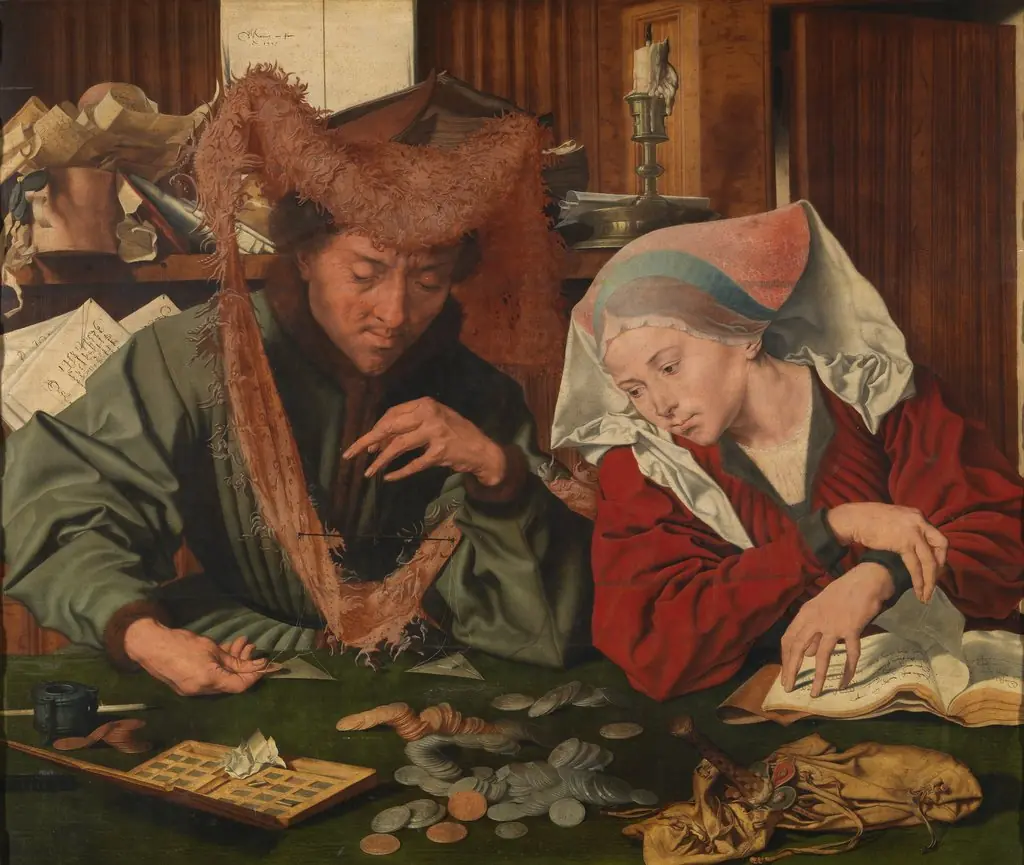
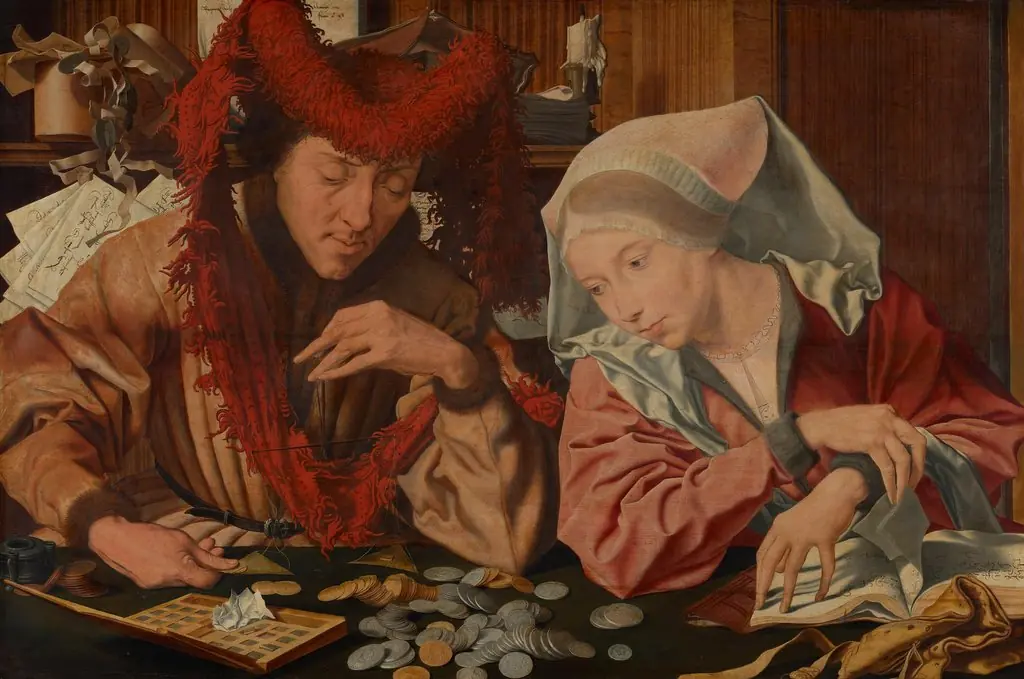
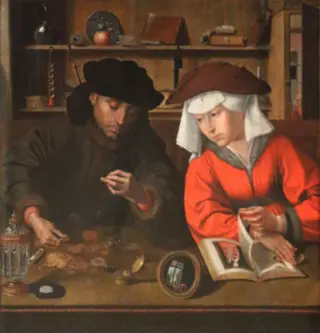
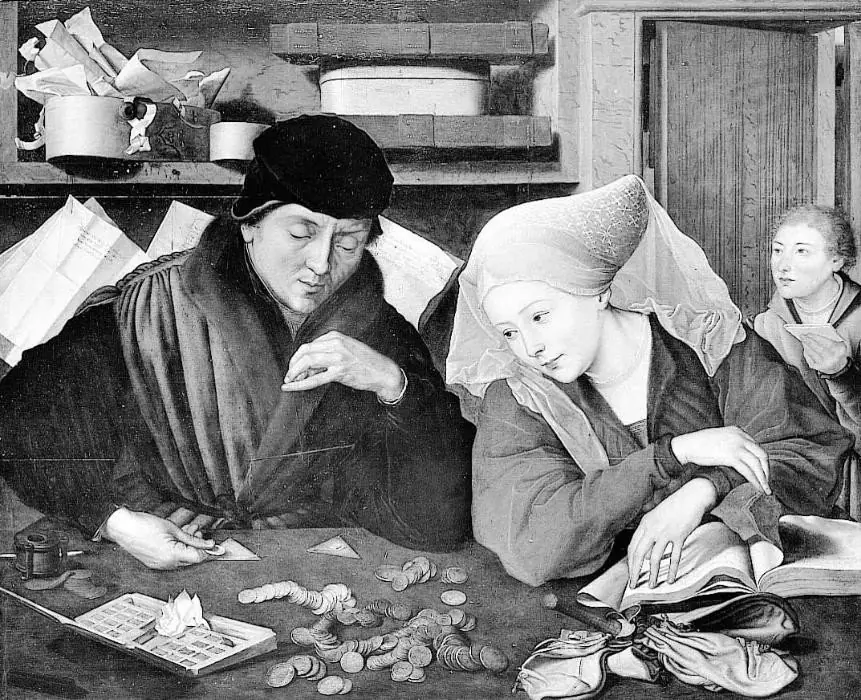
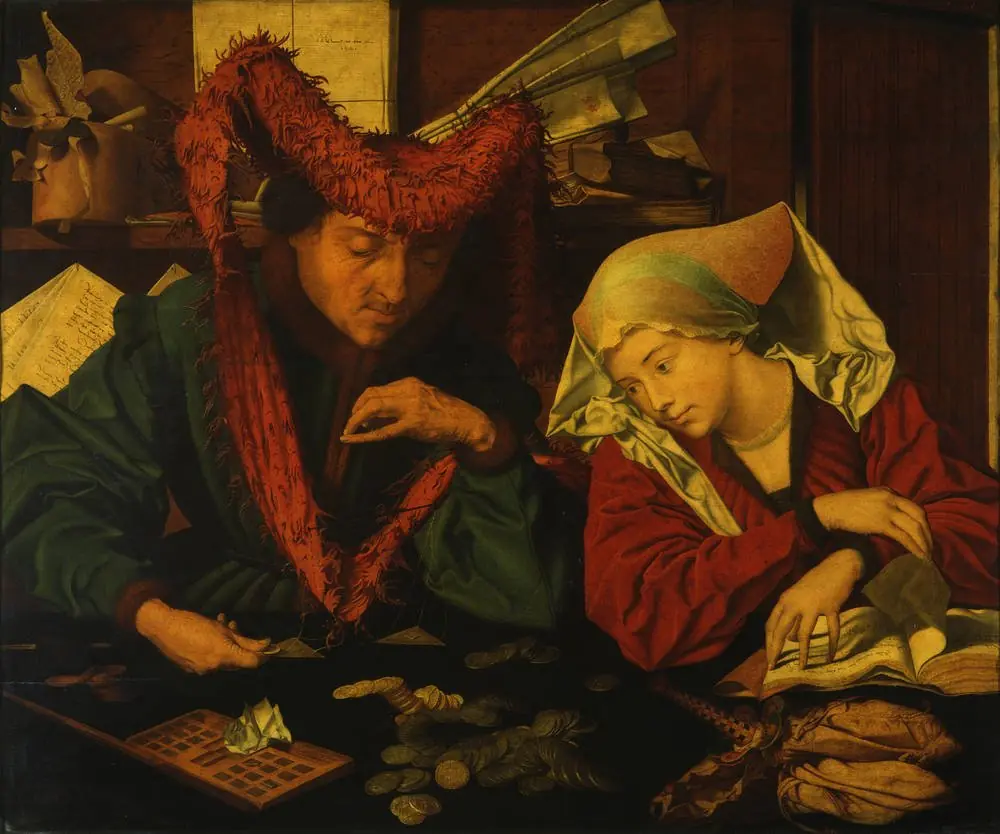
The Banker and his Wife is an oil painting by the Northern Renaissance artist Marinus van Reymerswaele. It is held in the collection of the Royal Museum of Fine Arts Antwerp.
About this work
Subject & Meaning
As the main subject, the male figure is identified as a money changer, accompanied by a woman, presumably his spouse.
The work is a genre scene depicting a money changer and his wife within an office setting. As the main subject, the male figure is identified as a money changer, accompanied by a woman, presumably his spouse. The composition focuses on these two individuals in a domestic or professional interior, characteristic of the artist's exploration of everyday life and financial activities.
The painting represents the interaction between the couple in their specific environment, highlighting the roles of the money changer and his wife without extending to broader symbolic interpretations not supported by the provided descriptions.
Technique & Style
Created in 1575, this genre scene by Marinus van Reymerswaele is executed in oil paint on a wooden panel. The work measures 80 cm in height and 113 cm in width. Visually, the composition depicts a man and a woman within an office setting, specifically identifying the male figure as a money changer.
The painting's material construction and subject matter align with the artist's known focus on financial themes rendered through the medium of oil on panel.
History & Provenance
The painting is dated 1575 by internal curatorial records, aligning with the single-year inception noted on its Wikidata entry, which also records the work’s dimensions as 80 cm by 113 cm on panel.
It has been held by the Royal Museum of Fine Arts Antwerp (KMSKA) since its acquisition into the Flemish Art Collection, where it remains located. The museum’s cataloguing assigns the work to Marinus van Reymerswaele and classifies it as a genre scene depicting a money changer and his wife.
The painting is held in the collection of the Royal Museum of Fine Arts Antwerp, where it is listed under the inventory number 1980.IV.1.
It was displayed in the museum’s exhibition titled "Flemish Masters of the Sixteenth Century," shown from March 12 to July 15, 2018.
The work has also been featured in the traveling exhibition "Early Netherlandish Portraiture," which toured the Rijksmuseum in Amsterdam (October 2019–January 2020) and the Kunsthistorisches Museum in Vienna (March–June 2020).
Overview
Marinus van Reymerswaele’s oil painting The Banker and his Wife (c. 1575) presents a domestic interior in which a senior male clerk, a woman in a vivid red garment, and a young attendant occupy a cramped, cluttered space. The composition focuses on the act of counting money, surrounded by ledgers, a chessboard and assorted objects, offering a detailed glimpse into the commercial life of a Northern Renaissance workshop.
Context
The painting belongs to a broader trend in Dutch and Flemish art that documented the rise of mercantile culture. By depicting a money‑changing office, van Reymerswaele aligns with contemporaneous genre painters who used everyday scenes to comment on the moral and economic dimensions of wealth, law, and social order during the early modern period.
Own this work as a print
Artist & collection
Artist
Marinus van Reymerswaele or Marinus van Reymerswale (c. 1490 – c. 1546) was a Dutch Renaissance painter mainly known for his genre scenes and religious compositions. After studying in Leuven and training and working as…