Artwork
Movement No. 10
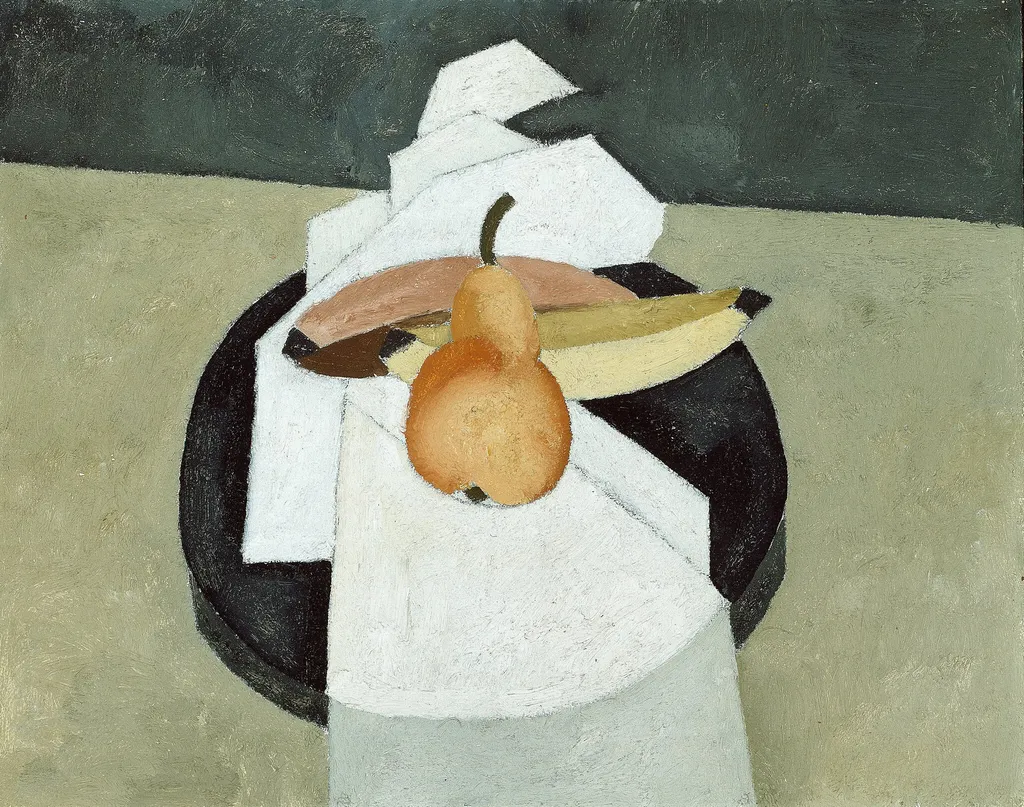
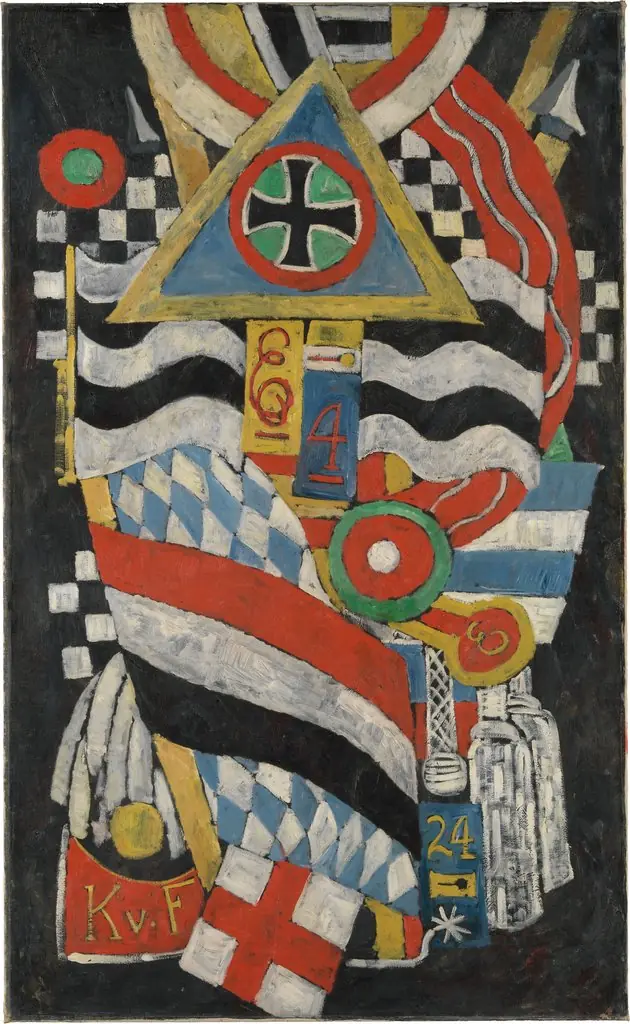
Movement No. 10 is an oil painting by Marsden Hartley. It dates from 1917 and is held in the collection of the Art Institute of Chicago. Movement No.
- Accession no.
- 90207
- Credit line
- Alfred Stieglitz Collection
About this work
Overview
Its nonobjective composition signals a departure from traditional subject matter in American art.
Movement No. 10 is an abstract oil painting on composition board, completed by Marsden Hartley in 1917. It resides in the collection of the Art Institute of Chicago. The work eschews representational forms in favor of energetic arrangements of color and line, reflecting Hartley’s engagement with emerging modernist trends during his time in Europe. Its nonobjective composition signals a departure from traditional subject matter in American art.
Subject & Meaning
The painting does not depict recognizable figures or scenes but instead conveys emotional and rhythmic intensity through abstract forms. Hartley’s use of dynamic shapes and contrasting hues suggests movement and spiritual resonance, possibly influenced by his interest in German military symbolism and early 20th-century avant-garde thought. The work functions as a visual expression of inner states rather than external reality.
Technique & Style
Hartley applied oil paint in layered, translucent washes, employing glazing to achieve luminous color depth. Bold, angular lines intersect with flat planes of saturated pigment, creating a sense of structural tension. The composition avoids perspective, favoring a flattened space that aligns with European modernist approaches, particularly those of Cubism and Expressionism, which Hartley encountered during his stay in Berlin.
History & Provenance
Painted during Hartley’s residence in Berlin, Movement No. 10 emerged from a period of intense artistic experimentation following his exposure to German avant-garde circles. It entered the Art Institute of Chicago’s collection in 1949, acquired through the Walter P. Chrysler Jr. Fund. The work remained relatively obscure until mid-20th-century reassessments of American modernism brought renewed attention to Hartley’s abstract period.
Context
Created amid the upheaval of World War I, the painting reflects a broader shift among artists to abandon realism in favor of personal, symbolic expression. Hartley, like many of his contemporaries, turned to abstraction as a means of processing cultural fragmentation. His work in this period bridges American sensibilities with European modernist innovations, particularly those emerging from Berlin’s vibrant art scene.
Legacy
Movement No. 10 stands as a significant example of early American abstraction, demonstrating Hartley’s role in expanding the boundaries of U.S. painting. While not widely exhibited during his lifetime, it later contributed to scholarly recognition of his contributions to modernism. The work remains a touchstone for understanding how American artists absorbed and transformed European avant-garde ideas in the early 20th century.

Own this work as a print
Artist & collection

Artist
Marsden Hartley was an American Modernist painter, poet, and essayist. Hartley developed his painting abilities by observing Cubist artists in Paris and Berlin.