Artwork
The Sepulchre
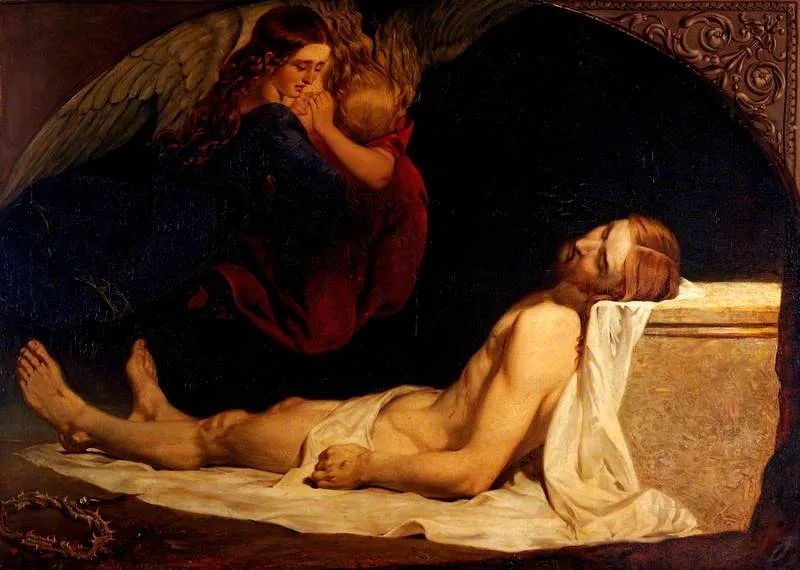
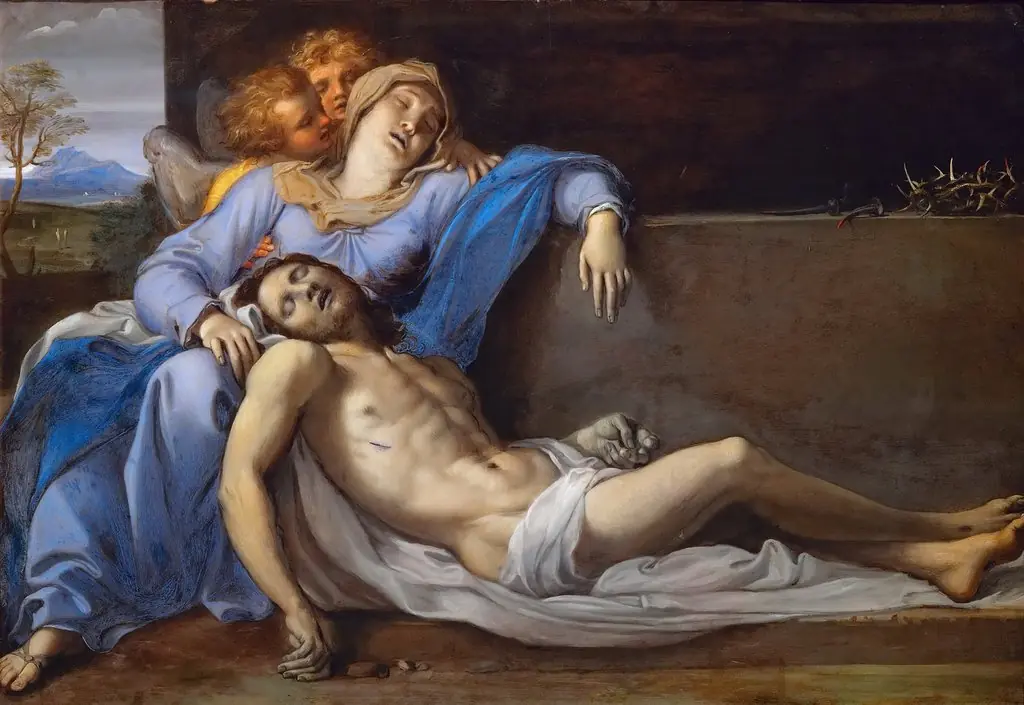
The Sepulchre is an oil painting by the Pre-Raphaelite artist Marshall Claxton. It dates from 1843 and is held in the collection of the Victoria and Albert Museum.
About this work
Overview
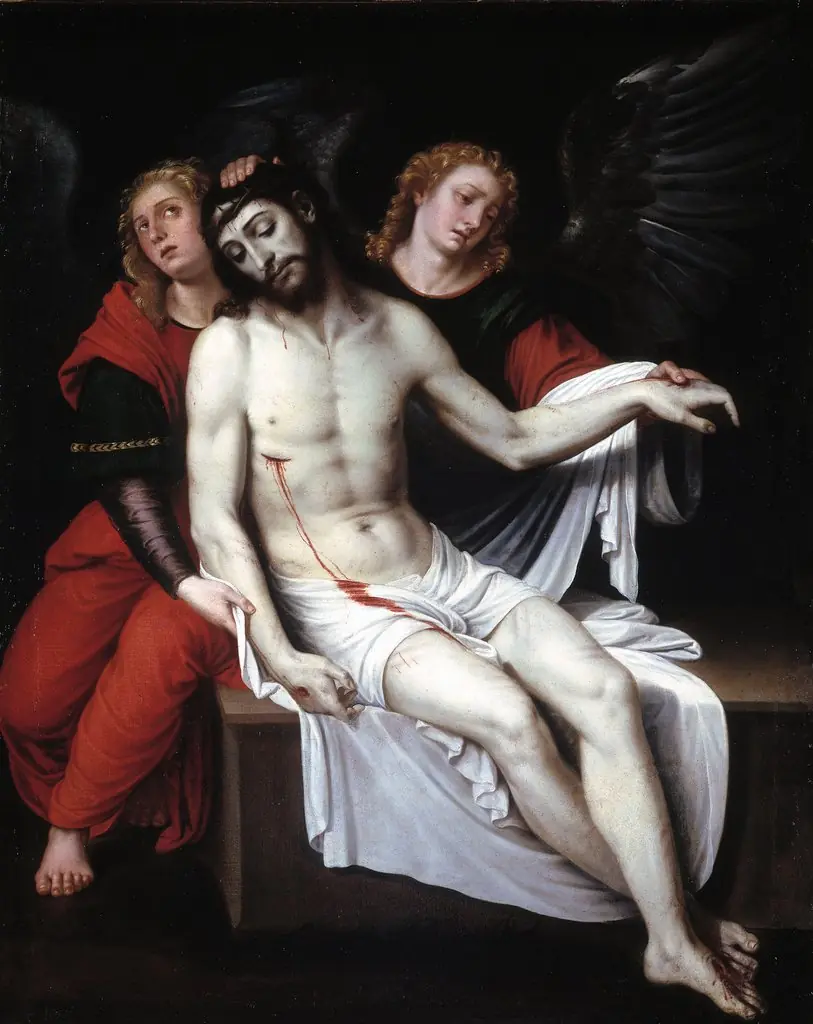
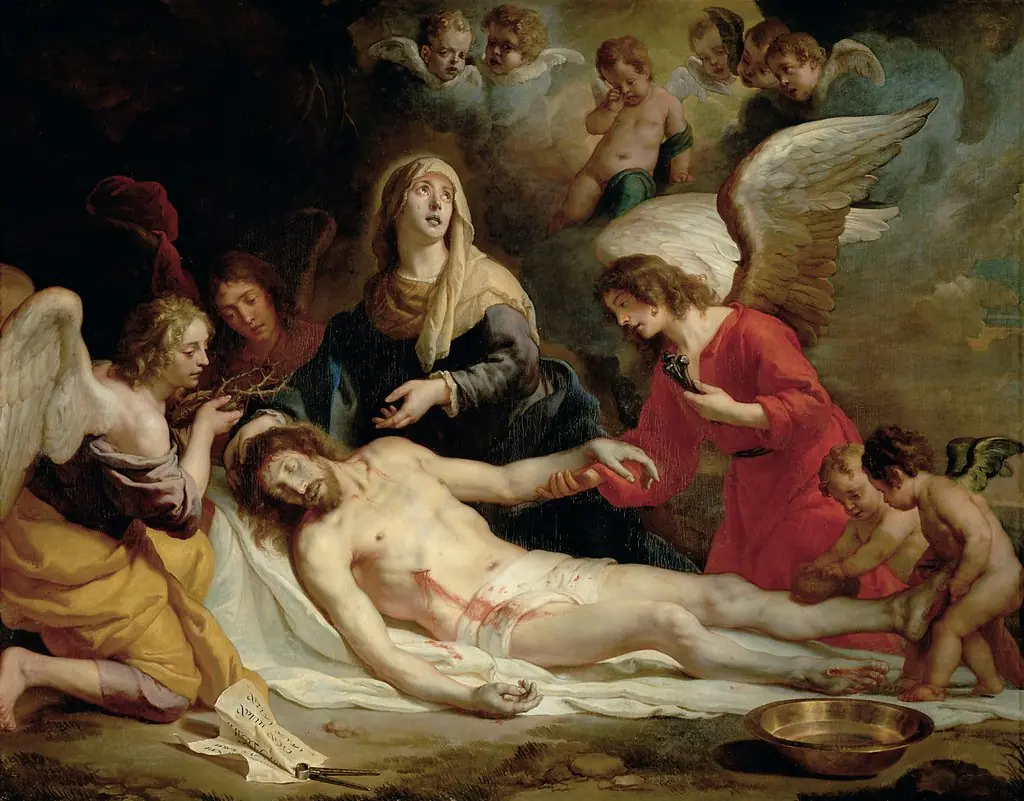
The Sepulchre, executed in oil in 1843, is part of the collection of the Victoria and Albert Museum. The work presents a quiet, nocturnal tableau centered on a stone slab draped with cloth, upon which a man lies. Flanking him are a woman in a dark robe with a red sash and an angel in a similarly dark habit, its wings rendered in luminous white.
Subject & Meaning
The composition suggests a moment of mourning or vigil, with the reclining figure appearing lifeless or asleep, his head supported by the slab’s edge. The presence of the angel, poised above, introduces a spiritual dimension, while the woman's solemn attire and proximity imply a personal connection, perhaps a grieving companion or family member.
Technique & Style
Claxton employs a pronounced chiaroscuro, juxtaposing deep shadows against illuminated forms to model the figures and convey depth. The light falls on the central group, highlighting the white cloth and the angel’s feathers, while surrounding darkness recedes, creating a dramatic focus on the emotional core of the scene.
History & Provenance
Painted by British artist Marshall Claxton in the mid‑nineteenth century, The Sepulchre entered the Victoria and Albert Museum’s holdings at an unspecified date. Its acquisition reflects the museum’s interest in Victorian religious and genre painting, and the work remains catalogued under its original title.
Context
Created during a period when religious sentiment and Romantic sensibilities often intersected in British art, the painting aligns with contemporary interests in depicting intimate, contemplative moments of faith. Its somber palette and theatrical lighting echo the influence of earlier Baroque chiaroscuro masters while retaining a distinctly Victorian narrative tone.
Artist & collection