Artwork
Pietà
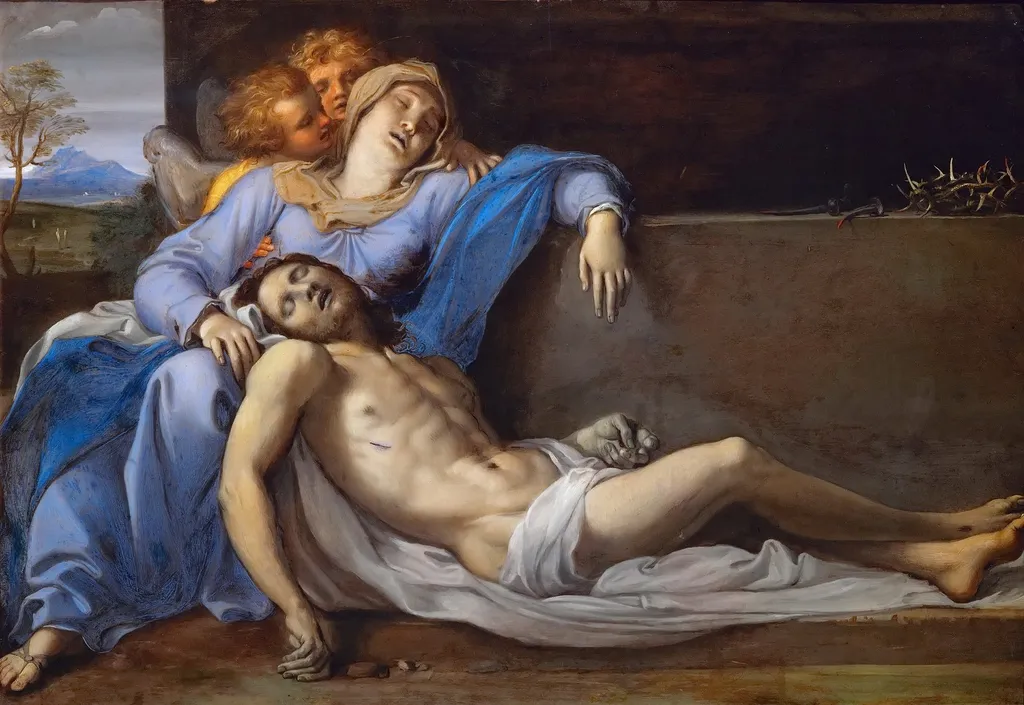
Pietà is an oil painting by the Early Baroque Italian artist Annibale Carracci. It dates from 1603 and is held in the collection of the Kunsthistorisches Museum.
About this work
Subject & Meaning
Two weeping cherubs support the fainting Virgin against a brown background representing the tomb, interrupted only by a small landscape glimpse.
The painting depicts the Pietà, showing the dead body of Jesus Christ stretched on a shroud with his head and shoulders resting on the lap of the Virgin Mary, who has fainted from grief. Two weeping cherubs support the fainting Virgin against a brown background representing the tomb, interrupted only by a small landscape glimpse. The iconography incorporates specific symbolic elements: instruments of the Passion, including nails and a crown of thorns soaked in blood, rest upon the tombstone.
Stylistically, the work synthesizes religious homage with classical reference. The composition pays tribute to Correggio's Lamentation while deriving Christ's reclining head position and expression of abandonment from the ancient statue of the Sleeping Ariadne. This fusion allows the artist to construct a scene of monumental gravity despite the work's small physical dimensions.
Technique & Style
Executed in oil on copper, this small-scale painting measures 41 cm by 60.8 cm. Despite its modest dimensions, the work achieves a monumental effect through its composition. The scene depicts the dead Christ reclining on a shroud with his head resting on the Virgin Mary's lap, while two weeping cherubs support the fainting mother. The figures are set against a dark brown background representing the tomb, punctuated only by a slight landscape view and a tombstone bearing the blood-stained instruments of the Passion.
Stylistically, the piece synthesizes references to Correggio's Lamentation with classical antiquity, specifically drawing from the pose and expression of the Sleeping Ariadne statue. The reclining position of Christ's head and his expression of abandonment directly echo this ancient sculpture, which the artist had previously cited in other works.
History & Provenance
The work commissioned by Annibale Carracci for himself around 1603 was later owned by Archduke Leopold Wilhelm of Austria, who brought it to Vienna after his tenure as governor of the Spanish Netherlands. It entered the Kunsthistorisches Museum collection in Vienna, where it remains today. A 1659 record documents its presence in the Archduke's Brussels gallery, reproduced in David Teniers the Younger's painting of the collection, and later moved to Vienna. Giulio Mancini's correspondence suggests the painting was a gift from Carracci to the physician who treated him in 1607, likely as compensation due to his illness, rather than a commissioned work. Stylistic analysis and the 1603 dating align with this identification, indicating Carracci created the small copper panel for personal reasons and later relinquished it. The work depicts the Virgin fainting as she supports the dead Christ, with cherubs weeping, set against a brown tomb background and subtle landscape hints, reflecting influences from Correggio and classical sculpture. The composition features Christ laid on a shroud, his head resting on Mary's lap, with instruments of the Passion displayed on the tombstone. Two cherubs support the Virgin while mourning. The painting's small size contrasts with its monumental construction, demonstrating Carracci's skill. Copies by artists in Carracci's circle and engravings by Frans van der Steen and Cornelis Caukercken attest to its appreciation. The theme was revisited shortly after in a work titled Pietà with the Three Maries, showing stylistic affinities with the Vienna piece. The Pietà is held by the Kunsthistorisches Museum in Vienna, where it remains part of the collection once assembled by Archduke Leopold Wilhelm of Austria. The first certain documentation of the painting dates to 1659, when it appears in David Teniers the Younger's Gallery of Archduke Leopold William in Brussels (c. 1650-1651), a painted record of the Italian works Leopold Wilhelm had gathered while serving as governor of the Netherlands. After becoming Archduke, Leopold Wilhelm transferred the collection to Vienna, where it now forms a substantial portion of the Kunsthistorisches Museum's holdings. It has been hypothesized that the painting may be the work mentioned in the correspondence of the physician and art lover Giulio Mancini, who reported receiving a painting directly from Annibale Carracci in 1607 as payment for medical treatment rendered to the ailing artist shortly before his death. Stylistic considerations, however, support a dating of c. 1603 for the copper.
Context
Scholars generally date this small oil on copper to 1603 based on stylistic analysis, though it is frequently identified with a work Annibale Carracci gave to the physician Giulio Mancini in 1607 as payment for medical treatment during the artist's final illness. This association suggests the painting was created for the artist's own possession rather than a direct commission. The composition synthesizes High Renaissance and Classical influences, paying homage to Correggio's Lamentation while adapting the reclining pose of the Sleeping Ariadne statue, a motif Carracci had previously utilized.
The work's historical significance is underscored by its inclusion in David Teniers the Younger's 1659 painted gallery of Archduke Leopold Wilhelm's collection, marking its early status as a prized Italian masterpiece. Its reputation generated multiple engravings by artists such as Frans van der Steen and Cornelis Caukercken, alongside copies attributed to Carracci's circle, confirming its impact on subsequent generations.
Legacy
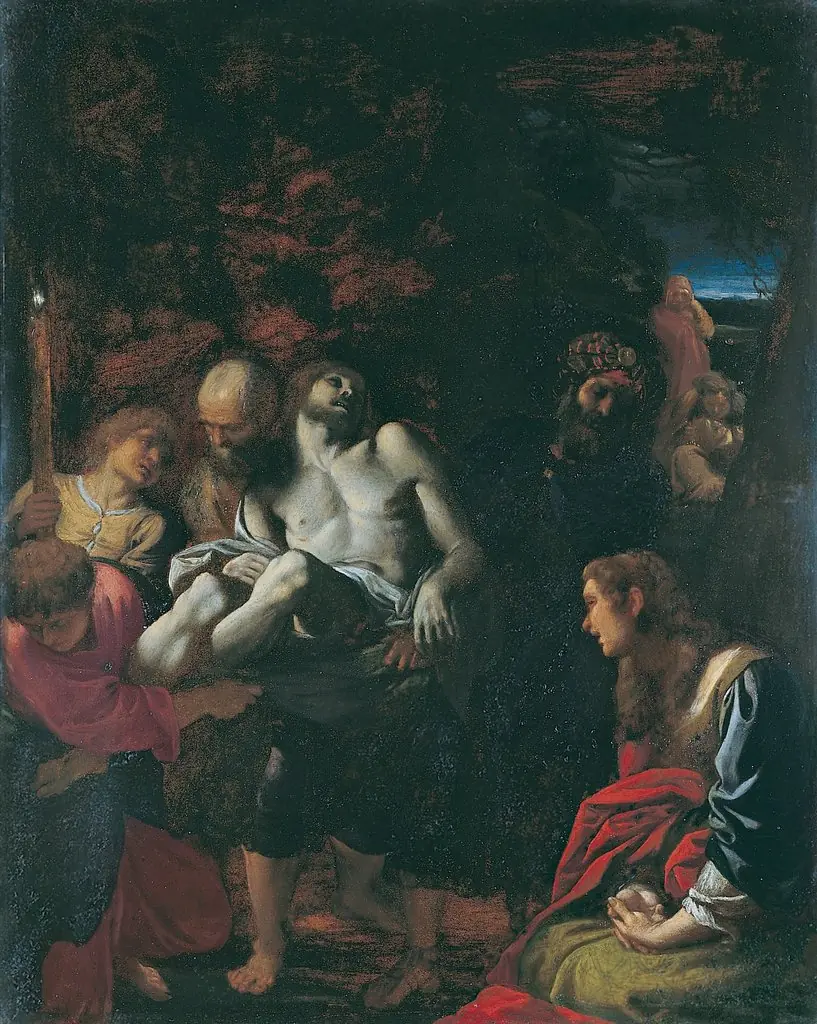
Copies and reproductive engravings after the Vienna Pietà attest to its early influence among contemporaries. Three printed versions are recorded, including engravings by Frans van der Steen and Cornelis Caukercken, while a painted copy in a private collection, attributed to Annibale’s circle (between Lanfranco and Badalocchio), is regarded as the strongest replica. The composition’s compact monumentality also prompted Annibale to revisit the theme soon after, producing the related Pietà with the Three Maries, which shares formal echoes with the copper panel. The work’s modest scale did not diminish its renown; it entered Archduke Leopold Wilhelm’s holdings by 1659 and was reproduced in David Teniers the Younger’s Gallery of Archduke Leopold William, consolidating its place among the admired Italian pictures of the Habsburg collection.
Artist & collection
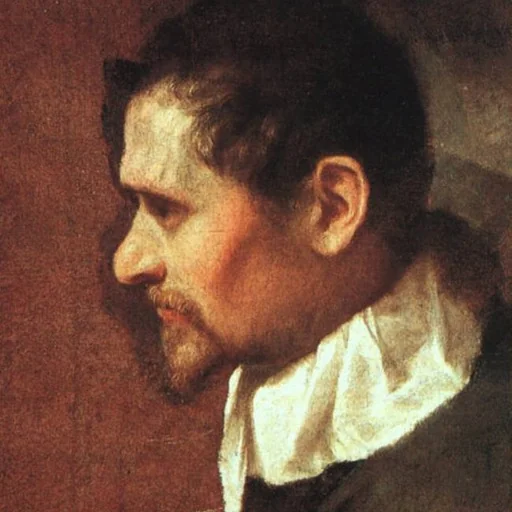
Artist
Annibale Carracci ( kə-RAH-chee, UK also kə-RATCH-ee, Italian:; November 3, 1560 – July 15, 1609) was an Italian painter and instructor, active in Bologna and later in Rome.