Artwork
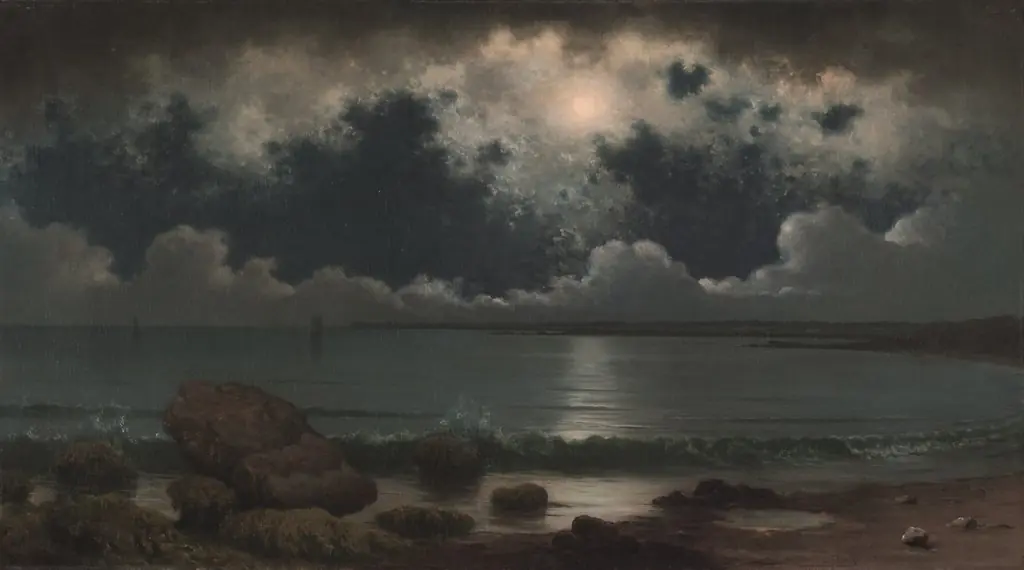
Moonlight, Wood Island Light
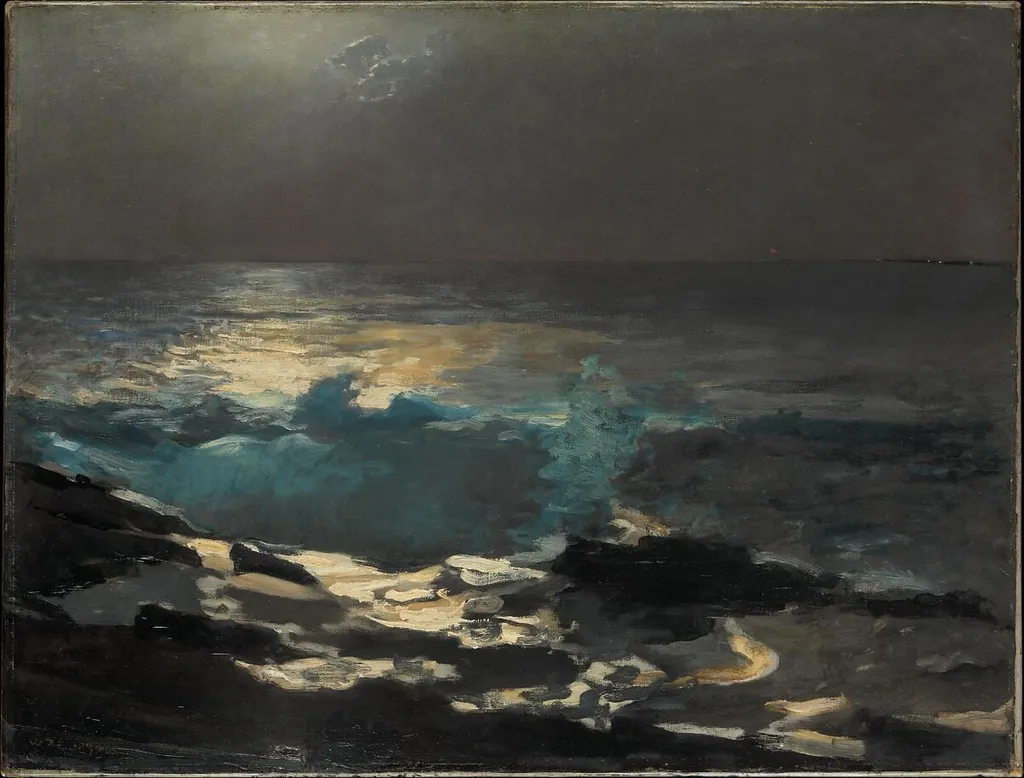
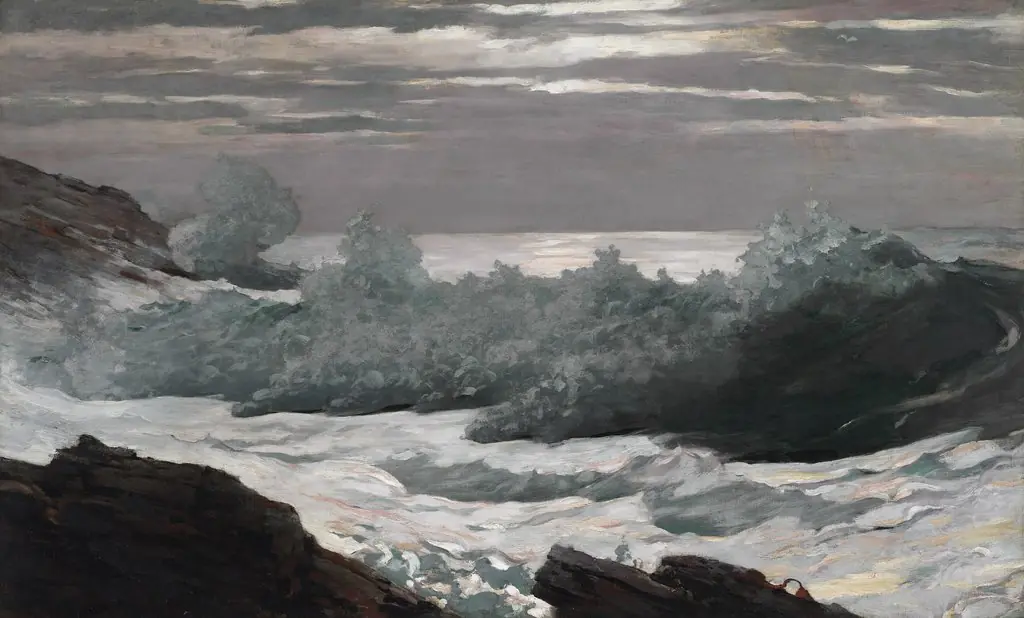
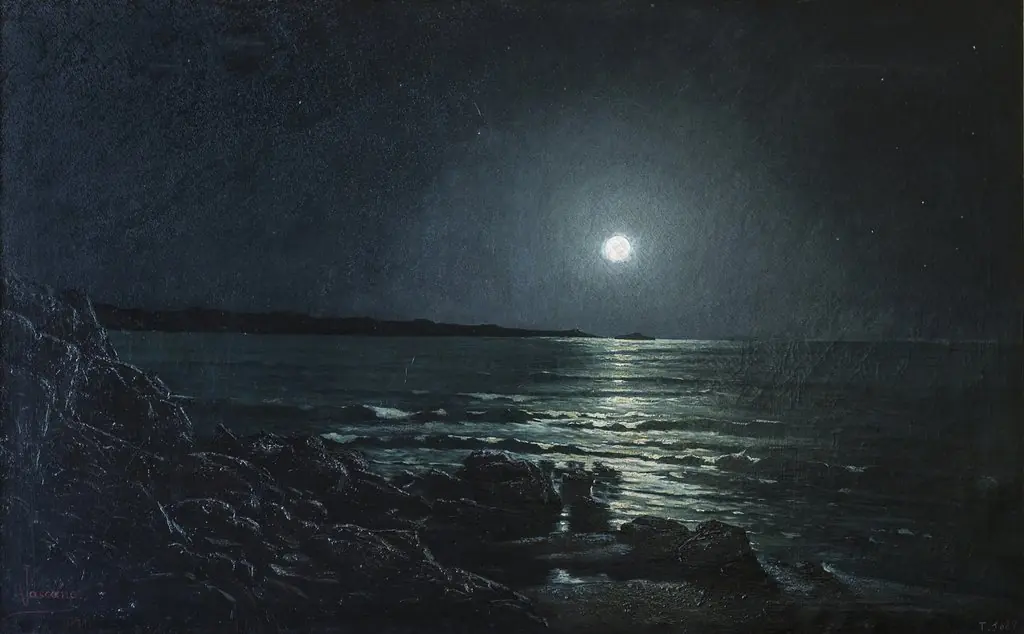
Moonlight, Wood Island Light is an oil painting by the American Impressionist artist Winslow Homer. It dates from 1894 and is held in the collection of the Metropolitan Museum of Art.
About this work
Subject & Meaning
As a piece of marine art, the painting emphasizes the interplay between the dark ocean environment and the solitary, guiding presence of the lighthouse beacon.
Winslow Homer's 1894 oil painting depicts a nocturnal marine landscape near the artist's studio at Prouts Neck, Scarborough, Maine. The composition focuses on a seascape under moonlight, with the specific iconography centered on a minute application of red pigment on the horizon. This small detail represents the Wood Island Lighthouse, located south of Prouts Neck.
The work captures a specific atmospheric condition, reportedly executed rapidly by the artist in under five hours using only lunar illumination. As a piece of marine art, the painting emphasizes the interplay between the dark ocean environment and the solitary, guiding presence of the lighthouse beacon.
Technique & Style
Moonlight, Wood Island Light is an oil painting on canvas created in 1894. The work measures approximately 78.1 x 102.2 cm and belongs to the landscape genre within the American Wing collection at the Metropolitan Museum of Art. Executed in oil paint, the piece depicts a nocturnal marine scene off Prouts Neck, Maine, highlighted by a small red pigment spot that marks the lighthouse on Wood Island.
According to his contemporary biographer William Howe Downes, Winslow Homer completed the canvas in under five hours under actual moonlight, giving the surface a spontaneous, impressionistic handling. The composition balances dark tonalities with the luminous spot, emphasizing formal contrast and the immediacy of the observed night seascape.
History & Provenance
Moonlight, Wood Island Light, an oil on canvas painted in 1894, entered the collection of the Metropolitan Museum of Art and has remained there since. The work was produced spontaneously by Winslow Homer, who, according to his contemporary biographer William Howe Downes, completed the canvas in under five hours while observing moonlight on the sea near his studio at Prouts Neck, Maine. Homer's depiction includes a small red spot indicating the lighthouse on Wood Island, south of Prouts Neck.
The painting is classified within the American Wing's landscape genre and is recognized as a marine work. No specific accession number or exhibition history beyond its presence in the Metropolitan Museum's holdings is documented in the available sources.
Legacy
Moonlight, Wood Island Light (1894) has cemented its place in American art history as a pivotal late work by Winslow Homer, influencing subsequent generations of landscape and marine painters. Its bold nocturnal palette and atmospheric effects challenged conventional depictions of seascapes, inspiring artists to explore mood and light over literal representation. The painting's inclusion in the Metropolitan Museum of Art's permanent collection has amplified its visibility, positioning it as a touchstone for studies of Homer's mature style and the broader evolution of American realism.
Critics and scholars, including Homer's biographer William Howe Downes, have underscored its technical audacity, particularly the rapid execution under natural moonlight, which underscored the artist's innovative approach to capturing ephemeral conditions. While not always singled out among Homer's most iconic works, its legacy endures in exhibitions and academic discourse as a testament to his mastery of marine subjects.
Overview
Winslow Homer's "Moonlight, Wood Island Light" is a late 19th-century oil painting housed in the Metropolitan Museum of Art. This canvas captures a nocturnal seascape near the artist's studio in Portland, Maine, rendered with a subdued palette of blues and grays. The scene conveys a quiet, atmospheric mood, with a distant lighthouse providing a subtle focal point on the horizon.
Context
Created in the late 19th century, this painting diverges from many artistic trends of its era. While some artists favored vibrant, optimistic depictions, Homer chose to explore the profound quietude and subtle drama of a night scene. This focus on the somber and atmospheric reflects a distinct artistic vision, emphasizing nature's raw power and solitary beauty rather than its more cheerful aspects.
Artist & collection
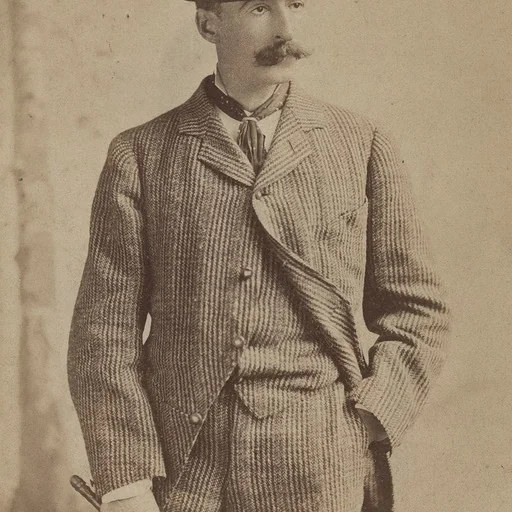
Artist
Winslow Homer (February 24, 1836 – September 29, 1910) was an American landscape painter and illustrator, best known for his marine subjects.