Artwork
William Middleton
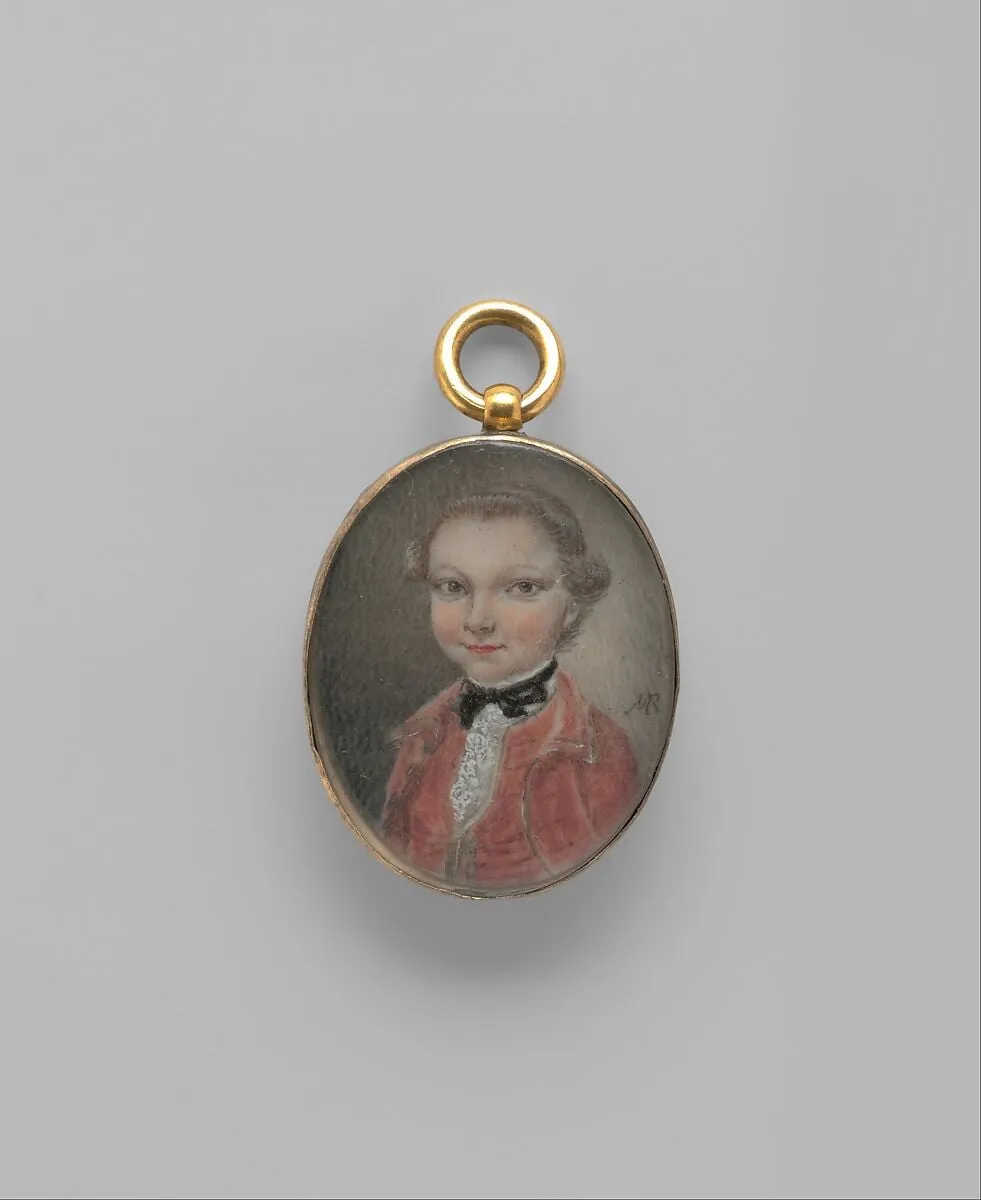
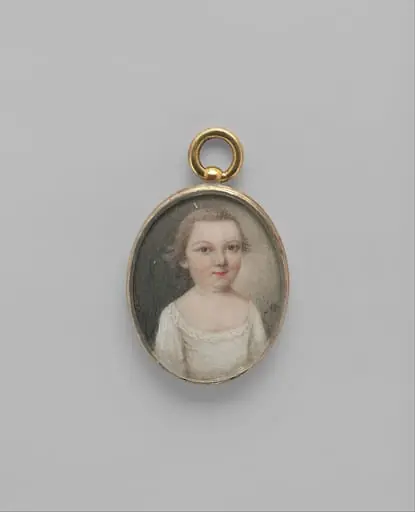
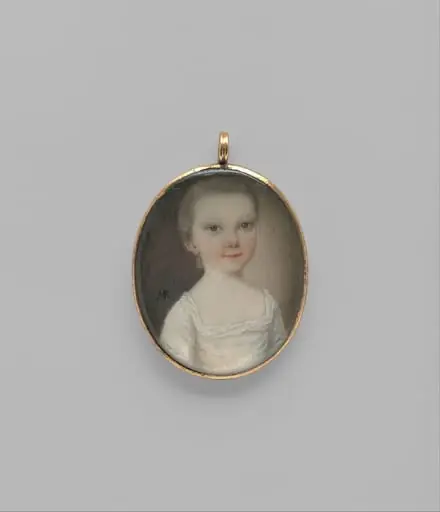
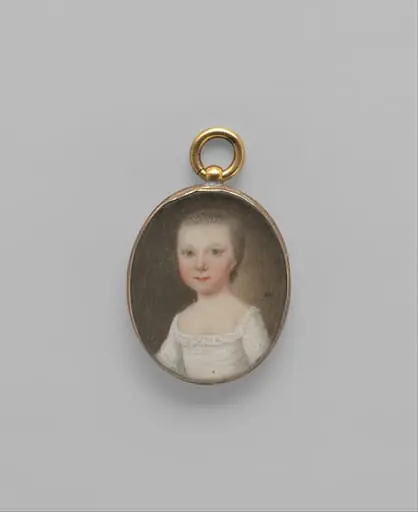
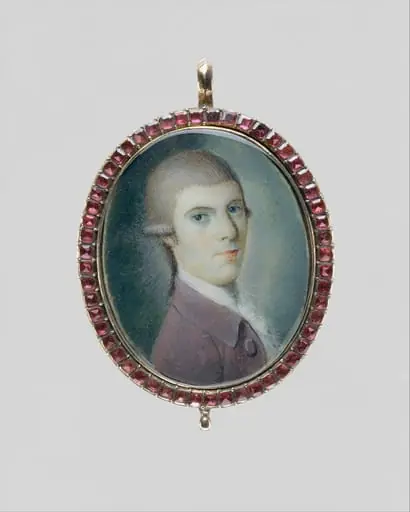
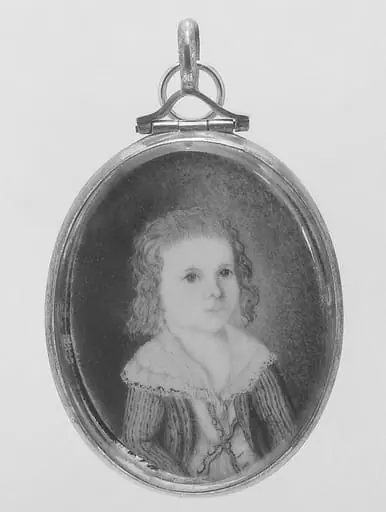
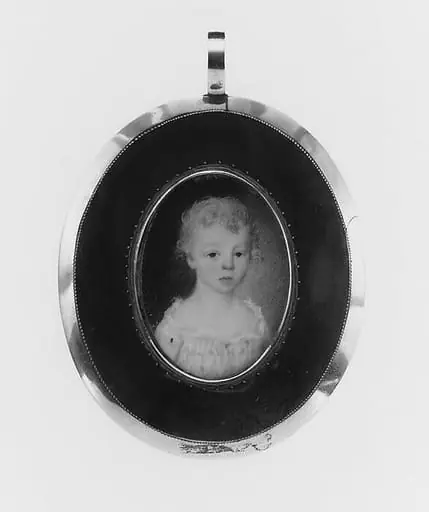
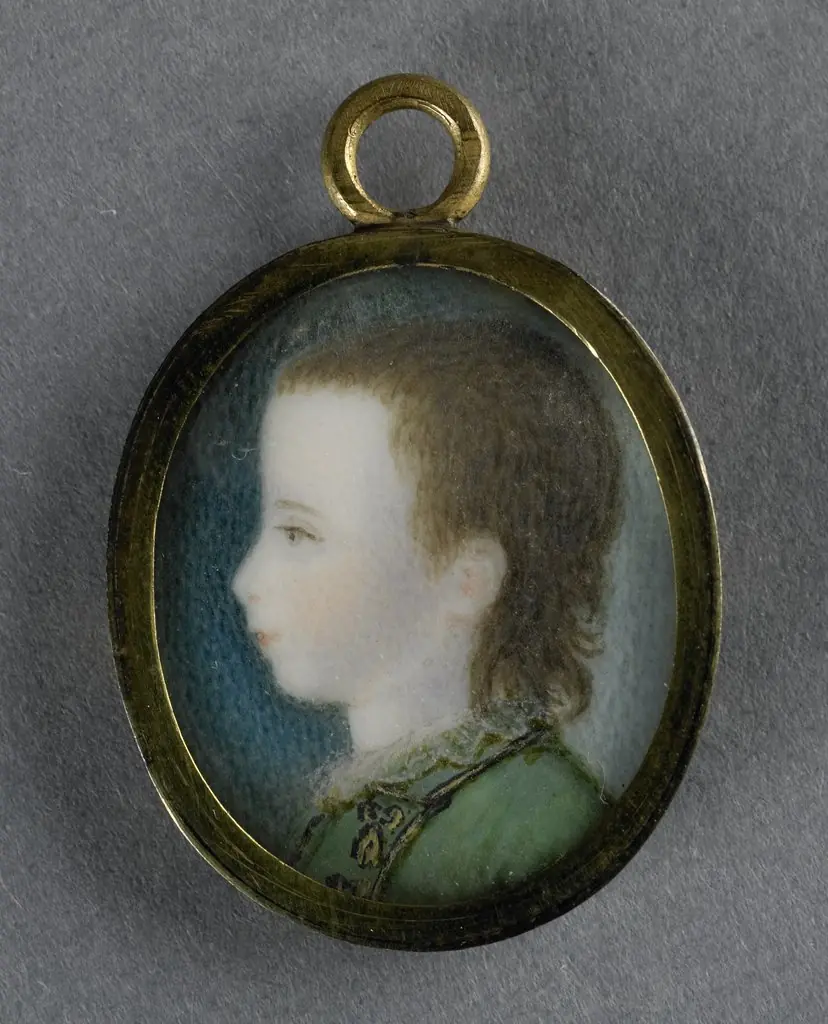
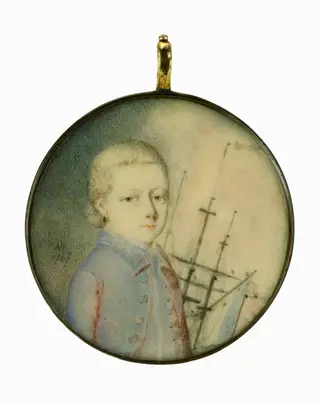
William Middleton is a watercolor painting by the Baroque artist Mary Roberts. It dates from 1755 and is held in the collection of the Metropolitan Museum of Art.
About this work
Technique & Style
While the sources record the medium, date, artist, and dimensions, they do not comment on the painting's current condition or any later handling.
William Middleton is a portrait miniature executed in watercolor on ivory by Mary Roberts in 1755. The ivory support provides a smooth, luminous ground for the delicate watercolor, which is applied with fine, controlled brushwork to render the sitter's lace collar, silk bow, ribbon, and waistcoat in minute detail. Measuring approximately 3.8 cm high by 2.5 cm wide, the work exemplifies the intimate scale and refined precision characteristic of eighteenth‑century American portrait miniatures.
While the sources record the medium, date, artist, and dimensions, they do not comment on the painting's current condition or any later handling.
History & Provenance
William Middleton is a miniature portrait dated 1755, executed by Mary Roberts in watercolor on ivory. The available sources do not record any earlier owners or commission details; the work's provenance prior to its entry into the Metropolitan Museum of Art is undocumented. It is housed in the Met's American Wing under accession number 2007.62, where it is part of the permanent collection.
There is no record of it having been lent or exhibited elsewhere, so no exhibition history is documented in the provided material.
Legacy
William Middleton, a 1755 portrait miniature by Mary Roberts, is part of the Metropolitan Museum of Art's American Wing collection. Depicting a young boy in period attire, the work is a surviving example of colonial-era American miniature portraiture and contributes to the study of the form's development. Mary Roberts is noted as one of the earliest documented women working as a miniaturist in colonial America.
Overview
Mary Roberts's portrait of William Middleton is a small-scale watercolor rendered on ivory. This intimate work captures a young boy, intended to be a cherished personal item. These miniature portraits were commonly designed to be worn as jewelry or carried within lockets, serving as private mementos rather than large public displays.
Subject & Meaning
The artwork depicts a young boy, William Middleton, presented with a calm demeanor and rosy cheeks. He wears a blue coat, and a pink ribbon adorns his hair, framing his youthful face. His direct gaze engages the viewer, creating a sense of immediate connection despite the portrait's diminutive size.
Context
Miniature portraits like William Middleton were popular during a period when personal keepsakes held significant sentimental value. Mary Roberts specialized in these small-format works, which served as portable reminders of loved ones. This piece, part of the American Wing, exemplifies a particular tradition of portraiture and personal art objects in American history.
Artist & collection

Artist
Mary Roberts was born in England and immigrated to Charleston, South Carolina, with her husband, the painter Bishop Roberts, before 1735.