Artwork
The Adoration of the Magi
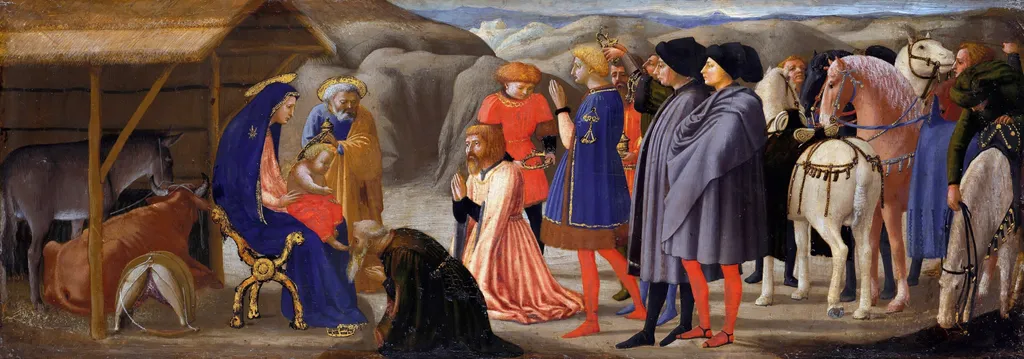
The Adoration of the Magi is a paint painting by the High Renaissance artist Masaccio. It is held in the collection of the Gemäldegalerie Berlin.
About this work
Subject & Meaning
To the right, horses and servants complete the retinue, including a horse shown grazing in a pose echoing Nicola Pisano's relief on the Pisa Baptistery pulpit.
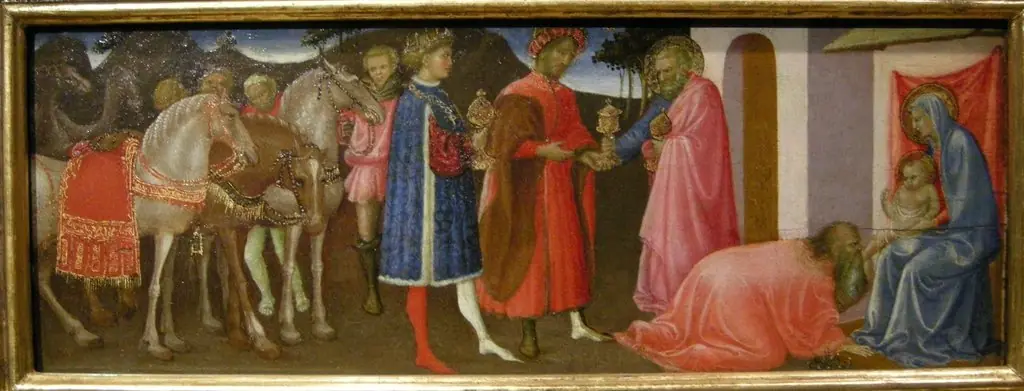
The panel depicts the Adoration of the Magi, a traditional episode in which the three wise men pay homage to the newborn Christ. The composition is arranged as a calm, frieze-like procession read from left to right. At the left, the ox and the donkey stand with their backs to the viewer beside the stable, with the Holy Family grouped at its entrance.
Mary is seated on a gilded seat modeled on a Roman curule chair, with lion-head protomes and paws, and holds the blessing Child on her lap. The first Magus has already knelt and placed his crown on the ground, his gift received by Saint Joseph; the second kneels in a rose tunic while a servant holds his crown; the third has just arrived, still standing, as attendants remove his crown and carry his offering.
Behind the kings appear two non-traditional figures in contemporary hats and long grey cloaks, identified as the patron notary ser Giuliano di Collino and his nephew, inserted as donor portraits. To the right, horses and servants complete the retinue, including a horse shown grazing in a pose echoing Nicola Pisano's relief on the Pisa Baptistery pulpit.
Technique & Style
The Adoration of the Magi is executed in tempera on a poplar panel, with sources giving its size as roughly 21 × 61 cm (or 22.3 × 61.7 cm). The paint handling varies from soft, blended passages in the background to firmer, more incisive strokes in the drapery of the two donor figures. The composition is arranged as a low frieze, shown in profile, with the Holy Family placed under a shortened halo and the Magi presented in a calm, orderly procession.
Light and a rich, unifying colour scheme bind the scene, contrasting with the more crowded, decorative approach of Gentile da Fabriano’s contemporary Adoration.
History & Provenance
The Adoration of the Magi was painted by Masaccio circa 1426 as part of the Pisa polyptych, commissioned for the chapel of notary Ser Giuliano di Colino degli Scarsi da San Giusto in the church of the Carmine, Pisa.
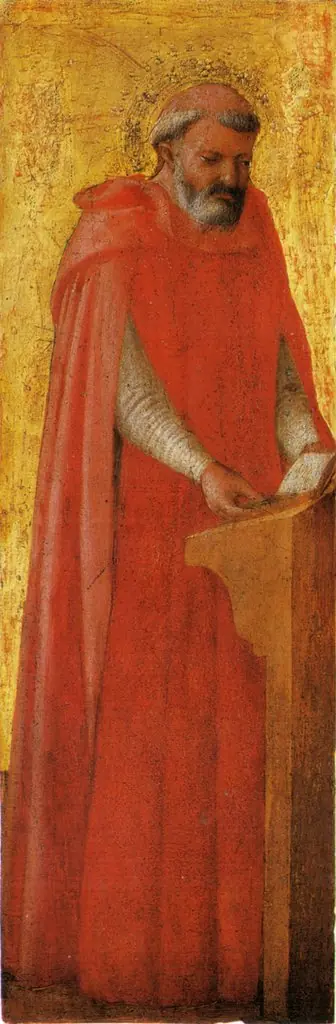
The work remained in situ until the mid-16th century, when Giorgio Vasari saw and described it in the second edition of his Vite (1568). In the 17th or 18th century the polyptych was removed from the altar, dismantled, and dispersed. The two panels of the Adoration of the Magi and Saints Peter and John the Baptist were in the Capponi collection in Florence when sold to the Gemäldegalerie Berlin in 1880; they had previously been attributed to Pesellino but were already recognized as Masaccio and part of the Pisa polyptych upon acquisition. The remaining predella panels entered the Berlin collection in 1908 with uncertain attribution.
The painting measures 22.3 cm in height and 61.7 cm in width, executed in tempera on poplar panel. It originally formed part of the central predella beneath Masaccio's Maestà (now in the National Gallery, London). The composition presents a profile view of the Adoration, contrasting with Gentile da Fabriano's 1423 Adoration in its restraint.
Figures include the Holy Family, three Magi, attendants, and likely representations of the commissioning notary and his nephew. The work reflects Masaccio's use of linear perspective, chiaroscuro, and naturalistic detail, while engaging with contemporary Florentine artistic debates.
The panel is held in the Gemäldegalerie, Berlin, inventoried as 1199.
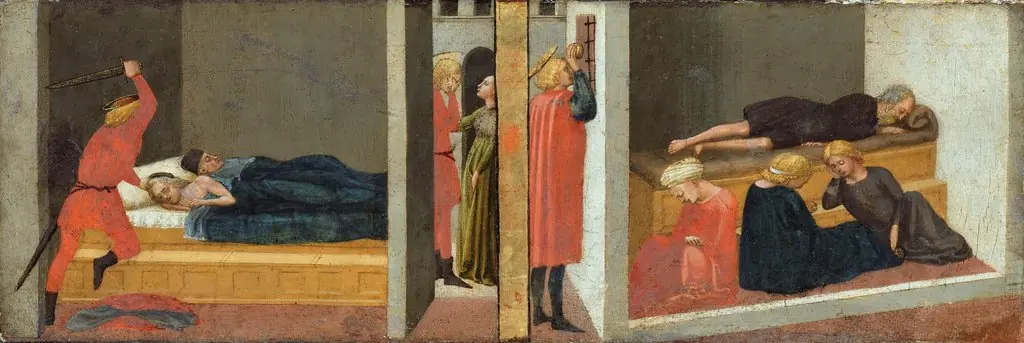
It entered the museum’s holdings in two acquisitions: the Adoration of the Magi together with the Martyrdom of Saints Peter and John the Baptist was purchased in 1880 from the Capponi collection in Florence; the two panels depicting the Stories of Saints Julian and Nicholas were added in 1908.
The work has not been recorded in major temporary exhibitions since its arrival in Berlin, and no modern exhibition history is documented in the cited sources.
Context
Masaccio's The Adoration of the Magi (1426) stands as a pivotal document of the Early Italian Renaissance, originating from the well-documented Pisa Polyptych commissioned by the notary Ser Giuliano di Colino. Art historical scholarship highlights the work's deliberate stylistic opposition to Gentile da Fabriano's ornate Adoration of the Magi (1423); where Gentile employed lavish detail, Masaccio adopted a frieze-like composition and sober realism. This shift marked a decisive move away from International Gothic frills toward the structural clarity and humanist values defining the Florentine Renaissance.
The painting's significance was recognized early by Giorgio Vasari, who described it in 1568, though the polyptych was later dismembered. Modern attribution confirms the panel's authorship, correcting earlier misidentifications as works by Pesellino, and situates the piece as a central element in understanding Masaccio's revolutionary approach to perspective and narrative solemnity.
Legacy
The painting's historical reputation is anchored in its early documentation by Giorgio Vasari, who viewed and described the work in the 1568 edition of his Lives. Although the original polyptych was dismantled and dispersed during the 17th or 18th centuries, the panel's artistic significance was recognized by the 19th century; by the time its components entered the Berlin collection in 1880, it had been correctly attributed to Masaccio, overturning earlier misidentifications as works by the Pesellino. The work is historically noted for its deliberate stylistic contrast to Gentile da Fabriano's 1423 Adoration of the Magi, rejecting ornate complexity for a frieze-like composition.
This specific iconographic choice, presenting the scene entirely in profile, remained unique until Sandro Botticelli later revived the format.
Overview
The Adoration of the Magi is a painting by Masaccio, created in 1426. It is a religious work executed in paint.
Artist & collection


- The Adoration of the Magi
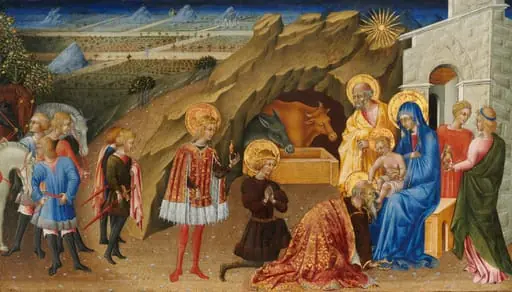
 The adoration of the Magi
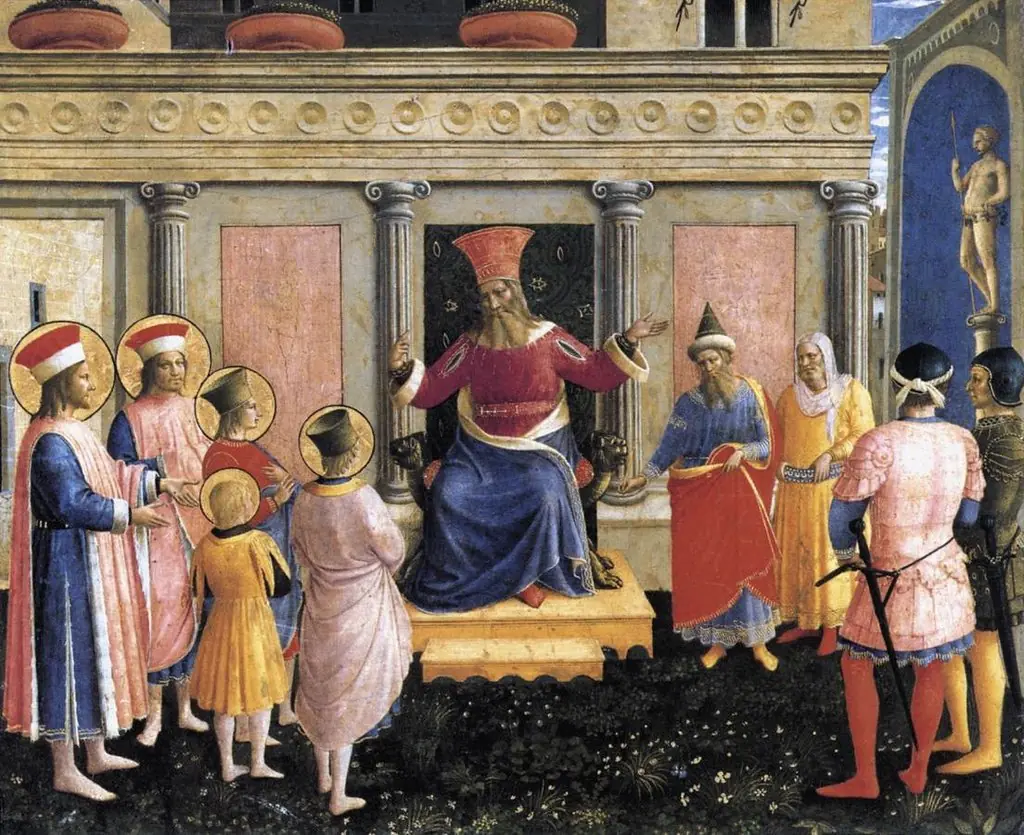 The Saints Cosmas and Damian with their Brothers before the Proconsul Lysias
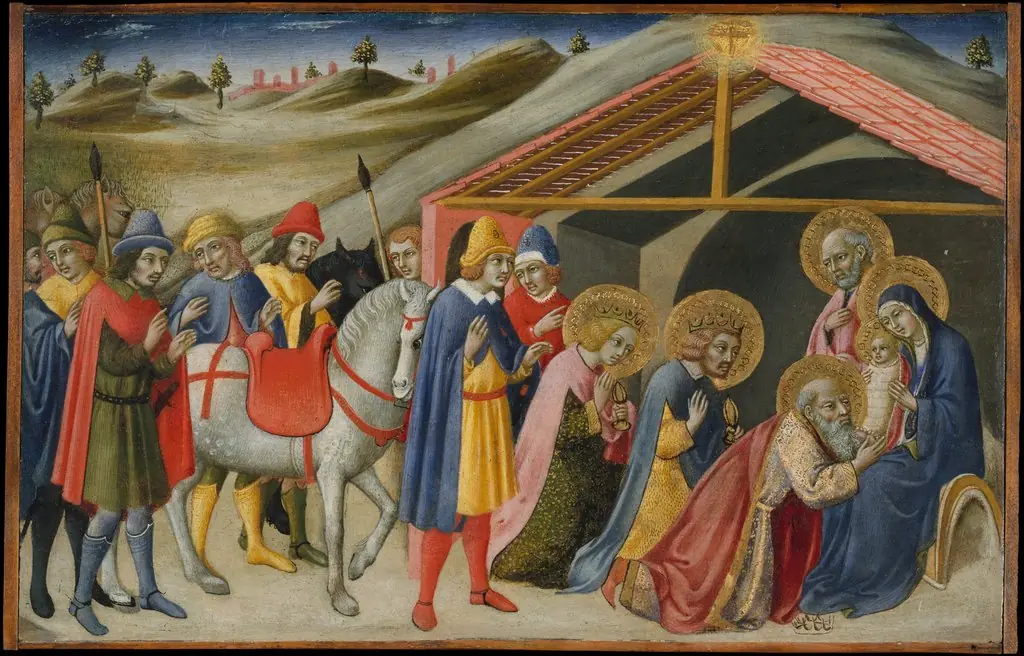 The Adoration of the Magi
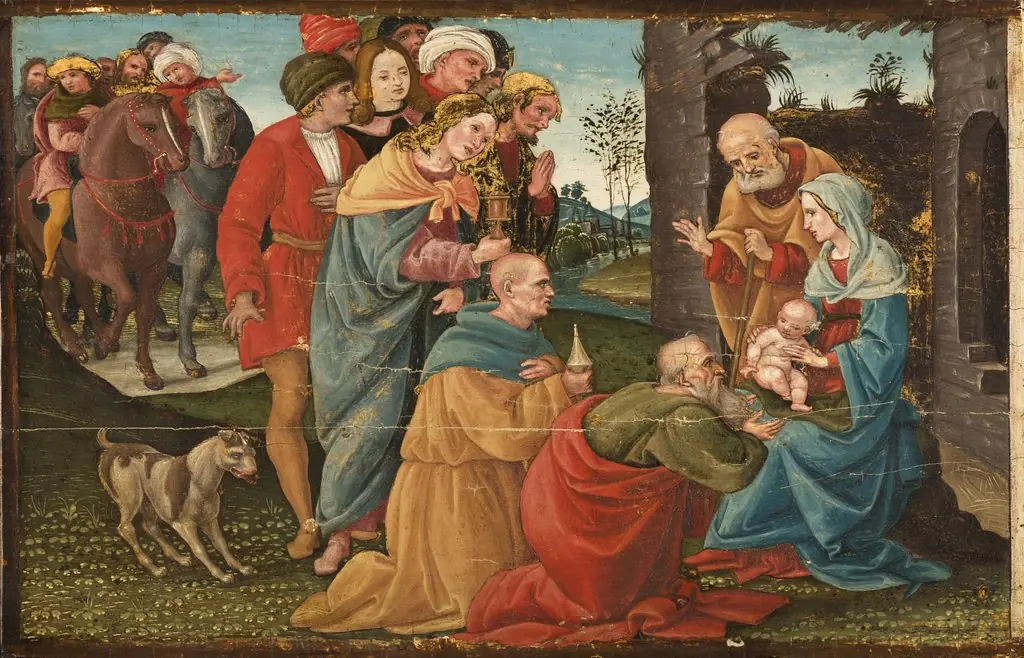 The Adoration of the Magi
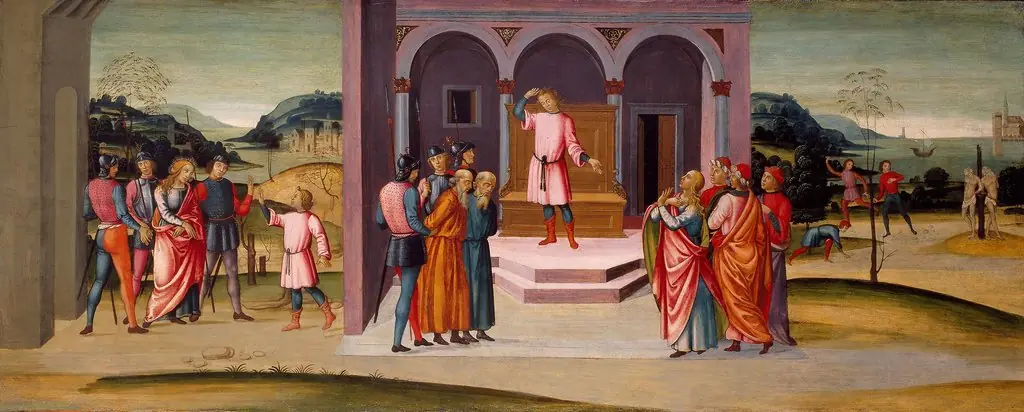 Daniel Saving Susanna, the Judgment of Daniel, and the Execution of the Elders
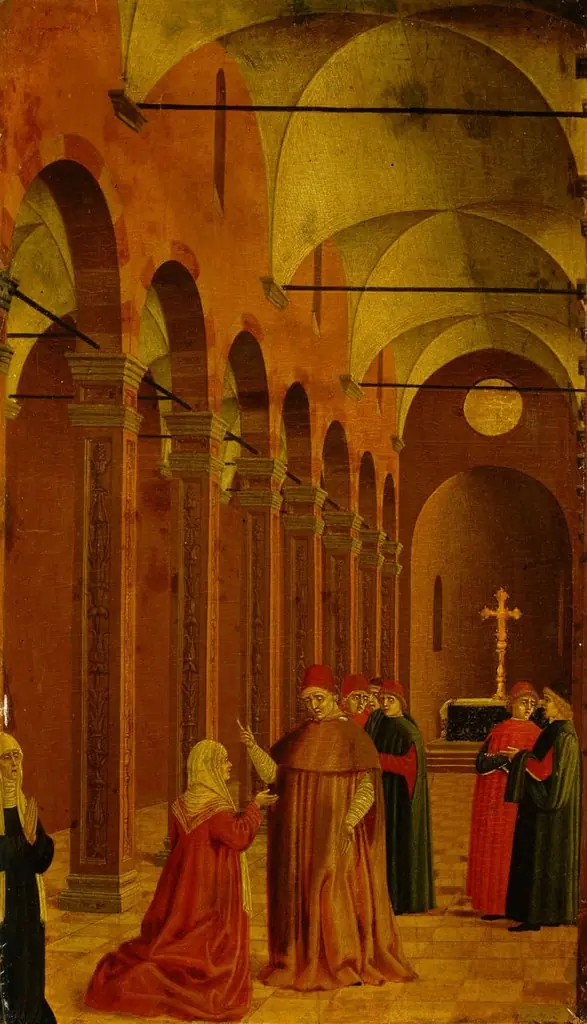 Szene aus dem Leben des Hl. Vinzenz Ferrer: Die Mutter des Heiligen fragt den Bischof von Valencia nach dem Sinn der wunderbaren Zeichen, die die Geburt ihres Kindes ankündigen
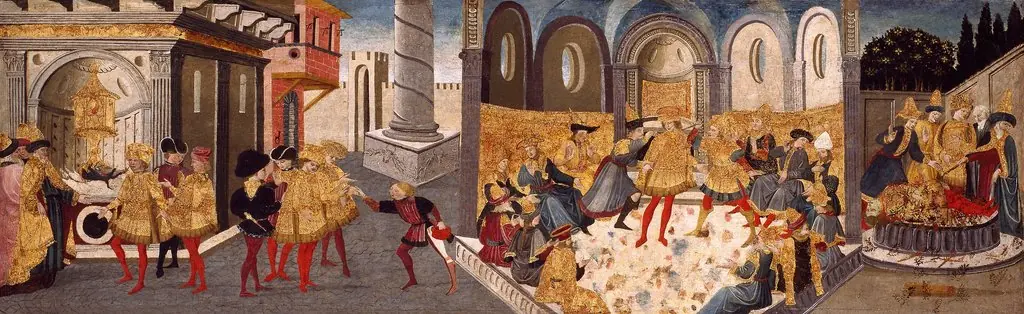 The Assassination and Funeral of Julius Caesar
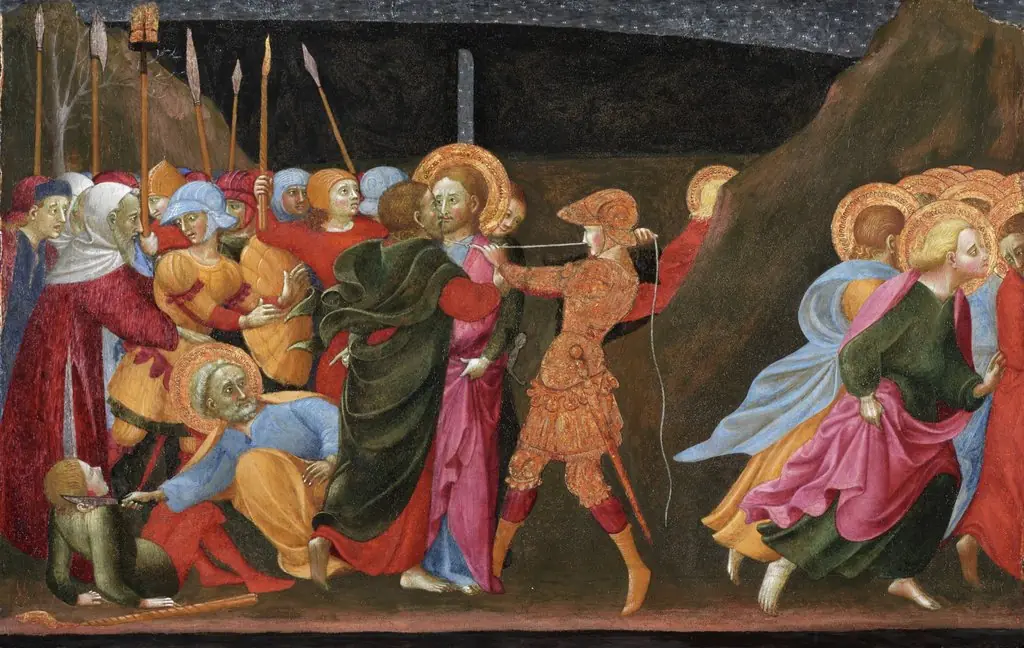 The Betrayal of Christ
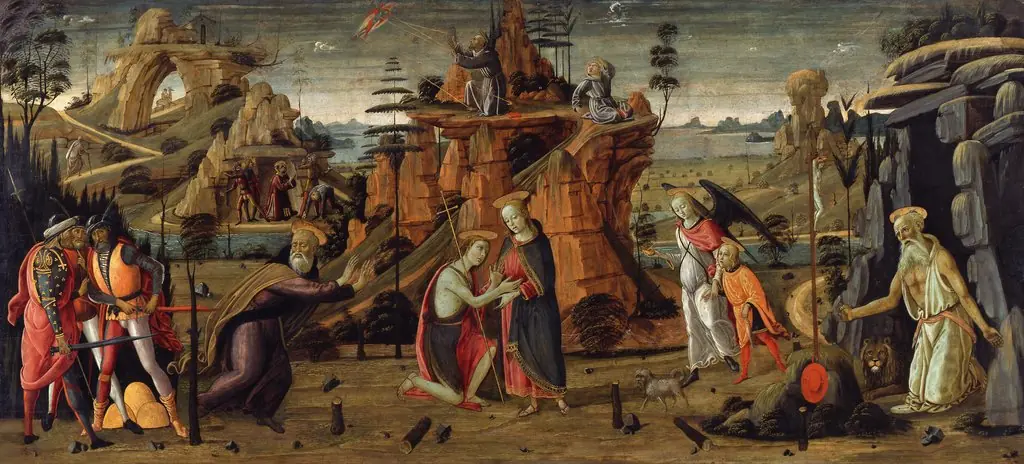 Landscape with biblical scenes and scenes from the legends of saints
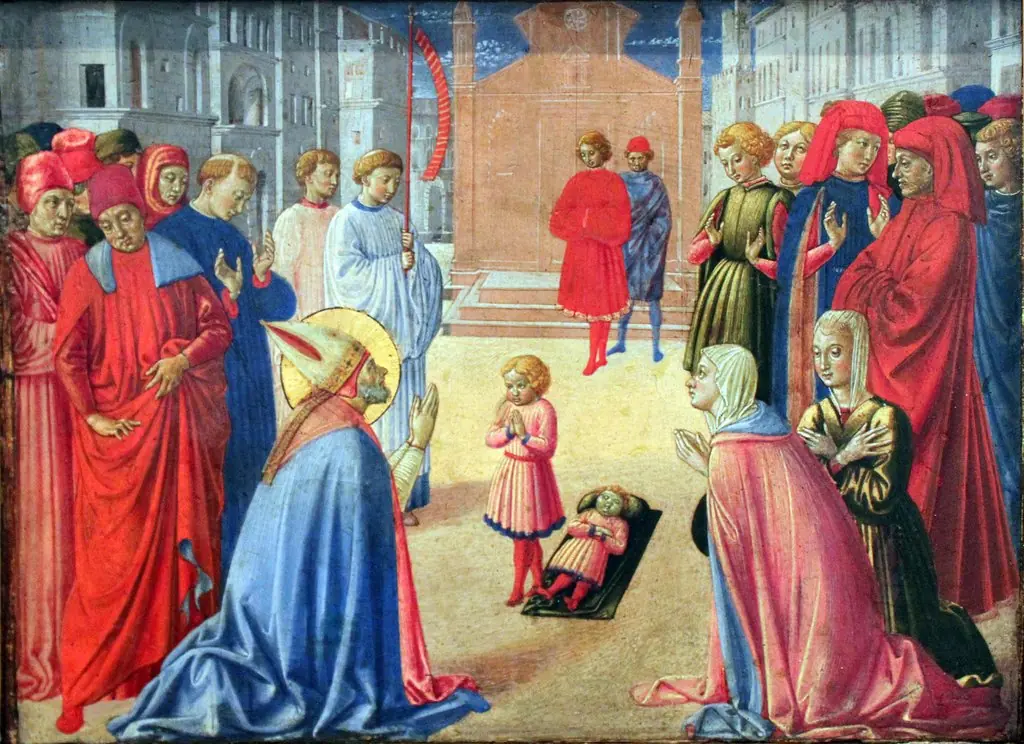 The hl. Zenobius raises a dead boy
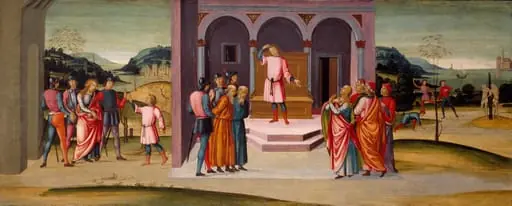 Daniel Saving Susanna, the Judgment of Daniel, and the Execution of the Elders