Artwork
The Madonna of Humility
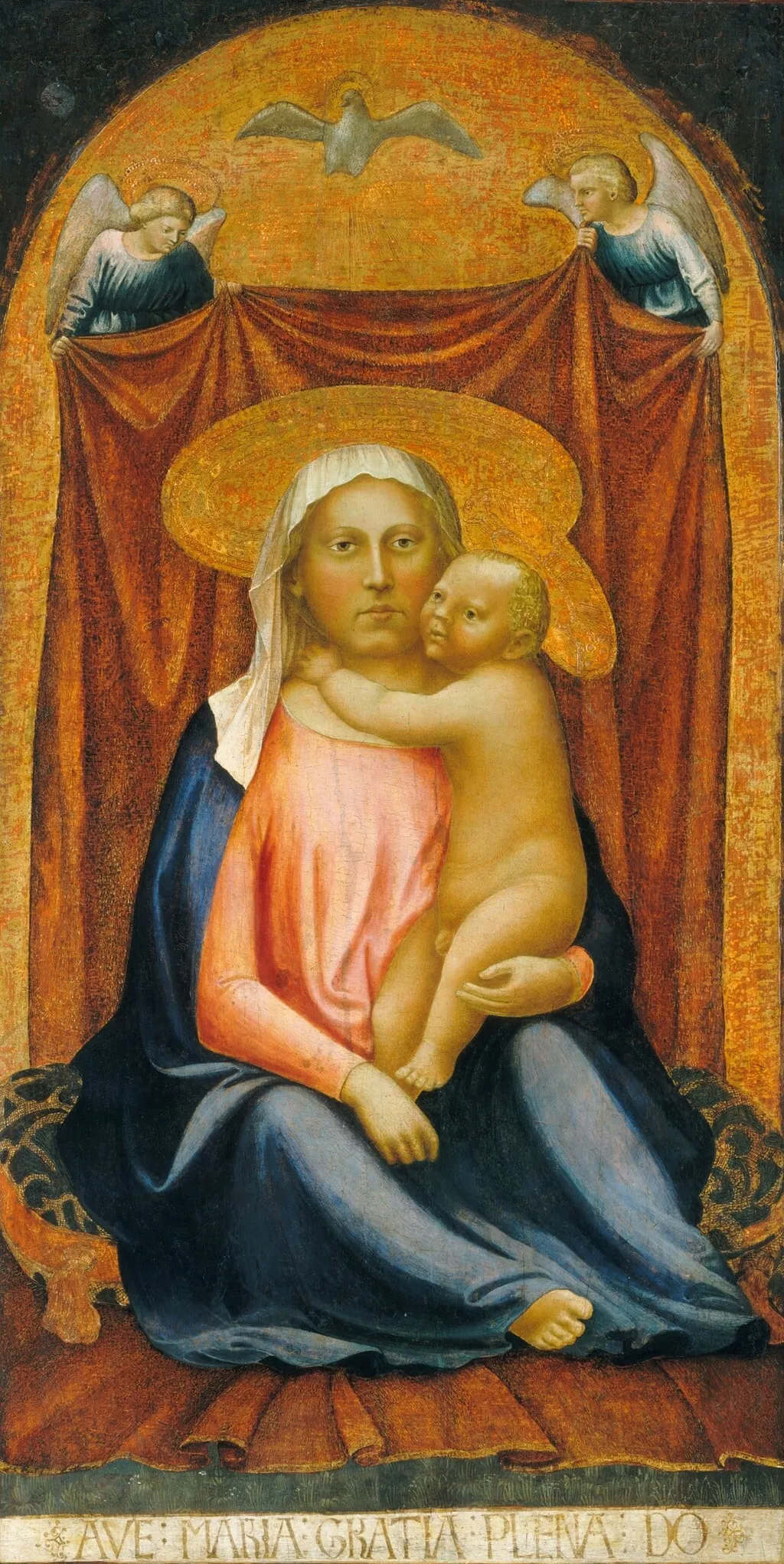
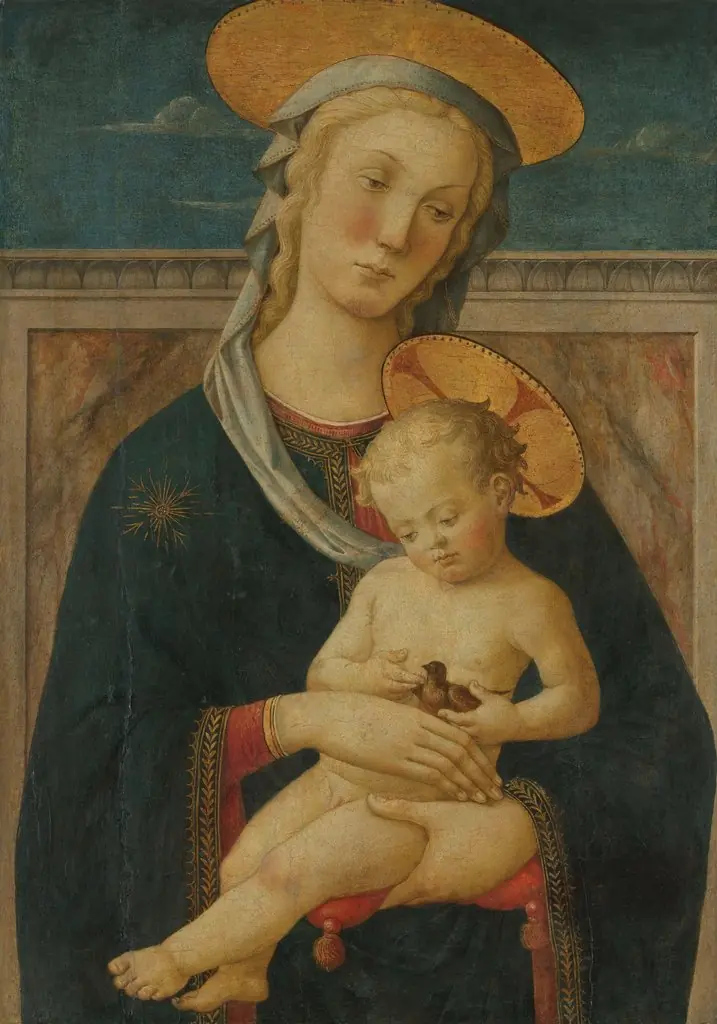
The Madonna of Humility is a tempera painting by the High Renaissance artist Masaccio. It dates from 1424 and is held in the collection of the National Gallery of Art.
- Inscription
- Inscribed:across bottom: AVE: MARIA: GRATIA: PLENA: DO[MINVS TECVM] (Hail, Mary, full of grace, the Lord is with thee), from Luke 1:28
About this work
Technique & Style
The panel is in mediocre condition, having undergone extensive restoration that complicates a definitive assessment of the work.
The painting is executed in tempera on a wood panel support, measuring approximately 105.6 × 54.1 cm. The panel is in mediocre condition, having undergone extensive restoration that complicates a definitive assessment of the work. Despite this, several stylistic details point to Masaccio's hand: the Virgin's foreshortened legs and the perspectival halos demonstrate an experimental handling of space and volume, borrowing from Giotto's formal language. The composition follows the Madonna of Humility iconography, depicting the Virgin seated on the ground with the Christ Child, a departure from the enthroned Maestà type.
The handling of drapery and the restrained, monumental figures reflect the early Italian Renaissance's integration of naturalistic observation with devotional gravity.
History & Provenance
The painting is dated to about 1424–1425 and was likely created for private devotion, given its small size. Its early history is obscure; it may have originated with the Strozzi Sacrati family in Mantua. By 1886 it was owned by Prince Leopold-Emmanuel-Louis Croy Dülmen of Vienna, inherited by his widow Princess Rosa Anne von Sternberg, then by Count Albert Lónyay, and later by his son Count Carl Lónyay.
Duveen Brothers purchased it in April 1929, and The A.W. Mellon Educational and Charitable Trust acquired it in December 1936, donating the work to the National Gallery of Art in 1937, where it forms part of the Andrew W. Mellon collection. No accession number is recorded in the available sources.
Context
The painting's scholarly reception has been shaped by its mediocre condition and extensive restorations, which complicate a definitive attribution. Nevertheless, most scholars regard the attribution to Masaccio as probable, citing experimental details like the Virgin's foreshortened legs and perspectival halos, which reflect Giotto's influence and Masaccio's early style. The 'Madonna of Humility' iconography (the Virgin seated on the ground) suggests a private devotional purpose.
Stylistic parallels with Masaccio's Sant'Anna Metterza date the work to circa 1424–1425, before the Brancacci Chapel frescoes, situating it within Masaccio's formative period.
Overview
Masaccio's The Madonna of Humility, executed in 1424, depicts the Virgin Mary seated directly on the ground rather than a throne, holding the Christ Child on her lap. This iconographic choice emphasizes Mary's humility and human nature, a theme prevalent in early 15th-century Franciscan spirituality. The composition is stark and monumental, set against a neutral, dark background that eliminates decorative distraction and focuses attention on the figures.
Masaccio employs his signature use of chiaroscuro, modeling the forms with a single light source to create a profound sense of three-dimensional volume and anatomical solidity. The figures exhibit a weightiness and naturalism that broke sharply with the International Gothic style, marking a decisive shift toward the principles of the Early Renaissance. Painted in tempera on panel, the work demonstrates Masaccio's mastery of linear perspective and spatial coherence, even within a devotional format.
This piece stands as a critical example of the artist's brief but transformative career, illustrating his ability to infuse sacred subjects with a tangible, earthly presence that would influence subsequent generations of Florentine painters.
Subject & Meaning
The artwork depicts the Virgin Mary in a humble posture, seated directly on the ground rather than on a traditional throne, a representation known as the "Madonna of Humility." This iconography emphasizes her modesty and accessibility, presenting her as a human mother. The Christ Child rests gently on her lap, reinforcing the intimate and tender maternal bond between them.
Artist & collection


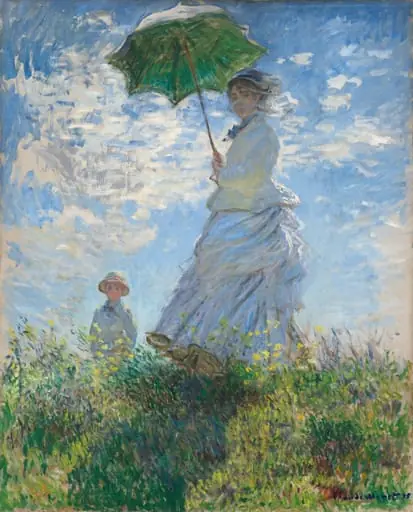 Woman with a Parasol - Madame Monet and Her Son
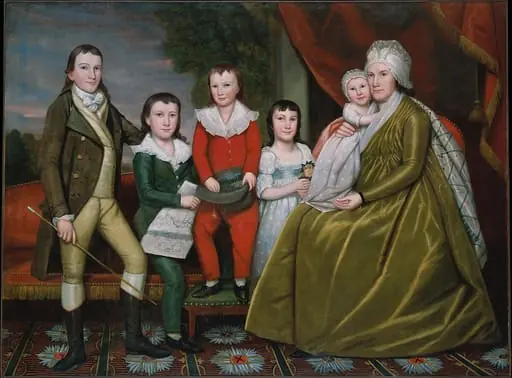 Mrs. Noah Smith and Her Children
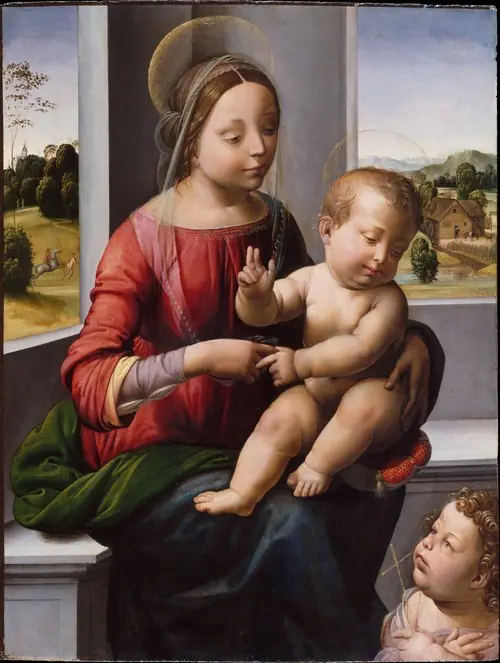 Madonna and Child with the Young Saint John the Baptist
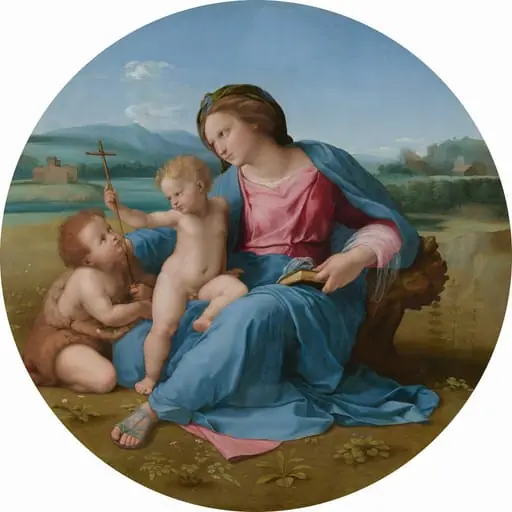 The Alba Madonna
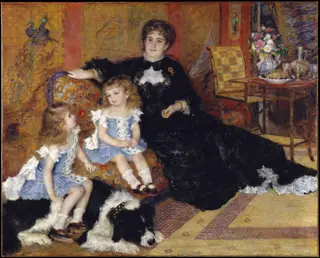 Madame Georges Charpentier and her Children
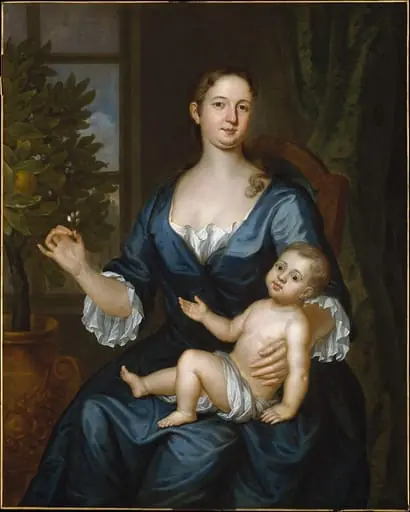 Mrs. Francis Brinley and Her Son Francis
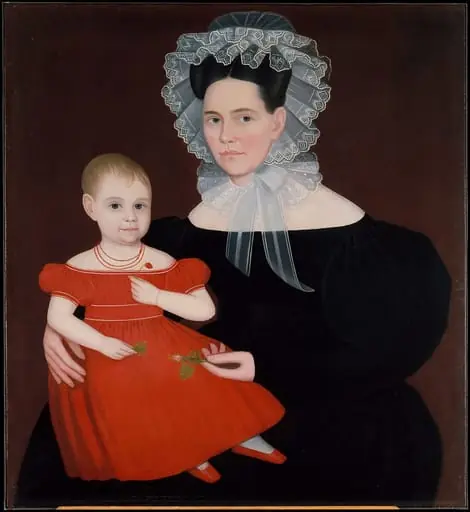 Mrs. Mayer and Daughter
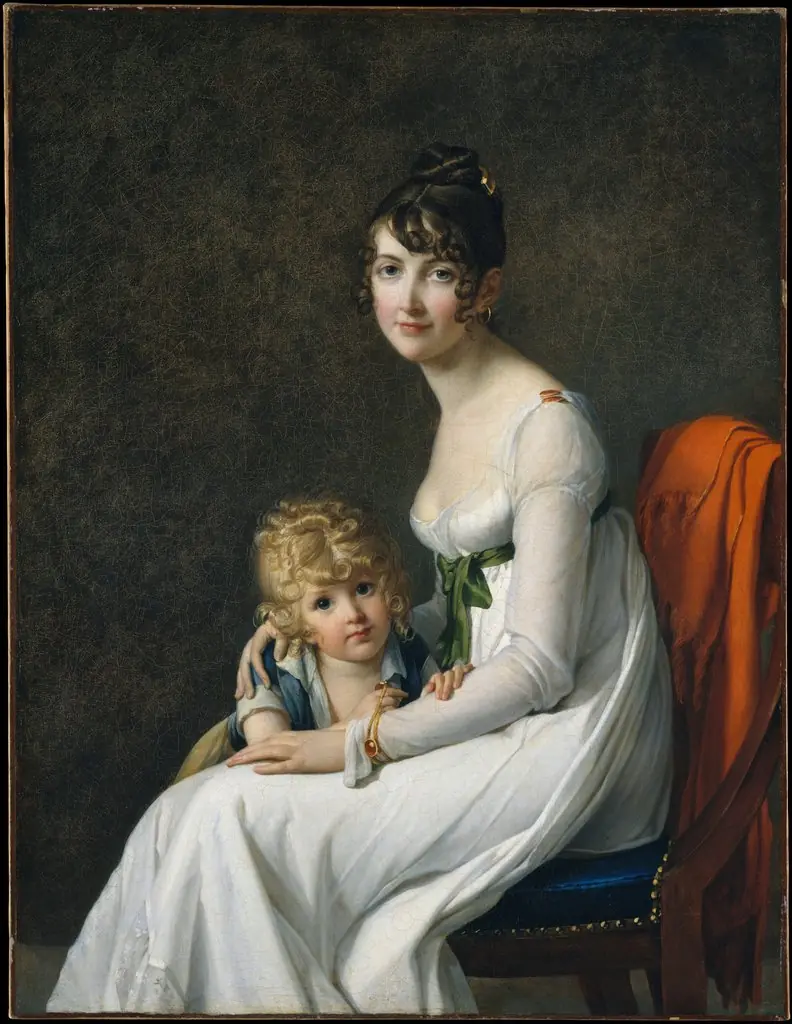 Madame Philippe Panon Desbassayns de Richemont (Jeanne Eglé Mourgue, 1778–1855) and Her Son, Eugène (1800–1859)