Artwork
The Virgin Annunciate
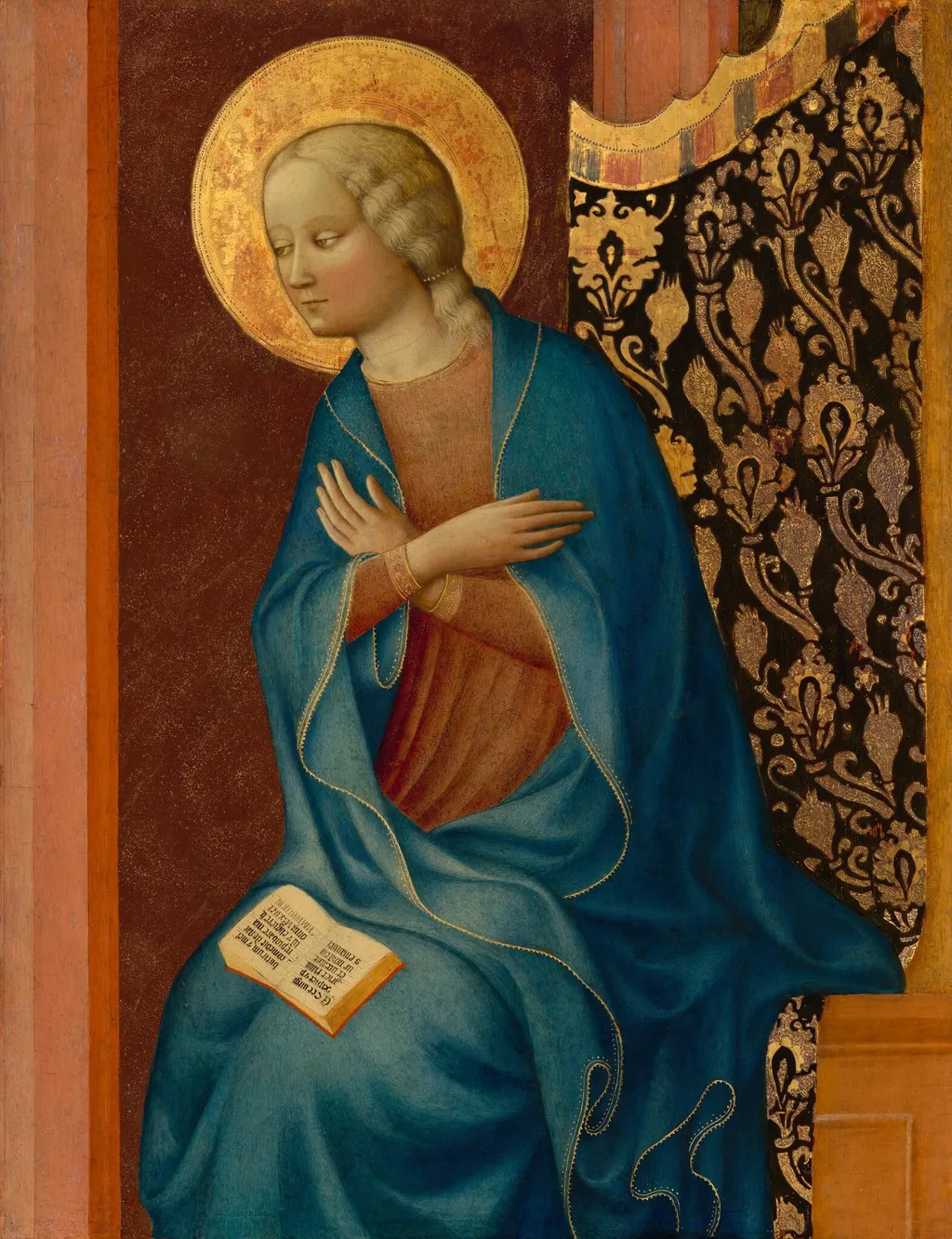
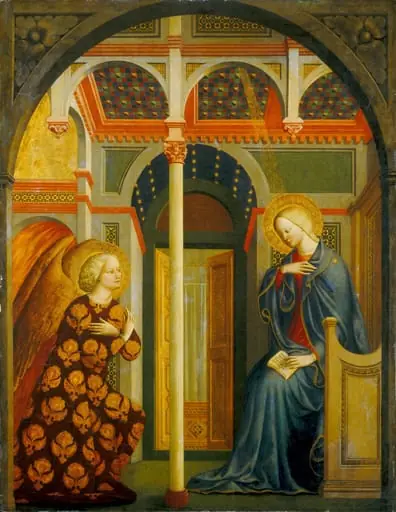
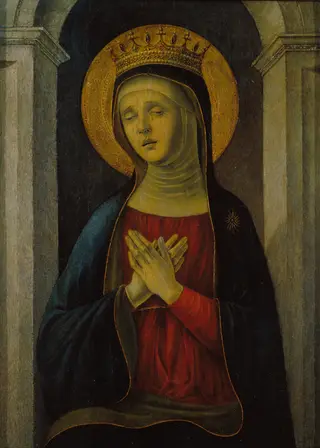
The Virgin Annunciate is a color painting by the Early Renaissance artist Masolino da Panicale. It dates from 1430 and is held in the collection of the National Gallery of Art.
- Inscription
- Inscribed:lower left on the Virgin's book: Ecce Virgo [con]cipiet [et] p / pariet fili[u]m / et uocabit / ur nom[en] eiu / [s] emanuel / butirum [et] mel / comedit ut fiat [sic] / reprobare ma / lu[m] [et] eligiere b / onum (Propter hoc dabit Dominus ipse vobis signum. Ecce virgo concipiet, et paret filium, et vocabitur nomen eius Emmanuel. Butyrum et mel comedet, ut sciat reprobare malum, et eligere bonum; Isaiah 7:14-15)
About this work
Technique & Style
Attributed to Masolino da Panicale and dated to 1450, this religious panel painting utilizes tempera as its primary medium applied to a wood support.
Attributed to Masolino da Panicale and dated to 1450, this religious panel painting utilizes tempera as its primary medium applied to a wood support. The work measures 76 cm in height and 57 cm in width, presenting a compact format typical of devotional images from the mid-fifteenth century. While specific details regarding the artist's brushwork or the current physical condition of the paint layer are not explicitly detailed in the available records, the piece is classified formally as a painting within the genre of religious art.
The composition focuses on the Annunciation, adhering to the iconographic traditions of the period through its material execution on panel.
History & Provenance
Attributed to Masolino da Panicale and dated to 1450, this panel painting entered the collection of Count Gustav Adolf Wilhelm von Ingenheim in Berlin or Ober-Rengersdorf by the 1810s or 1820s. The Count likely acquired the work during trips to Italy between 1816 and 1824. By 1929, the painting was located at Schloss Reisewitz or Ober-Rengersdorf.
Following the Count's death, his descendants sold the piece to Duveen Brothers, Inc. in 1930. Duveen subsequently sold the work to the Samuel H. Kress Foundation in New York in May 1936. The foundation gifted the painting to the National Gallery of Art in Washington, D.C., in 1939, where it remains part of the Samuel H. Kress Collection.
The Virgin Annunciate is held by the National Gallery of Art in Washington, D.C., where it forms part of the Samuel H. Kress Collection. The work entered the museum's holdings in 1939 as a gift from the Samuel H. Kress Foundation, following its acquisition by the foundation in May 1936 from the Duveen Brothers. Prior to this, the painting was in the collection of Count Gustav Adolf Wilhelm von Ingenheim in Berlin and Ober-Rengersdorf from the 1810s or 1820s until it was sold by his descendants in 1930.
The artwork is cataloged under accession number 1939.1.227. No specific exhibition history is detailed in the provided sources beyond its provenance chain.
Overview
Masolino da Panicale's The Virgin Annunciate, created around 1430, is a religious panel painting likely executed in tempera. It depicts the Virgin Mary at the moment of the Annunciation, focusing on her contemplative response to the angelic message. The work exemplifies early Renaissance approaches to sacred narrative, emphasizing serene human emotion within a devotional context.
Subject & Meaning
The painting isolates the figure of the Virgin Mary, capturing her reaction to the angel Gabriel's announcement. She is shown with hands crossed or folded in a gesture of humility and acceptance, her gaze serene. Her delicate features and composed demeanor convey a sense of inner peace and spiritual contemplation, characteristic of depictions of the Annunciation during this period.
Context
This painting aligns with broader artistic trends of the early Italian Renaissance, which frequently explored religious themes with an emphasis on human emotion and naturalistic representation. Masolino's portrayal of the Virgin Annunciate, with its calm and serene figure, echoes the period's developing interest in conveying spiritual depth through controlled expressions and graceful forms, setting a precedent for later artists.
Own this work as a print
Artist & collection

Artist
Masolino da Panicale spent his life painting stories on walls and panels for churches in central Italy.