Artwork
Ameto's Discovery of the Nymphs
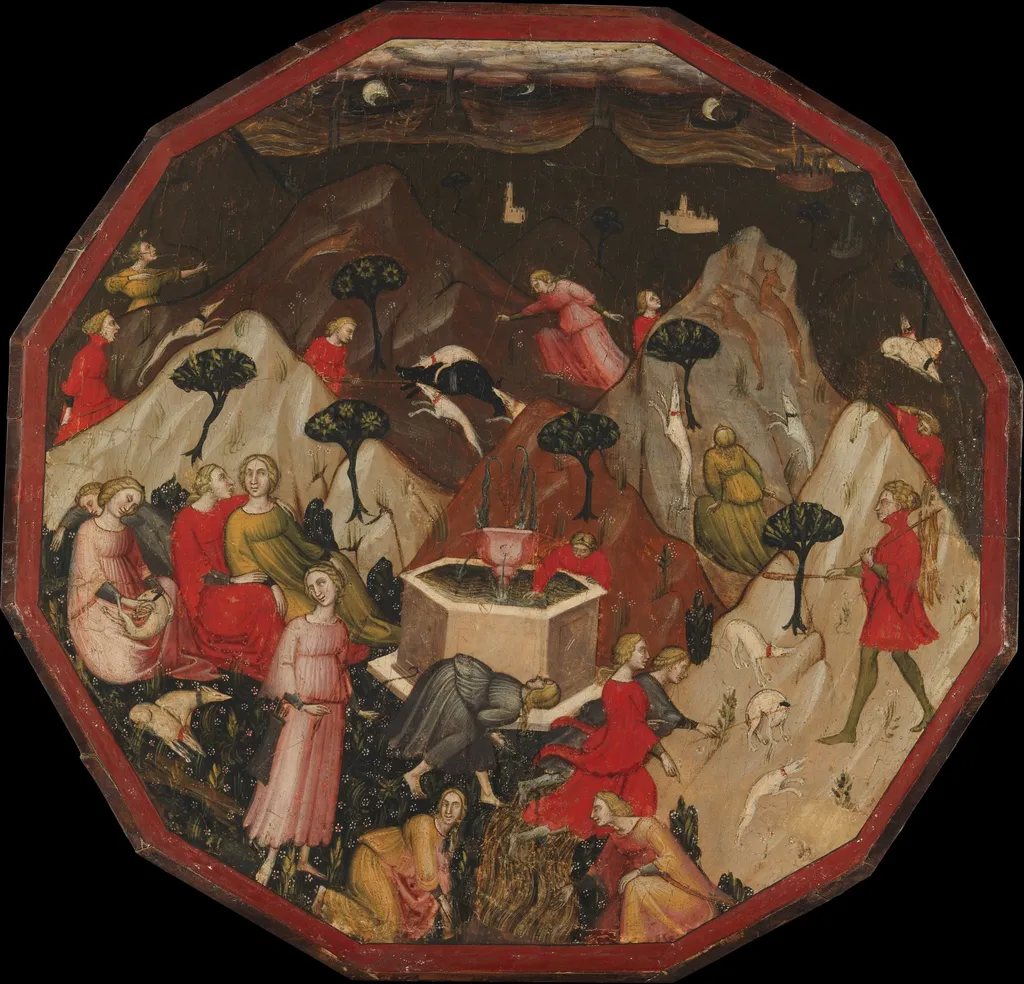
Ameto's Discovery of the Nymphs is a tempera painting by Master of 1416. It dates from 1410 and is held in the collection of the Metropolitan Museum of Art.
About this work
Subject & Meaning
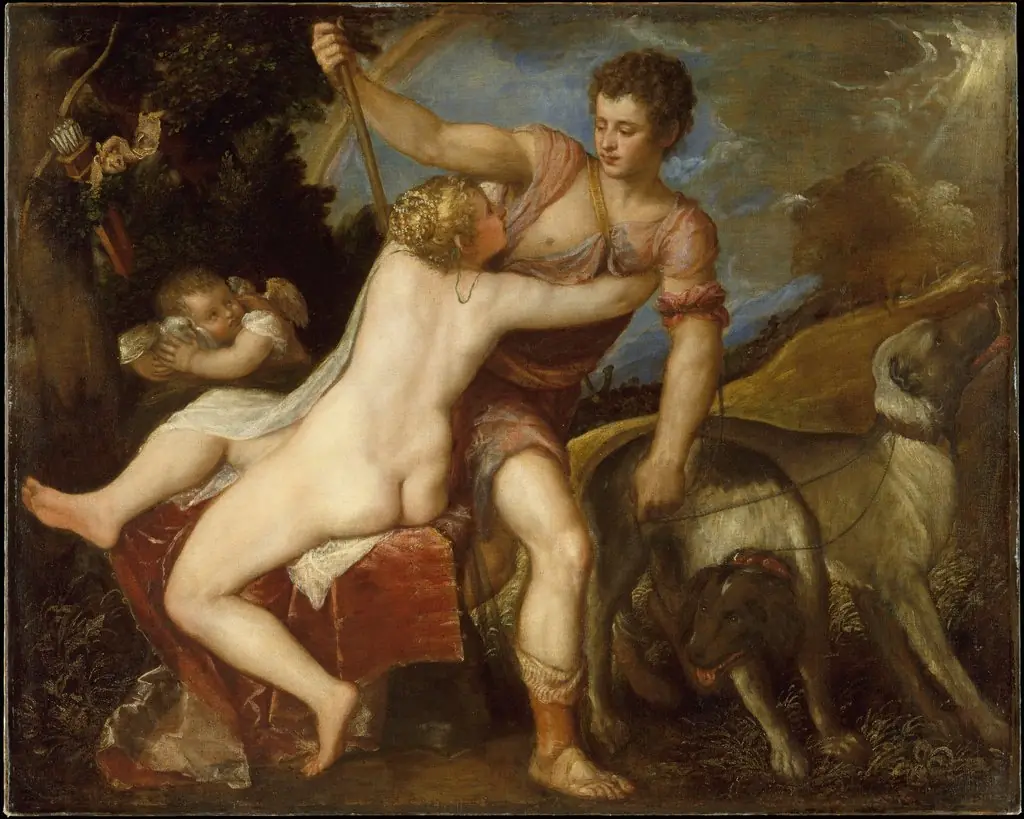
The composition centres on Ameto, a young man, who gazes upward at the nymphs, who appear as idealised, classical figures amid lush greenery.
The painting depicts a scene from Giovanni Boccaccio's Comedia delle ninfe fiorentine (c. 1344), illustrating the encounter between the protagonist Ameto and a group of nymphs in a Florentine forest. The composition centres on Ameto, a young man, who gazes upward at the nymphs, who appear as idealised, classical figures amid lush greenery. His hunting dog and the presence of a bow and arrows underscore the forest setting and the narrative's themes of love and transformation.
The nymphs' flowing garments and serene expressions evoke purity and the natural world, while Ameto's contemplative posture suggests his spiritual awakening, conveying the work's allegorical meaning of the pursuit of love and virtue through nature and classical ideals.
Technique & Style
Executed in 1410 by the Master of 1416, this mythological panel painting uses tempera on a wood support. The work measures 53.7 by 56.2 centimetres. Stylistically, the composition illustrates a scene from the Comedia delle ninfe fiorentine, featuring a grouping of figures that includes a man, women, and nymphs engaged in a hunting narrative accompanied by a dog.
As a painting within the genre of mythology, the piece demonstrates the artist's approach to depicting literary subjects through figurative arrangement on a wooden panel.
History & Provenance
Ameto's Discovery of the Nymphs is attributed to the Master of 1416 and dated to 1410, executed in tempera on wood panel. The work was part of the collection of Charles Fairfax Murray before entering the Metropolitan Museum of Art, where it remains. Its provenance traces from Murray's holdings to the museum's accession. No specific inventory or accession number is recorded in the available sources.
Context
Ameto's Discovery of the Nymphs is attributed to the Master of 1416 and dated to circa 1410, executed in tempera on wood. Held at the Metropolitan Museum of Art, having come from the Charles Fairfax Murray collection, it illustrates a scene from Boccaccio's Comedia delle ninfe fiorentine. The work is studied within scholarship on early fifteenth-century Florentine painting and the period's mythological and love iconography.
Overview
This painting, titled Ameto's Discovery of the Nymphs, is executed on wood. It depicts a lively sylvan setting populated by numerous figures and animals. At the composition's heart, a fountain emits water into a basin, drawing attention to the central action.
The background features dense foliage, rocky formations, and a distant ship, establishing a rich, natural environment for the narrative to unfold.
Own this work as a print
Artist & collection
Artist
An anonymous painter known only by a date, working on gilded wood panels. Ameto's Discovery of the Nymphs fills a golden forest with peeking nymphs and shepherds quarreling over love songs, the gold leaf bright and the…

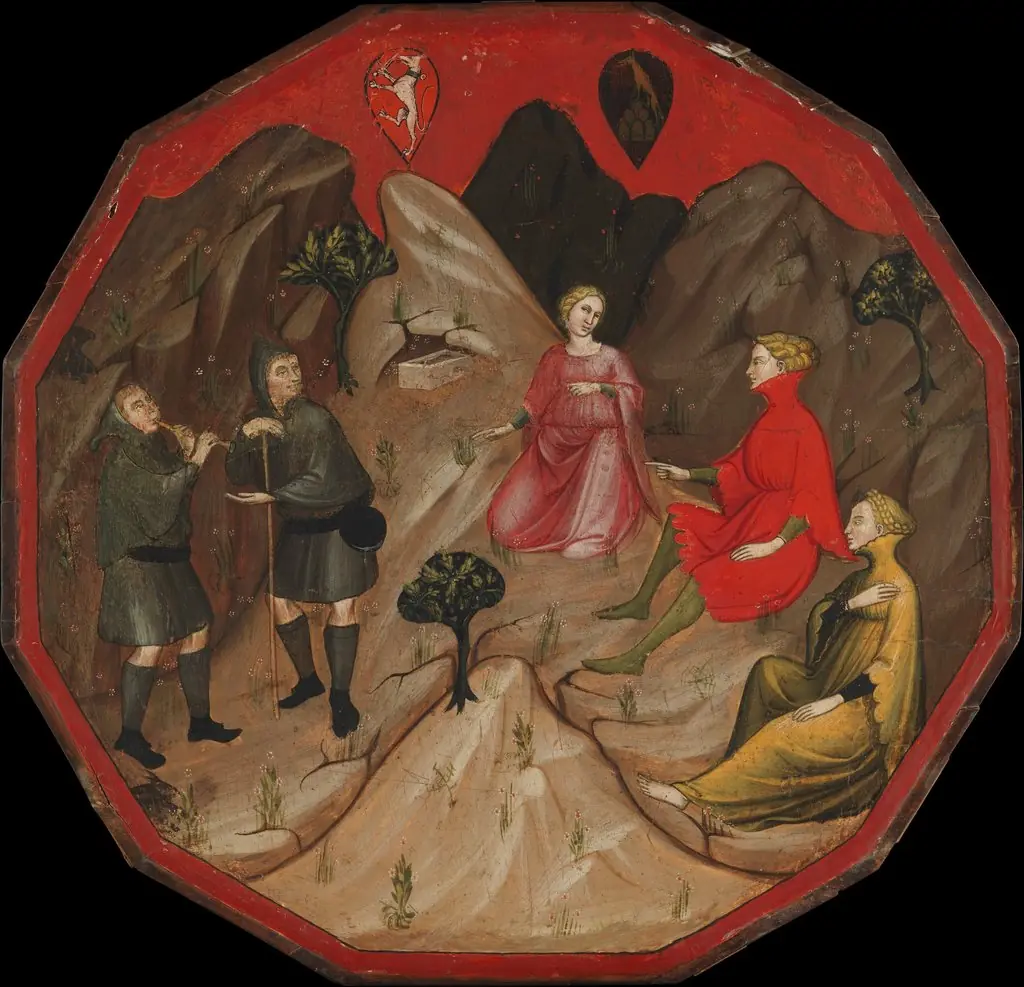
- A Contest between the Shepherds Alcesto and Acaten
 Garden of Love
 Scenes from the Lives of the Desert Fathers (Thebaid)
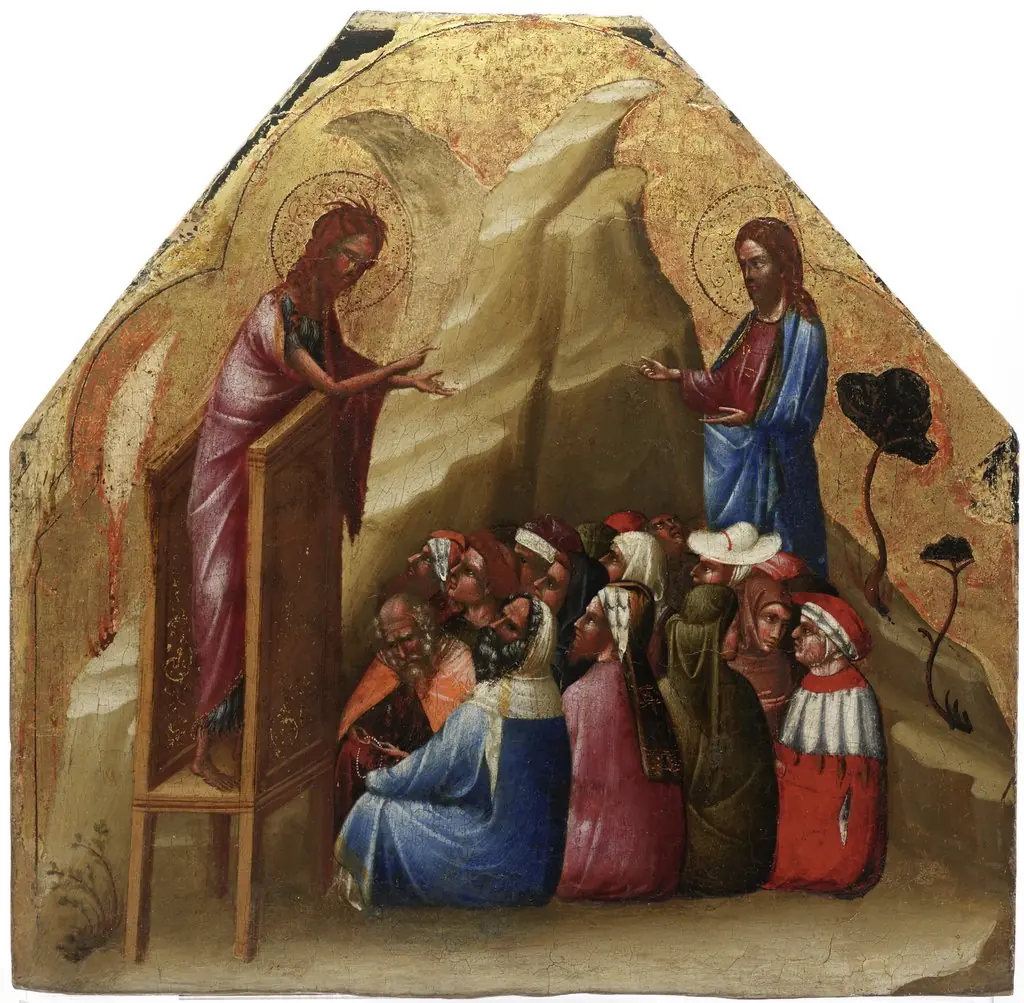 Saint John the Baptist Preaching
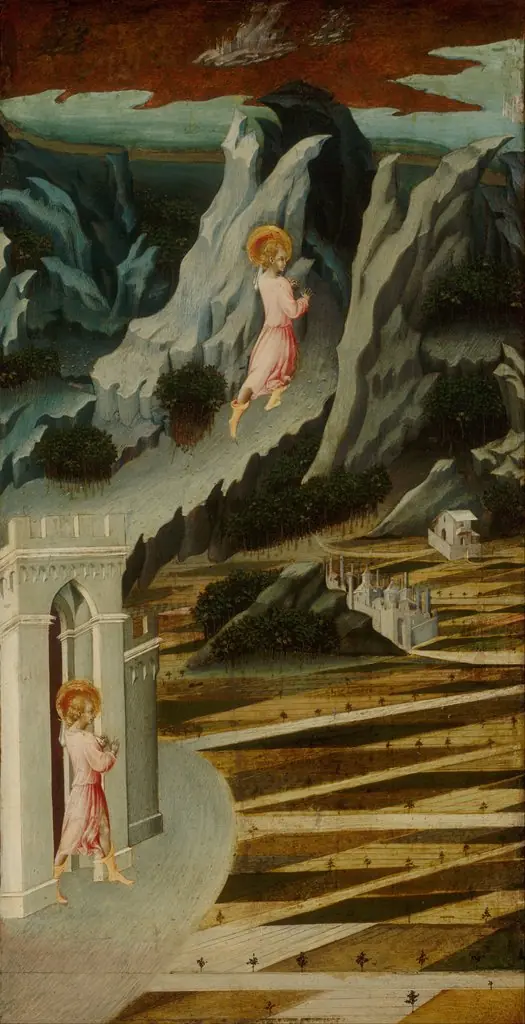 Saint John the Baptist Entering the Wilderness
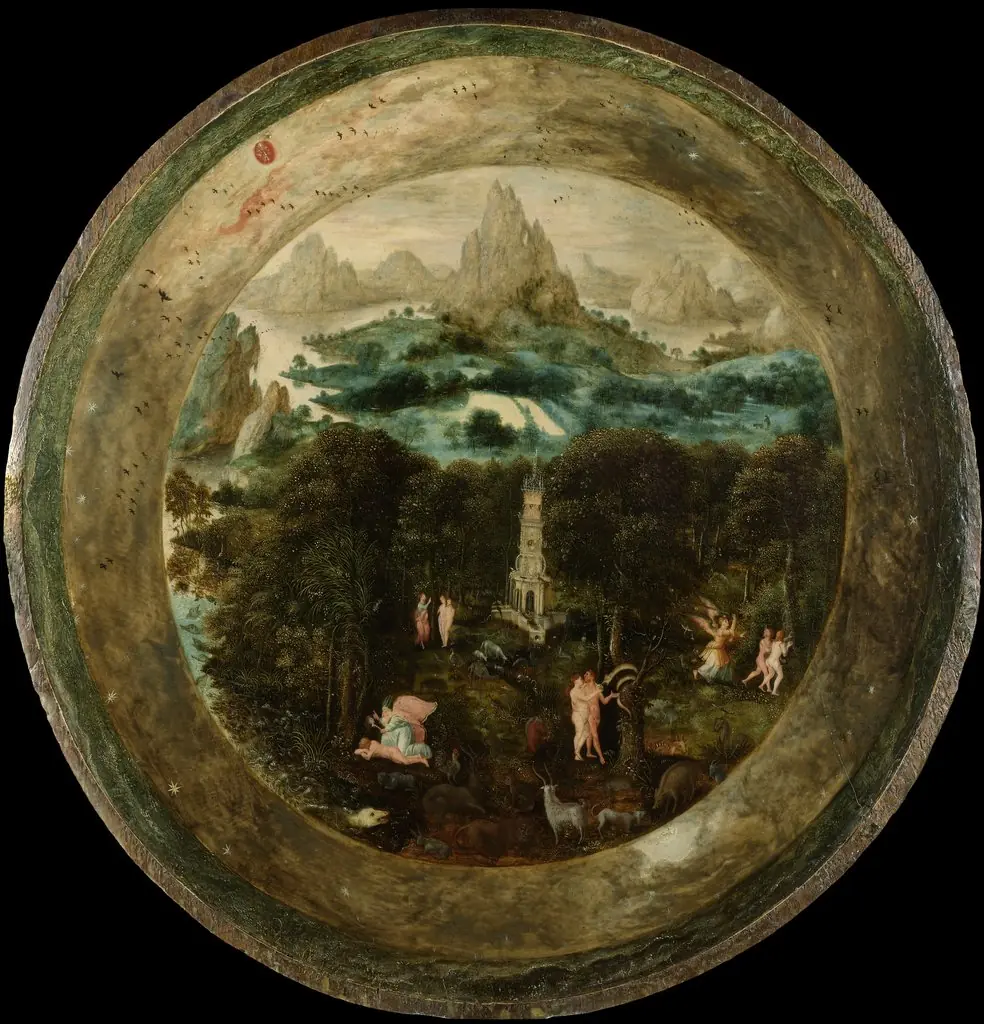 Paradise
 The Crucifixion
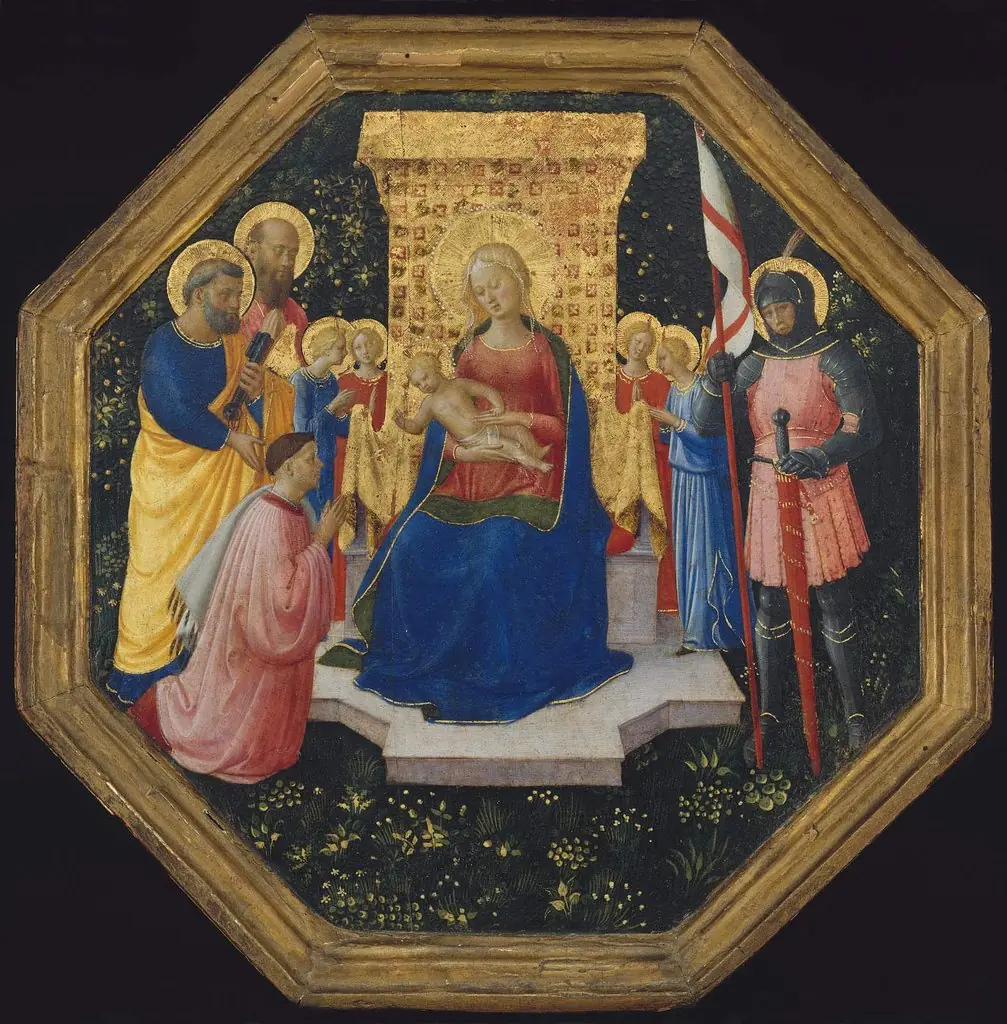 Virgin and Child Enthroned with Saints Peter, Paul and George (?), Four Angels, and a Donor
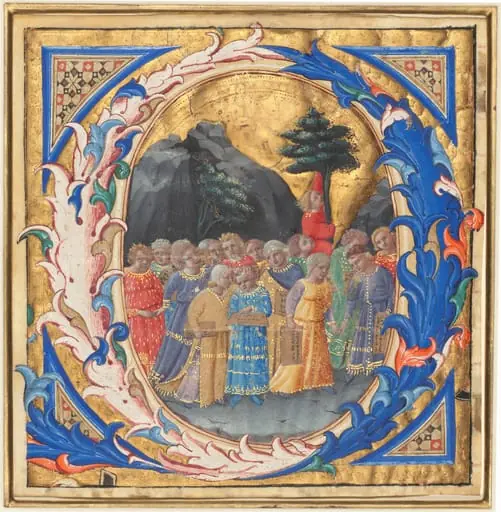 Initial Q with a Procession of Children
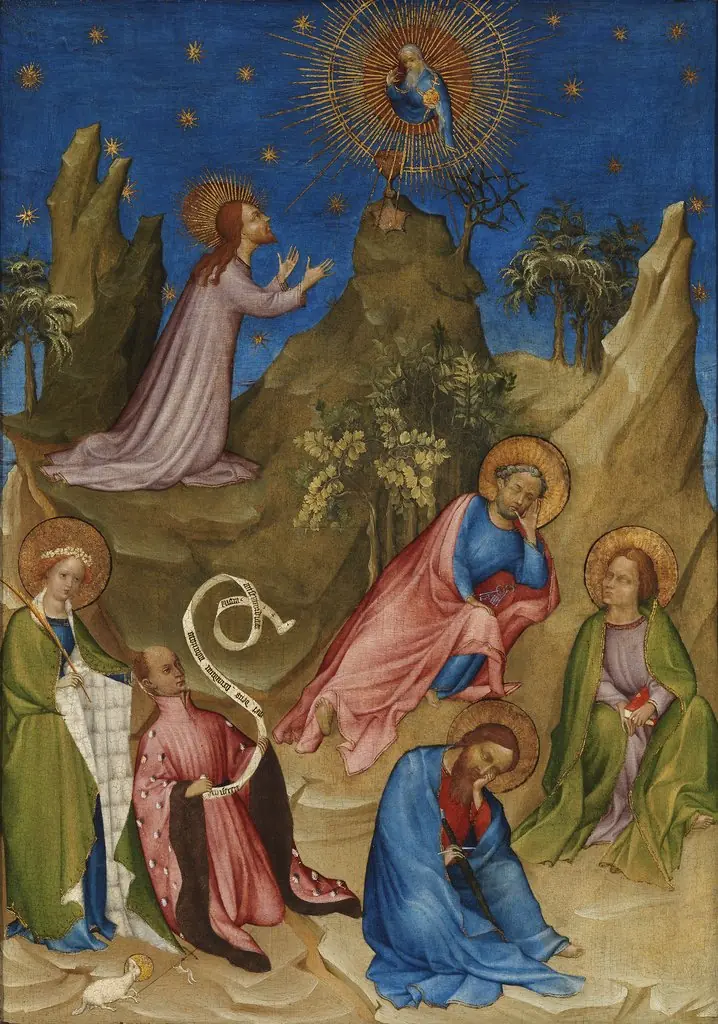 Agony in the Garden with donor Louis I of Orléans
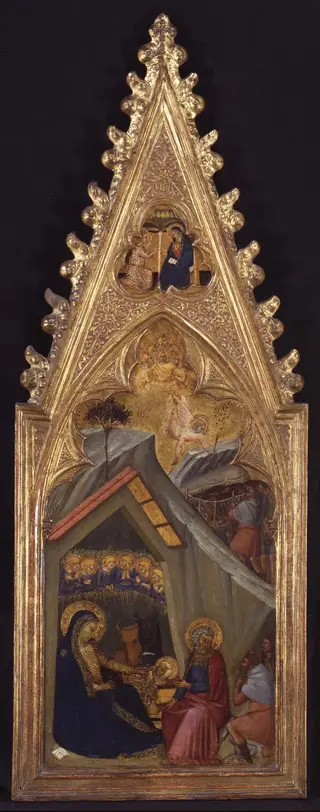 Nativity of Christ
 The Agony in the Garden