Artwork
Saint Adrian
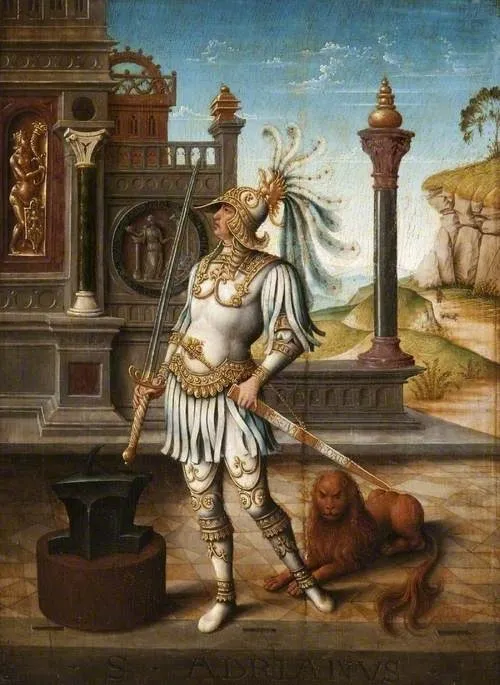
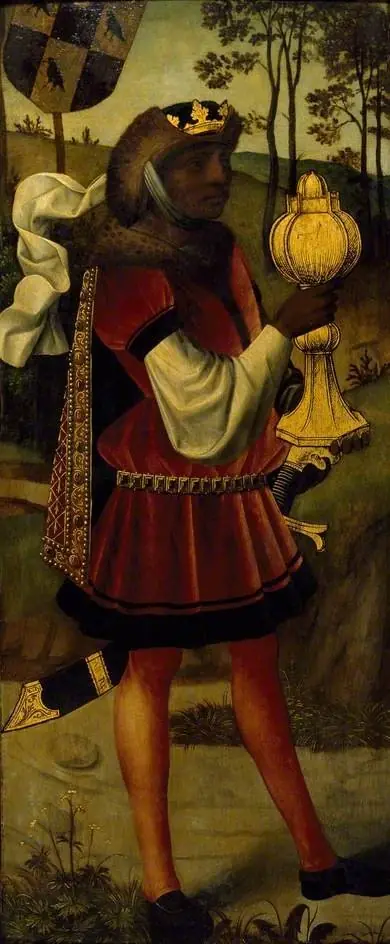
Saint Adrian is an oil painting by the Northern Renaissance artist Master of the Beighem Altarpiece. It dates from 1520 and is held in the collection of the Kelvingrove Art Gallery and Museum.
About this work
Overview
Created around 1520, the oil painting titled Saint Adrian is attributed to the anonymous Flemish artist known as the Master of the Beighem Altarpiece. Executed in Brussels, the work combines Gothic decorative motifs with emerging classical sensibilities characteristic of the Northern Renaissance. The panel is part of the permanent collection of the Kelvingrove Art Gallery and Museum in Glasgow.
Subject & Meaning
The composition presents the martyr Saint Adrian of Nicomedia as a heavily armored figure, sword in his right hand and spear in his left, standing triumphantly upon a lion that lies subdued at his feet. The lion, rendered as either dead or sleeping, underscores the saint’s victorious struggle against pagan forces, while the regal armor and feathered helmet emphasize his heroic stature.
Technique & Style
Rendered in oil on panel, the painting demonstrates the fine brushwork and layered glazing typical of early sixteenth‑century Flemish practice.
Rendered in oil on panel, the painting demonstrates the fine brushwork and layered glazing typical of early sixteenth‑century Flemish practice. Gold accents on the armor and the flowing cape are articulated with meticulous detail, while the background architecture, featuring a stone edifice with a circular window and a solitary column, offers a restrained, spatial depth that balances the figure’s ornate presence.
History & Provenance
The work entered the Kelvingrove Art Gallery and Museum’s collection in the twentieth century, though its exact acquisition path remains undocumented in public records. Its attribution to the Master of the Beighem Altarpiece rests on stylistic parallels with other altarpieces linked to the same workshop, confirming its place within the artist’s limited oeuvre.
Context
Saint Adrian reflects the devotional trends of early sixteenth‑century Brussels, where patrons commissioned images of military saints to embody both spiritual protection and civic pride. The painting’s blend of Gothic ornamentation with classical architectural elements mirrors the transitional aesthetic of the Northern Renaissance, a period when Flemish artists began integrating humanist ideals into traditional religious iconography.
Artist & collection
Artist
Master of the Beighem Altarpiece
The Master of the Beighem Altarpiece is a little-known Flemish painter who was active in Brussels during the first third of the sixteenth century, using a Gothic style with classical influences.