Artwork
The Flood
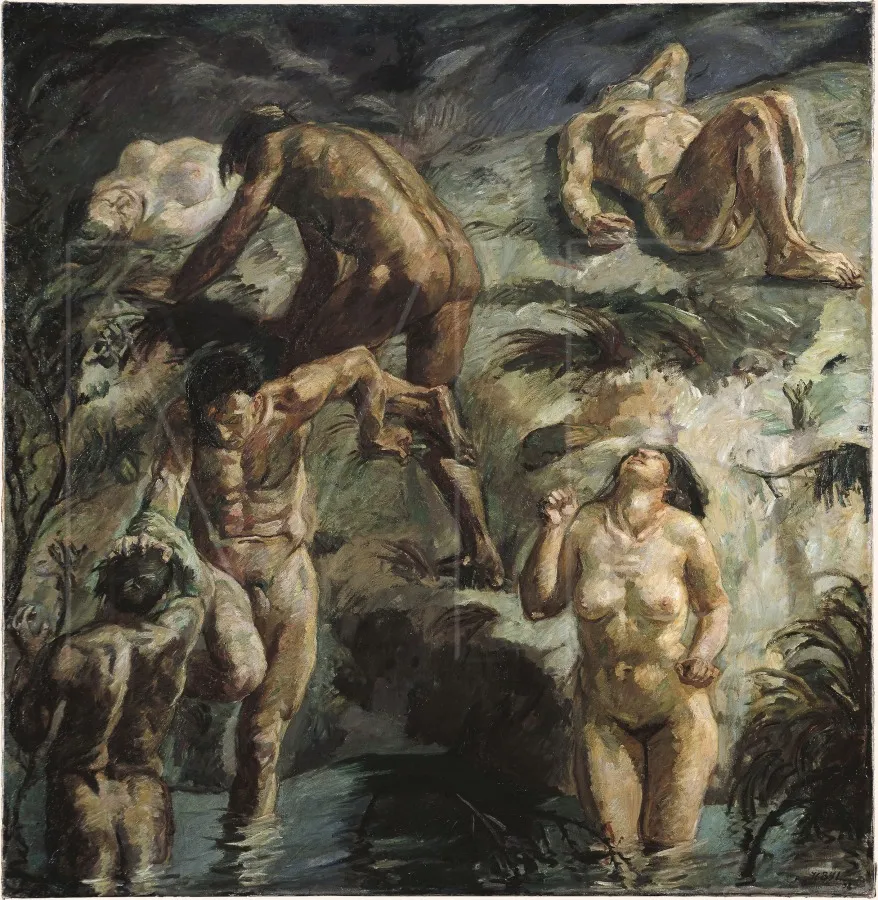
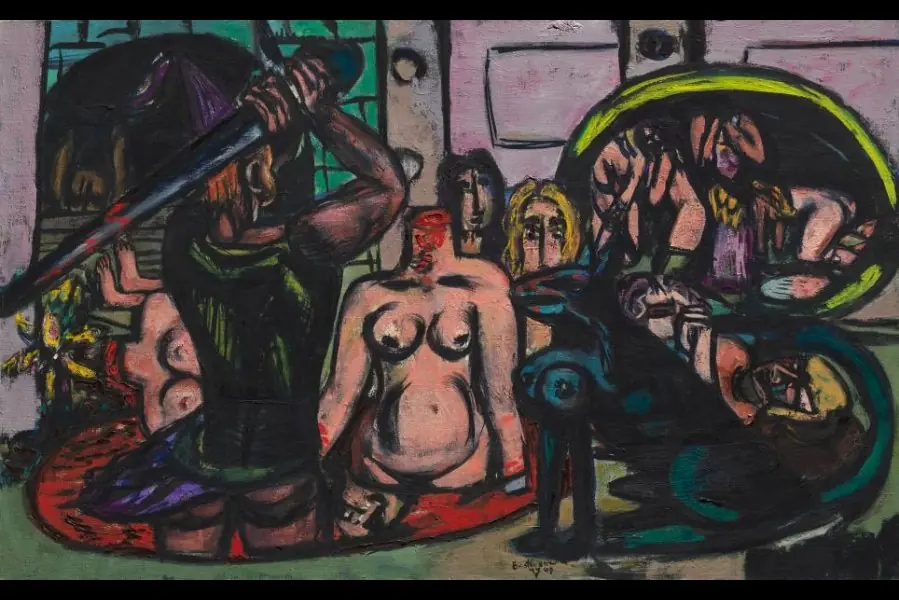
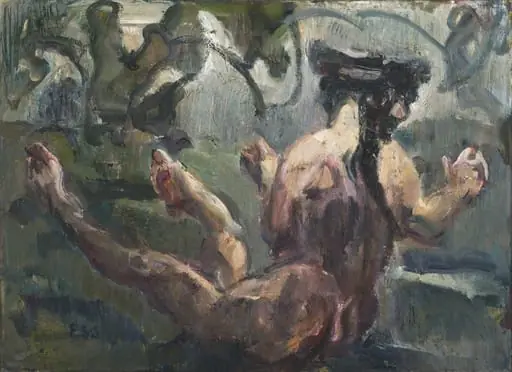
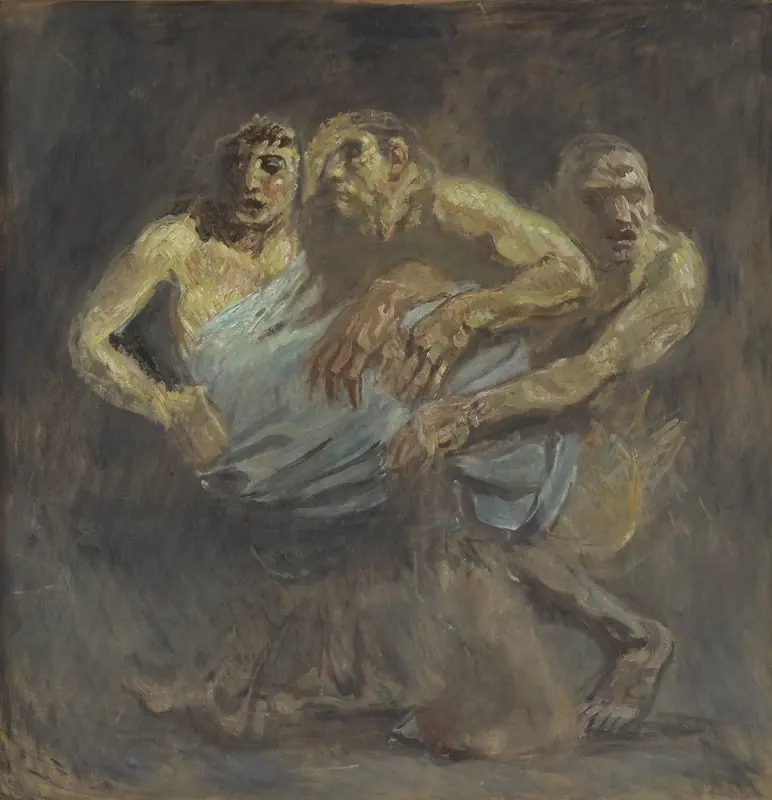
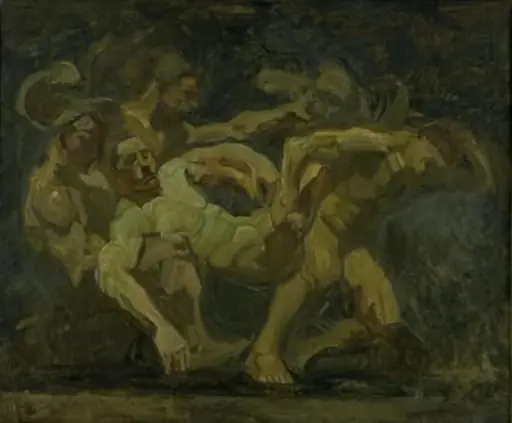
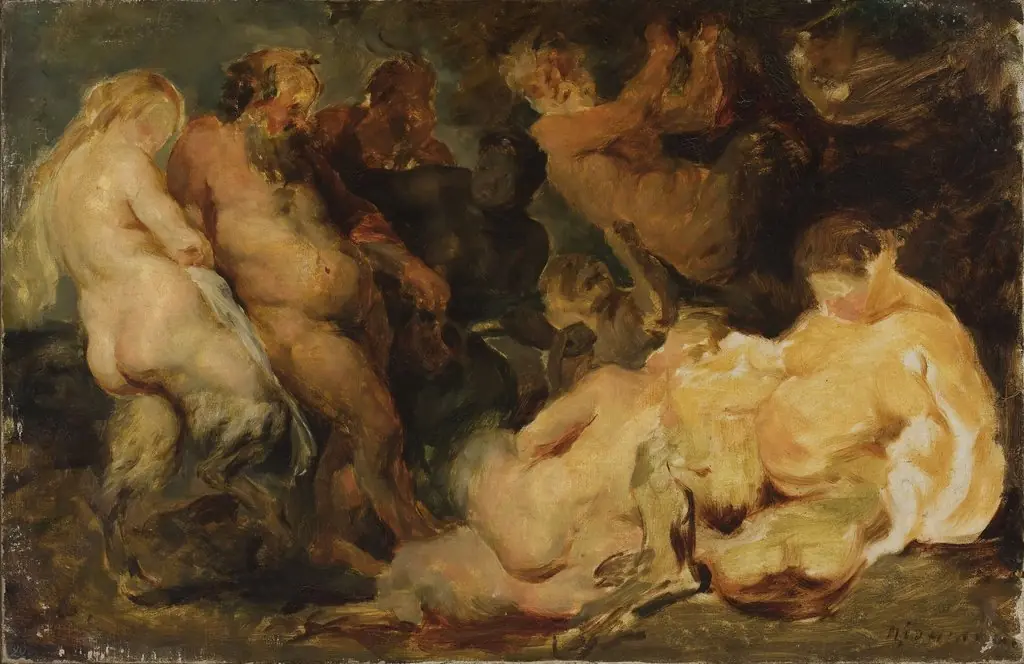
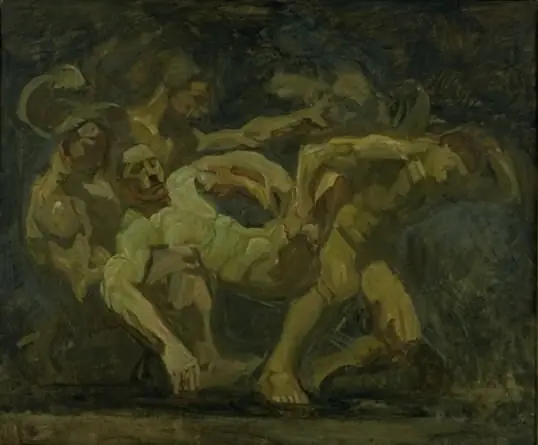
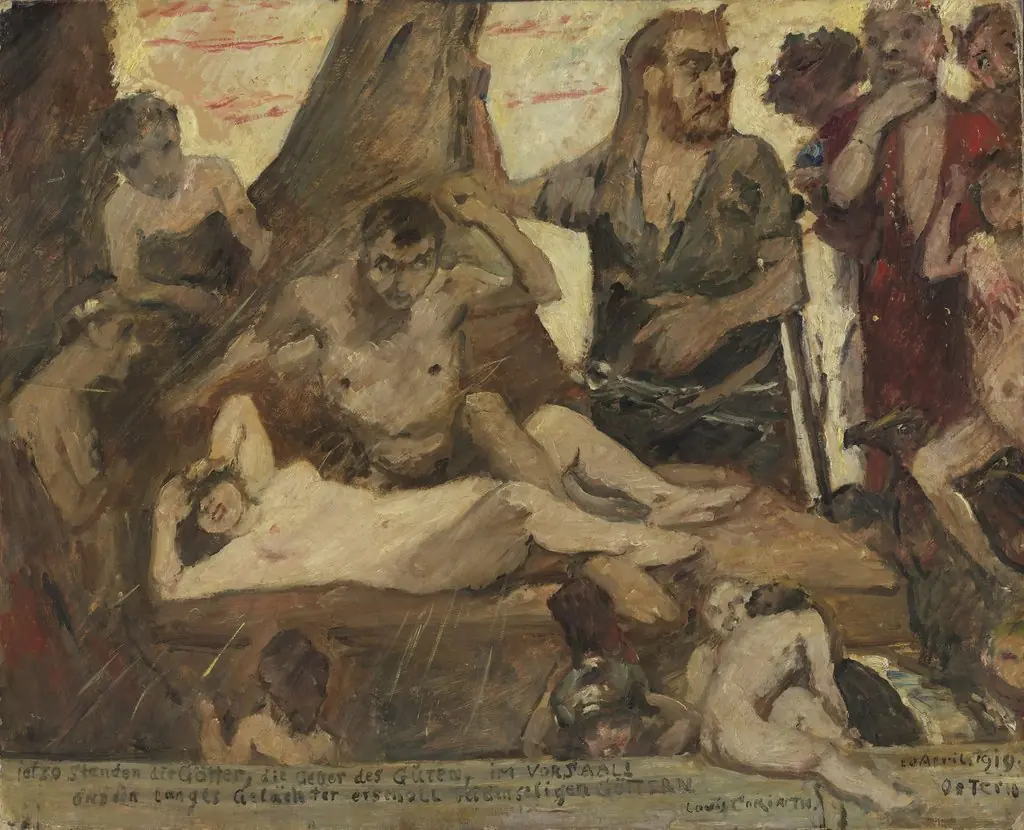
The Flood is an oil painting by the German Expressionist artist Max Beckmann. It dates from 1908 and is held in the collection of the Hamburger Kunsthalle.
About this work
Overview
Though rooted in religious narrative, the painting diverges from traditional iconography, emphasizing raw human vulnerability over spiritual redemption.
Painted in 1908, The Flood is an early oil work by Max Beckmann, depicting a biblical deluge through a group of nude figures in a rugged landscape. Though rooted in religious narrative, the painting diverges from traditional iconography, emphasizing raw human vulnerability over spiritual redemption. Its somber tones and agitated composition reflect Beckmann’s formative style before his later association with New Objectivity.
Subject & Meaning
The scene illustrates the biblical flood, but without divine figures or symbolic salvation. Instead, Beckmann focuses on the physical and emotional chaos of survival, naked bodies twisted in exhaustion, despair, or futile resistance. The absence of narrative clarity invites interpretation as a meditation on human suffering, stripped of theological certainty and rendered in visceral immediacy.
Technique & Style
Beckmann employs thick, muted oil pigments in earthy grays and browns, avoiding vivid contrast to heighten the painting’s oppressive mood. Figures are rendered with angular, almost sculptural forms, their limbs contorted to suggest strain. The rocky terrain is textured with deliberate brushwork, creating a sense of unstable, unforgiving space that mirrors the psychological tension of the subjects.
History & Provenance
Created during Beckmann’s early career, The Flood predates his formal alignment with Expressionist groups. It was painted before his wartime service and subsequent stylistic evolution. The work remained in private collections for much of the 20th century, with limited public exposure until later scholarly interest in his pre-war output brought renewed attention to its significance.
Context
In early 20th-century Germany, religious themes were being reexamined through modernist lenses. Beckmann’s approach here reflects a broader cultural unease, post-industrial, pre-war, where mythic narratives became vehicles for existential inquiry rather than moral instruction. His rejection of Expressionist labels later underscores his resistance to artistic categorization.
Legacy
The Flood stands as a transitional piece in Beckmann’s career, revealing his move away from romanticized symbolism toward a more austere, psychologically charged realism. While not widely exhibited in his lifetime, it has since informed studies of his development and the broader shift in German art from emotional intensity toward structural clarity.
Artist & collection
Artist
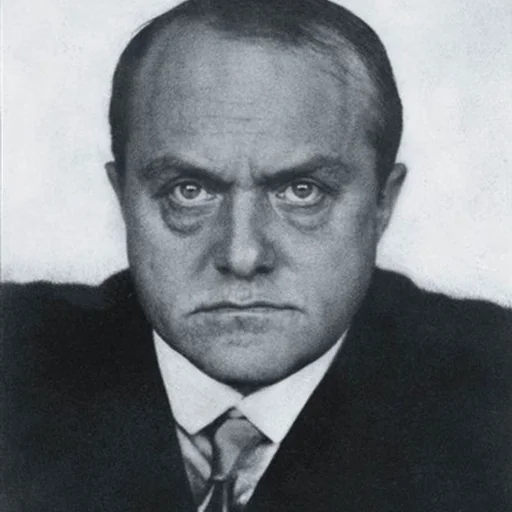
Max Carl Friedrich Beckmann (February 12, 1884 – December 27, 1950) was a German painter, draftsman, printmaker, sculptor, and writer.