Artwork
Mrs. John Harrisson and Daughter
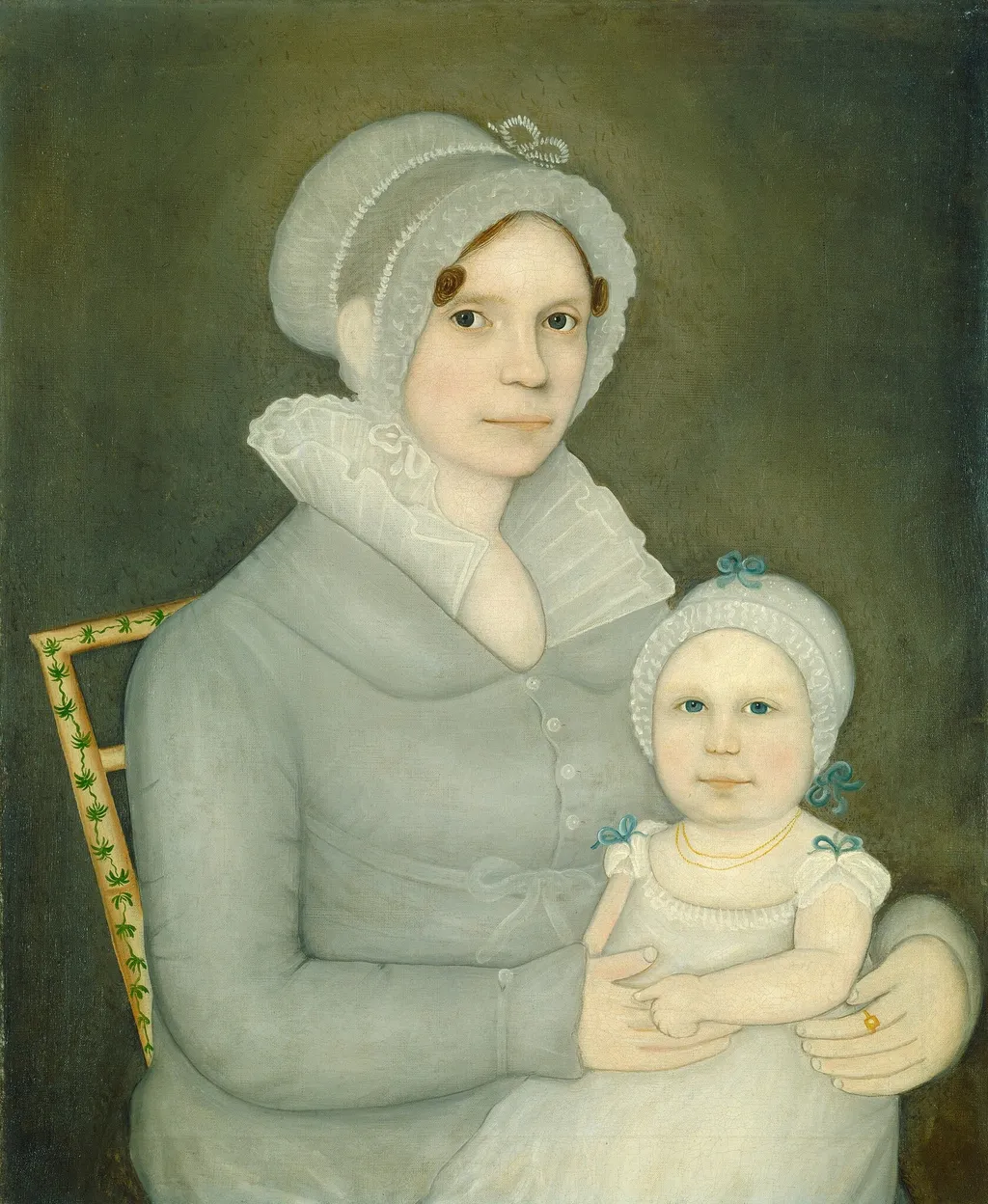
Mrs. John Harrisson and Daughter is an oil painting by the Romanticist artist Frederick W. Mayhew. It dates from 1823 and is held in the collection of the National Gallery of Art. Frederick W.
About this work
Overview
The painting is recorded as originating from South Carolina and is currently held in the collection of the National Gallery of Art in Washington, D.
Mrs. John Harrisson and Daughter is an oil on canvas painting created by Frederick W. Mayhew in 1823. The artwork measures 76.2 by 63.2 centimeters and is unsigned. It depicts Harriet Wood Harrisson and her infant child, rendered in a direct and restrained manner characteristic of American naive portraiture. The painting is recorded as originating from South Carolina and is currently held in the collection of the National Gallery of Art in Washington, D.C., having entered the museum as a bequest in 1980.
Subject & Meaning
The painting portrays a woman, identified as Harriet Wood Harrisson, seated and facing the viewer directly, with her infant daughter resting on her lap. The mother wears a pale blue-gray dress with a high ruffled collar and a matching bonnet trimmed with lace and a small decorative crown element, while her brown hair curls visibly at her temples. The infant is clothed in a white dress and a white cap adorned with blue ribbons, wearing a thin gold necklace. The mother's left hand, bearing a gold ring, supports the child. The straightforward, frontal composition and the direct outward gaze of both figures emphasize a solemn, familial bond and maternal role typical of early nineteenth-century portraiture.
Technique & Style
Mayhew employed a restrained palette dominated by blues, grays, whites, and muted earth tones against a plain, dark olive-brown background. The light falls evenly across the figures with minimal shadow, flattening the three-dimensional forms. Brushwork is smooth and flat, featuring precise linear detailing in the lace and costume elements but offering little modeling of the figures' forms. The composition is centered and frontal. The figures occupy a simple wooden chair with green painted decoration along its back rail. The canvas surface exhibits fine craquelure throughout, and the painting remains unsigned.
Context
Frederick W. Mayhew operated as a limner, an itinerant or folk portrait painter, and his life and work in Chilmark have been the subject of localized historical scholarship. The painting fits within the broader tradition of American naive painting, a category extensively catalogued by the National Gallery of Art. Scholarly attention to Mayhew includes Doris C. Stoddard's 1986 study on his role as a limner in Chilmark, Joyce Hill's 1984 article exploring connections between faces, figureheads, and scrimshaw, and the 1992 systematic catalogue of American Naive Paintings at the National Gallery of Art by Deborah Chotner and others, which specifically includes this work.
Own this work as a print
Artist & collection


 Mother and Child in White
 Elizabeth Grant Bankson Beatty (Mrs. James Beatty) and Her Daughter Susan
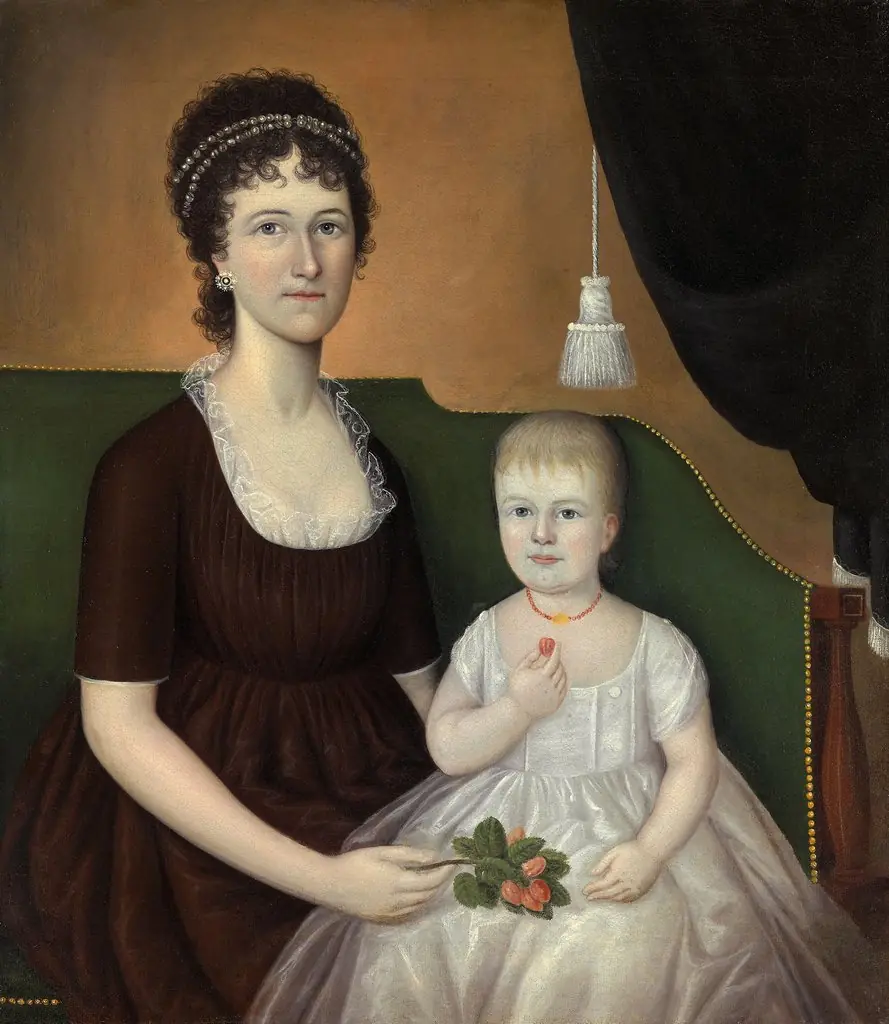 Mrs. Andrew Bedford Bankson and Son, Gunning Bedford Bankson
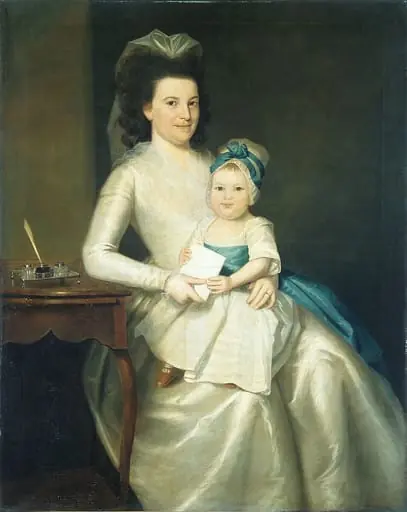 Lady Williams and Child
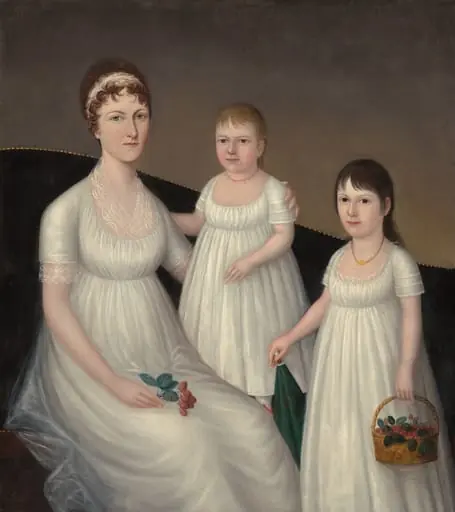 Grace Allison McCurdy (Mrs. Hugh McCurdy) and Her Daughters, Mary Jane and Letitia Grace
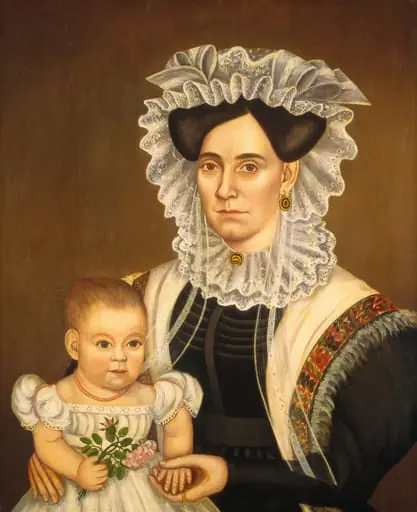 Aphia Salisbury Rich and Baby Edward
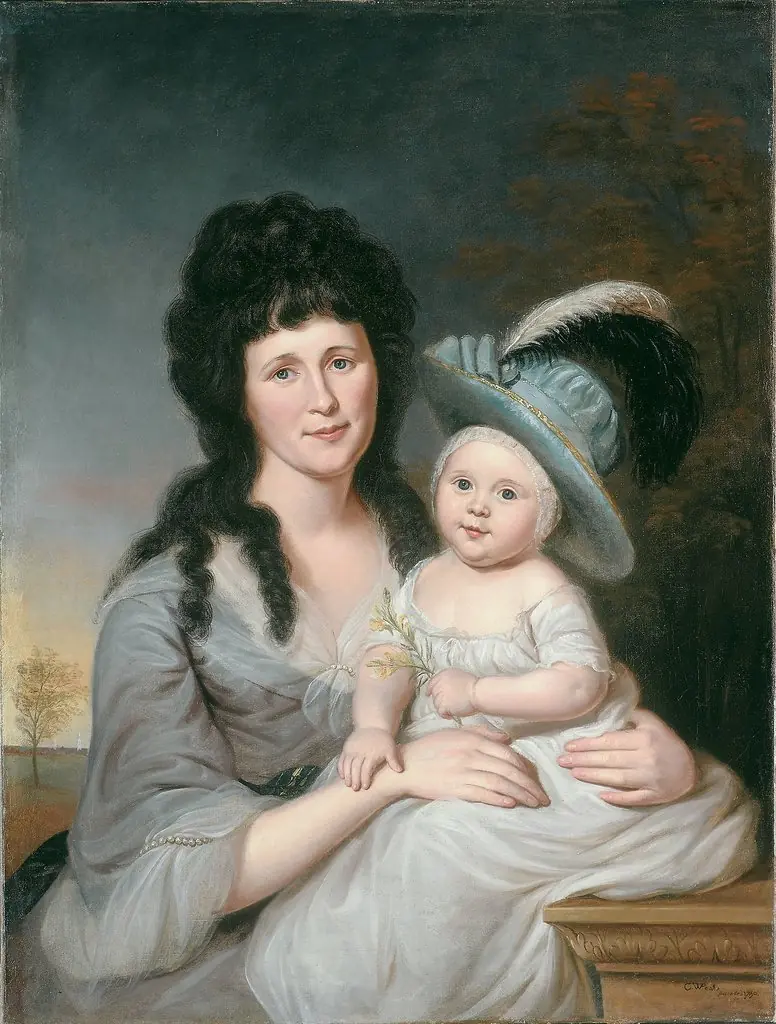 Mrs. John Nicholson (Hannah Duncan) and John Nicholson, Jr.
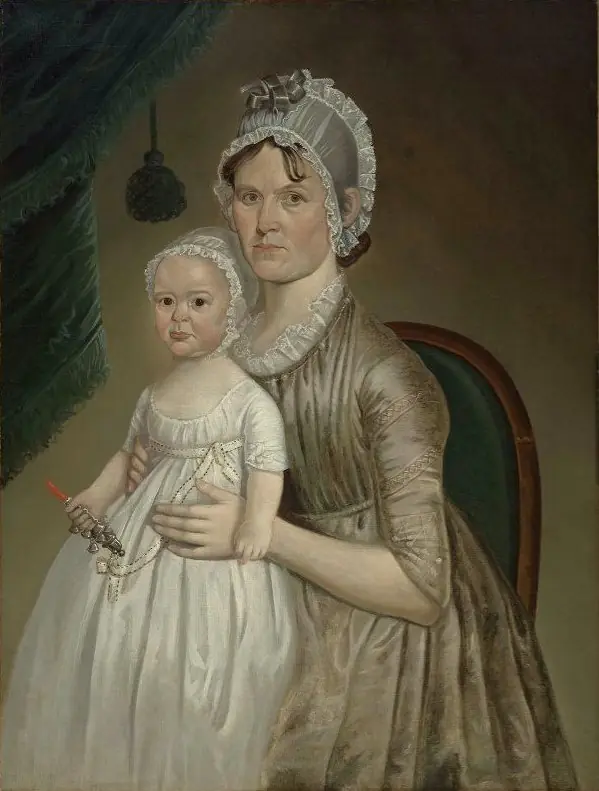 Mrs. Cephas Smith, Jr. (Mary Gove) and Child
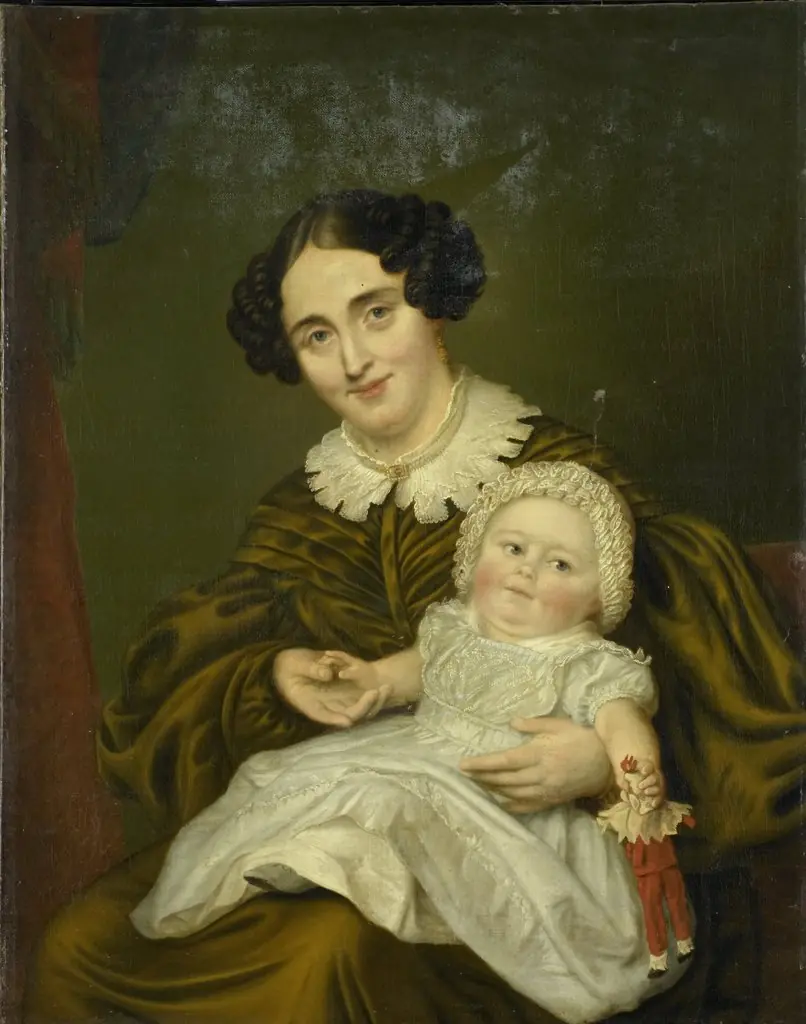 Mrs. Carp and her young Son
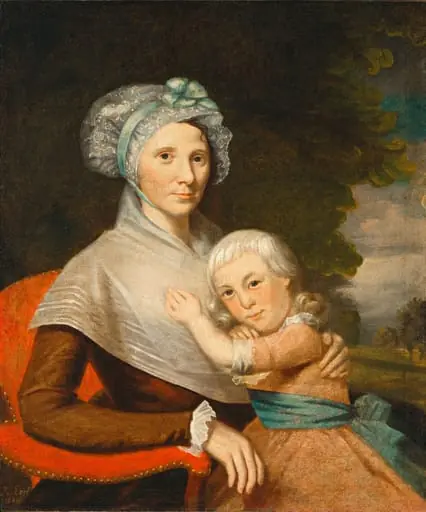 Martha Tennent Rogers (Mrs. David Rogers) and Her Son, probably Samuel Henry Rogers