Artwork
Mother and Child in White
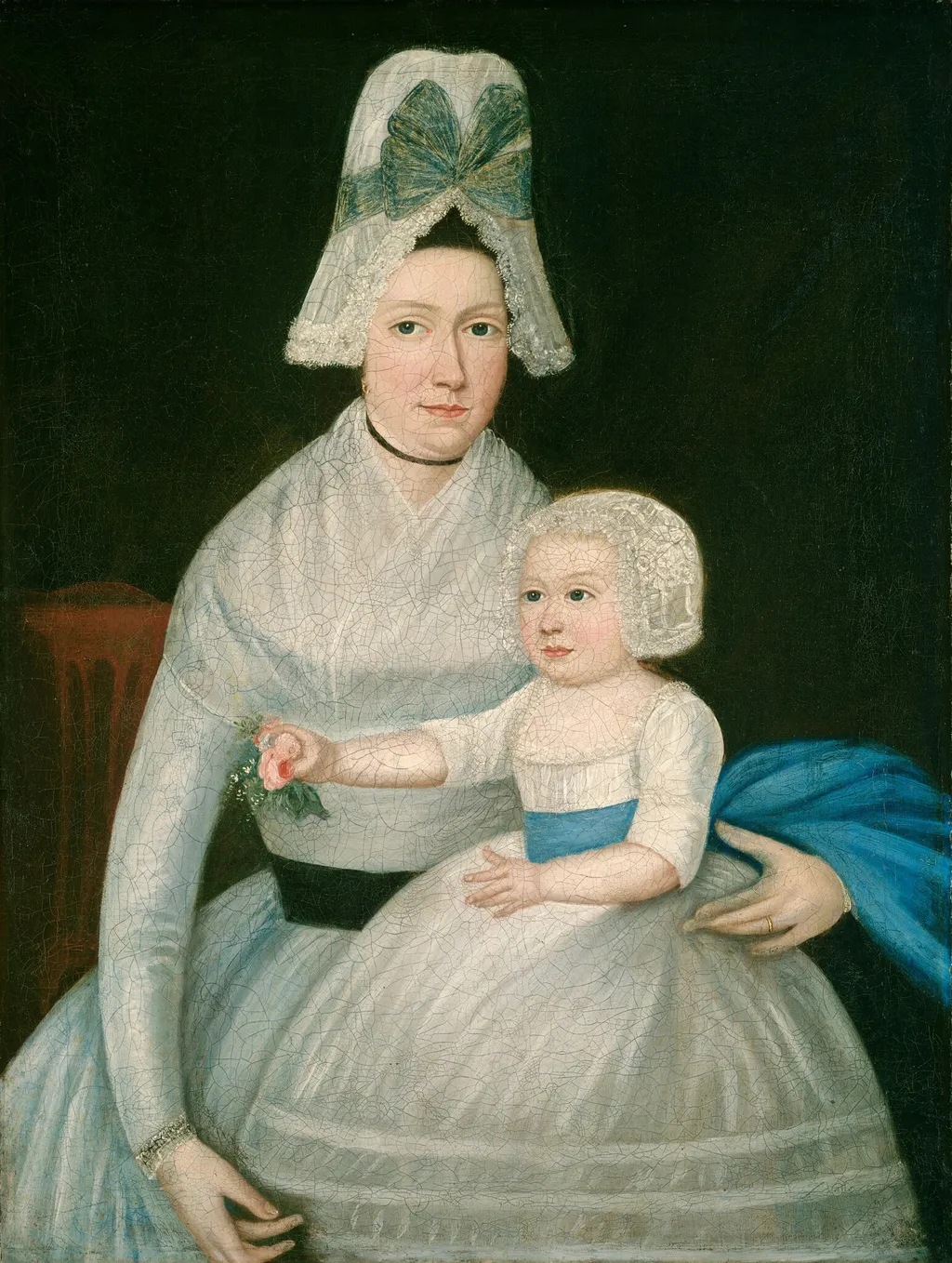
Mother and Child in White is an oil painting. It dates from 1790 and is held in the collection of the National Gallery of Art. The canvas presents a quiet domestic tableau: a mother and her child seated together.
About this work
Technique & Style
Created in 1790, Mother and Child in White is an oil painting executed on a canvas support.
Created in 1790, Mother and Child in White is an oil painting executed on a canvas support. The work measures 89.5 cm in height and 68.7 cm in width. As a product of the American 18th Century, the piece relies on traditional oil paint application to render its subjects, consistent with the medium classification of the era.
The physical condition and specific handling techniques are not detailed in the available records, though the work has been preserved in the collection of the National Gallery of Art since 1980.
History & Provenance
Created in 1790 by an unidentified American artist of the eighteenth century, this oil on canvas painting originated in New Haven, Connecticut. The work entered the documented ownership chain through Thomas D. Williams of Litchfield, Connecticut. In 1952, Williams sold the picture to the collectors Edgar William and Bernice Chrysler Garbisch.
Upon their deaths, the Garbisches bequeathed the painting to the National Gallery of Art in Washington, D.C., where it arrived in 1980.
Mother and Child in White has been held by the National Gallery of Art in Washington, D.C., since it entered that institution by bequest in 1980. It had previously been owned by Edgar William and Bernice Chrysler Garbisch, who acquired it in 1952 from Thomas D. Williams of Litchfield, Connecticut, with an earlier recorded association to New Haven, Connecticut. The painting's documented exhibition history within the provided sources is limited to this chain of ownership and transfer; no additional loans, displays, or catalogue appearances are recorded in the available material.
Context
The painting is recognized as an early example of American portraiture within the 18th-century tradition, reflecting evolving domestic themes in post-colonial art. Its formal composition and restrained palette illustrate the transitional style bridging colonial craftsmanship and emerging republican aesthetics. The work's provenance from Connecticut connects it to regional artistic networks prior to institutionalization of American art markets.
As a piece held by the National Gallery of Art since 1980, it contributes to scholarly reassessments of anonymously authored works in early American collections, though its attribution remains tied to broader categorizations of unnamed artists from the period.
Overview
The canvas presents a quiet domestic tableau: a mother and her child seated together. Both figures are dressed in white garments, the woman’s attire complemented by a bonnet with a blue bow, while the child’s dress is accented with a blue sash and matching bonnet. The composition emphasizes intimacy through their close proximity and gentle gestures.
Subject & Meaning
The scene captures a tender interaction, with the mother’s hand resting protectively on the child’s shoulder and the child holding a small flower. The use of white clothing and soft accessories conveys purity and familial affection, suggesting an idealized vision of motherhood within a serene household setting.
Artist & collection

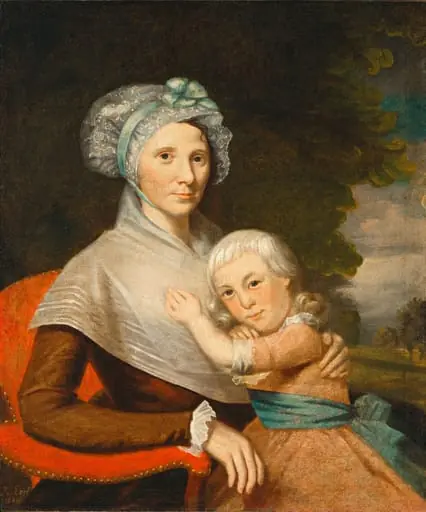 Martha Tennent Rogers (Mrs. David Rogers) and Her Son, probably Samuel Henry Rogers
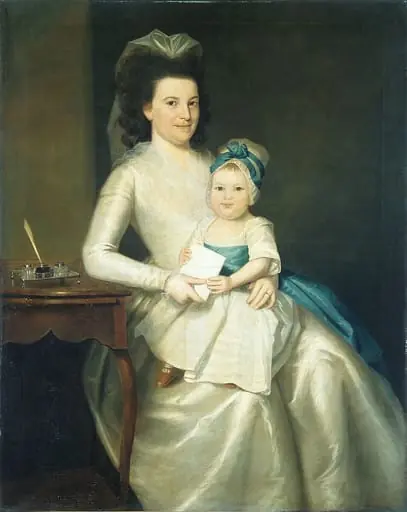 Lady Williams and Child
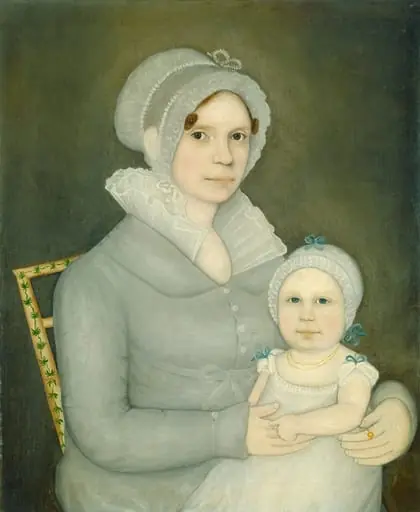 Mrs. John Harrisson and Daughter
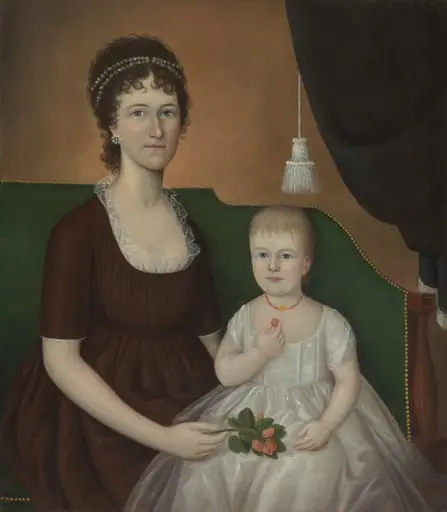 Elizabeth Grant Bankson Beatty (Mrs. James Beatty) and Her Daughter Susan
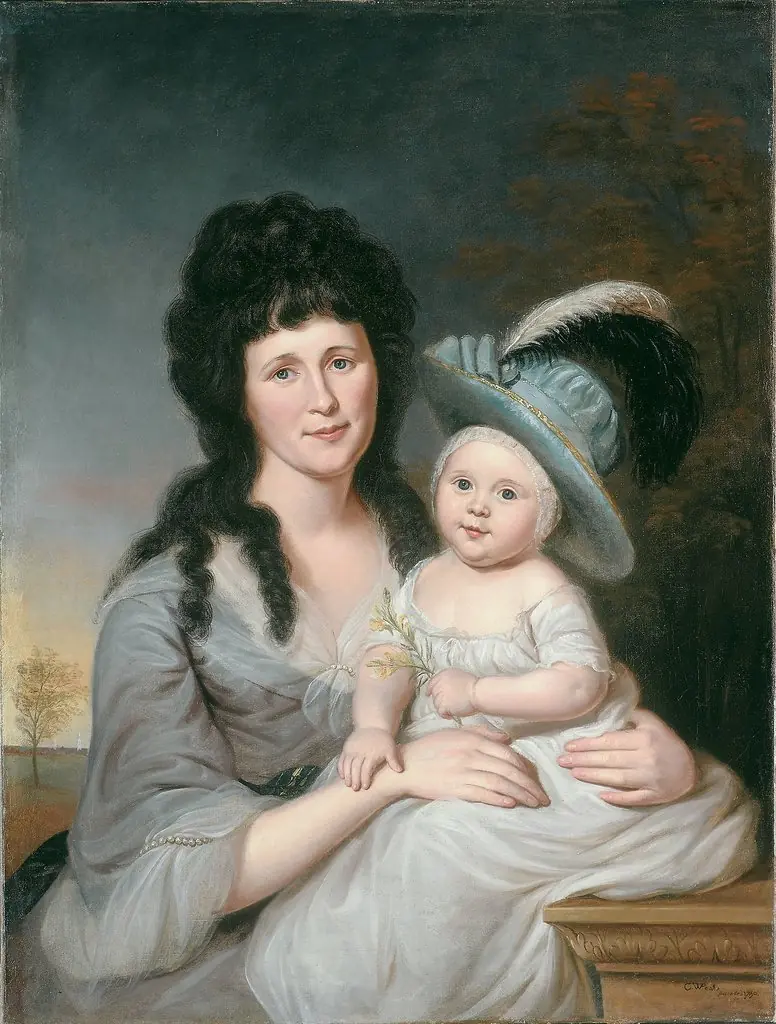 Mrs. John Nicholson (Hannah Duncan) and John Nicholson, Jr.
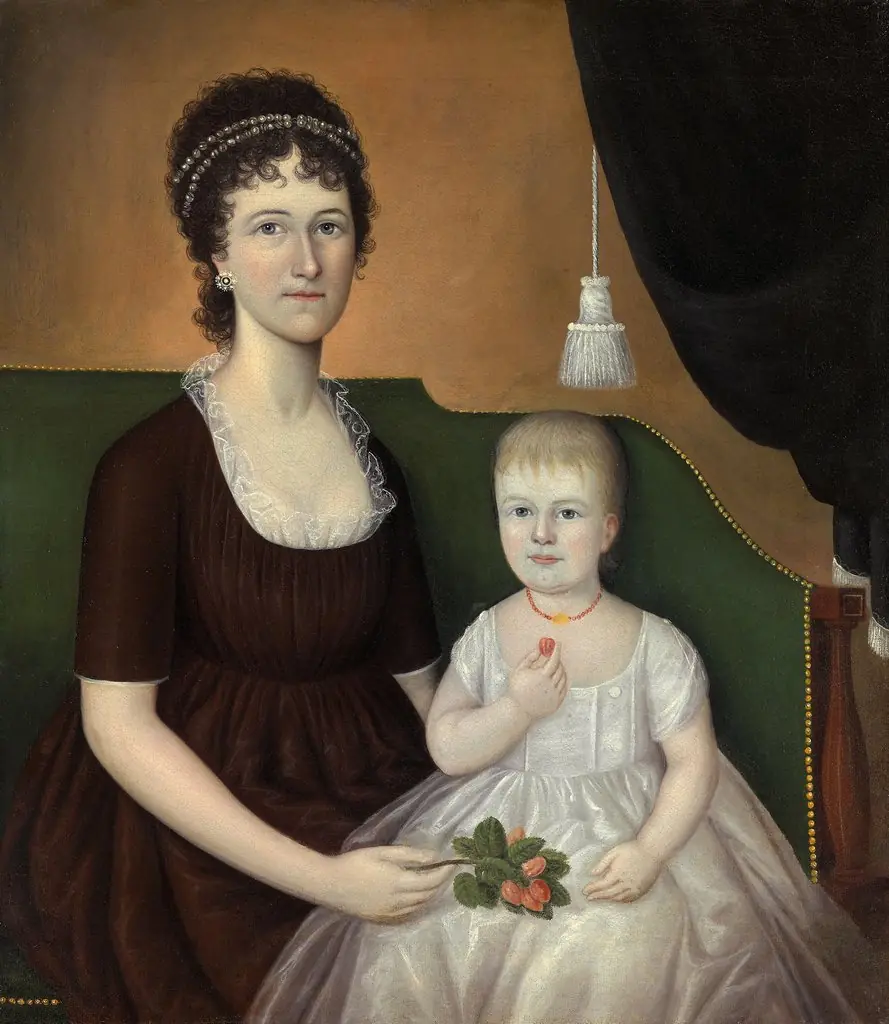 Mrs. Andrew Bedford Bankson and Son, Gunning Bedford Bankson
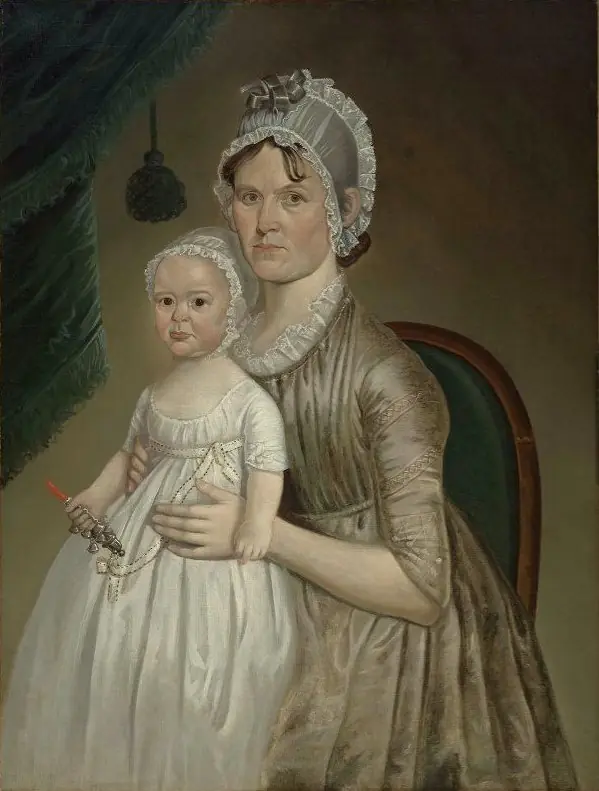 Mrs. Cephas Smith, Jr. (Mary Gove) and Child
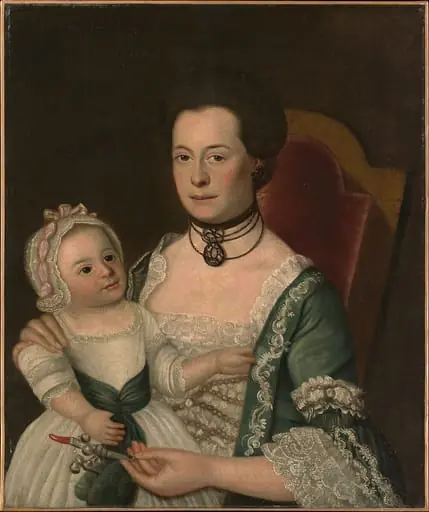 Mrs. Jacob Hurd and Child
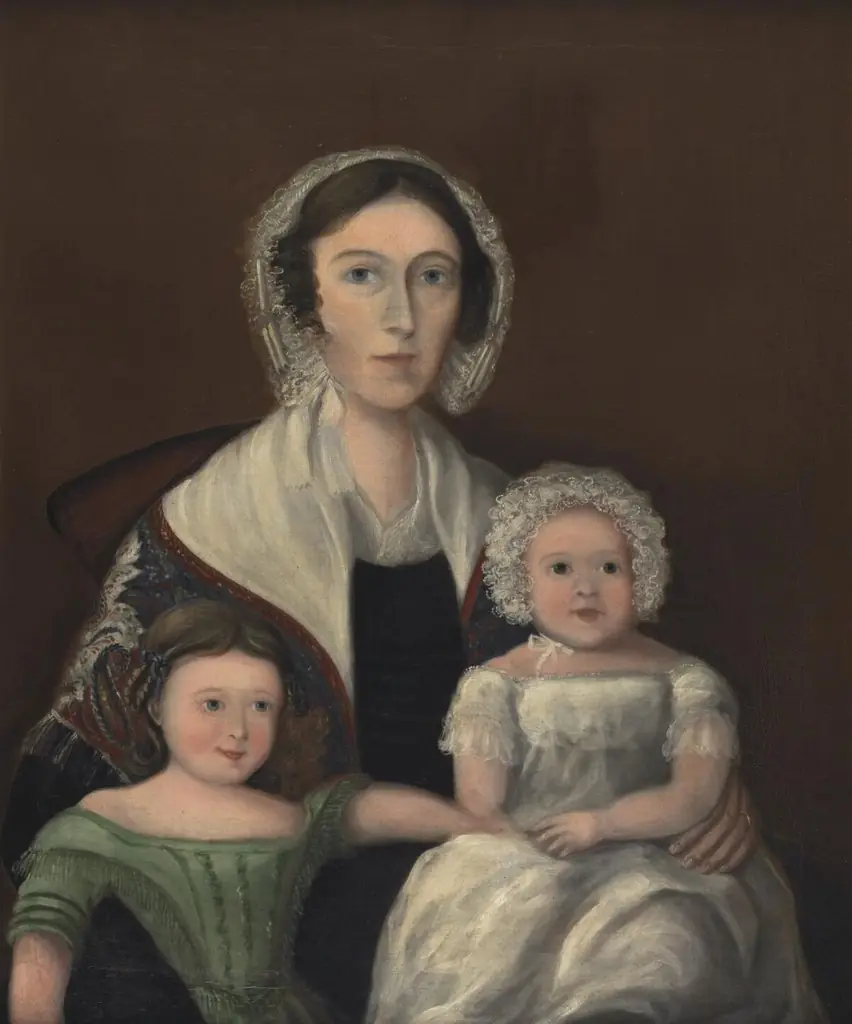 Margaret Rowlands & her children
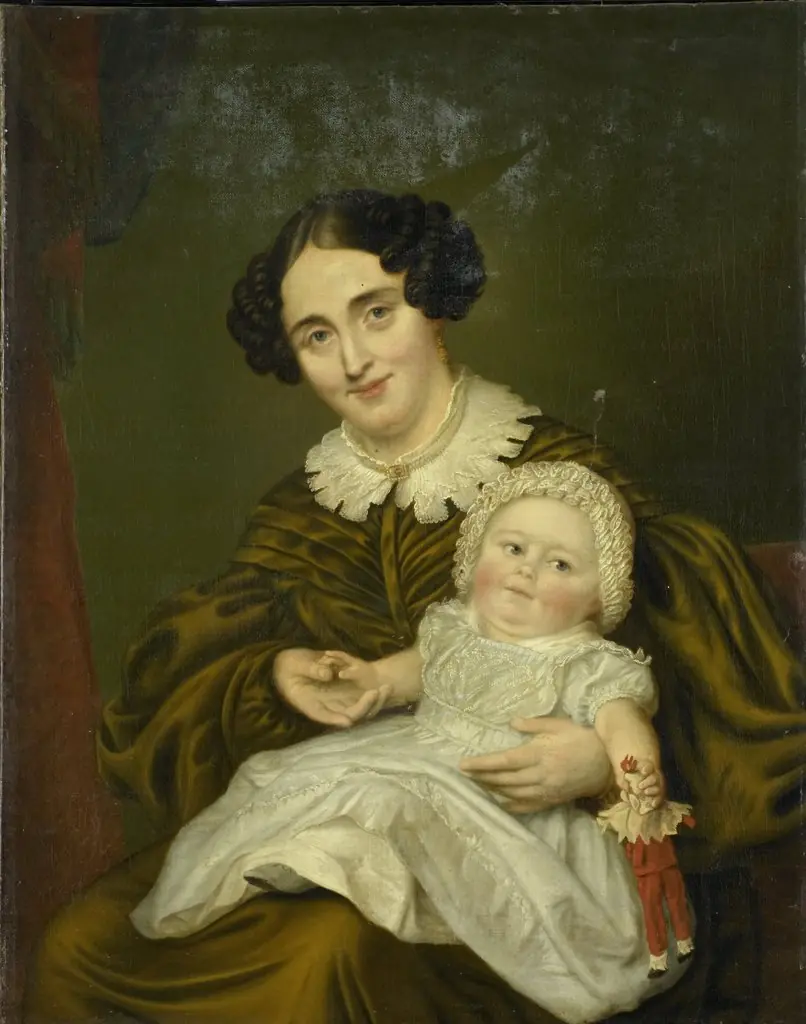 Mrs. Carp and her young Son