Artwork
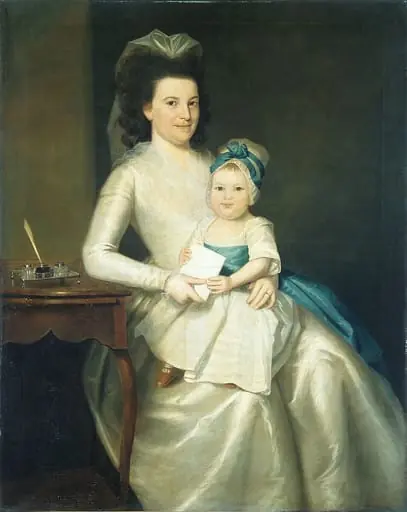
Martha Tennent Rogers (Mrs. David Rogers) and Her Son, probably Samuel Henry Rogers
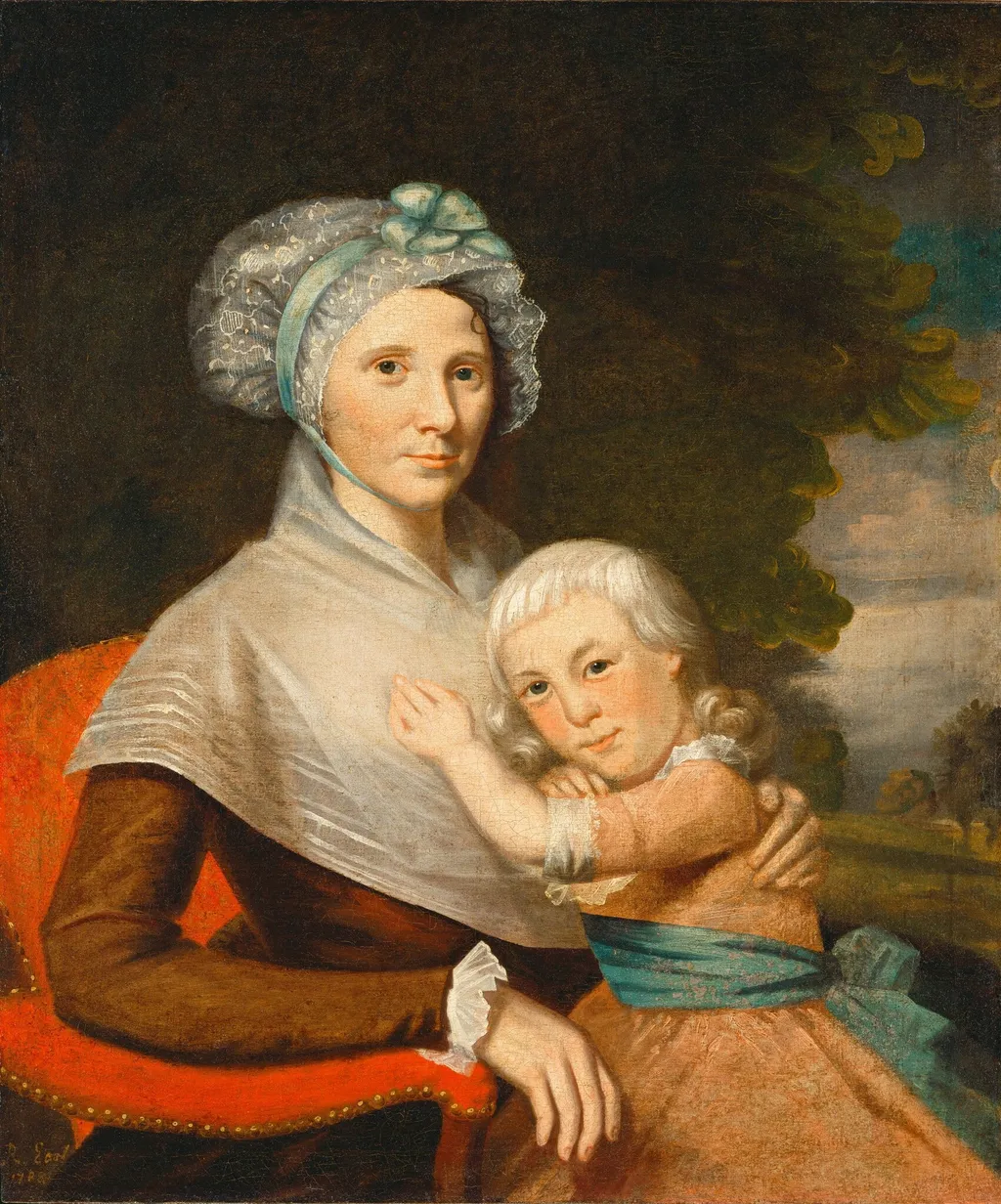
Martha Tennent Rogers (Mrs. David Rogers) and Her Son, probably Samuel Henry Rogers is an oil painting by the Rococo painting artist Ralph Earl. It dates from 1788 and is held in the collection of the National Gallery of Art.
- Inscription
- Inscribed:lower left: R. Earl / 1788
About this work
Subject & Meaning
This intimate portrayal aligns with Enlightenment-era ideals of domestic virtue, reflecting both personal narrative and broader cultural values of the period.
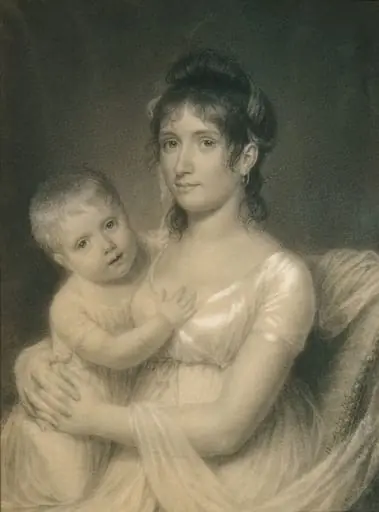
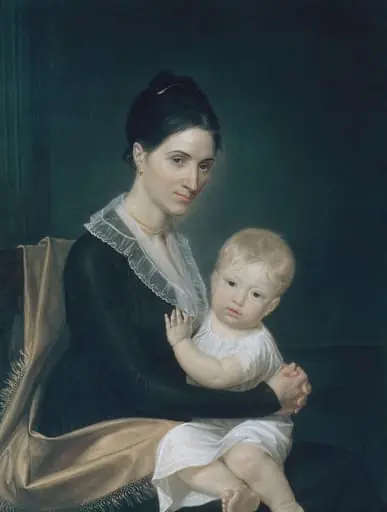
The painting portrays Martha Tennent Rogers, wife of David Rogers, alongside her son, likely Samuel Henry Rogers, in a domestic setting that emphasizes familial affection and genteel refinement. The composition uses a modest interior backdrop to highlight the subjects' status within early American society, with subtle gestures suggesting intimacy between mother and child. This intimate portrayal aligns with Enlightenment-era ideals of domestic virtue, reflecting both personal narrative and broader cultural values of the period. The work's symbolic focus on familial bonds underscores themes of continuity and heritage in early American portraiture.
The scene underscores themes of familial continuity and social standing through its tender interaction, while the sitter's attire and setting reflect contemporary ideals of refinement and domestic order.
Technique & Style
The painting is executed in oil on canvas, measuring 86.4 cm in height and 73.3 cm in width. The brushwork demonstrates the characteristic light handling and fine detail of Ralph Earl’s portraiture, with a restrained palette and careful rendering of facial features and fabric textures. The composition reflects the formal conventions of late 18th‑century American portraiture, emphasizing clarity of line and balanced spatial arrangement.
History & Provenance
Painted by Ralph Earl in 1788, the portrait of Martha Tennent Rogers and her son descended through the sitter's family for over a century and a half. It passed to Frank Bartlow West of Macon, Georgia, and then to his son Addison Tinsley West of Orlando, Florida, as documented in Edward Francis Frémaux de Beixedon, Jr.'s 1921 genealogy of Dr. David Rogers and confirmed by Addison West's daughter Elizabeth H. Reed in 1991.
On 21 February 1963, Addison Tinsley West sold the painting to Hirschl and Adler Galleries in New York. Less than a month later, on 15 March 1963, Edgar William and Bernice Chrysler Garbisch purchased it from the gallery, according to a letter from Hirschl and Adler dated 17 May 1991 in the NGA curatorial file. The Garbisches donated the work to the National Gallery of Art in 1965.
The painting is held by the National Gallery of Art in Washington, D.C., where it entered as a gift in 1965 from Edgar William and Bernice Chrysler Garbisch, who had purchased it on 15 March 1963 from Hirschl and Adler Galleries, New York. The gallery acquired the work following its sale on 21 February 1963 by Addison Tinsley West of Orlando, Florida, who had inherited it by descent from the sitter's family. No specific exhibition history is recorded in the provided sources.
Overview
Painted in 1788, Ralph Earl's 'Martha Tennent Rogers (Mrs. David Rogers) and Her Son, probably Samuel Henry Rogers' is a significant example of late 18th-century American portraiture. The oil on canvas depicts Martha Tennent Rogers seated with her young son, capturing a moment of maternal intimacy characteristic of the period. Rogers is dressed in a brown gown, her head and shoulders draped in a white shawl, while the child wears a pink dress accented by a blue sash.
Earl employs a direct, unidealized style, rendering the figures with a calm, steady gaze that reflects the pragmatic sensibility of early American society. The composition places the subjects against a neutral, dark background, focusing attention on their expressions and the tactile quality of their clothing. Created during a period when Earl was re-establishing his practice in Connecticut after a period of imprisonment for debt, this work demonstrates his mature technique and his ability to convey psychological presence without European aristocratic affectation.
The painting serves as a historical document of the Rogers family and illustrates the transition in American art toward more naturalistic and domestic subjects.
Own this work as a print
Artist & collection
Artist
Ralph Earl (May 11, 1751 – August 16, 1801) was an American artist known for his landscape paintings and numerous portraits.