Artwork
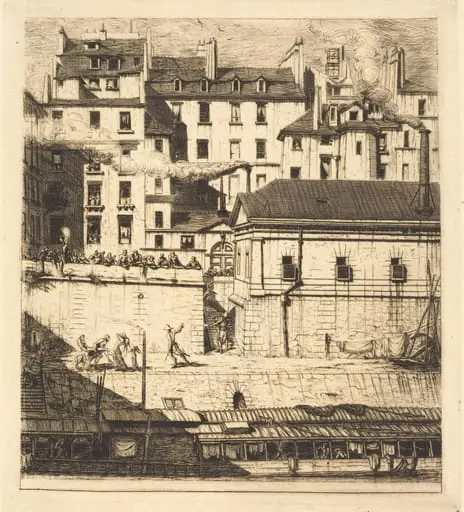
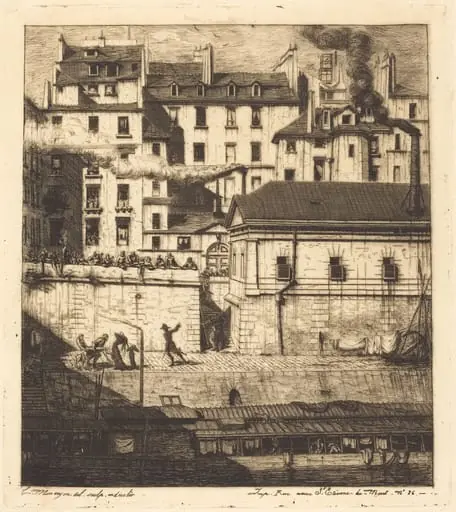
Bain-froid chevrier, dit "de l'École" (Chevrier's Cold-Bath Establishment, Sometimes called the "School-Baths")
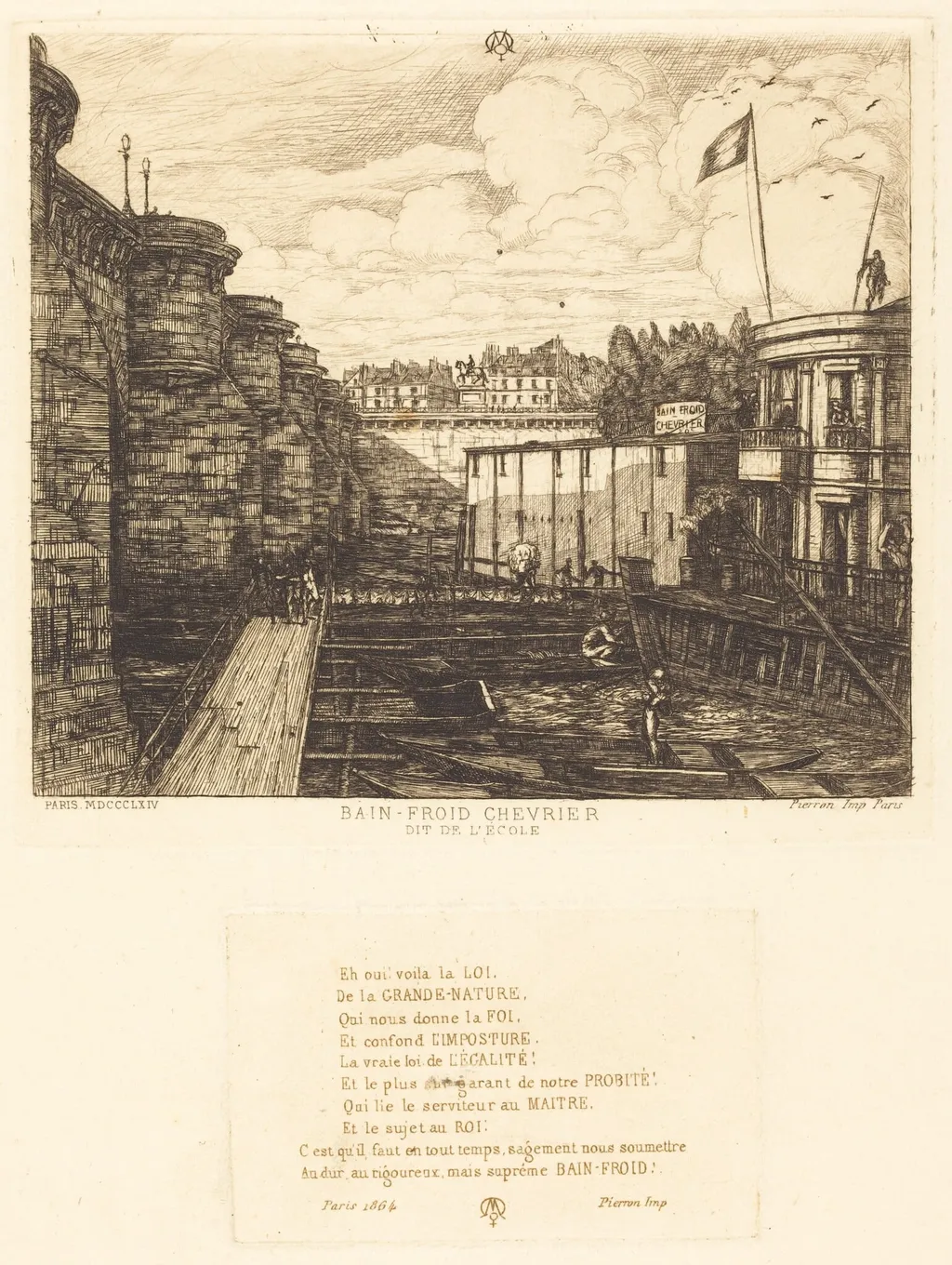
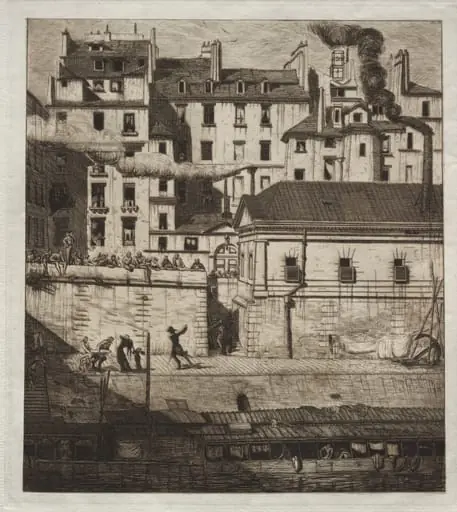
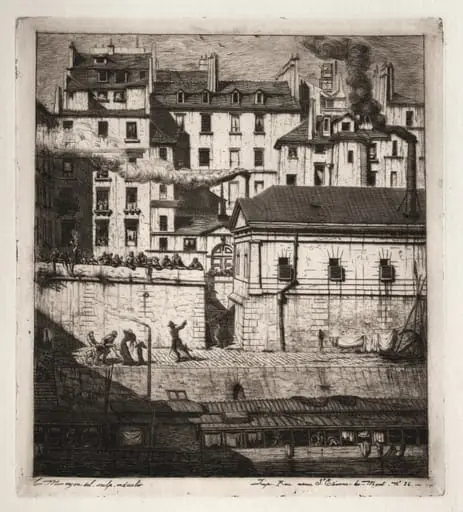
Bain-froid chevrier, dit "de l'École" (Chevrier's Cold-Bath Establishment, Sometimes called the "School-Baths") is an ink print by the Impressionist artist Charles Meryon. It dates from 1864 and is held in the collection of the National Gallery of Art.
- Inscription
- Inscribed:(Charles Meryon's monogram) upper center composition, in plate, artist's hand. "PARIS, MDCCCLXIV" lower left margin, in plate. "Pierron Imp Paris." lower right margin, in plate. "BAIN-FROID CHEVRIER / DIT DE L'ECOLE" lower center margin, in plate. "Eh oui!...BAIN-FROID!" lower center margin, gold ink, in plate. "Paris 1864" lower center margin, gold ink, in plate. (Charles Meryon's monogram) lower center margin, gold ink, in plate. "Pierron Imp" lower center margin, gold ink, in plate. "P12983" lower left margin, graphite, unknown hand. Verso: none.
- Markings
- Marked:"LRJ" verso, black stamped ink, stamped twice, (Lugt 1760b). "National Gallery of Art" verso, black stamped ink, (Lugt 1932d). (Charles W. Dowdeswell collector's stamp) verso, black stamped ink, (Lugt 690).
About this work
Overview
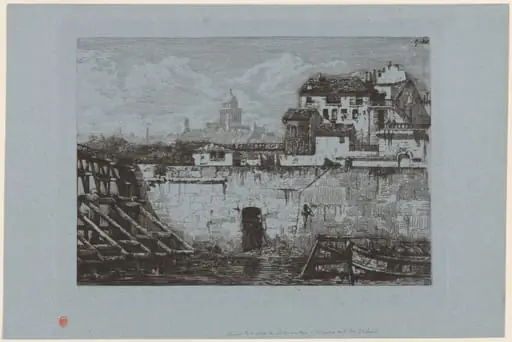
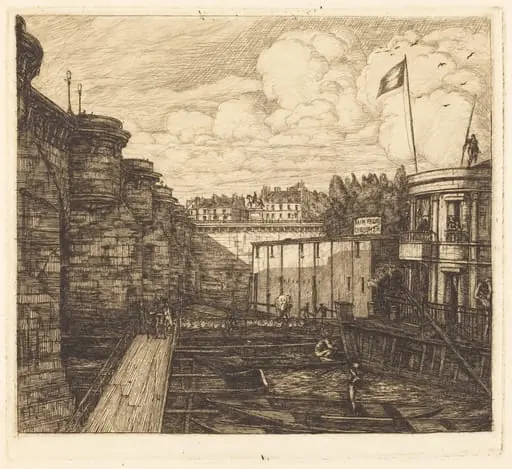
Bain-froid chevrier, dit "de l'École" is a print created by Charles Meryon in 1864, utilizing etching in black and gold on Hudelist laid paper. The work captures a lively Parisian riverside scene, incorporating architectural details, human activity, and natural elements.
Subject & Meaning
The etching depicts a specific Parisian location, highlighting the "Bain-Froid Chevrier" establishment, a riverside bathhouse, amidst everyday urban life. The scene conveys a sense of quotidian activity, with people, buildings, and boats interacting along the river.
Technique & Style
Meryon employed etching, a medium he favored due to his colour blindness, to achieve intricate details through fine lines. The addition of gold tones introduces warmth to the predominantly black-and-white composition, enhancing the overall visual depth.
History & Provenance
Created in 1864 by Charles Meryon, a prominent 19th-century French etcher, despite struggling with mental illness that ultimately led to his death in an asylum. His background, including a mother who was a Paris Opera dancer, influenced his artistic perspective.
Context
As part of Meryon's oeuvre, this work reflects his focus on Parisian landscapes and his technical mastery of etching, a characteristic that defined his career as the most significant etcher of 19th-century France.
Legacy
Bain-froid chevrier contributes to Meryon's enduring legacy in French etching, exemplifying his ability to blend detailed urban vignettes with the expressive capabilities of the etching medium.
Own this work as a print
Artist & collection
Artist
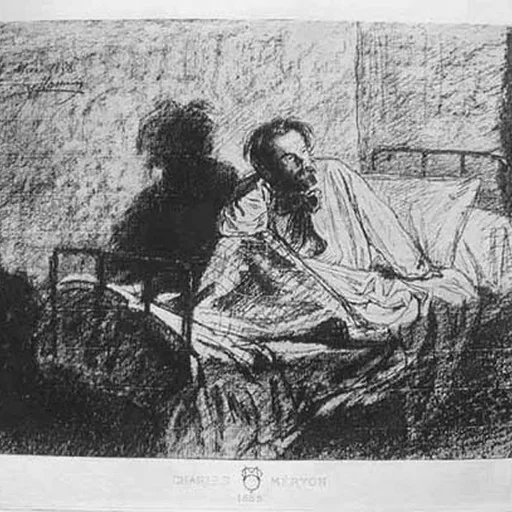
Charles Meryon (sometimes Méryon, 23 November 1821 – 14 February 1868) was a French artist who worked almost entirely in etching, as he had colour blindness.