Artwork
L'abside de Notre-Dame de Paris (The Apse ofthe Cathedral of Notre-Dame, Paris)
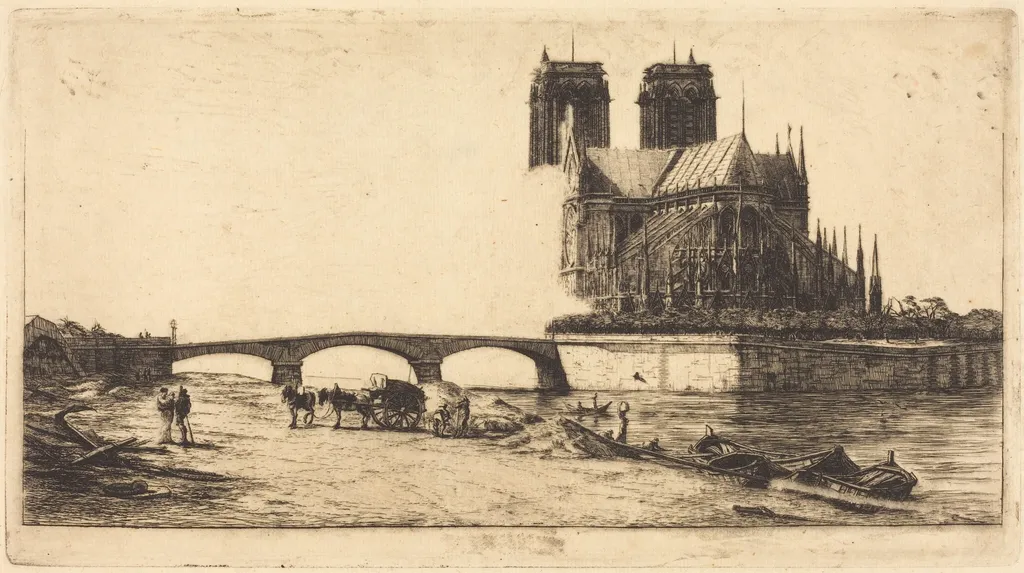
L'abside de Notre-Dame de Paris (The Apse ofthe Cathedral of Notre-Dame, Paris) is an ink print by the Impressionist artist Charles Meryon. It dates from 1854 and is held in the collection of the National Gallery of Art. Created in 1854, this black‑and‑white print portrays the apse of Paris’s Notre‑Dame Cathedral.
- Inscription
- Inscribed:Not signed. Not dated. "Epreuve non termine" lower left margin, graphite, unknown hand. "LD 38I" lower left margin, graphite, unknown hand. "(From the Niel Heywood collections)" lower center margin, graphite, unknown hand. "Possibly unique thus" lower right margin, graphite, unknonw hand. "27" lower right margin, graphite, unknown hand. "30" upper right margin, graphite, unknown hand. "37" verso, lower left sheet, graphite, unknown hand.
- Markings
- Marked:"National Gallery of Art" verso, black stamped ink, (Lugt 1932d). (Albert W. Scholle collector's stamp) verso, black stamped ink, (Lugt 2923a).
About this work
Overview
Created in 1854, this black‑and‑white print portrays the apse of Paris’s Notre‑Dame Cathedral. Executed as an etching on laid paper, the image captures the cathedral’s soaring spires, pointed arches and surrounding scaffolding, set against a river scene populated with boats, a stone bridge, pedestrians and a horse‑drawn wagon.
Subject & Meaning
The composition centers on the cathedral’s eastern limb, emphasizing the interplay of light and shadow across its stone façade and temporary wooden supports. By situating the sacred structure within a bustling riverbank, the artist juxtaposes the permanence of Gothic architecture with the transitory activity of everyday Parisian life.
Technique & Style
The work was produced by incising lines into a metal plate, then printing the image onto laid paper, a method that allows fine detail and tonal variation. The artist’s reliance on line and chiaroscuro reflects his color‑blindness, resulting in a stark, atmospheric rendering that highlights texture and depth without pigment.
History & Provenance
The print belongs to a series of architectural views the etcher made of Paris, a subject he revisited throughout his career. Though highly regarded in France as the preeminent 19th‑century French etcher, his reputation remained modest in English‑speaking circles during his lifetime and thereafter.
Context
Produced during a period of renewed interest in medieval architecture, the image aligns with the Romantic fascination for Gothic forms that permeated mid‑19th‑century French art. The inclusion of scaffolding hints at ongoing restoration efforts on Notre‑Dame, linking the work to contemporary concerns about preserving historic monuments.
Artist & collection
Artist
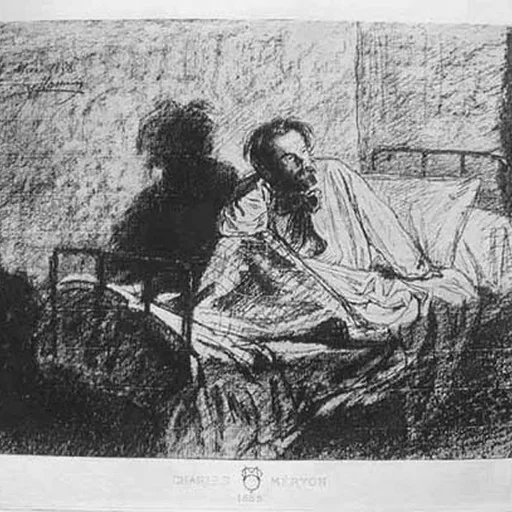
Charles Meryon (sometimes Méryon, 23 November 1821 – 14 February 1868) was a French artist who worked almost entirely in etching, as he had colour blindness.

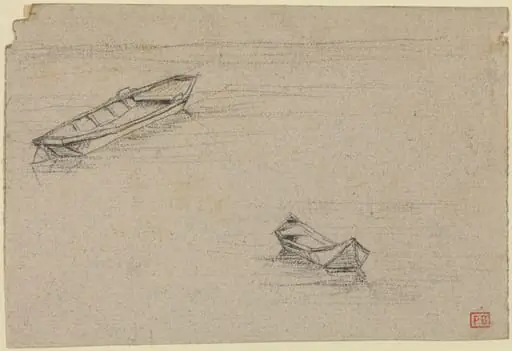
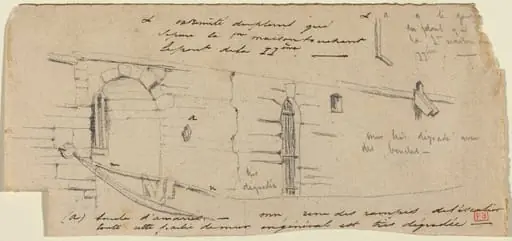
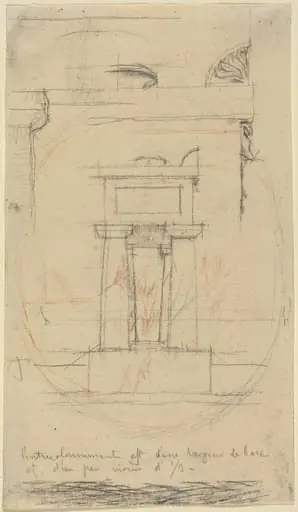
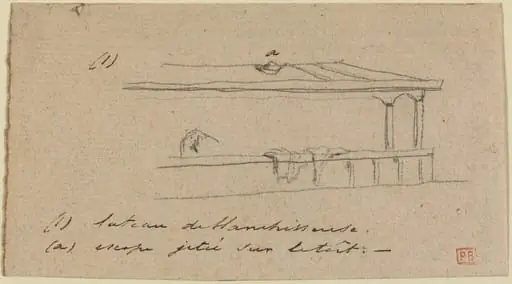
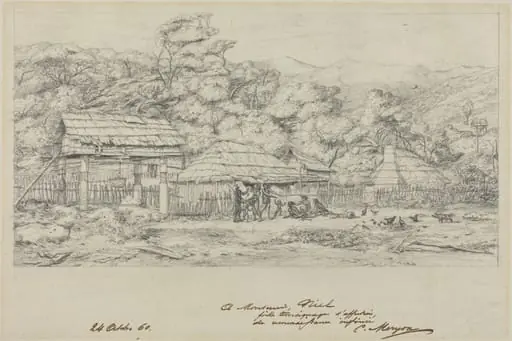
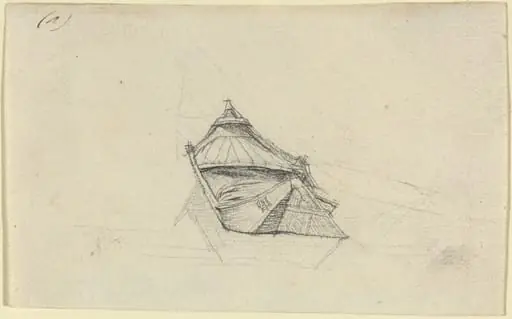
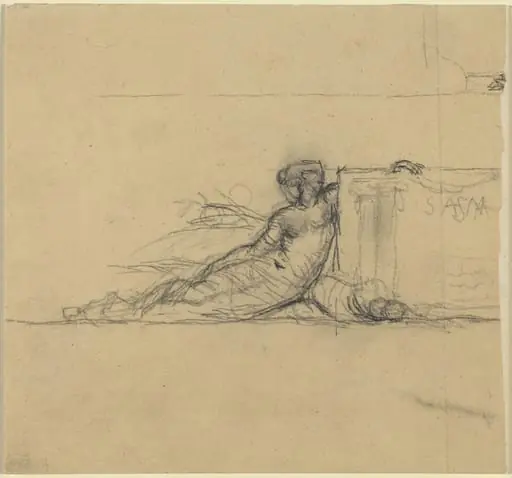
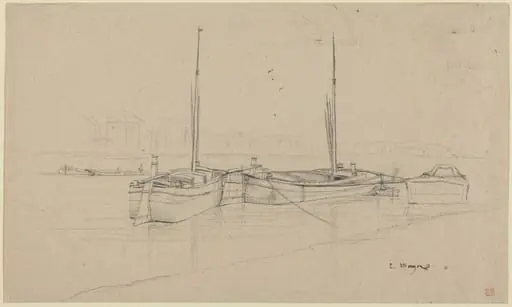
- L'abside de Notre-Dame de Paris (The Apse of the Cathedral of Notre Dame, Paris)
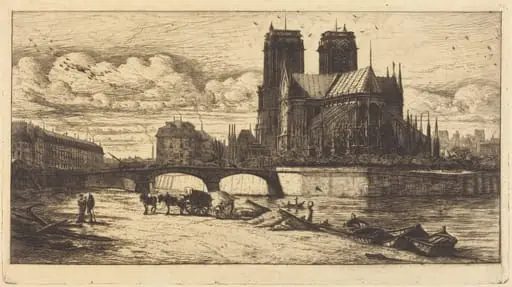 L'abside de Notre-Dame de Paris (The Apse of the Cathedral of Notre-Dame, Paris)
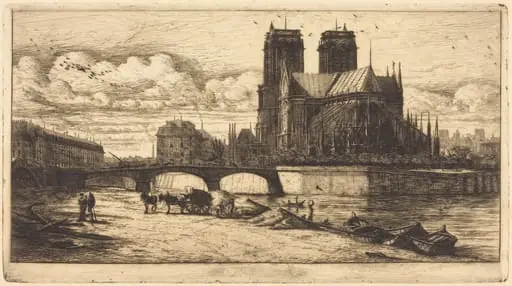
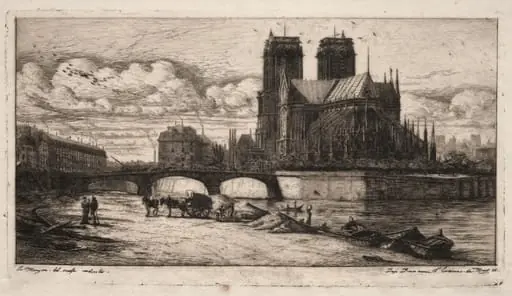 Etchings of Paris: The Apse of the Cathedral of Notre Dame
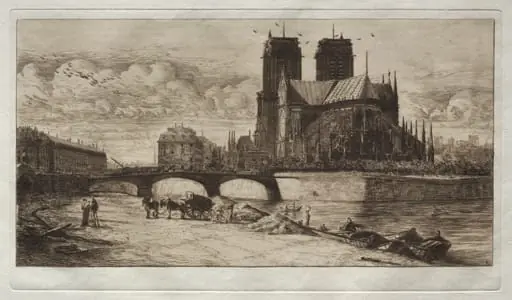 L'Abside de Notre Dame de Paris
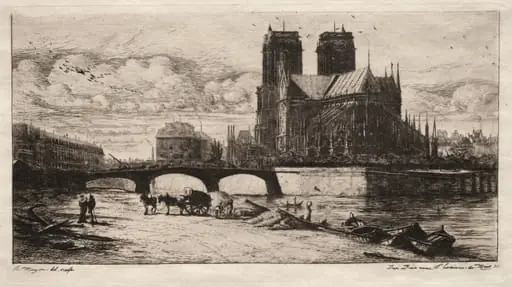 Etchings of Paris: The Apsis of the Cathedral of Notre Dame
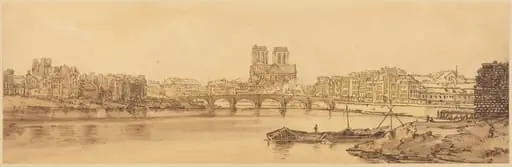 View of Pont de la Tournelle and Notre Dame Taken from the Arsnel: pl.11
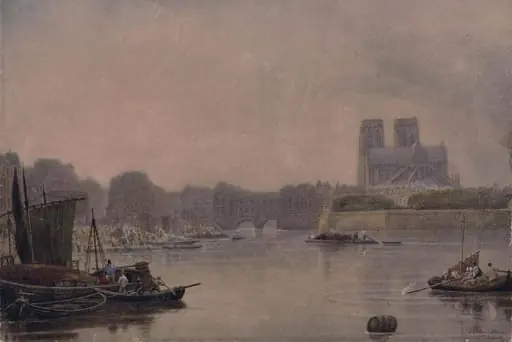 Notre Dame, Paris
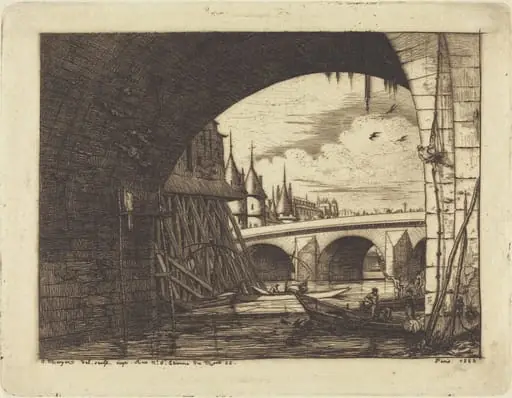 L'arche du Pont Notre-Dame, Paris (An Arch of the Notre-Dame Bridge, Paris)
 L'arche du Pont Notre-Dame, Paris (An Arch of the Notre-Dame Bridge, Paris)
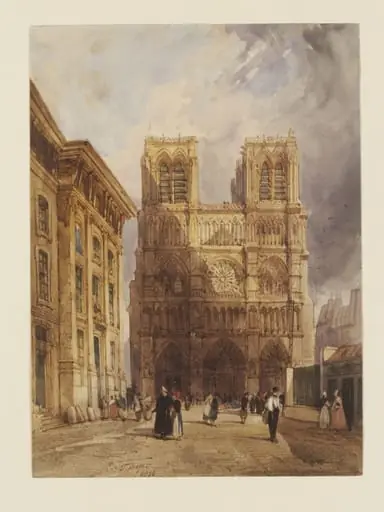 Notre Dame, Paris
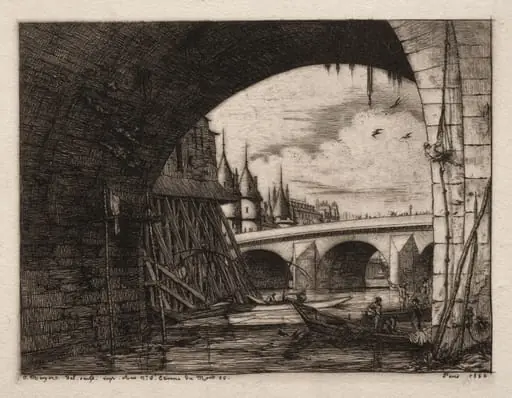 L'arch du Pont Notre Dame, Paris
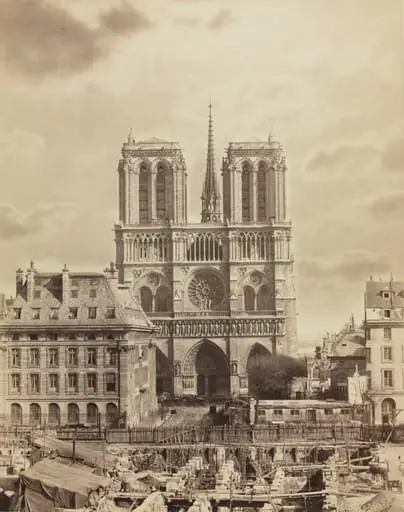 Notre Dame de Paris