Artwork
May Night
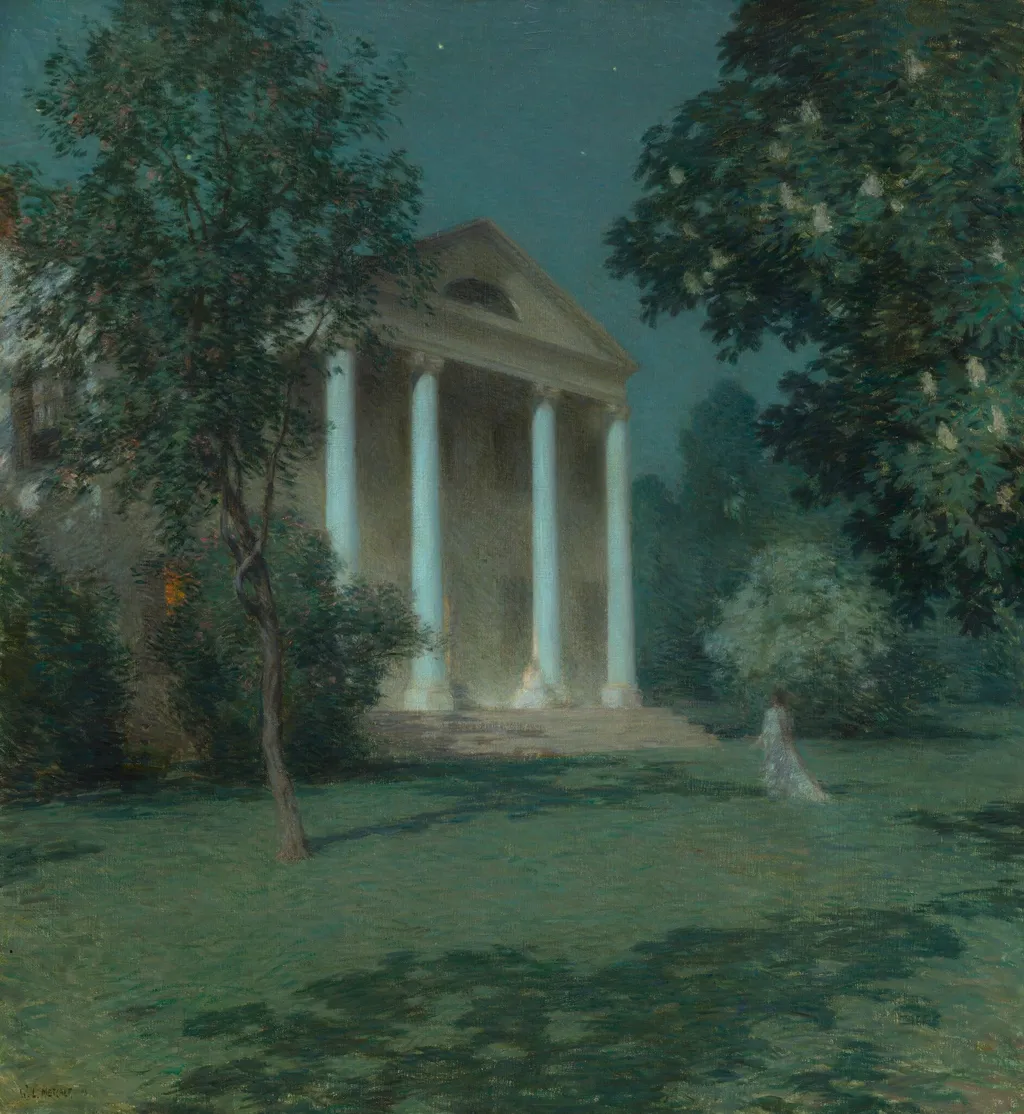
May Night is an oil painting by the American Impressionist artist Willard Metcalf. It dates from 1906 and is held in the collection of the National Gallery of Art.
- Inscription
- Inscribed:lower left: W. L. METCALF '06
About this work
Subject & Meaning
Botolph Club in Boston and later acquired by the Corcoran Gallery of Art, where it became the institution's first contemporary American painting purchase.
The painting portrays the front lawn and facade of the Griswold House in Old Lyme, Connecticut, illuminated by moonlight. A woman walks across the lawn toward the house while another sits on the front porch, both dressed in long pale garments that emphasize a sense of elegant tranquility. The Ionic columns of the house and the warm light spilling from within contribute to the nocturnal atmosphere.
Art historian Bruce W. Chambers notes that these details heighten the feeling of tranquil elegance. The work was inspired by a summer moonlight scene at the Florence Griswold Museum and reflects the romantic associations and subtle color harmonies that reconciled Tonalism and Impressionism within the Old Lyme colony. It was first exhibited at the St. Botolph Club in Boston and later acquired by the Corcoran Gallery of Art, where it became the institution's first contemporary American painting purchase.
Technique & Style
May Night is an oil painting on canvas executed in 1906 by Willard Metcalf, an American Impressionist associated with the Old Lyme Art Colony.
The work depicts the Griswold House in Old Lyme, Connecticut, under moonlight, rendered with atmospheric handling that emphasizes the interplay of artificial interior light and silvery nocturnal illumination. Gestural brushwork and broken color typical of Impressionist practice animate foliage and architectural details, while the subdued palette of blues, silvers, and warm interior glows orchestrates a quiet, dreamlike nocturne. The composition’s balance of structured geometry, columns and windows, and fluid shadow patterns underscores Metcalf’s synthesis of Tonalist mood with Impressionist luminosity.
History & Provenance
Willard Metcalf painted May Night between the spring and early September of 1906 while residing at the Old Lyme Art Colony in Connecticut. The work depicts the Griswold House under moonlight, a theme Metcalf explored during a highly productive year that saw him complete twenty-six canvases. Following its exhibition at the St. Botolph Club in Boston in November 1906, the painting was shown at the Corcoran Gallery of Art in January 1907.
There, it received the Clark Gold Medal and a cash prize of $1,000 before being purchased by the Corcoran for $3,000, marking the institution's first acquisition of a contemporary American painting. The artist retained ownership until the sale in February 1907. The National Gallery of Art subsequently acquired the work in 2014.
Completed in 1906, May Night was first exhibited at the St. Botolph Club in Boston in November of that year. It subsequently appeared in January 1907 at the Corcoran Gallery of Art's inaugural exhibition of contemporary art, where it received the Clark Gold Medal. Following this showing, the Corcoran purchased the work, marking its first acquisition of a contemporary American painting.
The painting remained in the Corcoran's collection until 2014, when it was transferred to the National Gallery of Art in Washington, D.C. Decades later, the work served as the centerpiece for a 2005 retrospective of Metcalf's oeuvre held at the Florence Griswold Museum.
Context
May Night stands as Willard Metcalf's most celebrated work and a defining example of American Impressionism. Created in 1906 during his tenure at the Old Lyme Art Colony, the painting synthesizes Tonalist mood with Impressionist technique, particularly through its exploration of nocturnes. The work achieved immediate critical acclaim, winning the Clark Gold Medal and securing a $3,000 purchase by the Corcoran Gallery of Art, marking the institution's first acquisition of a contemporary American painting.
This success cemented Metcalf's reputation as a master of the landscape genre and sparked a surge of interest in the Old Lyme colony, prompting contemporaries to emulate the moonlight theme. Critics such as Philip Leslie Hale praised the piece for capturing the mystery of night and springtime, while the painting later served as the centerpiece of a 2005 retrospective at the Florence Griswold Museum.
Legacy
May Night is widely regarded as Willard Metcalf's most celebrated work, a status cemented after it won the Clark Gold Medal and was purchased by the Corcoran Gallery of Art in 1907. This acquisition marked the gallery's first purchase of a contemporary American painting, significantly boosting Metcalf's reputation as an acclaimed master of Impressionist landscape. The painting's success had an immediate ripple effect on the Old Lyme art colony, sparking a surge in demand for local lodging and inspiring fellow artists to create their own nocturne variations of the scene.
Decades later, the work's enduring legacy was highlighted in 2005 when it served as the centerpiece for a major exhibition at the Florence Griswold Museum. Its cultural resonance extended beyond visual art, inspiring a musical production that featured an eponymous song dedicated to the painting and its subject.
Overview
Created in 1906, this oil on canvas by American Impressionist Willard Metcalf portrays a tranquil nocturnal scene. The composition centers on the residence of Florence Griswold, now the Florence Griswold Museum in Old Lyme, Connecticut, rendered under a moonlit sky with sparse trees and a subdued palette that emphasizes stillness.
Artist & collection
Artist
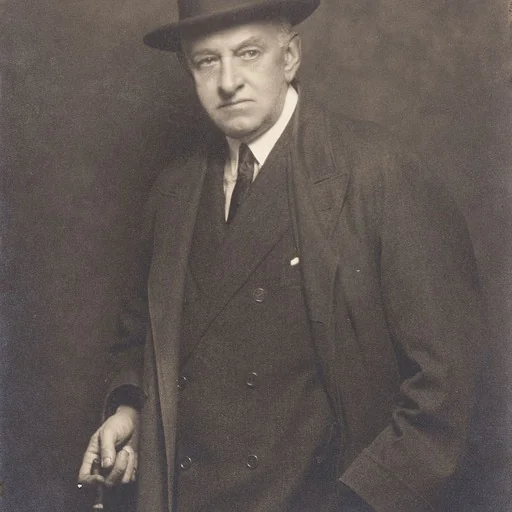
Willard Leroy Metcalf (July 1, 1858 – March 9, 1925) was an American painter born in Lowell, Massachusetts.