Artwork
Maria mit Kind in der Glorie, den hll. Hieronymus und Jakobus mit Stifter (?)
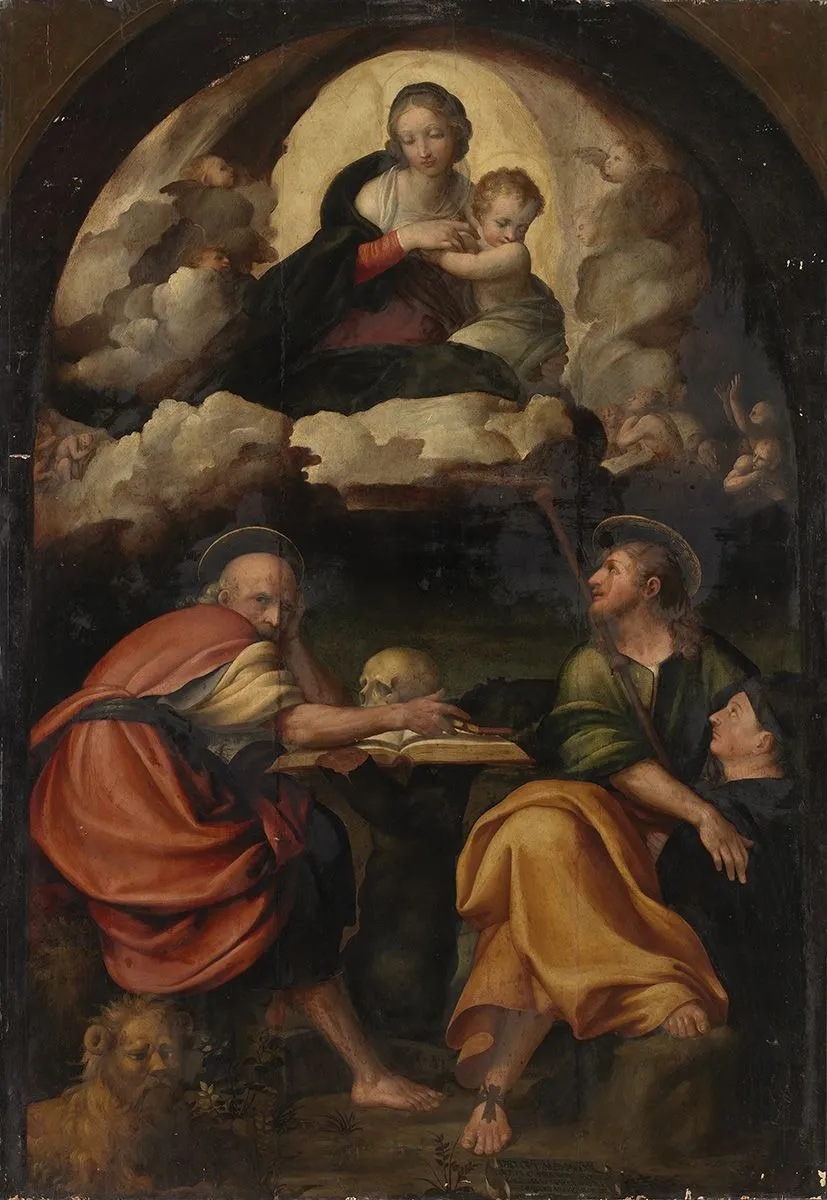
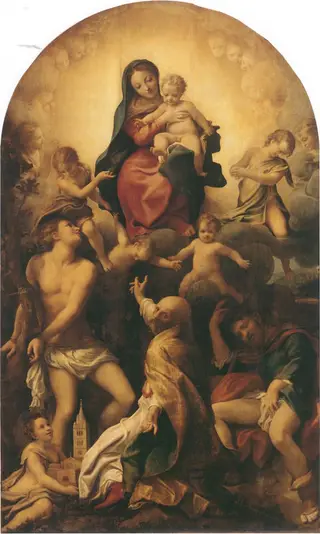
Maria mit Kind in der Glorie, den hll. Hieronymus und Jakobus mit Stifter (?) is an unspecified painting by the Mannerist artist Michelangelo Anselmi. It dates from 1523 and is held in the collection of the Bavarian State Painting Collections.
About this work
Subject & Meaning
The arrangement of these holy figures within a celestial setting reflects the devotional themes characteristic of early 16th-century religious art.
The work is a religious painting depicting the Virgin Mary and the Christ Child situated within a glory. Flanking the central figures are the saints Jerome and James the Great. A donor figure is also included in the composition, though their specific identity remains uncertain.
The arrangement of these holy figures within a celestial setting reflects the devotional themes characteristic of early 16th-century religious art.
Technique & Style
The work is executed in oil on wood panel, measuring 204.5 cm in height and 142.5 cm in width. It depicts the Virgin Mary holding the infant Jesus, accompanied by Saints Jerome and James the Greater, rendered with delicate chiaroscuro and a restrained palette that emphasizes the intimate interaction among the figures. The composition shows a balanced arrangement of the three holy persons within a shallow architectural space, reflecting the influence of early Mannerist stylization while retaining the naturalistic detail characteristic of Northern Renaissance painting.
History & Provenance
The work was created in 1523 by Michelangelo Anselmi, likely commissioned as a devotional piece for the Bavarian court, and has remained in the collection of the Bavarian State Painting Collections since its acquisition. It is housed in the Alte Pinakothek in Munich, where it has been displayed continuously since the mid‑20th century.
The painting’s provenance reflects a continuous ownership chain from its original patrons to the Bavarian State, with no documented sales or transfers before its formal accession.
The painting is held in the collection of the Bavarian State Painting Collections and is located at the Alte Pinakothek. Created in 1523, the work measures 204.5 cm in height and 142.5 cm in width. The provided sources do not contain specific inventory numbers or details regarding its exhibition history.
Context
Michelangelo Anselmi's 'Maria mit Kind in der Glorie, den hll. Hieronymus und Jakobus mit Stifter' (1523) exemplifies High Renaissance religious painting within the Venetian-influenced Bolognese school, reflecting Counter-Reformation emphasis on devotional imagery. The work functions as a devotional sacra conversazione where the Virgin and Child occupy central spatial authority amid saints Hieronymus and Jakobus, a compositional tradition significant for its synthesis of Venetian colorism and Emilian draftsmanship.
Stylistic analysis identifies influences from Raphael and early Parmigianino in the delicate modeling of drapery and naturalistic saintly attributes, situating Anselmi within the transitional period toward Mannerist spatial complexity. Its placement in the Alte Pinakothek's collection preserves a key example of 16th-century Bolognese output beyond the Venetian mainstream, contributing to scholarly understanding of secondary Emilian masters navigating Counter-Reformation artistic demands.
Overview
Created in 1523, this oil painting by the Italian Renaissance artist Michelangelo Anselmi presents a celestial tableau of four figures set against a luminous, cloud‑filled sky. The composition is housed in Munich’s Alte Pinakothek, where it remains a representative example of early‑16th‑century devotional art.
Artist & collection

- The Mystic Marriage of Saint Catherine
 Virgin and Child in Glory with St. Bartholomew, St. John the Baptist, St. Albert and St. Jerome
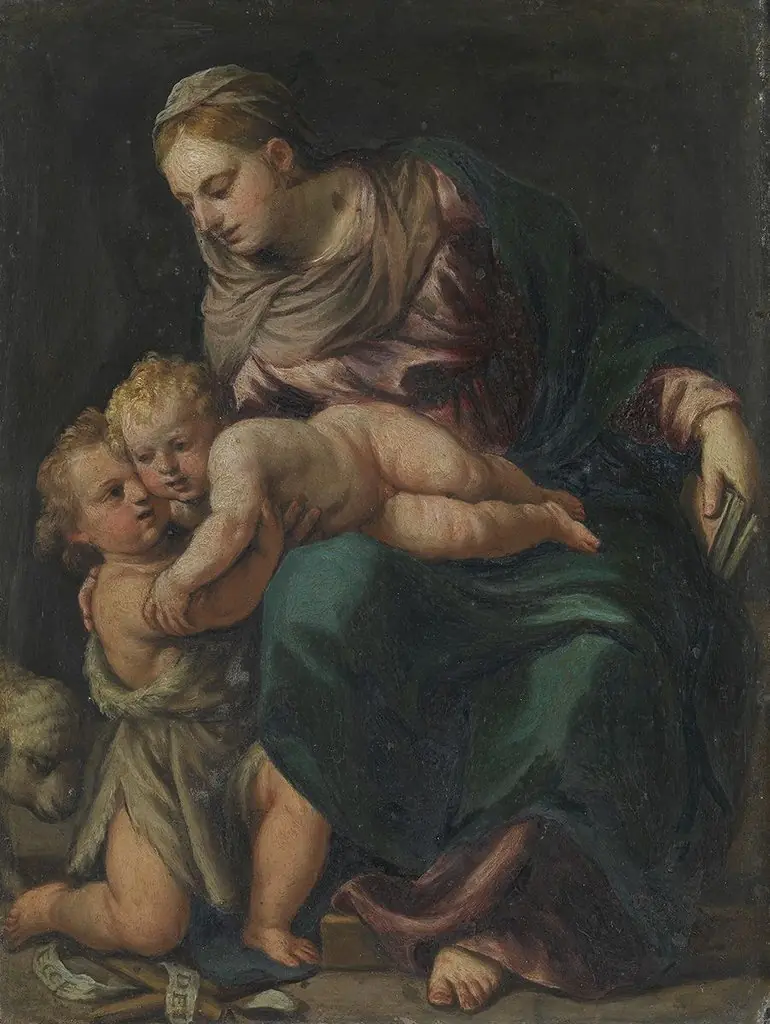 Maria mit dem Kinde und dem Johannesknaben
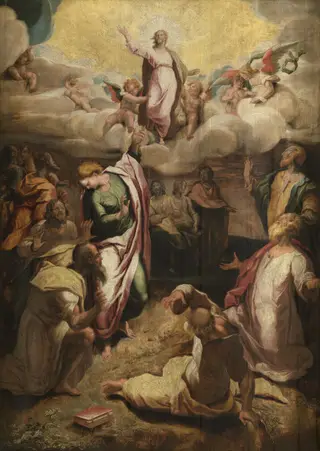 Resurrection of Christ
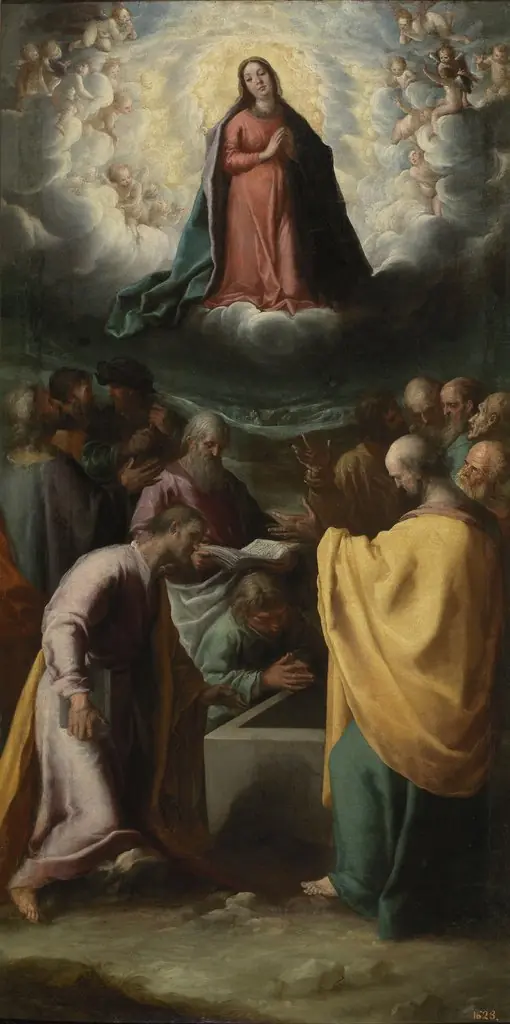 The Assumption of the Virgin
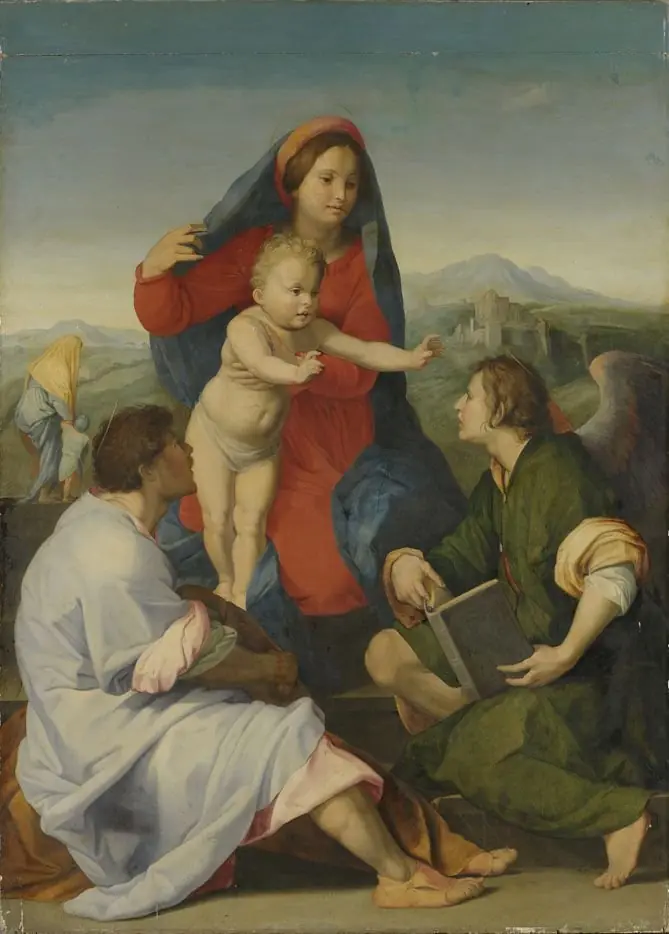 Holy family
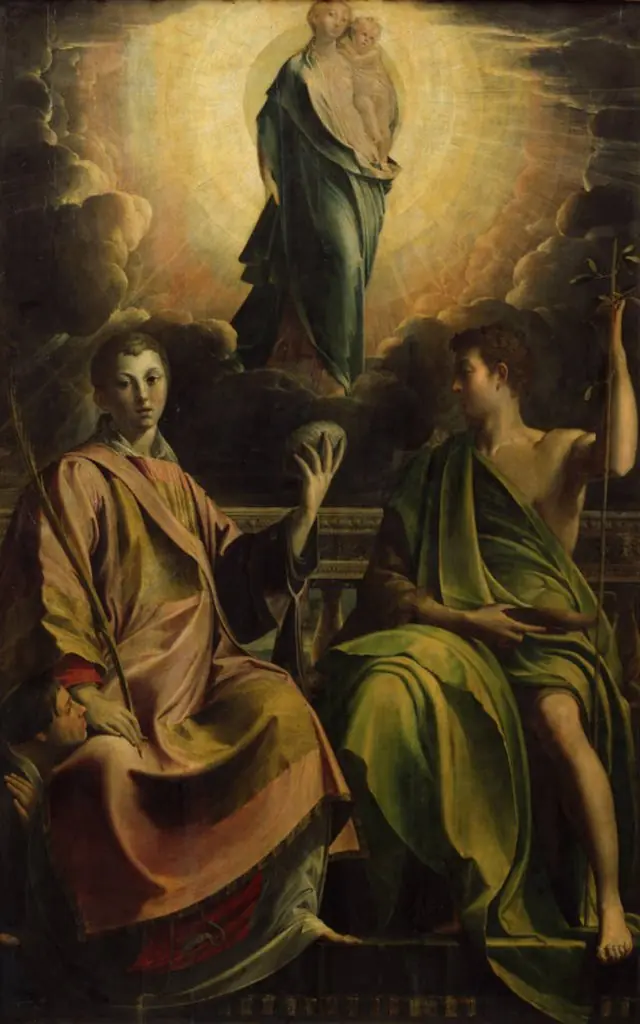 Madonna and child with Saints Stephen and John the Baptist
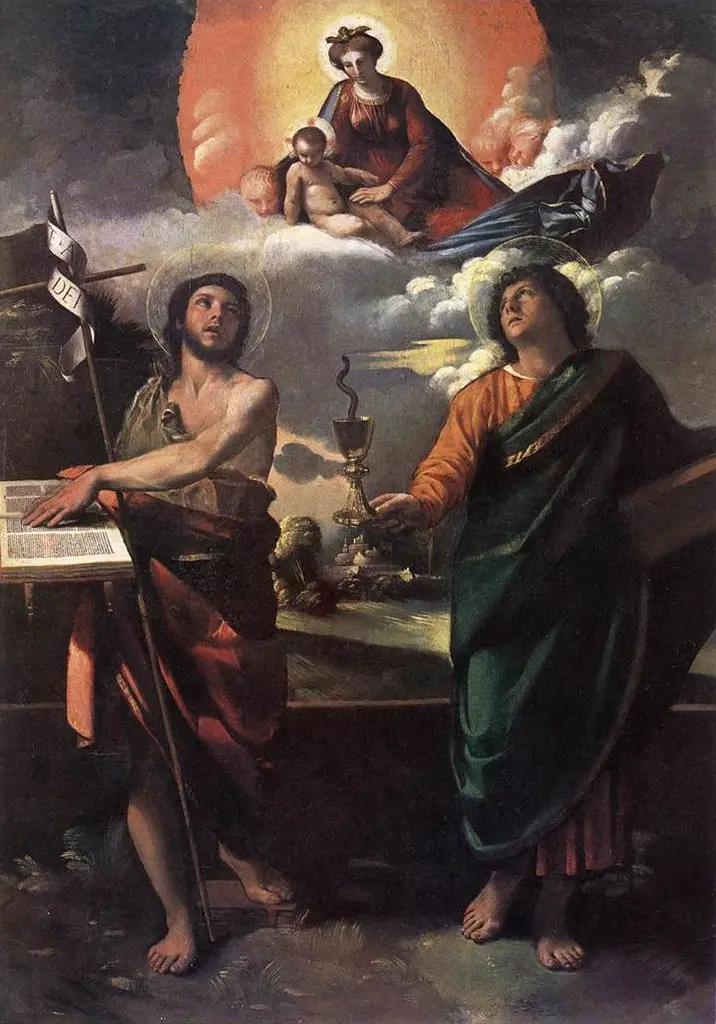 The Virgin Appearing to Sts John the Baptist and John the Evangelist
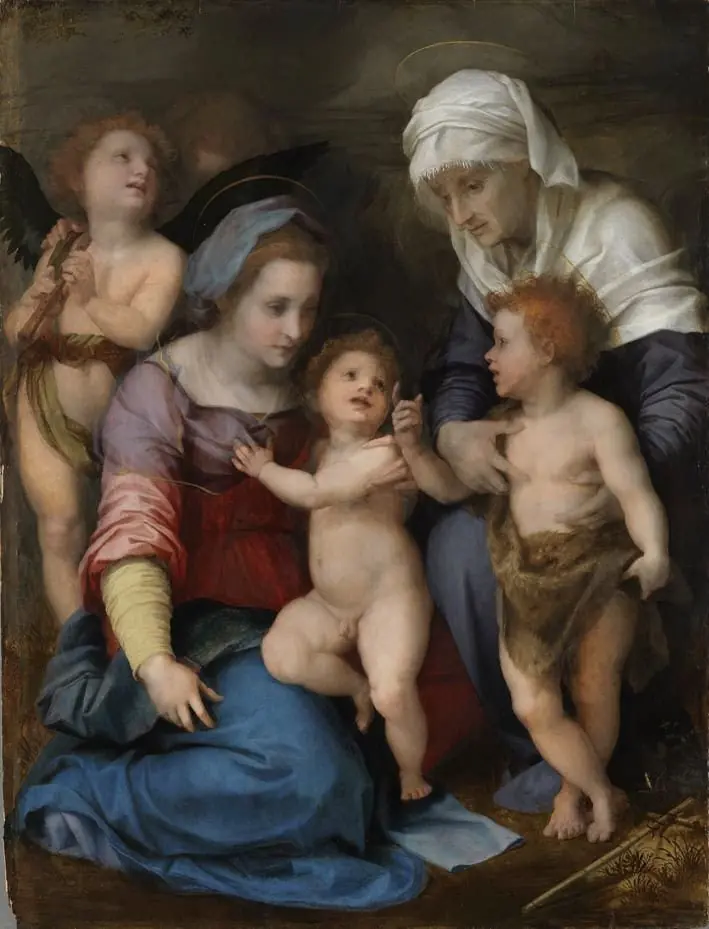 The Holy Family
 The Virgin and Child with Saint John the Baptist and Angels
 Madonna of Saint Sebastian
 Last Judgement: Saint John the Baptist with six apostles