Artwork
Madonna of Saint Sebastian
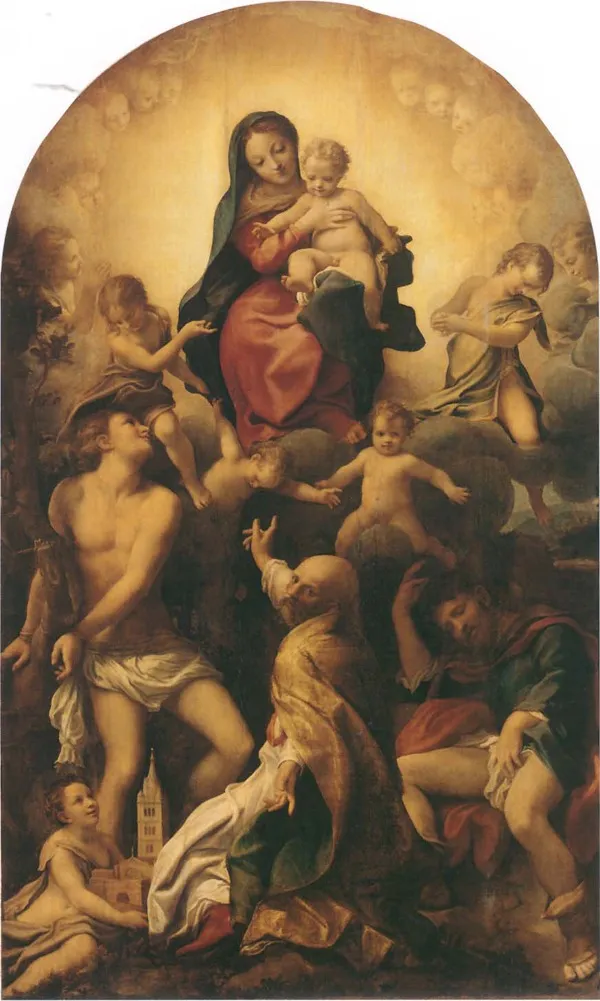
Madonna of Saint Sebastian is an oil painting by the Early Baroque Italian artist Antonio da Correggio. It dates from 1524 and is held in the collection of the Staatliche Kunstsammlungen Dresden.
About this work
Subject & Meaning
The earthly scene features Saint Sebastian bound to a tree on the left, Saint Geminian, the bishop of Modena, in the center, and Saint Roch asleep on the right.
The painting depicts a Sacred Conversation divided into a divine upper realm and an earthly lower plane. In the celestial section, the Virgin Mary, portrayed as a bearer of light, sits on a cloud with the Christ Child, surrounded by angels. The earthly scene features Saint Sebastian bound to a tree on the left, Saint Geminian, the bishop of Modena, in the center, and Saint Roch asleep on the right. The work was commissioned by the Confraternity of Saint Sebastian in Modena, likely in response to a plague epidemic in 1523. This context explains the inclusion of Saint Roch, a protector against pestilence; notably, his leg is shown healed and free of the usual plague sores, suggesting divine intervention. Saint Sebastian appears without visible arrows, bathed in the same radiant light that signifies the Virgin's glorification. The composition serves as a visual intercession, linking the suffering of the faithful to the heavenly realm.
Technique & Style
The Madonna of Saint Sebastian is an oil painting executed on a poplar panel, measuring 265 by 161 cm (SOURCE 2). It is classified as a religious artwork and belongs to the genre of sacred conversation, though its composition differs from Correggio’s other works such as the Madonna of Saint Francis (SOURCE 5). The figures are arranged in a complex, dynamic composition that blends celestial and earthly realms, with the Virgin portrayed as a bearer of divine light, a motif common in Christian iconography (SOURCE 5). The handling of light and gesture reflects a mature Renaissance style, with naturalistic details and a sense of movement that prefigures Baroque sensibilities (SOURCE 5). The painting originally served an altar in Modena before entering the collection of the Dukes of Este and eventually the Gemäldegalerie Alte Meister in Dresden (SOURCE 4).
History & Provenance
The painting was commissioned by the confraternity of Saint Sebastian in Modena for its altar in the city's cathedral, probably through the mediation of the sodalist Francesco Grillenzoni, whom Vasari described as a very close friend of Correggio. Stylistic considerations, together with the presence of Saint Roch on the right, a saint invoked against plague, suggest the commission was linked to the severe epidemic documented in Modena in 1523, leading to a dating of around 1524. Vasari briefly recorded the work while it still hung in its original location. In the seventeenth century, Francesco I d'Este acquired the altarpiece for his ducal gallery at the Castello Estense, where it was admired and praised by Francesco Scannelli. As part of the larger d'Este collection, the painting was purchased in August 1746 by Augustus III of Saxony, who transferred it to Dresden, where it remains in the Gemäldegalerie Alte Meister. The work also circulated early through reproductive media, including a print by Carlo Bertelli and a painted copy by Federico Zuccari. The Madonna of Saint Sebastian has been held since the mid-eighteenth century by the Gemäldegalerie Alte Meister in Dresden, part of the Staatliche Kunstsammlungen Dresden. It originally belonged to the confraternity of Saint Sebastian in Modena, for whose altar it was commissioned around 1524, probably through the sodalist Francesco Grillenzoni. In the seventeenth century Francesco I d'Este acquired it for the ducal gallery at the Castello Estense, where Francesco Scannelli admired and praised it. As part of the d'Este collection, it was purchased in August 1746 by Augustus III of Saxony, who brought it to Dresden, where it has remained in the royal, now state, picture gallery ever since. The work's early fame is documented by a print by Carlo Bertelli and a painted copy by Federico Zuccari, while Vasari recorded it while it was still in its original Modena location.
Context
Scholars date the work to circa 1524, linking its commission to a 1523 plague in Modena due to the inclusion of Saint Roch, a saint invoked against epidemics. Art historical analysis suggests Correggio may have incorporated influences from Michelangelo's Sistine Chapel ceiling, potentially viewed during a 1518 visit to Rome. The composition is noted for its mature organization of space, where Saint Geminian acts as an intercessor connecting the earthly and celestial realms through gesture and gaze.
Critics identify pre-Baroque qualities in the painting's dynamic movement and the fluid interaction between figures, a style further developed in Correggio's subsequent altarpieces. The work achieved early fame, evidenced by a print by Carlo Bertelli and a painted copy by Federico Zuccari. In the seventeenth century, Francesco Scannelli recorded enthusiastic admiration for the piece while it resided in the Este collection.
Legacy
The painting achieved early fame, evidenced by a print by Carlo Bertelli and a painted copy by Federico Zuccari. In the seventeenth century, after Francesco I d'Este acquired it for his gallery, Francesco Scannelli admired it there and wrote an enthusiastic praise of the work. Correggio's mature handling of the composition, interweaving gestures and gazes, dividing the scene between a celestial and a terrestrial zone, and using the bishop of Modena as a visual link between them, proved influential on his own subsequent altarpieces, including the Madonna of Saint George for Modena and the Adoration of the Shepherds for Reggio, where similar pre-Baroque solutions recur.
Artist & collection

Artist
Antonio Allegri da Correggio, usually known as just Correggio, was an Italian Renaissance painter who was the foremost painter of the Parma school of the High Renaissance, who was responsible for some of the most…

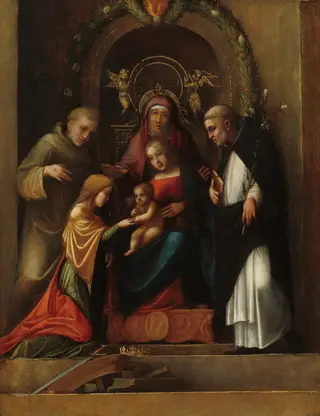




- The Mystic Marriage of Saint Catherine
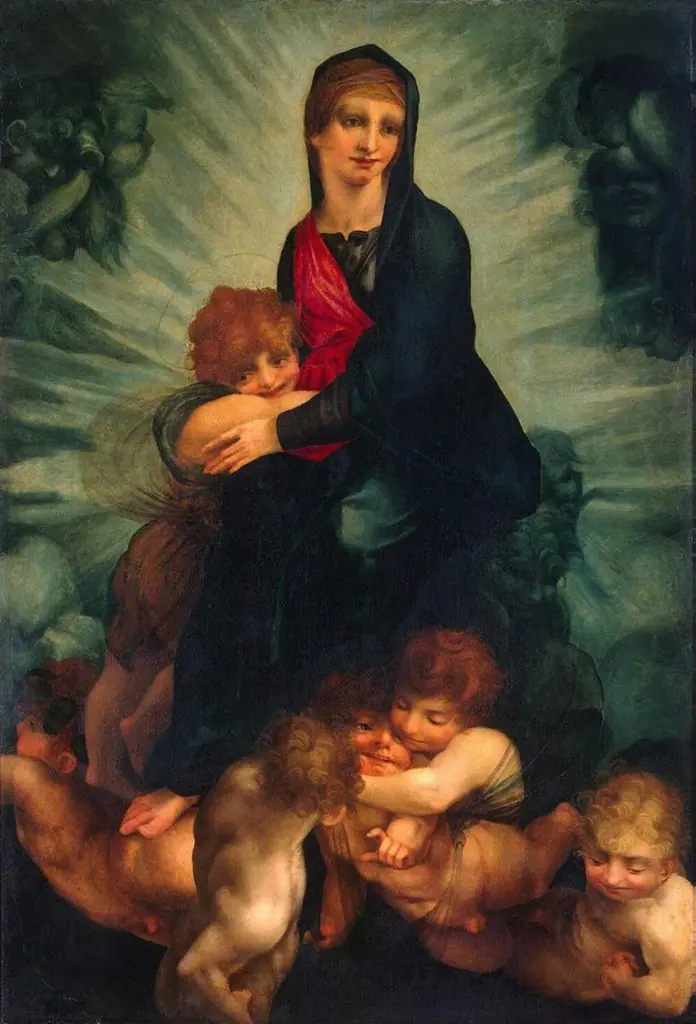 Madonna and Child with Cherubs
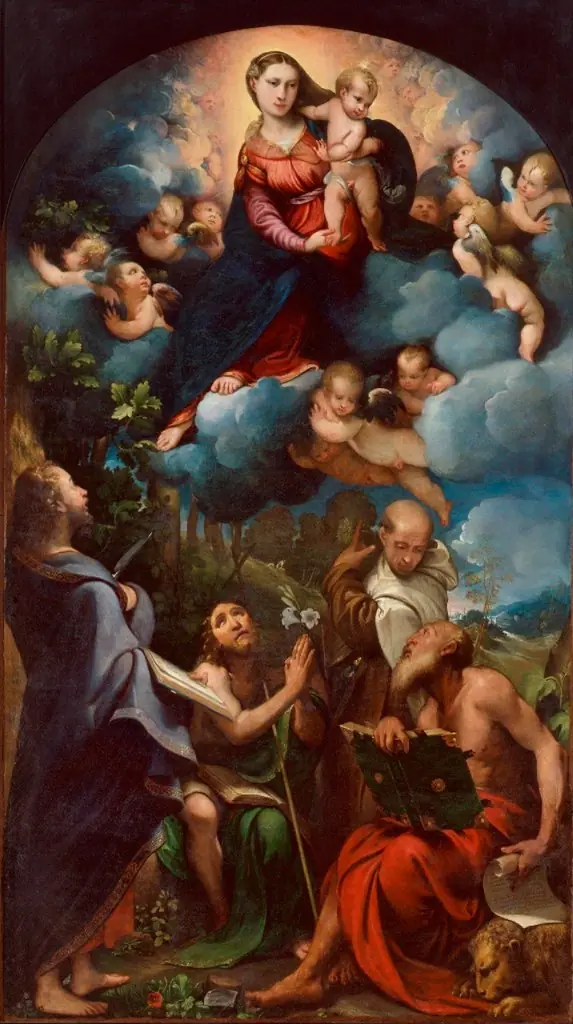 Virgin and Child in Glory with St. Bartholomew, St. John the Baptist, St. Albert and St. Jerome
 Madonna and Child with Souls in Purgatory
 La Asunción y Coronación de la Virgen
 Coronation of the Virgin with Saints Joseph and Francis of Assisi
 The Assumption of Mary
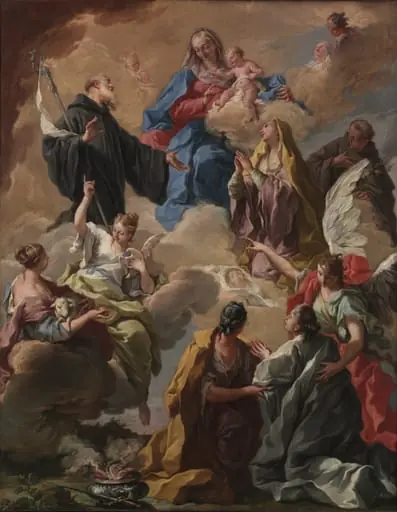 Saints Presenting a Devout Woman to the Virgin and Child
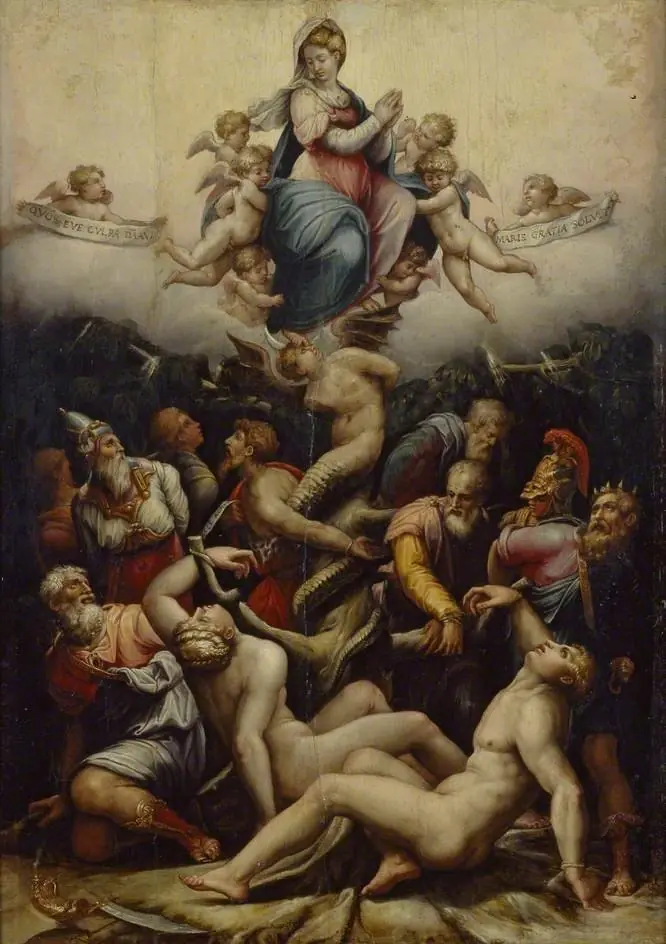 An Allegory of the Immaculate Conception
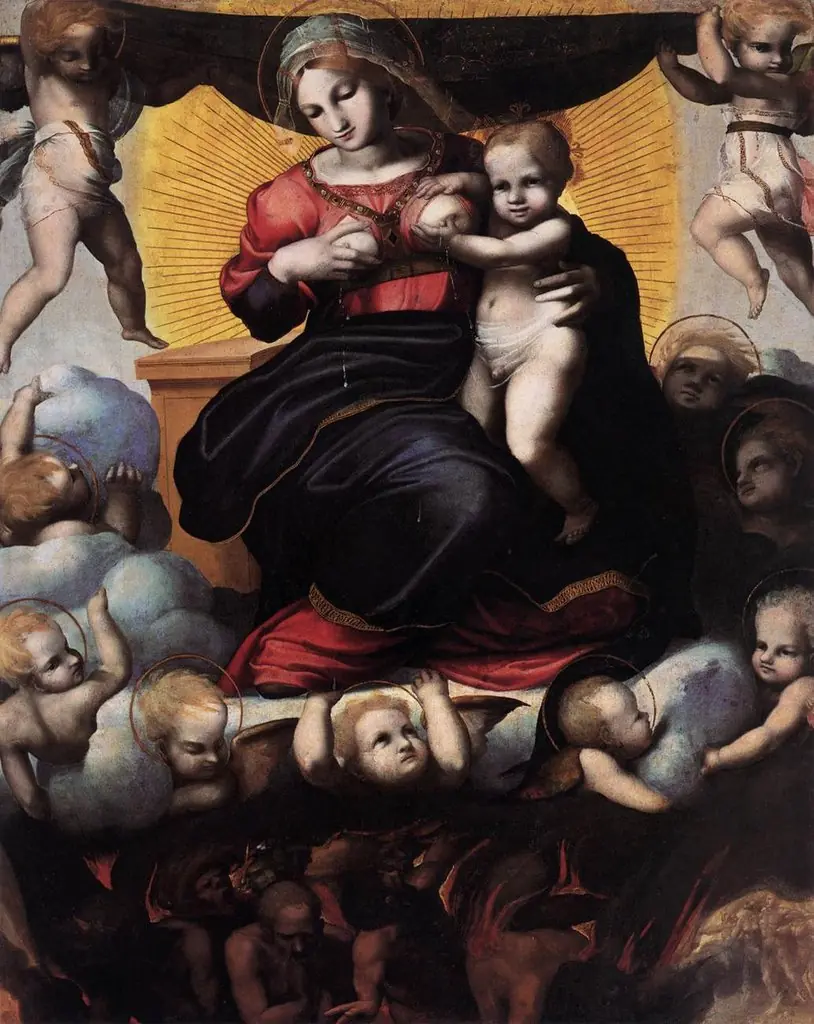 The Virgin and the Souls of Purgatory
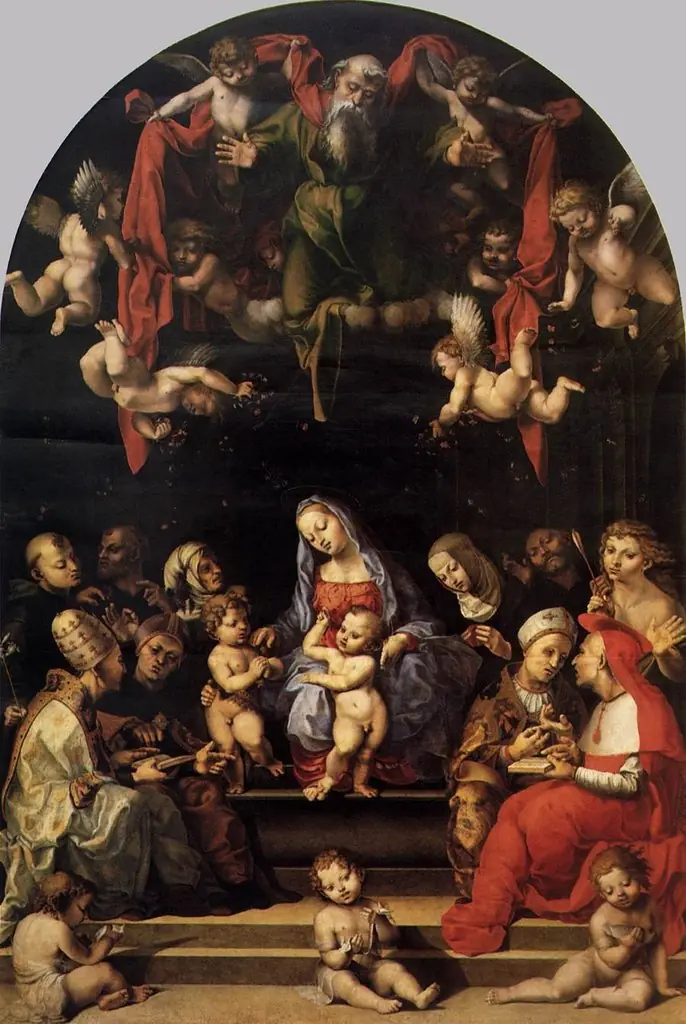 Disputation over the Immaculate Conception
 Assumption of Mary