Artwork
Le baptême du Christ
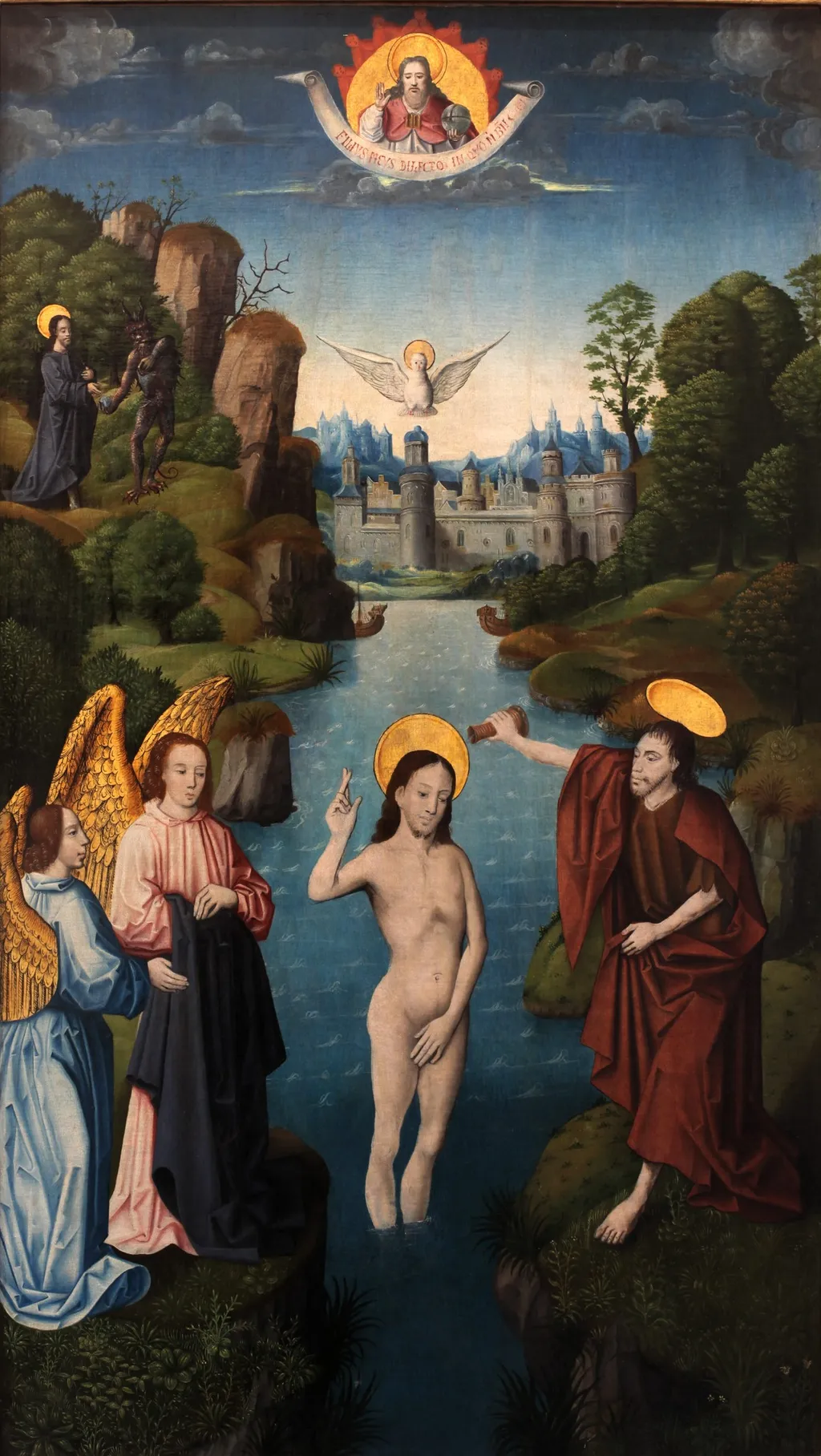
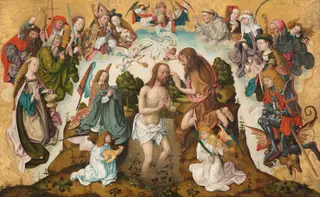
Le baptême du Christ is an oil painting by the Northern Renaissance artist Monogrammist AH. It dates from 1500 and is held in the collection of the Museum of Fine Arts of Lyon.
About this work
Subject & Meaning
The background setting combines a forest with a distant city, while the work also incorporates depictions of nudity and clothing to frame the sacred event.
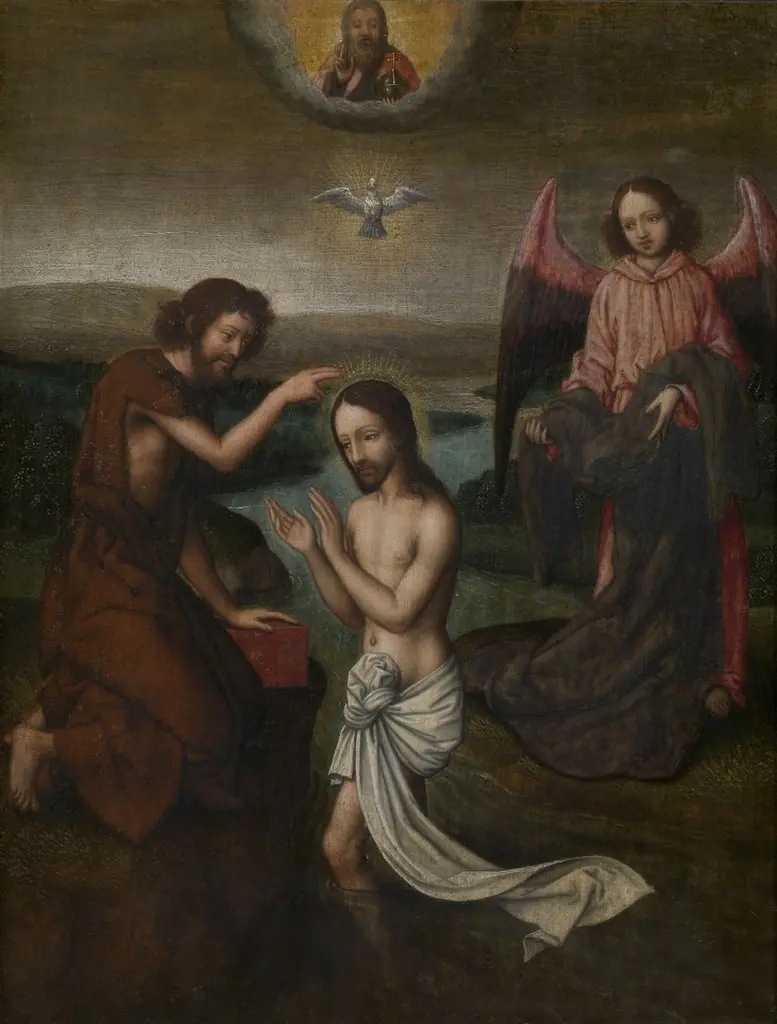
Created in 1500, this oil painting on panel illustrates the Baptism of Jesus as its central religious theme. The composition features Jesus Christ and John the Baptist, accompanied by an angel and the Holy Spirit represented as a dove. The iconography extends beyond the primary sacrament to include elements of the Temptation of Jesus, notably the presence of a devil within the scene.
The background setting combines a forest with a distant city, while the work also incorporates depictions of nudity and clothing to frame the sacred event. Additional symbolic layers include a beatific vision, enriching the theological narrative of the piece.
Technique & Style
Created in 1500 by the Monogrammist AH, this religious work is executed in oil paint on a panel support. The composition illustrates the Baptism of Jesus, featuring John the Baptist and Christ within a landscape that includes a forest and a distant city. The iconography incorporates specific theological elements such as the Holy Spirit represented by a dove, alongside attending angels.
The scene also depicts the Temptation of Jesus, introducing a devil figure into the narrative. Visual details include rendered clothing and instances of nudity appropriate to the baptismal subject matter.
History & Provenance
The painting known as Le baptême du Christ was created in 1500 by the artist identified as Monogrammist AH. Executed in oil paint on a panel support, the work depicts the Baptism of Jesus alongside other religious subjects such as the Holy Spirit and John the Baptist. It is currently held in the collection of the Museum of Fine Arts of Lyon.
Specific details regarding the original commission, the chain of ownership prior to its arrival at the museum, or the precise circumstances of its creation are not provided in the available records.
Context
The painting Le baptême du Christ by the Monogrammist AH occupies a pivotal position in early sixteenth-century French religious art, exemplifying the transitional stylistic currents preceding the High Renaissance. Its depiction of the Baptism of Jesus incorporates complex symbolic elements such as the dove representing the Holy Spirit and the tempter devil, reflecting theological nuance and narrative ambition characteristic of contemporary devotional imagery. The work's integration of naturalistic landscape, varied human forms including nudity, and a beatific vision underscores its function as both devotional object and artistic exploration of scriptural narrative.
Scholarship emphasizes its significance within the Monogrammist's oeuvre as a mature synthesis of Netherlandish influence and emerging French classicizing tendencies, situating it at the intersection of regional workshop practice and evolving visual interpretations of Christological themes.
Overview
Le baptême du Christ, an oil painting dated to 1500 and attributed to the anonymous Monogrammist AH, portrays the biblical episode of Christ’s baptism. The work is part of the collection of the Musée des Beaux-Arts de Lyon, where it is displayed among the museum’s early‑Renaissance holdings.
Artist & collection
Artist
This German painter, active in the mid-1500s, left a small set of religious scenes in oil.