Artwork
Minerva Terrace, Yellowstone
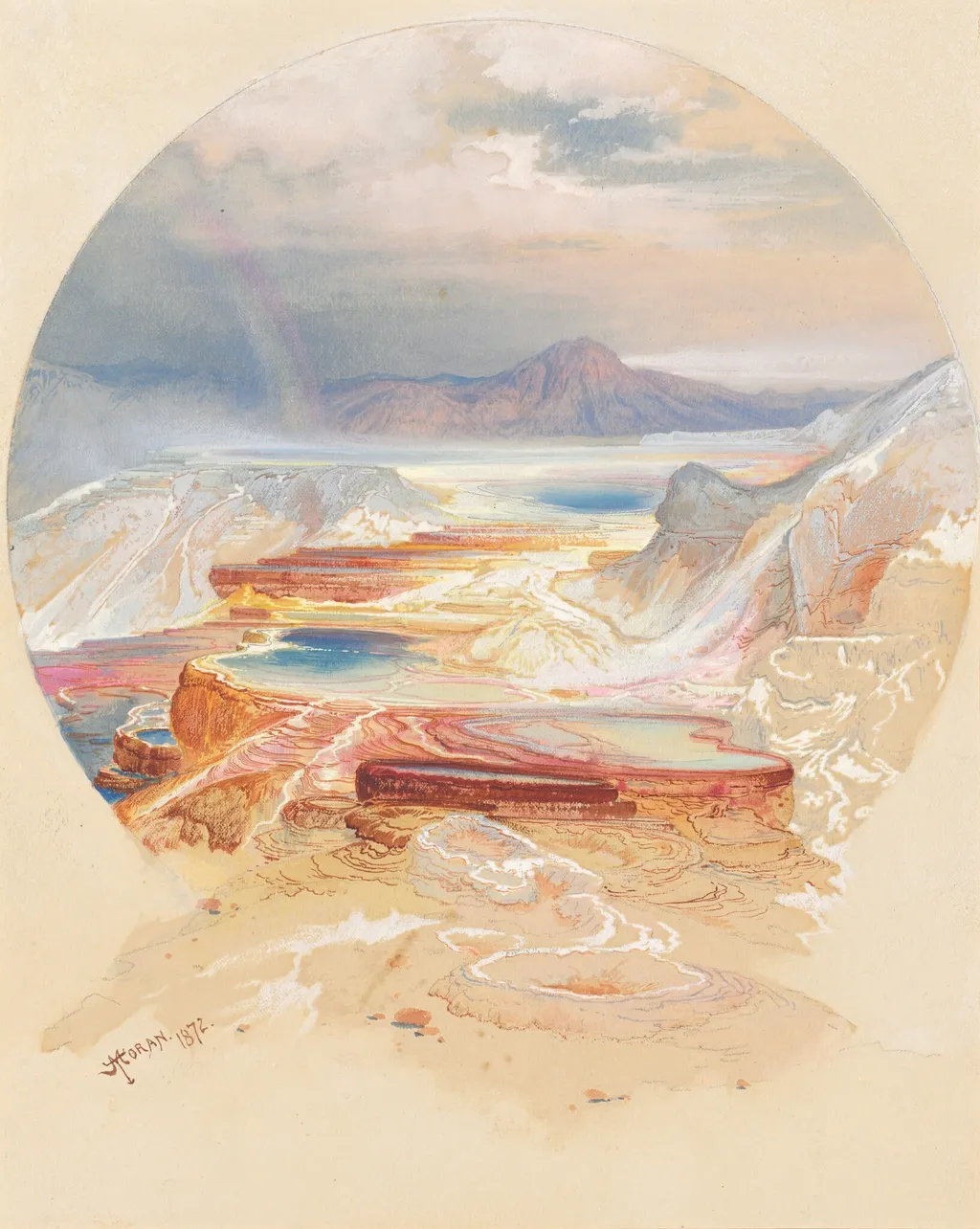
Minerva Terrace, Yellowstone is a gouache drawing by the Impressionist artist Thomas Moran. It dates from 1872 and is held in the collection of the National Gallery of Art.
- Inscription
- Inscribed:lower left in watercolor: T Moran (TYM monogram) 1872
About this work
Overview
Minerva Terrace, Yellowstone is a 1872 drawing by Thomas Moran, executed in watercolor, gouache, and graphite on wove paper.
Subject & Meaning
The drawing depicts Minerva Terrace, a natural feature in Yellowstone, reflecting Moran's fascination with the American West's landscapes.
Technique & Style
Moran employed watercolor, gouache, and graphite to achieve vivid colors, characteristic of his work, which often blended artistic and illustrative techniques.
History & Provenance
Created in 1872, the piece draws from Moran's experiences illustrating the American West for Scribner’s Monthly and his association with the Hudson River School.
Context
Part of a broader body of work focusing on the Rocky Mountains, this drawing exemplifies late 19th-century American artists' interest in the West's natural wonders.
Legacy
While specific legacy details of 'Minerva Terrace, Yellowstone' are not provided, it contributes to Moran's overall legacy as a prominent artist of the American West.
Own this work as a print
Artist & collection
Artist
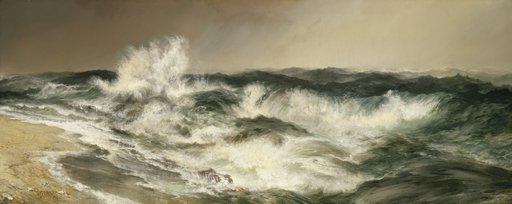
Thomas Moran (February 12, 1837 – August 25, 1926) was an American painter and printmaker of the Hudson River School in New York whose work often featured the Rocky Mountains.