Artwork
Whiteleaf
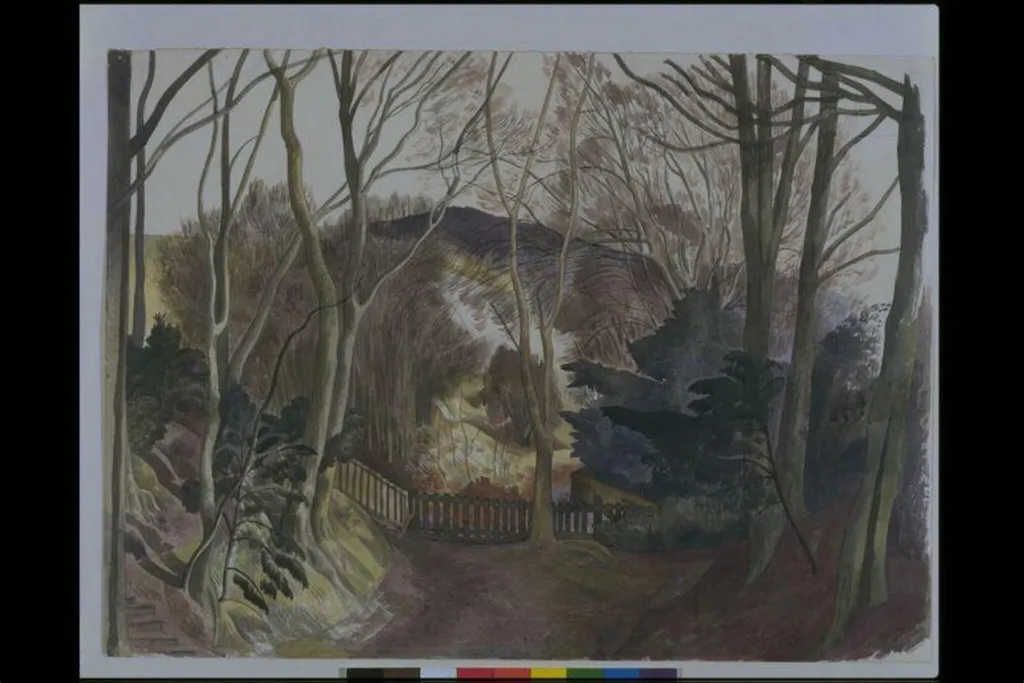
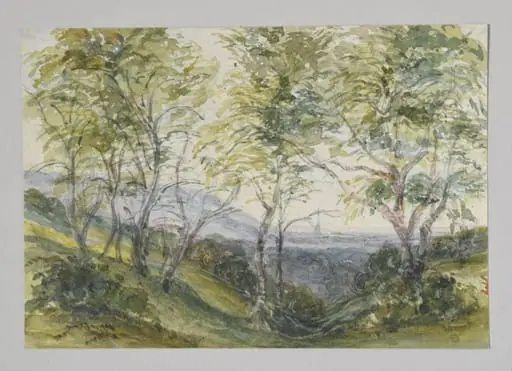
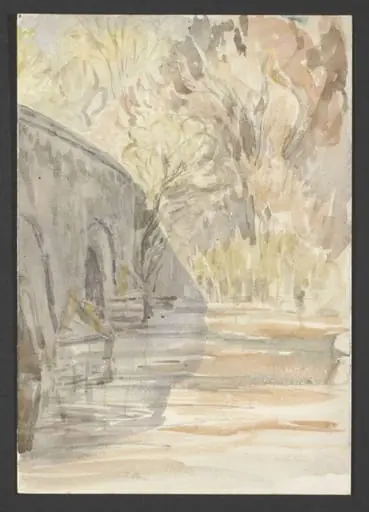
Whiteleaf is a watercolor work on paper by the Aestheticist artist John Northcote Nash. It dates from 1928 and is held in the collection of the Victoria and Albert Museum.
About this work
Overview
John Northcote Nash created Whiteleaf in 1928 as a watercolour landscape depicting a quiet woodland path. The work is signed by the artist and measures modestly, typical of his intimate approach to natural scenes. Executed with delicate precision, it captures a moment of stillness in the English countryside, avoiding dramatic elements in favor of subtle observation.
Subject & Meaning
The painting presents a narrow path winding through trees toward a low wooden fence, which marks the boundary of the visible space. The path recedes into the distance, suggesting passage rather than destination. There is no human presence, and the absence of movement or disturbance reinforces a mood of solitude and quiet reflection, characteristic of Nash’s contemplative vision of nature.
Technique & Style
Nash employed transparent watercolour washes to build layered tones, using soft edges and restrained hues to evoke atmosphere. The brushwork is deliberate yet fluid, with minimal detail in the foliage and background, allowing the composition to breathe. Muted greens, greys, and browns unify the scene, while the path’s linear rhythm guides the viewer’s gaze without force or emphasis.
History & Provenance
Whiteleaf was painted during a period when Nash was deeply engaged with rural English landscapes, often working en plein air. It remained in private hands after its creation and was later acquired by a public collection in the mid-20th century. Its provenance reflects its status as a representative work of Nash’s mature phase, though it has never been widely exhibited.
Context
Created in the late 1920s, Whiteleaf emerges from a British artistic tradition that valued quiet realism over modernist abstraction. Nash, influenced by the New English Art Club and the legacy of watercolourists like Turner, sought to convey emotional resonance through understated observation. The painting aligns with broader interwar interests in pastoral peace amid industrial change.
Legacy
Whiteleaf exemplifies Nash’s enduring focus on the English landscape as a site of quiet dignity. While not among his most famous works, it continues to be referenced in studies of 20th-century British watercolour for its restraint and sensitivity. Its influence is seen in later artists who prioritized atmosphere over narrative in landscape painting.
Artist & collection

Artist
John Northcote Nash (11 April 1893 – 23 September 1977) was a British painter of landscapes and still-lifes, and a wood engraver and illustrator, particularly of botanic works. He was the younger brother of the artist Paul Nash.

- Saddlescombe
 Untitled
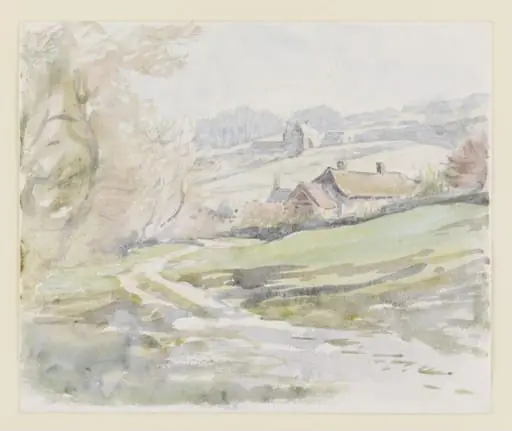 Landscape near Sidmouth, with cottages surrounded by fields and woods
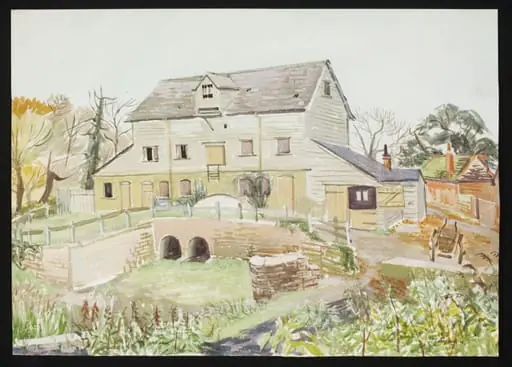 The Mill, Wadesmill
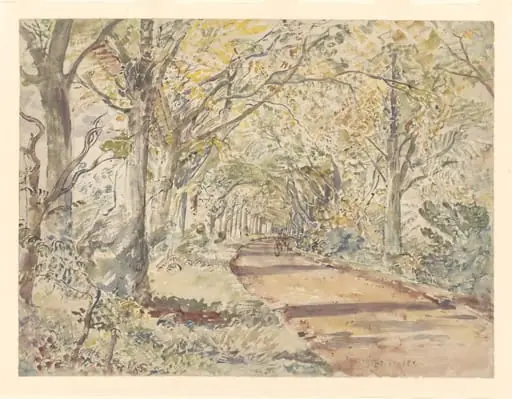 The Beech Avenue, Lasham, Hampshire
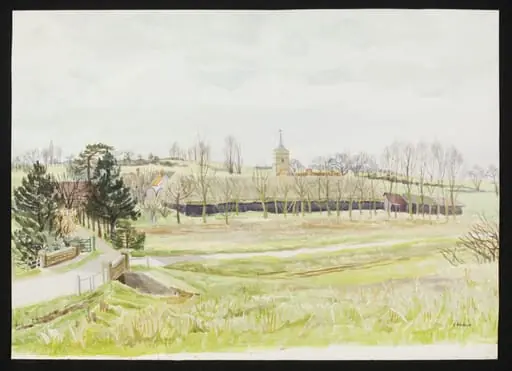 Barn at Westmill
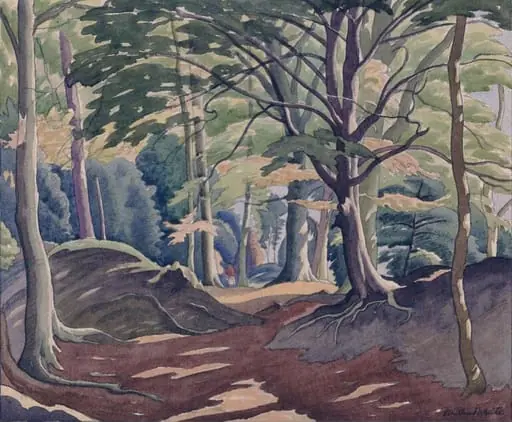 The Wood
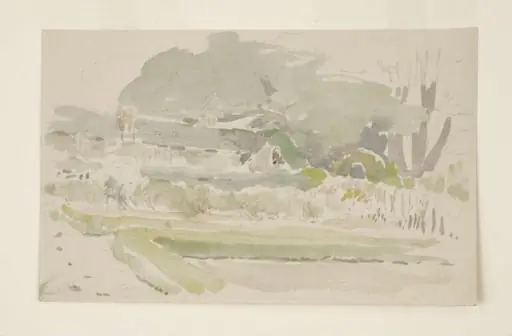 Sketch of the garden and potting shed at Gwaynynog
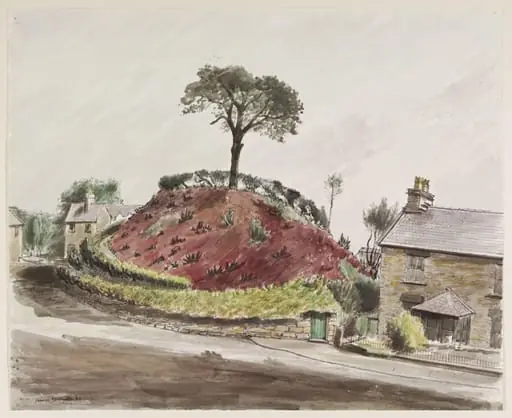 Tomen-y-Bala (Ancient Roman mound at Bala) Merionethshire
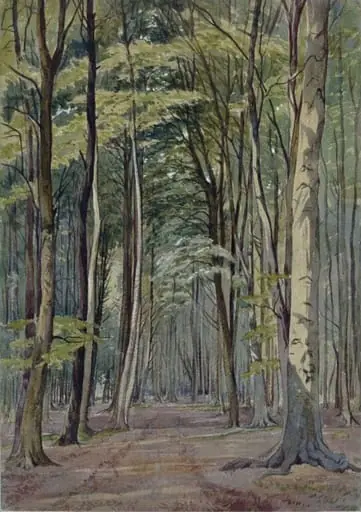 A beechwood
 A bridge seen from a riverbank