Artwork
Payta Kootha, a Shawnee Warrior
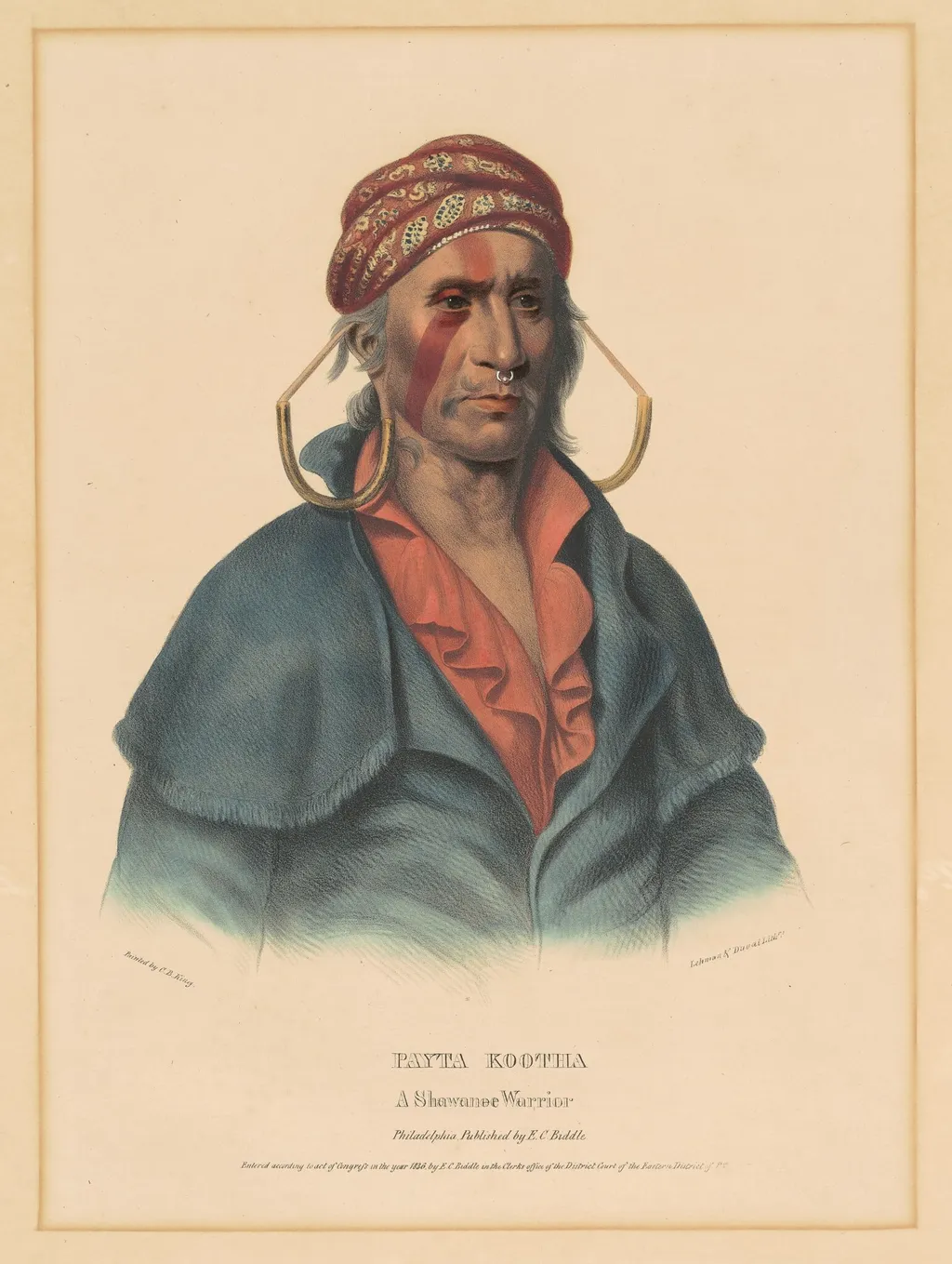
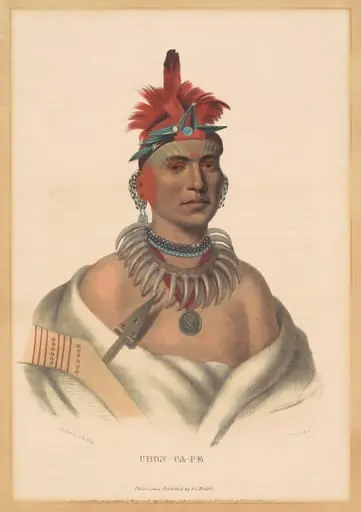
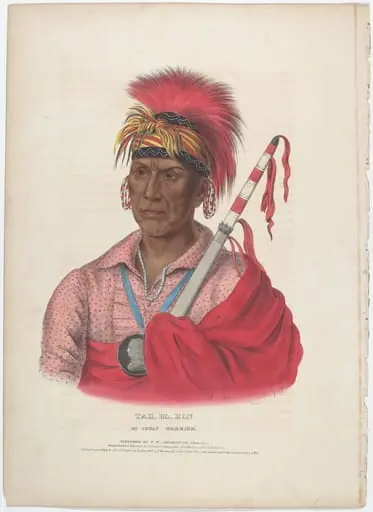
Payta Kootha, a Shawnee Warrior is an ink print by the Romanticist artist Albert Newsam. It dates from 1836 and is held in the collection of the National Gallery of Art. Created in 1836, this hand‑colored lithograph on wove paper portrays a Shawnee warrior identified as Pay Ta Kootha.
- Inscription
- Inscribed:upper left corner in graphite by unknown hand: 18; upper left verso in graphite by unknown hand: A9361 / P60; upper right verso in graphite by unknown hand: 2.50 / P text at bottom on stone: Painted by C. B. King / Lehman & Duval Lithrs. / PAYTA KOOTHA / A Shawanee [sic] Warrior / Philadelphia, Published by E.C. Biddle. / Entered according to act of Congress in the year 1836, by E.C. Biddle in the Clerks office of the District Court of the Eastern District of Pa.
About this work
Overview
Created in 1836, this hand‑colored lithograph on wove paper portrays a Shawnee warrior identified as Pay Ta Kootha. The figure is rendered in vivid hues, with a red headwrap patterned in gold, a dark cloak, and an orange, ruffled shirt. His cheeks are painted red, and he wears prominent gold earrings, set against an unadorned background that concentrates attention on the portrait.
Subject & Meaning
The image presents a solemn Native American combatant, emphasizing personal dignity through detailed costume and facial coloration. The choice of bright, contrasting pigments highlights cultural attire and individual identity, suggesting an intent to document or honor the warrior’s status within the Shawnee community rather than to romanticize the figure.
Technique & Style
The work employs lithography, a printing process that allowed for multiple copies while preserving fine line work. After the initial stone‑based impression, the artist applied hand‑applied color washes, creating a layered effect that enhances texture and depth. The style combines precise portraiture with decorative coloration typical of early American printmaking.
History & Provenance
Albert Newsam, a deaf artist trained at the Pennsylvania School for the Deaf, produced the lithograph during his early career as one of the United States’ pioneering lithographers. His background as an orphan who mastered drawing and printing contributed to the work’s technical proficiency, helping to establish lithography as a significant medium in 19th‑century visual culture.
Context
In the 1830s, American interest in Native American subjects grew alongside expanding westward settlement. Portraits like this served both documentary and commercial purposes, providing audiences with visual representations of indigenous peoples that were both exotic and accessible through affordable prints.
Own this work as a print
Artist & collection
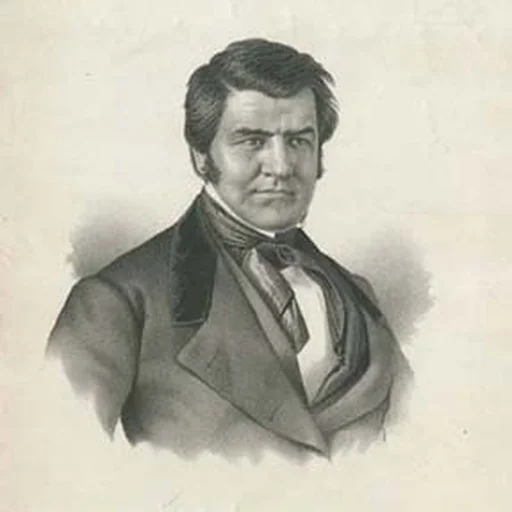
Artist
Albert Newsam (May 20, 1809 – November 20, 1864) was an American lithographer and painter.