Artwork
Männliche Heilige (3 Reihen) oben: Maria der Verkündigung; rechter Flügel
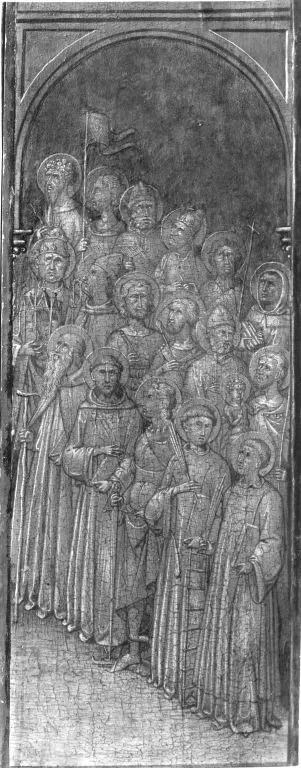
Männliche Heilige (3 Reihen) oben: Maria der Verkündigung; rechter Flügel is an unspecified painting by the Italo Byzantine artist Niccolò di Buonaccorso. It is held in the collection of the Bavarian State Painting Collections. Created around 1400, this painted panel forms part of a triptych’s right wing and is now displayed in Munich’s Alte Pinakothek.
About this work
Overview
It presents a procession of male saints arranged in three horizontal tiers, while the uppermost section includes a depiction of the Annunciation to Mary.
Created around 1400, this painted panel forms part of a triptych’s right wing and is now displayed in Munich’s Alte Pinakothek. It presents a procession of male saints arranged in three horizontal tiers, while the uppermost section includes a depiction of the Annunciation to Mary. The work exemplifies the late medieval Italian approach to devotional imagery, combining narrative and hierarchical composition.
Subject & Meaning
The central focus is a line of male saints, each identified by a halo, a staff or a book, and distinctive vestments. Their collective stance underscores a communal intercession, a common theme in ecclesiastical art. Above them, the Annunciation scene introduces the Virgin Mary, linking the saints’ veneration with the pivotal moment of Christ’s incarnation.
Technique & Style
Executed in the Italo‑Byzantine tradition, the panel relies on a restrained palette and a flattened spatial setting, with a simple arch framing the figures against a dark, textured wall. The faces are rendered with a uniform, stylized rigidity, reflecting the period’s emphasis on iconic representation over individual portraiture. Fine brushwork reveals the artist’s miniaturist background.
History & Provenance
The panel was painted by Niccolò di Buonaccorso, a leading Sienese artist active in the late 14th and early 15th centuries. After serving both artistic and civic roles in Siena, the work entered various collections before being acquired by the Alte Pinakothek, where it remains part of the museum’s medieval Italian holdings.
Context
Di Buonaccorso’s output aligns with the late medieval shift toward more narrative religious panels, yet retains the decorative elegance characteristic of Sienese painting. The inclusion of the Annunciation on the right wing reflects the liturgical practice of pairing saintly intercessors with key biblical events, a compositional strategy common in polyptychs intended for private devotion or chapel altars.
Artist & collection
Artist
Niccolò di Buonaccorso, also Niccolò di Niccolò di Buonaccorso or Bonaccorso, (active 1355 – 1388) was an Italian painter and one of the most prominent Sienese painters of the 14th century.

 All Saints
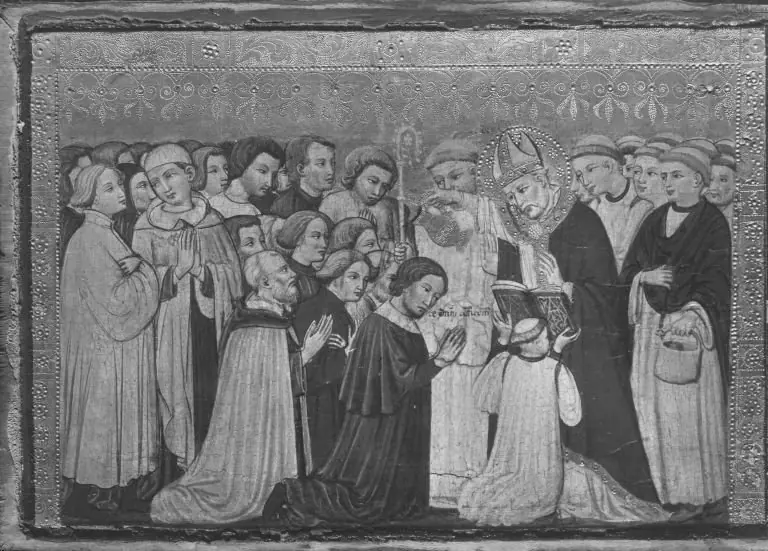 The baptism of Saint Augustine
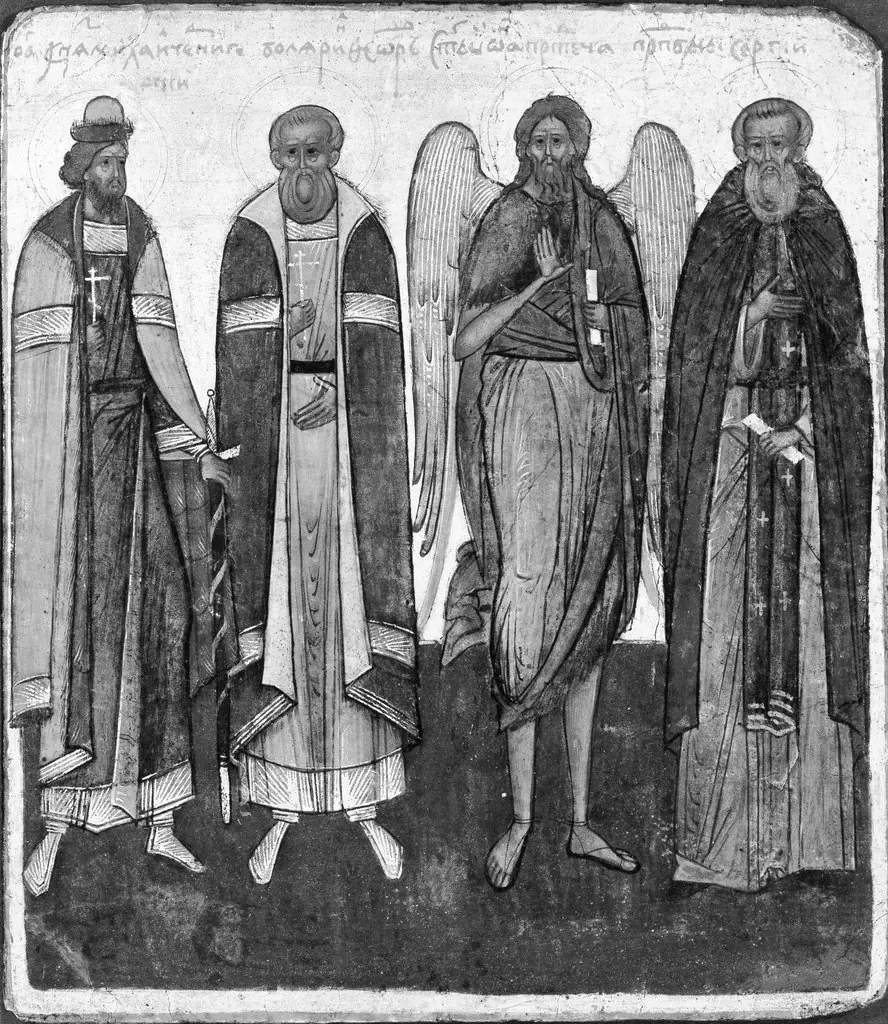 Panel from a Saints' Calendar (painted on both sides)
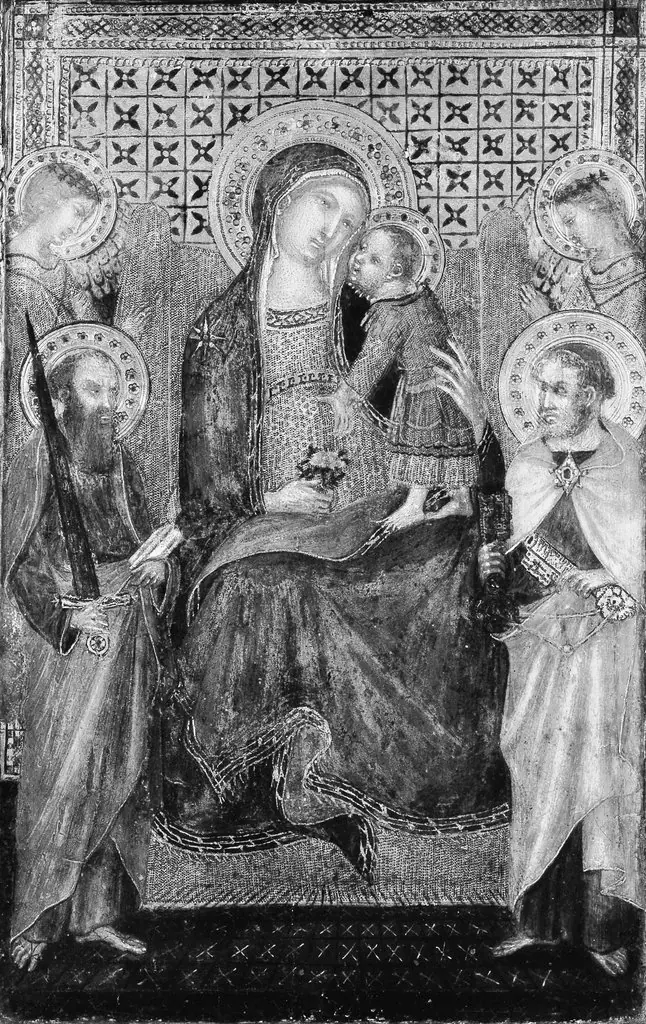 Madonna and Child Enthroned with Saints Peter and Paul and Angels
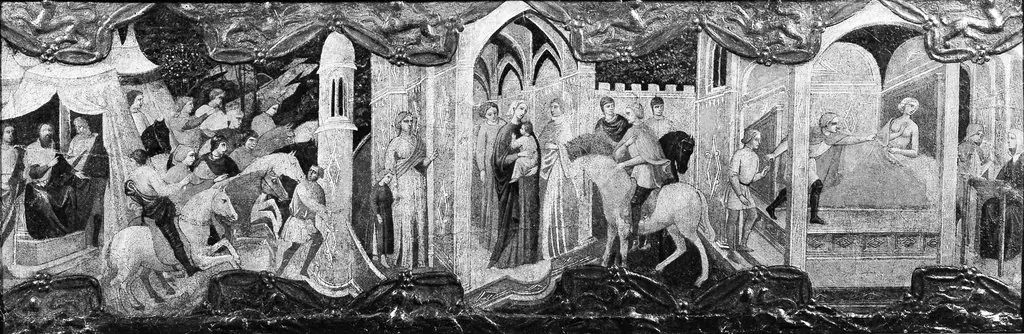 Scenes from a Legend; Coats of Arms
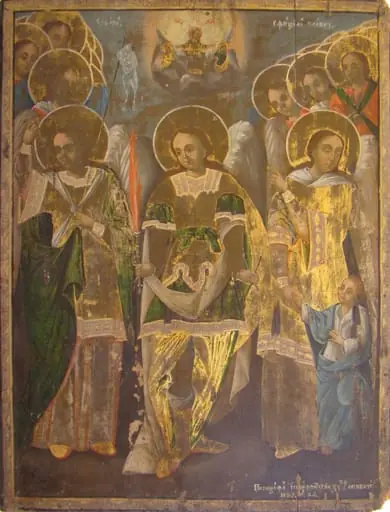 Soborul Arhanghelilor
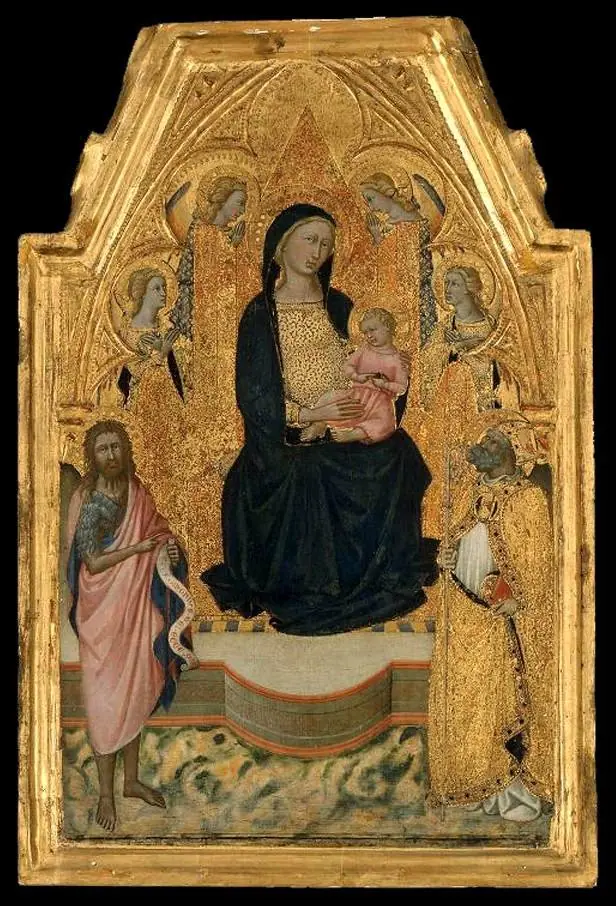
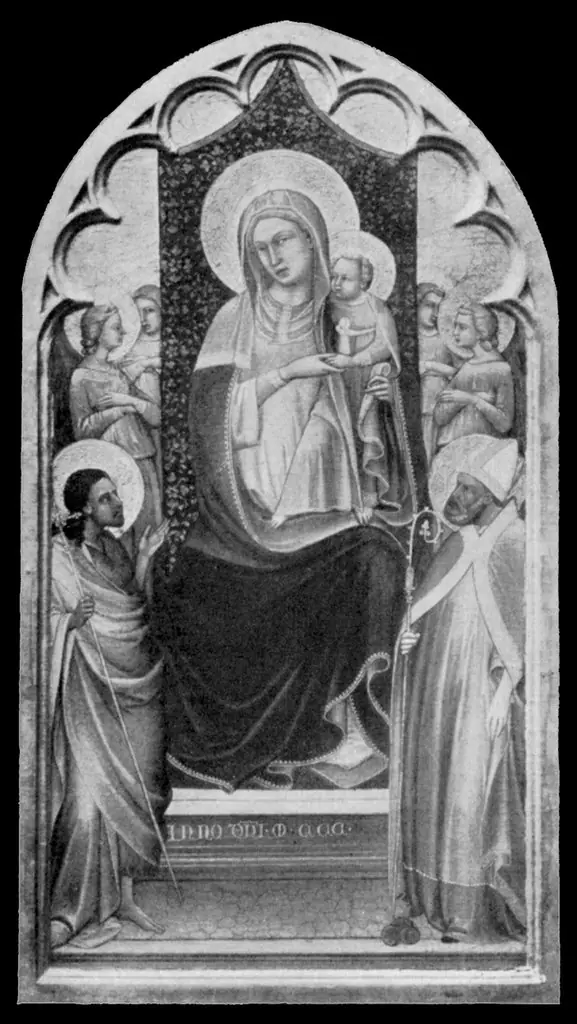 Madonna and Child with Saints John the Baptist and Nicholas
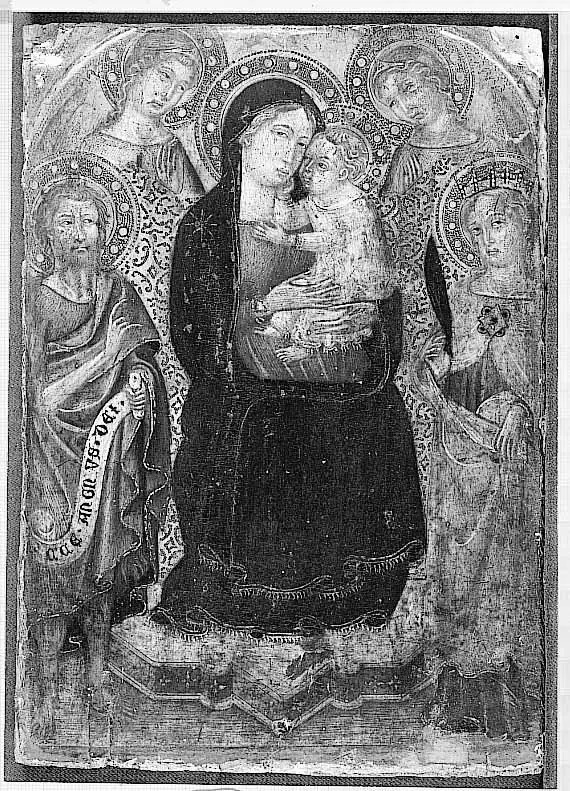 The Virgin and Child with two Saints and two Angels
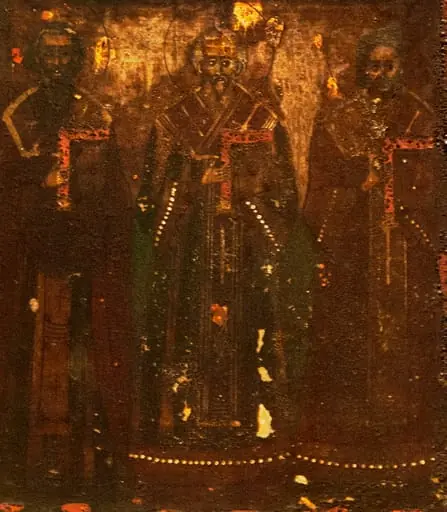 În spațiul dreptunghiular creat prin scobire(rezultă o ramă de 3 cm lățime), sunt pictați, în ax vertical, Sfinții trei ierarhi Vasile, Grigorie și Ioan. Stratul pictural fiind înnegrit, nu se pot identifica exact fiecare din cei trei sfinți. Probabil ca cel din centru să fie Sf. Ioan Gură de Aur, cu părul și barba albe, în stânga fiind sf. Vasile cel Mare iar în dreapta sf. Grigorie Noul Teolog, toți în picioare. Toți trei țin în mîini cartea Sfântă.Veșmintele sunt arhierești, patrafirele au cruci în linii subțiri, doi dintre ei au veșmântul împodobit cu șiruri de puncte albe. Fondul este aurit, aureolele trasate cu linii subțiri, negre, în stilul icoanelor lipovenești. Pe partea de sus a ramei o inscripție în același stil. La mijloc chipul lui Isus și monogramul Acestuia.
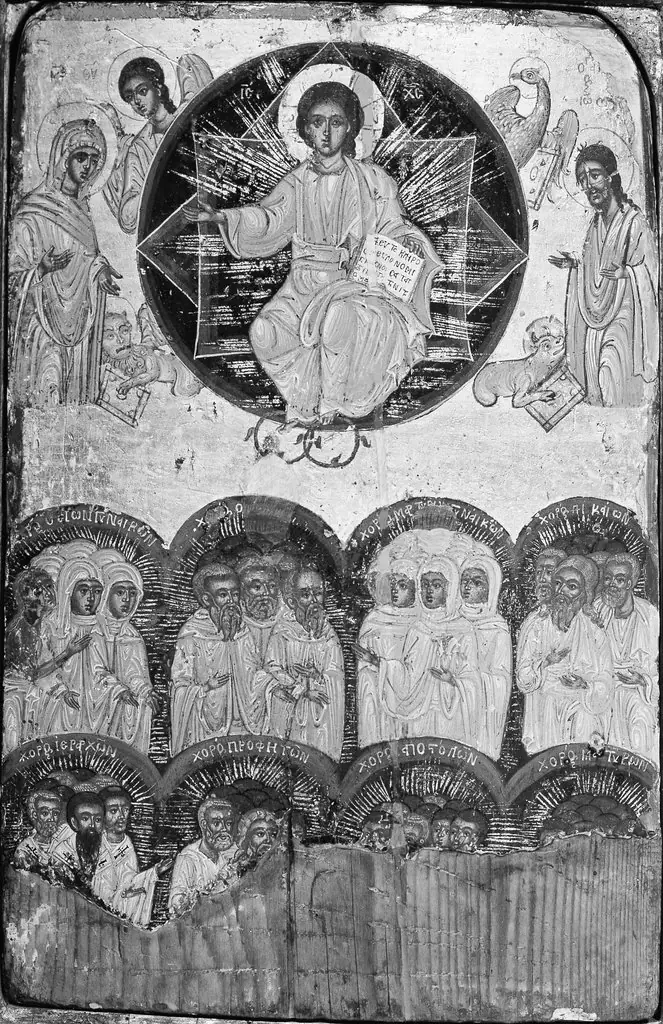
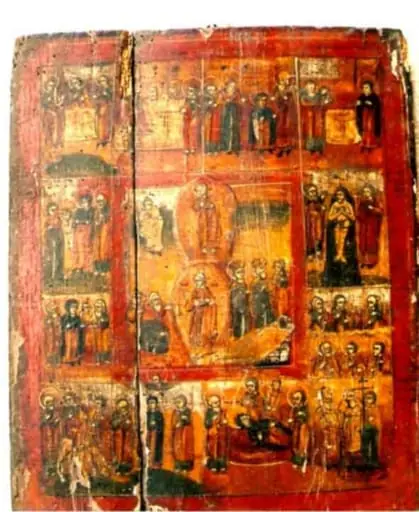 Coborârea în iad
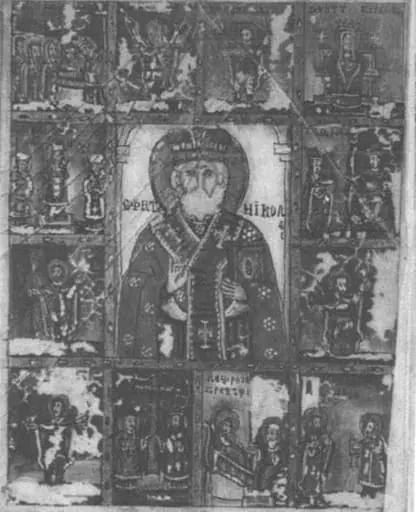 Sfântul Mare Ierarh Nicolae